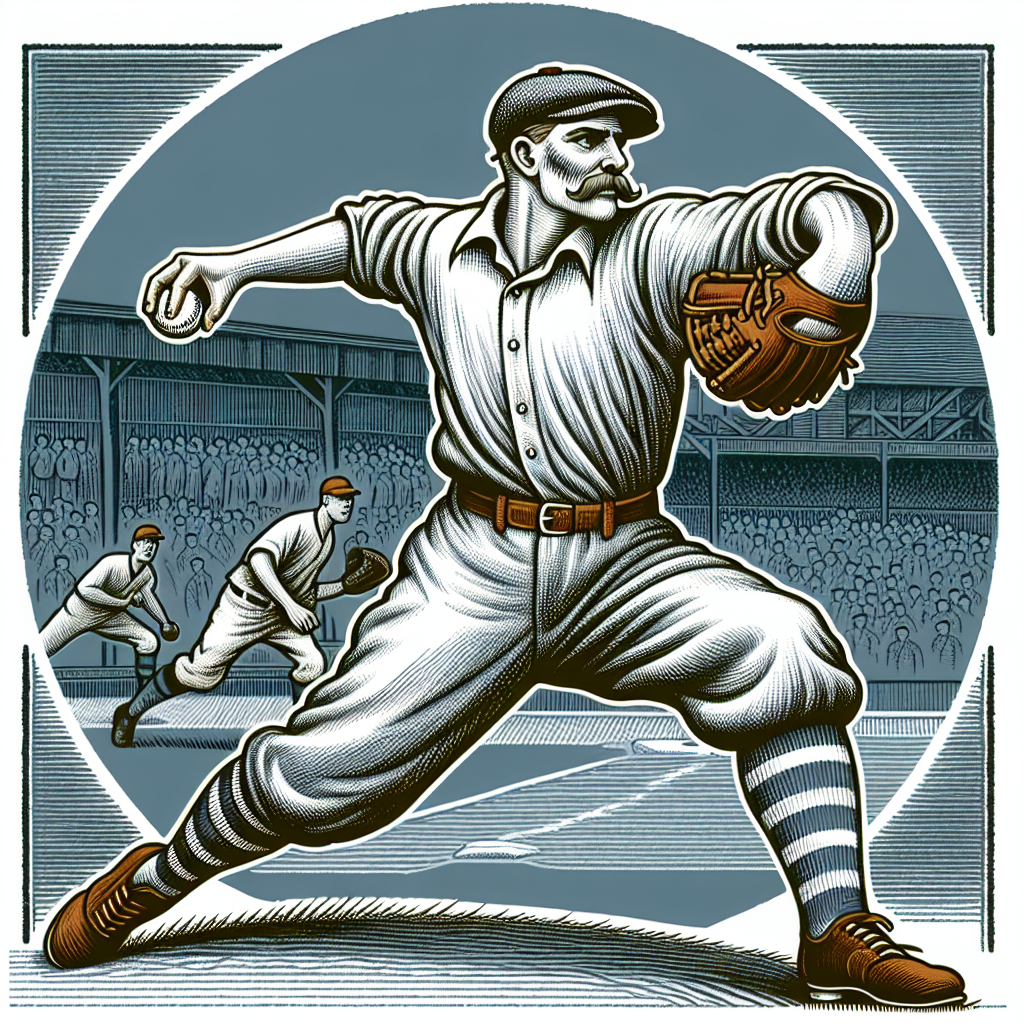
The annals of baseball history are filled with legendary names that evoke the spirit of a bygone era. Among those legendary figures stands Burleigh Grimes, remembered as the last of the spitballers. His legacy is intertwined with the evolution of pitching techniques, the changes in baseball regulations, and the enduring charm of the sport’s early days.
Introduction
Burleigh Arland Grimes, born on August 18, 1893, in Emerald, Wisconsin, etched his name in baseball lore not just through his mastery on the mound, but also by persevering with a now-outlawed pitch: the spitball. By the time Grimes made his major league debut on September 10, 1916, baseball was undergoing a significant transformation. In 1920, the use of the spitball was banned, a response to both the rising dominance of pitchers who employed it and the danger it posed by making the ball unpredictable.
Grimes, however, was one of 17 pitchers allowed to continue using the spitball, having been “grandfathered” in because it was a fundamental part of his repertoire. His career then spanned from 1916 to 1934, an impressive tenure upheld by his resilience, tactical prowess, and his infamous pitch. Over these years, Grimes not only outlasted the ban on his signature pitch but also exemplified the rough-and-tumble spirit of early 20th-century baseball.
As the sport evolved and modernized, Grimes’ presence on the mound became a reminder of a more rugged era. His sweat-stained jersey, fierce competitive nature, and masterful control over his unpredictable pitch spoke volumes of a time when strategy and grit were paramount. Through exploring Grimes’ career, we gain insight into the historical developments of baseball and appreciate the art of pitching in its formative years.
The Early Years and Rise
Grimes’ journey to baseball immortality began in rural Wisconsin, where his talent for the sport was evident from a young age. His early career saw him partake in various minor league stints, sharpening his skills and perfecting his pitch delivery. His mastery of the spitball set him apart, and in 1916, he caught the eye of the Major League scouts.
Signed by the Pittsburgh Pirates, Grimes made his debut later that same year. Although his rookie season didn’t hint at the greatness to come, it proved instrumental in acclimatizing Grimes to the big leagues. The subsequent seasons saw Grimes bounce between teams, including the Brooklyn Robins, where he began to solidify his reputation as a feared spitball pitcher.
It was during his tenure with the Brooklyn Robins that Grimes’ career truly took off. The 1920s were a dominant period for him, characterized by remarkable consistency and a rising strikeout count. Despite the tightening regulations around pitching styles, Grimes adapted, ensuring his spitball remained an effective weapon. His dedication to the craft saw him consistently ranked among the league’s top pitchers.
Off the field, Grimes was known for his intensity and competitive fire. Teammates and opponents alike respected and feared his tenacity. This dedication to excellence and relentless pursuit of success became key elements of his legacy, setting him apart as more than just a practitioner of an outlawed pitch but as a true master of the pitcher’s mound.
A Dominant Force in Baseball
Grimes’ peak years saw him rack up numerous accolades and impressive statistics. From 1920 to 1931, he consistently ranked among the leaders in strikeouts, complete games, and innings pitched. His unique style baffled hitters who struggled to predict the path of his spitball, leading to frequent strikeouts and a daunting presence on the mound.
One of Grimes’ standout seasons was in 1921 when he posted a 22-13 record with a sterling 2.85 ERA. His performance was instrumental in leading the Brooklyn Robins to a successful campaign, reinforcing his status as a top-tier pitcher. The unpredictability of his spitball, combined with his strategic acumen, made him a formidable adversary.
In addition to his regular-season dominance, Grimes also made significant contributions in the post-season. His teams frequently reached the World Series, and Grimes’ postseason performances were marked by his characteristic tenacity and skill. Despite the high stakes, he never wavered from his reliance on the spitball, showcasing his unwavering confidence in his abilities.
Grimes’ success on the mound was also characterized by his versatility. He possessed a diverse arsenal of pitches beyond the spitball, and his ability to seamlessly integrate these pitches into his strategy further bewildered hitters. This adaptability, combined with his fierce competitive spirit, allowed him to maintain his dominance even as the game evolved around him.
Legacy and Impact on Baseball
Grimes’ impact on baseball extended far beyond his time on the mound. His perseverance as the last of the spitballers marked a significant chapter in baseball history, symbolizing the transition from one era to the next. The evolution of pitching techniques and the regulation changes were in many ways embodied by Grimes’ career.
He was a trailblazer, highlighting the importance of strategic pitching and resourcefulness. As the game moved towards modernity, Grimes served as a living testament to the old-school methods that once dominated the sport. His career offered a bridge between the rougher, more experimental days of early baseball and the more polished, regulated game that emerged in the mid-20th century.
Moreover, Grimes’ influence is evident in the generations of pitchers who followed. His approach to the game, characterized by determination and a relentless work ethic, became a model for aspiring pitchers. He showcased the value of mastering one’s craft and adapting to changing circumstances, lessons that remain pertinent in the sport to this day.
The End of an Era
By the early 1930s, Grimes’ storied career began to wind down. Despite his advanced age for a professional athlete, he continued to perform at a high level, defying the odds and showcasing the durability of his pitching style. His final seasons saw him play for several teams, including the Boston Braves and the New York Yankees, leaving a mark wherever he went.
Grimes officially retired from Major League Baseball in 1934. By then, he had amassed a remarkable record, with 270 wins, 1,512 strikeouts, and an ERA of 3.53 over his career. His retirement marked the end of an era, as he was the last pitcher legally allowed to throw the spitball, a pitch that had become synonymous with his name.
Post-retirement, Grimes remained active in baseball, taking on various coaching roles and sharing his wealth of knowledge with younger generations. His insights into pitching and his firsthand experiences from a rapidly changing era of baseball made him a valuable mentor. Grimes’ passion for the game never waned, and his legacy continued through the players he coached and influenced.
Grimes’ Post-Playing Career and Honors
After hanging up his cleats, Grimes transitioned into coaching and managerial roles in both the major and minor leagues. His vast knowledge and experience made him a sought-after figure, and he quickly earned a reputation as an astute and insightful coach. Among his notable stints was a coaching position with the New York Yankees, where he contributed to the development of future pitching stars.
Grimes’ post-playing career was a testament to his enduring love for the sport. He saw coaching as an opportunity to impart the wisdom accrued from years on the mound, and many young pitchers benefitted from his tutelage. His understanding of the game’s nuances, particularly pitching mechanics, was invaluable, and he became a respected figure in baseball circles.
In recognition of his outstanding contributions to baseball, Grimes was inducted into the Baseball Hall of Fame in 1964. This honor solidified his place among the sport’s legends, ensuring his legacy would be remembered for generations to come. The Hall of Fame induction was a fitting tribute to a career defined by perseverance, innovation, and excellence.
Conclusion
Burleigh Grimes’ legacy is a rich tapestry woven from the threads of talent, resilience, and a deep passion for baseball. As the last of the spitballers, his career serves as a fascinating chapter in the history of the sport, bridging the gap between the raw, early days of baseball and the more structured modern era. His mastery of the infamous pitch, combined with his relentless work ethic, made him a formidable figure on the mound and an enduring symbol of a pivotal era in baseball history.
Grimes’ impact is felt even today, as his approach to pitching and his strategic insights continue to influence players and coaches. His life story is one of dedication and adaptability, qualities that transcend the sport and offer lessons applicable to a variety of fields. By examining Grimes’ career, we gain not only a better understanding of baseball’s evolution but also an appreciation for the timeless qualities that define true greatness.