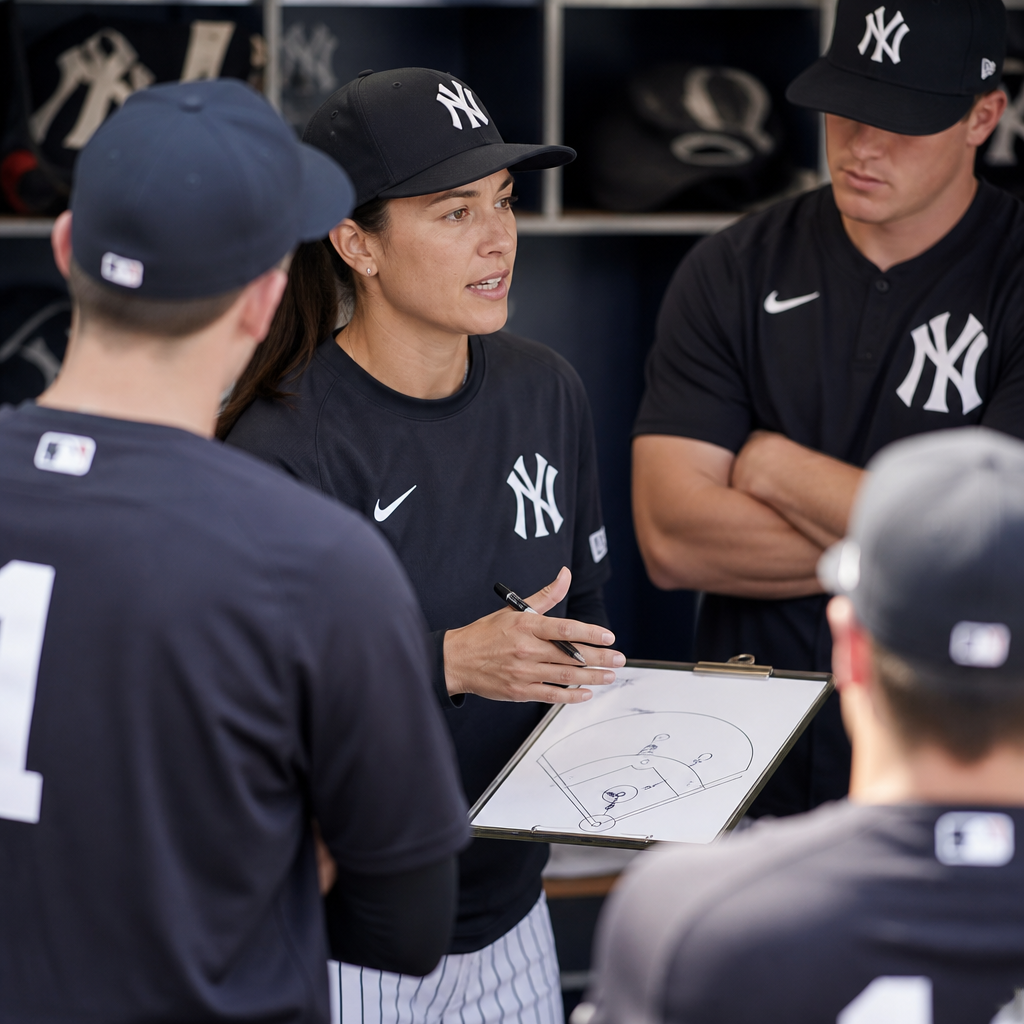
Baseball tactics are often described as products of tradition, probability, and repetition, yet that framing misses an important truth: women have helped expand how the game is taught, analyzed, communicated, and strategically applied. Breaking the Mold: Women’s Unique Contributions to Baseball Tactics is not simply a story about inclusion. It is a practical look at how women in baseball have influenced decision-making on the field and in the front office, often by questioning assumptions that had gone untested for decades.
In baseball, tactics means the choices that shape a game in real time and across a season. It includes lineup construction, defensive positioning, pitcher usage, baserunning pressure, player development plans, scouting priorities, and communication methods that help players execute under stress. Strategy is the broader plan; tactics are the specific moves. When women enter baseball operations, coaching, analytics, sports science, player development, broadcasting, or umpiring, they do not contribute as a monolith. Their unique impact comes from perspective, training, observational rigor, and the freedom to see inefficiencies that insiders may overlook.
I have worked with baseball content, player development frameworks, and performance analysis long enough to see a recurring pattern: the people who improve tactical systems are usually the ones willing to translate across departments. That is one reason women have mattered so much in modern baseball environments. Many have built influence by connecting analytics to player language, biomechanics to drill design, and scouting notes to usable game plans. In a sport crowded with data, the competitive edge often comes from interpretation and communication, not just collection.
This matters because baseball is now decided on thinner margins. A better pre-pitch alignment, a more precise advance report, or a clearer bullpen decision tree can change wins over a full season. Women have contributed to those edges in professional leagues, college programs, youth baseball, media analysis, and international development. Their work also broadens the sport’s tactical imagination. A healthier baseball culture does not only create opportunity; it creates better questions, better feedback loops, and better tactical outcomes.
How Women Reshaped Tactical Thinking in Baseball Operations
One of the clearest contributions women have made to baseball tactics is in operations roles where information becomes action. Front offices rely on analysts, coordinators, and development staff to turn scouting reports, TrackMan data, Hawkeye video, and medical input into decisions managers and coaches can use. Women working in these environments have helped refine how clubs assess matchups, defend hitters, sequence pitchers, and identify undervalued skills.
Kim Ng’s career is the best-known example of women influencing baseball decision-making at the highest level. Before becoming the first woman general manager in Major League Baseball, she spent decades in player personnel and operations with the White Sox, Yankees, Dodgers, and MLB. Her significance is not symbolic alone. Executives in those roles shape roster construction, depth planning, and the tactical options available to field staff every day. A club cannot deploy platoon advantages, defensive versatility, or multi-inning relief weapons unless the roster has been assembled with those tactical paths in mind.
Women in baseball analytics have also helped normalize evidence-based tactical planning. That includes modeling times-through-the-order penalties, measuring catcher framing before automated ball-strike discussions changed the landscape, and quantifying jump efficiency for outfield defense and baserunning. Tactical gains often start as quiet process improvements: a better heat-map presentation for a hitter meeting, a cleaner classification of swing decisions, or a more useful set of probabilities for stolen-base attempts by count and pitcher move profile.
Another underappreciated area is decision hygiene. Strong tactical departments reduce noise. They define terms consistently, separate signal from anecdote, and force organizations to test whether a habit remains justified. When staff members from different backgrounds challenge inherited logic, clubs avoid the trap of copying yesterday’s consensus. That is where many women have delivered value: by asking precise questions that lead to sharper choices.
Coaching, Communication, and the Translation of Complex Tactics
Baseball tactics fail when players do not trust the message or cannot apply it under game speed. Women coaches and instructors have made important contributions by improving the translation layer between technical analysis and player execution. This is especially visible in catching instruction, strength and conditioning, mental performance, and skill acquisition work, where communication quality determines whether information becomes behavior.
Rachel Balkovec’s rise through affiliated baseball illustrates this point. Her background in strength and conditioning and hitting development helped show that tactical coaching is not limited to calling pitches or flashing signs. It includes how staff design practice environments, structure feedback, and create drills that produce transferable game actions. If a coach can improve a hitter’s recognition of spin earlier in flight, that affects swing decisions, chase rate, and two-strike tactics. If a coach helps players understand why a machine is set to a particular release height and movement profile, practice becomes strategically aligned rather than generic.
Alyssa Nakken’s work in the major league coaching environment similarly reflects the tactical importance of preparation. First-base coaching may look narrow from the outside, but it sits at the intersection of baserunning reads, outfielder arm assessment, relay positioning, game-state awareness, and player confidence. Coaches who organize those details well create extra bases over time. That is not cosmetic. Run expectancy tables show how often moving from first to third or second to home changes scoring probability in a close game.
Women have also influenced tactical communication through player-centered coaching. That means delivering concise cues, using video efficiently, and knowing when information density hurts performance. The best tactical coaches do not dump data on athletes. They filter it. In my experience, the most effective staff members are the ones who can explain a matchup plan in twenty seconds, then expand only if the player needs more. Women succeeding in baseball have often excelled at this disciplined clarity because they had to earn credibility through precision from the start.
Scouting, Player Development, and Hidden Tactical Advantages
Scouting is tactical because it determines what a team sees before opponents do. Women scouts, development staff, and evaluators have contributed by widening the lens used to judge players. Traditional reports once leaned heavily on body type stereotypes, visual assumptions, and narrow ideas about projection. Better evaluation asks how a player solves problems, adapts, learns, and executes in different contexts. Those factors directly affect tactical usefulness.
For example, a utility defender with average raw tools may still create major tactical value if she or he processes contact quality quickly, positions instinctively, and throws from multiple arm slots on the move. A pitcher with modest velocity may outperform because of deception, extension, seam effects, or elite command to the glove side. Development-oriented evaluators, including many women in the game, have helped organizations identify these less obvious pathways to performance.
International baseball offers another important example. Women involved in global scouting and development have helped clubs think beyond domestic templates. Tactical styles vary across countries and leagues. Some environments emphasize contact skills, pressure offense, or creative pitcher usage more than the traditional U.S. amateur pipeline does. Organizations that pay attention to those differences can borrow useful ideas, whether that means more aggressive infield positioning, alternative warmup routines, or different teaching progressions for breaking balls.
| Area of contribution | Tactical effect | Plain-language example |
|---|---|---|
| Analytics and advance reports | Sharper matchup decisions | A reliever is used against hitters vulnerable to sweepers off the plate rather than simply by inning role |
| Coaching communication | Better execution under pressure | A baserunner gets one clear read cue instead of five mechanical reminders |
| Scouting and evaluation | More flexible roster construction | A team values defensive adaptability and baseball IQ, not only raw measurables |
| Player development | Faster skill transfer from practice to games | Drills are built from game constraints such as pitch shape, count, and timing |
| Sports science and health | Smarter workload management | A pitcher’s recovery markers adjust usage before fatigue changes command |
Player development may be the most important hub within this miscellaneous area because it connects every other baseball function. Tactical improvement is cumulative. Women working in development departments have helped clubs integrate biomechanics, motion capture, force-plate data, bat sensors, and video review into usable teaching plans. The value is not technology itself; it is choosing which metric matters for a specific player. A tactical system improves when staff can say, with confidence, that this pitcher needs a different seam orientation to create carry or that this hitter needs a contact-point adjustment against high velocity.
Game Preparation, Sports Science, and the Small Decisions That Win Games
Modern baseball tactics are inseparable from preparation. Women in sports science, rehabilitation, nutrition, psychology, and operations support have influenced tactical performance by improving readiness. Teams win not only through talent but through the availability and sharpness of that talent on specific days. If a pitcher’s shoulder strength profile suggests reduced recovery, the staff may alter usage, side work, or pitch mix. If a hitter’s vision training improves pitch recognition, that changes plate approach in measurable ways.
This area deserves more attention because it often produces invisible wins. Consider catcher workload. Tactical planning must balance game-calling continuity, pop time, receiving quality, and offensive output against fatigue. Staff members who track sleep, soreness, hydration, and movement quality can prevent declines that a manager might otherwise notice only after performance drops. Similar logic applies to travel schedules, recovery windows after day games, and return-to-play progressions that affect roster flexibility.
Women have contributed strongly in these interdisciplinary roles because success requires organization and credibility across departments. Tactical decisions become better when medical, performance, and coaching staffs speak a common language. The Los Angeles Dodgers, Tampa Bay Rays, Cleveland Guardians, and other development-focused organizations have shown how competitive advantages come from systems thinking. While not every contribution is public, the pattern is clear across baseball: the clubs that connect health, skill, and strategy make better in-game choices.
Broadcasting and media analysis also belong in this discussion. Women analysts who break down pitch sequencing, defensive alignment, swing path, or replay review strategy help educate fans and shape how the sport talks about tactics. That matters because clearer public analysis raises the standard for everyone. When television segments explain why an outfield shade changed with two strikes or why a backdoor cutter set up a chase pitch, they normalize tactical literacy. In turn, more young players and coaches learn to think in systems rather than clichés.
Why Representation Changes the Tactical Future of Baseball
Representation matters in baseball tactics not as a slogan but as an operating advantage. A sport that draws ideas from a wider pool of coaches, analysts, scouts, trainers, and communicators will solve more problems. That is especially true in baseball, where many tactical gains come from reframing the question. Should this player be judged by a traditional defensive position or by movement patterns? Should this pitcher attack vertical or horizontal approach angles? Should this hitter train against likely game shapes rather than generic batting practice? Diverse staffs ask different first questions, and first questions determine where organizations look next.
There are still barriers. Women in baseball continue to deal with underrepresentation, slower promotion paths, credibility tests that men are not always asked to pass, and a shortage of visible mentors in some specialties. Those obstacles can limit tactical innovation because they narrow the pipeline of people trusted to influence decisions. The solution is not token hiring. It is sustained investment in internships, apprenticeships, coaching pathways, leadership development, and fair evaluation standards tied to measurable performance.
For readers exploring the broader Women in Baseball hub, this miscellaneous category is essential because it catches the connective tissue between famous milestones. Not every tactical contribution fits neatly into coaching, front office, or playing history. Many of the most important advances happen in blended roles: analyst-coach, coordinator-educator, scout-developer, trainer-strategist. Women have helped define those hybrid positions, and hybrid positions increasingly drive baseball’s competitive edge.
The key takeaway is simple: women have made baseball tactics better by improving how the game observes, teaches, prepares, and decides. Their contributions show up in roster flexibility, smarter player development, cleaner communication, sharper matchup planning, and stronger interdisciplinary systems. If you want to understand where baseball strategy is going next, study the women already shaping its tactical language. Then keep exploring the Women in Baseball hub to see how these contributions connect across history, leadership, development, and the future of the sport.
Frequently Asked Questions
How have women specifically influenced baseball tactics rather than just baseball culture?
Women have influenced baseball tactics in concrete, practical ways by reshaping how teams evaluate information, prepare players, communicate strategy, and challenge inherited habits. Baseball strategy is often treated as if it develops only from former players repeating tradition or analysts running probability models, but that is too narrow. Women working as coaches, analysts, executives, player-development specialists, broadcasters, and scouts have helped widen the decision-making process. Their contributions often begin with better questions: Why is a teaching method assumed to work? Why is a matchup being managed this way? What does the data actually say, and what does it fail to capture?
That mindset has tactical consequences. In player development, women have helped push more individualized coaching plans instead of one-size-fits-all instruction. In analytics, they have contributed to systems that connect data to in-game choices, such as defensive positioning, pitch sequencing, baserunning decisions, and lineup optimization. In scouting and front-office environments, women have often helped integrate objective analysis with observational detail, producing more balanced evaluations of players and opponents. Even in communication roles, women have influenced tactics by improving how strategic concepts are translated for players, coaches, and fans, making information more usable under pressure.
The key point is that tactical progress often comes from people willing to question assumptions. Women in baseball have repeatedly done that, not because they are outsiders by definition, but because they have frequently had to prove ideas on their merits rather than rely on tradition or status. That can lead to sharper processes, clearer reasoning, and better strategic outcomes on the field.
Why does questioning traditional baseball assumptions matter so much in tactical decision-making?
Questioning traditional assumptions matters because many baseball tactics survive long after their original logic has become incomplete, outdated, or poorly matched to current players. Tradition has value, but strategy improves when teams regularly test beliefs against evidence and real-world results. Women in baseball have been especially important in this area because many have entered the game without the benefit of automatic acceptance, which often requires them to be precise, evidence-driven, and highly intentional in how they present strategic ideas.
That approach can expose blind spots. For example, a team may continue using standard bunting logic, bullpen roles, defensive alignments, or hitter-development cues simply because those methods are familiar. But when someone asks whether those choices maximize run expectancy, suit the roster, or help a specific player execute better, the conversation becomes more tactical and less ceremonial. Women have contributed to that shift by helping organizations become more comfortable with interdisciplinary thinking, where biomechanics, psychology, analytics, video, and coaching are used together rather than in isolation.
In practice, questioning assumptions leads to smarter adjustments. A pitcher may benefit from a different sequencing pattern than convention suggests. A hitter may need a swing decision plan tailored to game state rather than broad mechanical advice. A defense may need positioning based on batter tendencies, pitcher shape, and count leverage instead of generic placement. These are not symbolic changes. They are strategic refinements that can affect outs, runs, and wins over time. The broader lesson is that baseball tactics become stronger when no idea is protected simply because it is old.
What kinds of roles have allowed women to shape strategy in baseball most directly?
Women have shaped baseball strategy most directly through roles that sit close to preparation, evaluation, and decision-making. These include front-office positions in baseball operations, research and development, scouting, player development, coaching, performance science, and communications-related roles that help transfer strategic information clearly across an organization. While public attention often focuses on dugout titles, many tactical breakthroughs happen before the first pitch, when teams are designing game plans, developing training models, and deciding how information will be acted upon.
In research and development, women have contributed to the models and frameworks teams use to assess matchups, pitch usage, batted-ball tendencies, defensive alignment, and roster construction. In player development and coaching, they have helped translate those findings into drills, routines, and player-specific plans. That bridge between theory and execution is essential. Data is only valuable if players can use it in the batter’s box, on the mound, or in the field.
Scouting is another major area of influence. Strong scouting is tactical because it shapes both long-term roster strategy and short-term opponent preparation. Women in scouting and evaluation roles have helped organizations build fuller pictures of players by combining measurable performance indicators with observations about adaptability, decision-making, movement quality, and competitive approach. At the executive level, women have also influenced broader strategic systems, including how departments share information and how much weight is given to evidence versus instinct. In that sense, women have not merely joined existing baseball structures. They have helped redesign how strategic knowledge moves through them.
How have women helped improve the way baseball strategy is taught and communicated?
One of the most significant contributions women have made to baseball tactics is improving how strategy is taught, explained, and made actionable. In baseball, a good idea has limited value if it is delivered poorly. Players need information they can trust, remember, and apply quickly. Women working across coaching, development, analytics, and media have helped sharpen that communication process by emphasizing clarity, context, and usability.
That can mean simplifying complex analytical findings into one or two game-relevant cues, rather than overwhelming players with raw data. It can mean presenting scouting reports in a format that supports decision-making under pressure. It can also mean adjusting communication style based on the player, because not every athlete learns the same way. Some respond to visual examples, some to feel-based instruction, some to numerical targets, and some to concise competitive reminders. Women have often been strong contributors in this area because they have had to operate in environments where persuasion depends less on authority and more on preparation, precision, and trust-building.
This matters tactically because execution is communication-dependent. A catcher’s game plan, an infielder’s first step, a hitter’s two-strike approach, or a reliever’s attack sequence all depend on whether information has been taught effectively. Better communication does not just make strategy easier to understand; it makes strategy more likely to hold up in real time. That is why women’s influence on baseball instruction and messaging should be seen as a core tactical contribution, not a secondary one.
What does recognizing women’s tactical impact change about how fans and teams understand baseball?
Recognizing women’s tactical impact changes baseball understanding in two important ways. First, it gives a more accurate account of how strategy actually evolves. Baseball tactics do not emerge from tradition alone, and they do not belong to any one demographic. They develop through observation, experimentation, teaching, revision, and organizational learning. When women are included in that story, fans and teams get a clearer picture of the game as a dynamic system shaped by many kinds of expertise.
Second, recognition improves future decision-making. When teams acknowledge that valuable strategic insight can come from different professional backgrounds and lived experiences, they widen the pool of ideas that can improve performance. That does not mean lowering standards. It means focusing on rigor, results, and intellectual honesty wherever they are found. For fans, this recognition can deepen appreciation for the hidden layers of baseball: the planning behind defensive positioning, the communication behind pitcher usage, the developmental logic behind swing adjustments, and the evaluative discipline behind roster moves.
Ultimately, recognizing women’s contributions reframes the conversation from representation alone to competitive value. It highlights that women have not simply participated in baseball’s tactical evolution; they have helped drive it by refining analysis, strengthening instruction, improving collaboration, and challenging habits that no longer serve the game. That perspective makes baseball richer, smarter, and more truthful to how winning strategies are actually built.