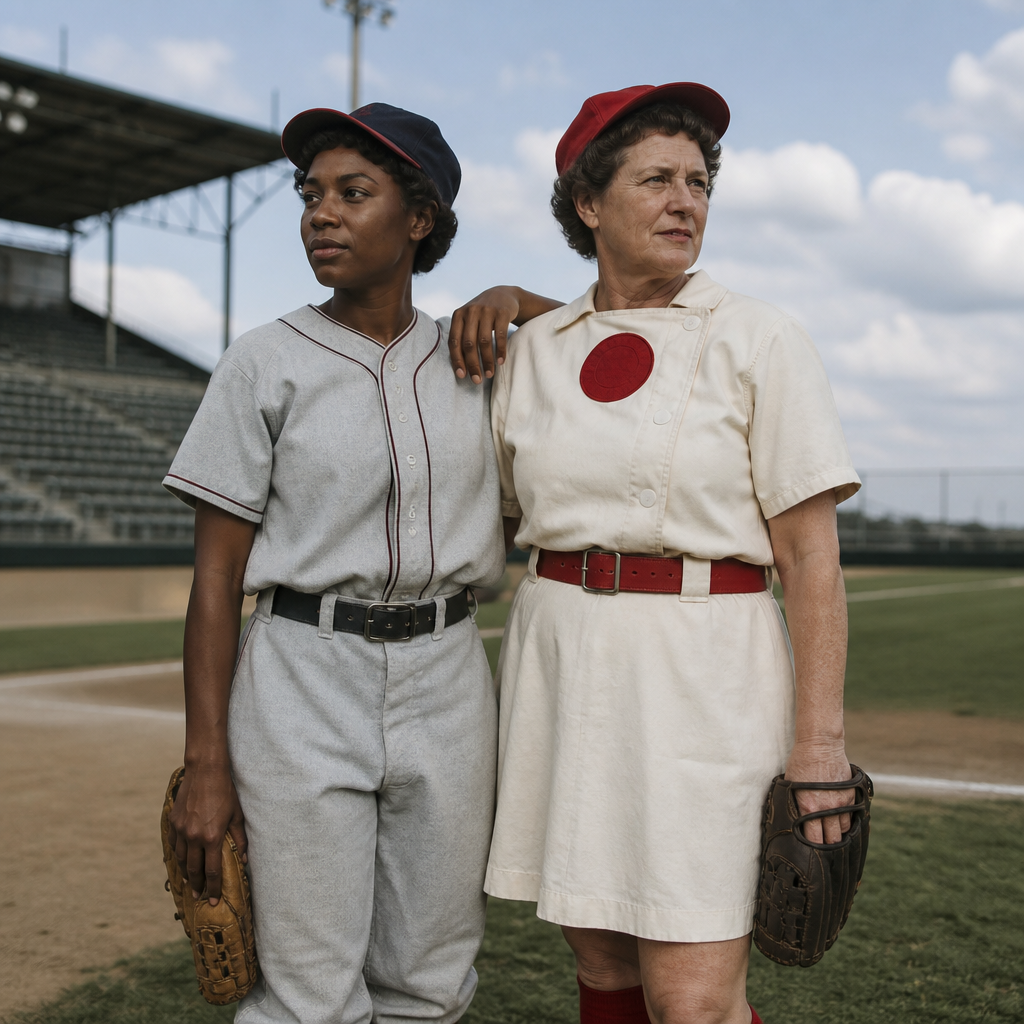
Women in baseball have shaped the sport far beyond the margins of popular memory, and any serious look at baseball history is incomplete without their stories. The legacy of women in baseball includes professional players, barnstorming stars, club owners, executives, scouts, broadcasters, umpires, statisticians, and community advocates who expanded who could belong in the game. In practice, women in baseball is not one narrow chapter. It is a connected history of participation, labor, visibility, and institutional change across amateur fields, Negro Leagues circuits, wartime professional leagues, college programs, youth development, media, and front offices. As a hub topic, this miscellaneous guide matters because readers often search for one famous example, then miss the wider network of people and milestones that made progress possible. I have worked on baseball history projects where a single newspaper clipping about a woman pitcher led to records on local semipro teams, league policy changes, and modern girls baseball initiatives. That pattern is common: one story opens into many others. Understanding this legacy helps explain current debates about opportunity, representation, and why baseball still differs from softball in public support, coaching pipelines, and scholarship structures. It also helps parents, educators, and fans find the right context for related subjects such as the All-American Girls Professional Baseball League, Toni Stone, women baseball executives, girls baseball development, and women working in Major League Baseball operations. This hub article provides that context by defining the major eras, identifying the most important names, and showing how women’s influence has touched nearly every layer of the sport.
Early pioneers and the overlooked roots of women in baseball
Women played baseball in the nineteenth century, long before organized leagues gave them stable visibility. The Bloomer Girls teams that toured the United States in the 1890s and early 1900s are a crucial starting point. These teams mixed entertainment with serious competition, often playing men’s semipro clubs and using travel to build audiences in towns that had never seen women play at that level. The name came from bloomers, the practical athletic clothing associated with women’s reform dress. Some rosters included men disguised under women’s names, which reflected both promotional tactics and skepticism about women athletes. Even so, many women on these teams were genuine professionals who traveled constantly, took physical risks, and proved they could draw crowds through skill as well as novelty.
One early star was Lizzie Arlington, believed to be the first woman to play for a men’s professional team when she appeared for the Reading Coal Heavers of the Atlantic League in 1898. Another was Alta Weiss, an Ohio pitcher whose appearances in the early twentieth century attracted national attention. Their careers show a recurring pattern in baseball history: women were allowed moments of exception, but institutions rarely converted those moments into durable pathways. Newspaper coverage often focused on appearance, decorum, or spectacle rather than mechanics, strategy, or workload. Yet if you read game accounts closely, you find clear evidence of baseball competence: command pitching, defensive range, baseball IQ, and the stamina required for travel schedules that were grueling even by men’s standards.
The overlooked roots also include school and community baseball. Girls played on factory teams, town teams, and school clubs in the early twentieth century, especially when local organizers had flexible attitudes and access to fields. These settings mattered because baseball opportunity has always depended on infrastructure. A player can have talent, but without coaches, diamonds, equipment, opponents, and social permission, development stalls. That reality still shapes girls baseball today.
Breaking barriers on the field from the Negro Leagues to wartime baseball
No discussion of the legacy of women in baseball is complete without the women who played in high-level men’s leagues. Toni Stone, Mamie “Peanut” Johnson, and Connie Morgan each played in the Negro Leagues during the 1950s, a fact that deserves far more mainstream recognition. Stone became the first woman known to play regularly as a professional in a major Negro League when she joined the Indianapolis Clowns in 1953. She played second base, faced male competition, and endured hostility from opponents, teammates, and promoters who did not always distinguish publicity value from genuine support. Johnson, a pitcher for the Clowns, reportedly posted a 33-8 record in one season and said she modeled herself after Satchel Paige. Morgan also played second base for the Clowns, bringing athletic precision and composure to an environment where every mistake was magnified.
These players mattered not because they were symbols alone, but because they performed under pressure in one of baseball’s most demanding contexts. The Negro Leagues were rich in talent, constant travel, and intense competitive expectations. Their success disproved claims that women could not handle professional baseball speed, strategy, or clubhouse pressure. It also exposed the intersection of race and gender in baseball history. Black women often faced exclusion from mainstream women’s opportunities while simultaneously challenging barriers in Black baseball institutions.
The wartime era created another landmark through the All-American Girls Professional Baseball League, founded in 1943. The league emerged when Philip K. Wrigley and other owners feared that World War II would reduce men’s baseball and threaten fan interest. At its peak, the league included teams such as the Rockford Peaches, Racine Belles, and South Bend Blue Sox, and it eventually drew more than 900,000 fans in a single season. The league blended softball and baseball rules in its early years, then moved steadily toward regulation baseball standards, including overhand pitching and longer base paths. That evolution matters because it shows the league was not static entertainment; it was serious athletic development shaped by audience demand and player ability.
Popular culture often reduces this league to one film, but the historical record is richer. Players trained hard, traveled extensively, lived under behavioral codes, and performed in an environment that asked them to be elite athletes while conforming to narrow ideas of femininity. Their legacy is both inspiring and complicated, which is precisely why it remains important.
Beyond players: owners, executives, scouts, broadcasters, and umpires
Women changed baseball not only by taking the field but by running parts of the sport that determine who gets signed, funded, covered, and remembered. Effa Manley stands at the center of that story. As co-owner and business manager of the Newark Eagles, she was one of the most influential executives in Negro League history and is the first woman inducted into the National Baseball Hall of Fame. Manley handled contracts, promotions, finances, and civil rights advocacy with unusual sophistication. She pushed for fair compensation when Negro League stars moved to Major League organizations, a stance that anticipated later conversations about labor justice and intellectual ownership in sports businesses.
In modern Major League Baseball, women have steadily entered baseball operations and leadership roles once considered unreachable. Kim Ng became the first general manager of an MLB team when the Miami Marlins hired her in 2020, after decades of front office experience with the White Sox, Yankees, Dodgers, and MLB central office. Her appointment mattered because it confirmed what industry insiders already knew: women had long possessed the analytical, legal, and roster-building expertise required to lead baseball departments. Other figures, including Elaine Weddington Steward, Raquel Ferreira, Jean Afterman, and Farhan Zaidi’s female department peers across clubs, helped normalize women’s authority in player development, contract administration, and international operations.
Broadcasting and umpiring also reveal how baseball institutions change. Suzyn Waldman broke ground in radio, Jessica Mendoza brought elite analysis to national television, and women umpires such as Bernice Gera and later trailblazers in affiliated baseball challenged assumptions about who could enforce the rules. In my experience reviewing baseball hiring patterns, visibility in these roles has a multiplier effect. Once fans regularly hear women explain pitch sequencing, service time, or replay rules with authority, old myths about competence weaken faster than policy alone could manage.
| Area of impact | Key figures | Why it matters |
|---|---|---|
| Professional playing | Toni Stone, Mamie Johnson, Connie Morgan | Proved women could compete in elite men’s circuits under real game pressure |
| Wartime professional league | AAGPBL players and managers | Created a durable public record of women as paid baseball athletes |
| Ownership and executive leadership | Effa Manley, Kim Ng | Changed who could control baseball decisions, budgets, and strategy |
| Media and officiating | Suzyn Waldman, Jessica Mendoza, Bernice Gera | Expanded authority, analysis, and rule enforcement beyond the field |
How women’s baseball development works today
Today, the biggest shift is not a single headline appointment but the slow construction of a development pipeline. Baseball for girls has historically lacked the institutional support that softball built through school sponsorship, NCAA scholarships, and cultural familiarity. That difference still matters. In the United States, many talented girls are steered into softball even when they prefer baseball, simply because softball offers clearer team access, coaching, and college pathways. Organizations such as Baseball For All, founded by Justine Siegal, have worked to change that by creating tournaments, clinics, coaching education, and advocacy specifically for girls who want to stay in baseball.
National and international competition has become another growth engine. The Women’s Baseball World Cup, organized by the World Baseball Softball Confederation, gives countries a formal platform for women’s national teams. Japan has been especially strong, with a well-developed women’s baseball culture and repeated international success. Canada, the United States, Australia, Chinese Taipei, and other countries have also invested in national programs. These events matter because high-performance competition influences youth aspiration. When girls can see women wearing national team uniforms, baseball stops looking like a borrowed space.
Development still faces structural barriers. Field access often prioritizes boys teams. Equipment and coaching are not always tailored to girls baseball retention. Data collection is inconsistent, making it harder to quantify participation and funding gaps. Yet progress is tangible. MLB has supported initiatives such as the Trailblazer Series, created with USA Baseball to increase exposure and elite development opportunities for girls. Coaching internships, girls baseball showcases, and youth ambassadors now create entry points that barely existed a generation ago. If the next stage of growth succeeds, it will come from something unglamorous but essential: repeated local opportunities, not one-time celebrations.
Why the legacy matters now and where to explore next
The legacy of women in baseball matters now because history shapes present options. When people assume women are new to baseball, they underestimate both the depth of past participation and the cost of lost opportunity. The record shows that women have always been capable of playing, leading, evaluating talent, and explaining the game at a high level. What has changed is not ability but access. That distinction is essential for anyone building programs, covering the sport, or deciding how baseball should grow.
As a hub for the miscellaneous side of women in baseball, this page should point readers in several directions. One path is biographical: stars such as Toni Stone, Mamie Johnson, Connie Morgan, Effa Manley, Alta Weiss, and Kim Ng deserve standalone attention. Another path is institutional: the AAGPBL, Negro Leagues, girls baseball development programs, and MLB front office integration each reveal different mechanisms of change. A third path is practical: parents and coaches need guidance on keeping girls in baseball, locating tournaments, and understanding the difference between baseball access and softball substitution. Those related topics build a fuller picture than any single famous story can provide.
The clearest takeaway is simple. Women did not arrive late to baseball; they were too often written out of it. Their legacy is one of persistence, skill, adaptation, and leadership across every level of the game. If you want to understand baseball more accurately, start following these stories, share them, and use them to support more inclusive opportunities in your league, school, or community.
Frequently Asked Questions
Why is the history of women in baseball so important to understanding the sport as a whole?
The history of women in baseball matters because it changes the way we understand the game itself. Baseball is often told through a narrow set of familiar names, leagues, and milestones, but that version leaves out many of the people who helped build, sustain, and expand the sport. Women were not simply occasional participants or symbolic figures on the sidelines. They played professionally, organized teams, scouted talent, managed business operations, covered the game in the press box, worked in front offices, kept statistics, officiated contests, and advocated for broader community access. Their presence shows that baseball’s development was shaped by more than the traditional male-centered narrative suggests.
Looking at women in baseball also reveals how the sport reflects larger social questions about labor, opportunity, visibility, and power. Women often had to prove they belonged in spaces where their knowledge and skill were underestimated, even when they were already contributing at a high level. That makes their stories essential not only as inspirational examples, but as evidence of how baseball institutions have changed over time. When we include women in baseball history, the game becomes more accurate, more human, and more representative of the many forms of work that make baseball possible.
Who are some of the most influential women in baseball history?
There is no single list that can capture the full range of influential women in baseball, because their impact spans playing, ownership, operations, media, and advocacy. One of the most recognized names is Effa Manley, co-owner of the Newark Eagles of the Negro Leagues and the first woman inducted into the Baseball Hall of Fame. Her influence reached far beyond ownership. She was deeply involved in team operations, player advocacy, business strategy, and civil rights efforts, making her one of the most important executives in baseball history. Another key figure is Toni Stone, who broke barriers by playing professional baseball in the Negro Leagues, proving that women could compete at a high level in men’s professional environments.
Many fans also know the All-American Girls Professional Baseball League, which created opportunities for women players during and after World War II and helped preserve women’s visibility in the sport. But influence extends beyond the field. Women such as Ila Borders challenged assumptions through professional pitching careers, while scouts, executives, and broadcasters opened doors in modern baseball institutions. Rachel Balkovec, for example, became a landmark figure in player development and coaching, demonstrating that baseball expertise is not limited by gender. Broadcasters, statisticians, and community leaders have also shaped how fans understand the game and who feels welcome in it. The most influential women in baseball are not important because they fit into a novelty category; they are important because they helped define what baseball could be.
Did women only gain visibility in baseball during wartime, or were they involved long before that?
Women were involved in baseball long before wartime opportunities brought wider public attention to their participation. The common assumption that women entered baseball mainly because men were absent during World War II is incomplete and misleading. Women had been playing baseball in various forms since the nineteenth century, including on amateur teams, traveling clubs, exhibition squads, and barnstorming teams. Some played in highly organized settings, while others built baseball communities in local and regional circuits that have not always been well documented in mainstream histories. Their participation was real, sustained, and often highly skilled, even if it was not consistently recognized by major institutions or the national press.
World War II did create a moment of increased visibility, especially through the All-American Girls Professional Baseball League, but it did not create women’s baseball from scratch. Instead, it amplified an existing tradition. After the war, women continued to participate in baseball, though often with less media attention and fewer structural opportunities. That longer timeline is important because it shows continuity rather than exception. Women were not temporary substitutes in baseball history. They were and are part of the sport’s fabric across generations, adapting to changing cultural attitudes while continuing to claim space in the game.
In what ways have women contributed to baseball beyond playing on the field?
Women have contributed to baseball in nearly every area that supports, shapes, and grows the sport. As owners and executives, they have made decisions about team finances, operations, hiring, marketing, and long-term organizational direction. As scouts and player development professionals, they have evaluated talent, built relationships with players, and influenced how teams identify and develop success. As broadcasters and journalists, they have helped interpret the game for the public, turning baseball into a richer and more accessible experience for fans. As statisticians, analysts, and researchers, they have contributed to the sport’s deep culture of recordkeeping and strategic understanding. As umpires and officials, they have brought expertise and authority to one of the game’s most demanding roles.
Just as important, women have served as community advocates and organizers who connect baseball to schools, neighborhoods, youth programs, and grassroots initiatives. That work often determines who gets to play, who can afford to participate, and who sees a future in the sport. In many cases, women’s contributions took place in roles that were historically overlooked precisely because they happened behind the scenes. But baseball does not function only because of what happens between the foul lines. It depends on administration, communication, evaluation, education, and local support. Women have shaped all of those areas, and their work has broadened the game’s reach and challenged old assumptions about who belongs in baseball culture.
What is the lasting legacy of women in baseball today?
The lasting legacy of women in baseball is both historical and ongoing. Historically, women proved again and again that they belonged in the sport as competitors, decision-makers, experts, and advocates, even when institutions were slow to recognize them. Their persistence expanded the boundaries of baseball and left a record of excellence that modern fans, players, and historians continue to rediscover. That legacy matters because it corrects the myth that women’s presence in baseball is new, unusual, or secondary. It is not. Women have long been part of the game’s life, and acknowledging that changes how future generations understand baseball’s past.
Today, that legacy continues in visible and practical ways. More women are working in coaching, front-office leadership, analytics, broadcasting, officiating, and player development than in previous eras, and their presence is helping normalize a broader vision of baseball expertise. At the same time, the legacy of women in baseball remains unfinished, because visibility does not automatically create equal access or opportunity. The significance of this history lies not only in honoring pioneers, but in recognizing an ongoing tradition of participation and leadership. The legacy of women in baseball is, ultimately, a legacy of expansion: expanding who gets remembered, who gets hired, who gets heard, and who gets to imagine themselves as part of the game.