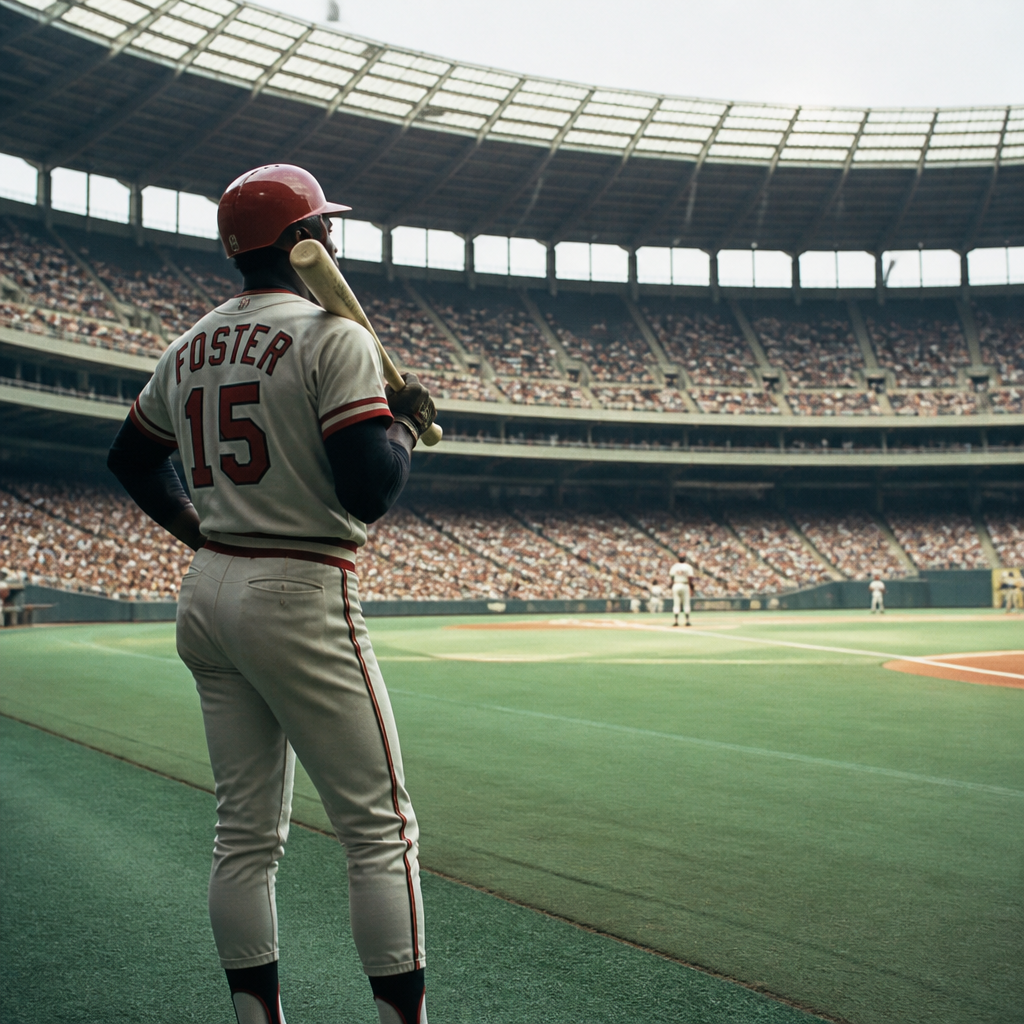
Baseball in the 1970s transformed the sport more dramatically than any decade since integration, turning a tradition-bound game into a modern entertainment business shaped by labor power, stadium design, and expansion. When people discuss Baseball in the 1970s, they usually mean three linked changes: free agency, the spread of artificial turf, and a new style of power hitting and pitching that reflected bigger parks, faster surfaces, and deeper bullpens. This period also sits at the center of Expansion and Free Agency, because league growth, franchise relocation, collective bargaining, and owner-player conflict all changed how teams were built. I have worked through this era’s records, contracts, and game footage enough to know that the decade cannot be reduced to nostalgia for colorful uniforms and mustaches. It was a structural reset. The reserve clause, which had tied players to one club indefinitely, came under direct legal and union pressure. Multi-purpose stadiums installed synthetic surfaces that changed batted-ball behavior, defensive positioning, and roster construction. Meanwhile, front offices began treating home-run power, bullpen leverage, and player mobility as strategic assets rather than incidental traits.
The key terms matter. Free agency means a player’s right to sell his services on the open market after meeting negotiated conditions rather than remaining bound to one team forever. Artificial turf refers to synthetic playing surfaces, most commonly early AstroTurf, used in stadiums such as Riverfront Stadium, Three Rivers Stadium, Veterans Stadium, and Busch Memorial Stadium. Expansion describes the addition of new franchises, including the Seattle Mariners and Toronto Blue Jays in 1977, after the earlier 1969 wave had already enlarged both leagues. New forms of power describes more than home runs. It includes strikeout power from hard-throwing relievers, lineup power concentrated in corner positions, and organizational power exercised by agents and unions. The decade matters because it established the labor market, playing conditions, and roster logic that still define Major League Baseball. If you want to understand why stars change teams, why stadium surfaces once drove style, or why owners and players still negotiate around service time and salary structure, the 1970s provide the blueprint.
Expansion reshaped the map, the schedule, and competitive balance
Expansion and Free Agency are often treated as separate stories, but they reinforced each other from the start. Baseball had already added the Royals, Padres, Expos, and Pilots in 1969, then adjusted to divisional play and the League Championship Series. By the 1970s, owners were learning how expansion fees, television territories, and new markets could increase the sport’s reach even while diluting talent. The Washington Senators became the Texas Rangers in 1972, reflecting the era’s willingness to chase larger media markets. Then, in 1977, the American League added Toronto and Seattle. Those clubs had to build from expansion drafts, marginal trades, and developmental bets, which exposed a major truth: labor rules determine how quickly a new franchise can become competitive.
Before true free agency, expansion teams had little access to established stars in their prime. They depended on protected-list leftovers, aging veterans, and scouting luck. That is one reason early expansion clubs often struggled to pitch, defend, and develop depth. Once free agency arrived, however, new or weak clubs gained a different path. They could spend to shorten the rebuilding cycle, though not every owner chose to. This matters historically because expansion forced baseball to confront a modern question: should teams rise through player development alone, or should markets allow rapid talent redistribution? In practical terms, expansion also increased travel, intensified divisional rivalries, and made front offices more systematic about organization-wide depth. More teams meant more jobs, more roster churn, and more leverage for players who could credibly threaten to sign elsewhere.
The reserve clause collapsed because players and the union forced the issue
The single biggest baseball business story of the decade was the weakening and eventual defeat of the reserve system. For nearly a century, the reserve clause gave clubs continuing rights to a player even after his contract expired. Owners defended it as essential to competitive balance. Players experienced it as a restraint on earnings and freedom. The Major League Baseball Players Association, under Marvin Miller, turned scattered frustration into disciplined collective action. Miller understood labor economics, messaging, and timing. He did not sell fantasy. He taught players how pension rights, salary arbitration, grievance procedures, and bargaining power fit together.
The legal breakthrough came through pitchers Andy Messersmith and Dave McNally. After playing without signing 1975 contracts, they argued they had fulfilled the one-year renewal allowed by the standard contract and should become free agents. Arbitrator Peter Seitz agreed in December 1975. That decision did not create free agency from nothing; it exposed that the clubs’ interpretation of perpetual control could not stand under scrutiny. The 1976 Basic Agreement then established a formal free-agent system tied to service time. In plain terms, players eventually gained the right to choose their employer. That change shifted salary structures immediately. It also changed clubhouse culture, because players began to see themselves as professionals with market value instead of property under indefinite assignment.
Free agency changed salaries, negotiation strategy, and team-building philosophy
Once free agency became real, the market moved fast. Reggie Jackson’s five-year, $2.96 million deal with the Yankees after the 1976 season symbolized the new era, not only because of the money but because a franchise openly used star acquisition as branding, lineup construction, and postseason strategy. Catfish Hunter’s earlier move to the Yankees after an arbitrator voided his Oakland contract had already signaled what elite pitchers could command in an open market. Those deals did not instantly enrich every player, but they reset expectations across the salary ladder. Agents became central actors. Clubs had to forecast aging curves, injury risk, gate revenue, and television impact when making offers.
From a roster-building perspective, free agency created new choices and new mistakes. Wealthier teams could patch weaknesses quickly. Smaller-revenue clubs had stronger incentives to extend stars early, trade them before losing them, or double down on player development. The best front offices learned that buying performance after a career year is dangerous, especially for pitchers with heavy workloads. The worst clubs chased headlines and ignored fit. I have seen the same pattern in every later era: once a market opens, disciplined organizations separate themselves by understanding valuation better than their rivals.
| Change | Before the mid-1970s | After free agency arrived |
|---|---|---|
| Player mobility | Teams controlled players indefinitely through the reserve system | Veterans with service time could negotiate with multiple clubs |
| Salary growth | Raises depended heavily on owner discretion | Market bidding and arbitration pushed salaries upward |
| Expansion strategy | New teams relied mainly on drafts and trades | New teams could target veterans to accelerate credibility |
| Front-office planning | Long control windows reduced urgency | Contract timing, extensions, and replacement planning became essential |
Artificial turf changed how baseball looked, sounded, and was played
Artificial turf was not a cosmetic trend. It altered the game’s physics. Early synthetic surfaces were hard, fast, and less forgiving than natural grass. Ground balls skipped through infields, bad hops behaved differently, and outfielders had to play caroms aggressively. Multi-purpose stadiums, built for both baseball and football, often had symmetrical dimensions, vast foul territory, and indoor or weather-driven design constraints. Houston’s Astrodome introduced the most famous version of the concept, but the 1970s made turf mainstream. Teams such as the Reds, Pirates, Phillies, Cardinals, and Royals all operated in environments where speed and reaction time became critical assets.
On turf, a medium-hard grounder could become a single where it might have died on grass. Middle infielders needed quick first steps and soft hands. Outfielders had to charge balls decisively because the bounce could shoot past them. Offensively, teams could pressure defenses with speed, hit-and-run tactics, and line-drive contact. Defensively, clubs valued range more than ever. Turf also influenced wear and tear. Players complained about joint stress, abrasions, and the toll of repeated impact on knees and backs. Those complaints were not empty resistance to change. The surface genuinely felt different underfoot, and it shaped careers. By changing run creation and defensive expectations, turf became part of the same modernization story as free agency: baseball was no longer a single standardized product from city to city.
New forms of power included home runs, bullpen dominance, and speed amplified by surface
When fans hear power, they think of sluggers, and the decade delivered them. Reggie Jackson, Mike Schmidt, Willie Stargell, Jim Rice, George Foster, and Dave Kingman all represented different versions of game-changing force. Schmidt’s 48 home runs in 1979 showed how third-base power could anchor a modern lineup. Foster’s 52 in 1977 nearly broke Roger Maris’s American League-era cultural hold on the single-season benchmark, even though Foster played in the National League. Yet the 1970s broadened the meaning of baseball power beyond tape-measure shots.
Pitching power became more specialized. Goose Gossage, Rollie Fingers, Sparky Lyle, Bruce Sutter, and others demonstrated that late-inning relief could decide pennant races. Managers increasingly trusted hard throwers or elite out-pitch specialists to finish games, shrinking the importance of the complete game as a universal expectation. Sutter’s split-finger fastball, popularized at the major league level, is a perfect example of innovation becoming competitive power. Meanwhile, turf clubs weaponized speed as a force multiplier. The Big Red Machine and the Royals did not rely on one-dimensional small ball, but they understood that quickness on fast surfaces could turn singles into doubles, force rushed throws, and sustain pressure. In other words, the decade’s new power was multidimensional: the blast, the strikeout, and the sprint all mattered more because teams were designing rosters intentionally.
Teams that mastered the decade combined labor awareness, player development, and tactical fit
The best clubs of the 1970s were not simply richest or luckiest. They aligned philosophy with environment. The Cincinnati Reds built an extraordinary talent core through development and smart transactions, then maximized it in a turf-friendly setting with athletic defenders, deep at-bats, and enough power to overwhelm mistakes. The Oakland Athletics won three straight World Series from 1972 through 1974 with stars such as Jackson, Hunter, and Fingers, but owner Charlie Finley’s cost-conscious battles with players also previewed the coming labor rupture. Oakland proved that elite scouting and bold innovation could build a dynasty, yet the club’s inability to retain harmony showed the limits of owner control in the new age.
The Yankees then illustrated the opposite model: use financial strength to import impact talent, market star personalities, and treat free agency as a competitive weapon. The Pirates blended homegrown excellence with adaptability, winning the 1971 and 1979 World Series in very different baseball climates. The Phillies, Royals, and Dodgers also showed how continuity, strong farm systems, and selective spending could keep a club relevant through rule and market changes. The lesson for Expansion and Free Agency is direct. The 1970s did not make development obsolete. They made integration of development, contracts, and ballpark context mandatory.
Why the 1970s remain the hub for understanding Expansion and Free Agency
Every major baseball labor and roster conversation now traces back to the 1970s. Service-time debates, luxury-tax strategy, arbitration cases, relocation politics, expansion feasibility, and the value of controllable young talent all rest on foundations built in this decade. The era also explains why baseball history should not be divided only by statistical milestones or championship counts. Institutional change matters just as much. Without the Seitz decision, Marvin Miller’s union strategy, and the first wave of major free-agent contracts, today’s player movement would look unrecognizable. Without turf and multi-purpose stadiums, offensive style and defensive metrics would have evolved differently. Without expansion, the market for talent and media rights would have remained narrower.
For readers exploring Baseball Eras, this 1970s hub is the essential starting point for deeper articles on labor battles, expansion franchises, owner strategies, stadium design, and star players who embodied the new market. The decade’s central takeaway is simple: baseball became modern when power changed hands and changed form. Players gained bargaining power. Teams learned to value financial power and tactical power more precisely. Surfaces, parks, and bullpen roles created on-field power in new ways. If you want to understand the game that followed, start here, then keep digging into the teams, cases, and personalities that made the 1970s baseball’s true turning point.
Frequently Asked Questions
How did free agency change baseball in the 1970s?
Free agency changed baseball by shifting power away from owners and toward players in a way the sport had never seen before. For decades, the reserve clause effectively tied a player to one team indefinitely, even after his contract ended. That system began to break down in the mid-1970s, most famously after arbitrator Peter Seitz ruled in favor of pitchers Andy Messersmith and Dave McNally in 1975. The decision opened the door for players to become free agents after playing out their contractual obligations, and the effects were immediate and far-reaching.
Once players gained the right to negotiate on the open market, salaries rose quickly, team-building strategies changed, and front offices had to start thinking like modern businesses. Wealthier clubs could now compete for star talent with money rather than relying only on trades, scouting, or control through the reserve system. Just as important, players and their union, led by Marvin Miller, gained leverage in labor negotiations. That transformed the relationship between management and labor across the entire game.
In practical terms, free agency also changed how fans understood team loyalty and roster continuity. It became more common for stars to change uniforms, and franchises had to sell themselves not only to fans but also to players. The 1970s therefore mark the point when Major League Baseball stopped being simply a tradition-bound institution and became a modern entertainment business shaped by contracts, negotiations, and market value.
Why was artificial turf such a big story in 1970s baseball?
Artificial turf became one of the defining symbols of 1970s baseball because it reflected larger changes in stadium design, economics, and style of play. Many multipurpose stadiums built in the 1960s and 1970s were designed to host both baseball and football, and artificial surfaces were easier to maintain under heavy use. Teams in cities with indoor or weather-challenged environments also saw turf as a practical solution. The result was a fast, hard playing surface that looked futuristic at the time and fit the era’s embrace of modernized sports facilities.
On the field, turf dramatically altered how baseball was played. Ground balls moved faster, bad hops behaved differently, and speed became even more valuable. Teams that could put pressure on defenses with quick runners, line drives, and aggressive baserunning often thrived in turf environments. Defenders had less time to react, and infields played notably quicker than on natural grass. This helped encourage a style of baseball associated with clubs like the Kansas City Royals, St. Louis Cardinals, and Cincinnati Reds, where athleticism, range, and contact hitting could be just as dangerous as pure slugging.
Artificial turf also had a downside. Players frequently complained that it was harder on their bodies, contributing to sore joints, turf burns, and a different physical wear-and-tear than grass fields produced. So while turf symbolized modernization and flexibility, it also became part of a larger debate about whether efficiency and spectacle were being prioritized over player comfort and traditional baseball aesthetics. That tension helps explain why turf remains such an important topic in any discussion of baseball in the 1970s.
What does “new forms of power” mean in the context of 1970s baseball?
In the 1970s, “new forms of power” refers to both literal power on the field and institutional power off it. On the field, the decade saw an evolving offensive and pitching environment shaped by larger ballparks, artificial turf, specialized bullpens, and changing roster construction. Home run hitters still mattered enormously, but power was no longer just about traditional sluggers launching towering drives. It also showed up in harder throwing relievers, pitchers with shorter but more explosive outings, and offenses that generated pressure through speed, extra-base hits, and the ability to force mistakes on fast surfaces.
Teams increasingly built around a broader understanding of what made an opponent vulnerable. In some parks, especially cookie-cutter multipurpose stadiums, the dimensions and conditions rewarded line drives into gaps, quick first steps, and pitchers who could induce weak contact. Bullpens grew in importance, with managers relying more heavily on relief specialists to protect leads. That represented a subtle but major shift in the balance of games: power was being redistributed from complete-game starters and middle-of-the-order sluggers to deeper staffs and more flexible offensive systems.
Off the field, “new forms of power” also captures the rise of the players’ union, the influence of arbitration and free agency, and the growing role of television revenue and business strategy. In other words, power in 1970s baseball was not only about who hit the longest home runs. It was about who controlled careers, who shaped payrolls, who designed ballparks, and who decided what kind of game baseball would become. That is why the decade feels so pivotal: it redefined power in every sense.
How did 1970s stadiums and playing conditions influence strategy?
Stadiums in the 1970s had a major impact on strategy because many new venues were multipurpose facilities with symmetrical outfields, large foul territories, and surfaces very different from classic ballparks. The architecture of the era often emphasized functionality over charm, and that changed how teams thought about run scoring and defense. Bigger parks could suppress some types of home run power while rewarding speed, outfield range, and gap hitting. Meanwhile, artificial turf made infield play faster and increased the value of putting the ball in play.
Managers adapted by emphasizing roster versatility. Clubs wanted defenders who could cover more ground, outfielders who could chase balls in expansive alleys, and middle infielders with quick hands on hard surfaces. Offensively, line-drive hitters and aggressive baserunners could create chaos in ways that were less common on slower natural grass fields. Turf also encouraged strategic experimentation, including hit-and-run play, stolen bases, and pressure tactics designed to exploit hurried defensive decisions.
Pitching strategy evolved as well. As offenses diversified and conditions varied from park to park, bullpens became more central to game planning. Managers increasingly matched relievers to situations, preserving narrow leads with specialists rather than expecting every starter to finish what he began. This was an important bridge to the more bullpen-oriented baseball that would define later decades. In that sense, 1970s stadiums did not just change the appearance of the sport. They changed the logic of roster construction, in-game tactics, and the overall rhythm of competition.
Why is baseball in the 1970s considered such a turning point in the sport’s history?
Baseball in the 1970s is considered a turning point because the decade fundamentally reshaped the sport’s economics, labor structure, visual identity, and style of play all at once. Earlier eras certainly had major changes, especially integration beginning in the late 1940s, but the 1970s brought a cluster of transformations that touched nearly every part of the game. Free agency altered the business model, artificial turf and multipurpose stadiums changed the playing environment, and evolving strategies around power, speed, and bullpen usage pushed baseball toward a more modern form.
This was also the decade when the sport became more openly commercial and nationally marketable. Television, expanding fan bases, franchise movement, and the growth of player salaries all helped redefine baseball as a major entertainment industry rather than simply a local civic institution. Teams and players were no longer operating within the old assumptions of owner control and relatively stable rosters. Instead, the game became more mobile, more negotiated, and more visibly shaped by money and media.
Just as importantly, the 1970s sit at the center of larger historical conversations about labor rights, modernization, and cultural change in American sports. The rise of the Major League Baseball Players Association gave athletes a stronger collective voice. New stadiums reflected urban planning and business trends. Changes in playing style mirrored the conditions created by those spaces. Put together, these developments make the decade feel like a hinge point between old baseball and modern baseball. If you want to understand how the contemporary game took shape, the 1970s are one of the most important places to start.