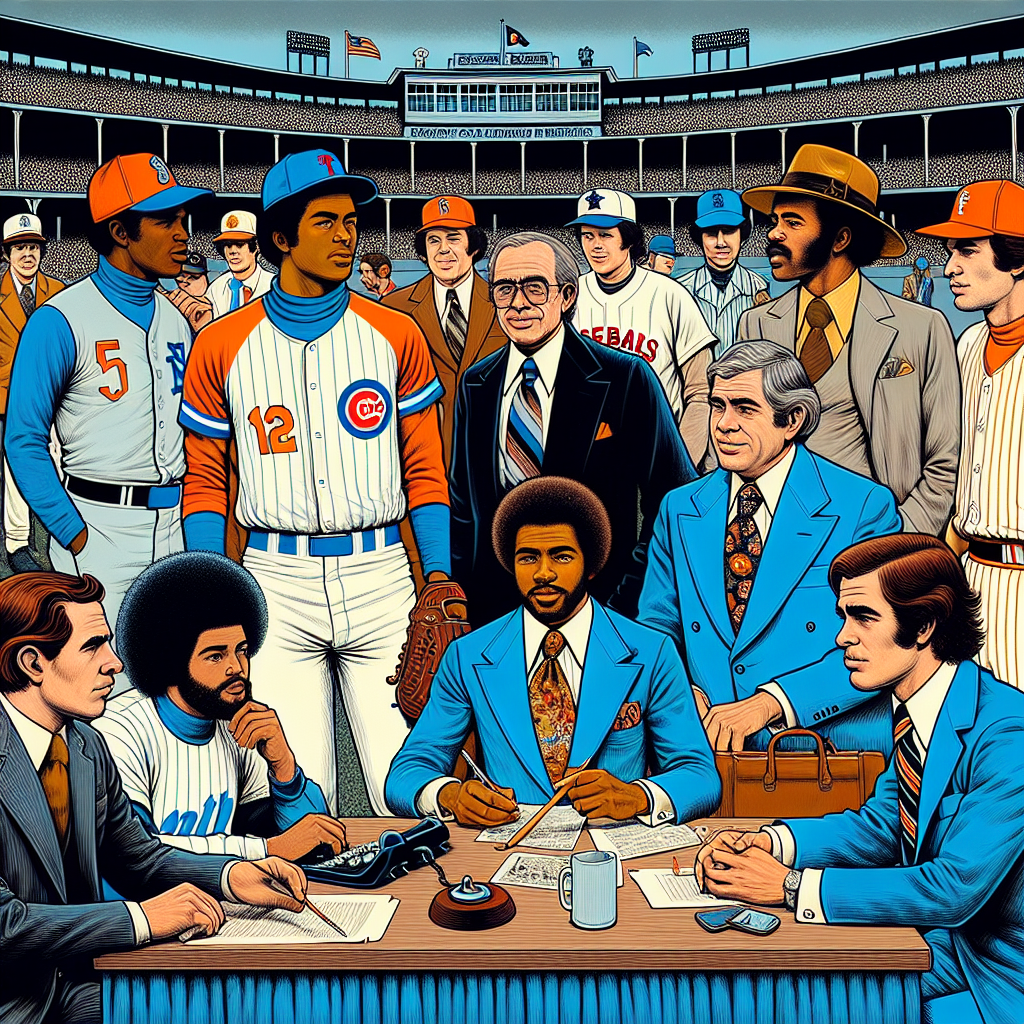
The 1970s were a transformative and tumultuous decade for Major League Baseball (MLB), marked by a pivotal shift in the balance of power between team owners and players. During this era, baseball was forced to grapple with new concepts of economic fairness and player autonomy. The lingering traces of the reserve clause, which bound players to their teams even after their contracts ended, were beginning to erode. This period was characterized by legal battles, intense negotiations, and the emergence of free agency—a system that would forever change the dynamics of America’s favorite pastime.
Baseball players during this time were growing increasingly vocal about their right to negotiate their worth, something previously out of reach due to the restrictive nature of the reserve clause. This old system had maintained a status quo heavily tilted in favor of team owners, who wielded almost unparalleled control over player careers and salaries. The players’ quest for free agency turned into a broader struggle for workers’ rights, emblematic of wider societal contractions concerning personal liberties and fair compensation.
The transformation from the 1970s was not just about economics—it was deeply woven into the cultural fabric of the time. Players began to take on roles as public figures advocating for change, garnering support from both fans and fellow athletes in other sports. Baseball became a microcosm of the significant socio-political upheavals occurring in America, reflecting debates on unionization, labor laws, and individual freedom. As baseball evolved through the decade, it set a precedent in the world of sports regarding athletes’ rights, and their impact reverberated beyond the ballpark.
The Reserve Clause and Its Dismantling
At the heart of baseball’s struggle with player rights in the 1970s was the reserve clause—a contract stipulation that effectively chained players to one team indefinitely. Initially introduced in the 19th century, the clause allowed teams to renew player contracts without the player’s consent, preventing them from negotiating with other teams even after their contract term expired. This system kept player salaries artificially low and ensured team owners maintained control over the labor market within baseball.
However, by the 1970s, the winds of change were clearly blowing. Players began to challenge the justice of the reserve clause, and legal battles became inevitable. One of the landmark cases involved Curt Flood, an All-Star centerfielder who, in 1969, refused a trade from the St. Louis Cardinals to the Philadelphia Phillies, citing that the reserve clause was tantamount to slavery. Although Flood’s case against MLB ultimately failed in a Supreme Court decision in 1972, it significantly raised awareness and turned public sentiment against the reserve clause.
The atmosphere was ripe for change, with growing pressure from players and the Players Association, led by labor leader Marvin Miller, to reform this unjust system. In 1975, pitchers Andy Messersmith and Dave McNally took the reserve clause head-on by playing a season without signing a contract, resulting in an arbitration ruling that effectively abolished the clause for them. This landmark event opened the doors to free agency, setting a precedent that would redefine player contracts and team-owner relations forever.
The Introduction of Free Agency
The introduction of free agency in the mid-1970s was a game-changer for Major League Baseball. This shift allowed players to declare themselves free agents after six years of service with a team, granting them the freedom to negotiate with any franchise for their services. The immediate effect of free agency was a dramatic increase in player salaries, as teams now had to bid competitively for top talent.
For players, this was a monumental victory. For the first time, they were able to command their true market value. Stars like Reggie Jackson, Catfish Hunter, and later, players like Nolan Ryan, benefited greatly from the new system, signing lucrative contracts that were unheard of under the thumb of the reserve clause. Players gained unprecedented leverage, which also translated into increased respect and negotiating power in both contract disputes and endorsement deals.
However, team owners faced challenges to their traditional business model. The absence of the reserve clause meant escalating salary expenses and a need to adjust to the rapidly evolving marketplace. Some owners feared that free agency would lead to financial instability or imbalance within the league, with wealthier franchises stockpiling talent at the expense of smaller-market teams.
Despite these concerns, free agency ultimately contributed to a more dynamic and equitable league, where players had both a voice and a choice. The economic realities of professional sports began to reflect modern values of fairness, and player empowerment became a central narrative in sports discourse.
Labor Strikes and Negotiation Battles
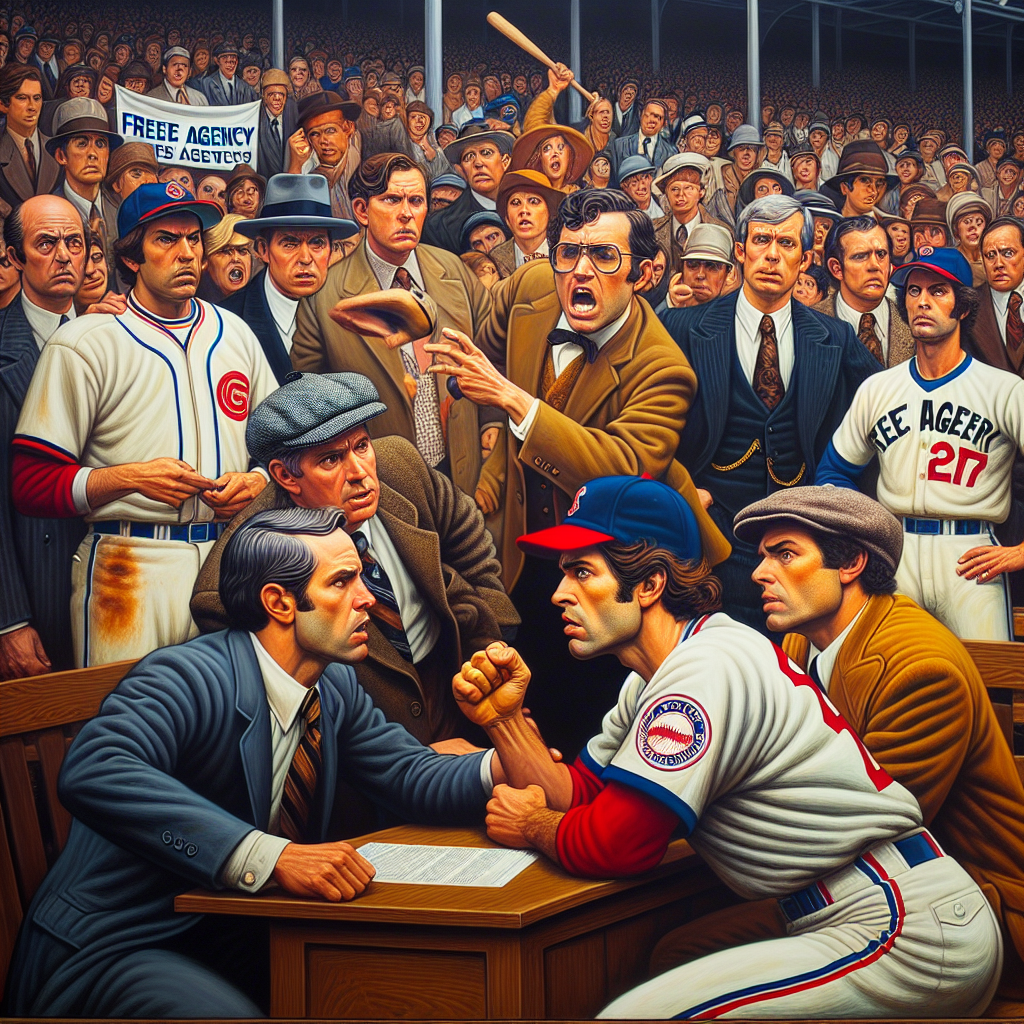
The 1970s were not just defined by the advent of free agency, but also notable for increasing tensions between players and owners, culminating in labor strikes and contentious negotiations. The newfound player empowerment came with its own set of challenges, as owners sought to contain costs and maintain competitive balance.
The Baseball Players Association, under Marvin Miller’s leadership, became a powerful force advocating for players’ rights. The increased union strength and player solidarity were put to the test during the labor disputes of 1972 and 1976. The 1972 strike was MLB’s first-ever players’ strike, a brief walkout that underscored the players’ anger over the reserve system and their quest for fair compensation increases.
In 1976, another pivotal moment saw a more prolonged labor confrontation, related explicitly to the finalization and implementation of free agency terms. The players held firm under intense pressure, and their perseverance resulted in the Basic Agreement, which included fundamental guidelines for free agency, salary arbitration, and the expansion of pension benefits.
These strikes and negotiations illuminated the shifting power dynamics within baseball, positioning players as significant stakeholders with a voice that could not be easily dismissed. The solidarity shown by players during these labor disputes played a crucial role in shaping modern labor-management relations within sports and extending influence into other industries.
Impact on Team Dynamics and Fan Reception
The seismic changes brought about by free agency and the players’ rights movement had profound effects on team dynamics and fan perceptions. With players now able to test the open market, team rosters became more fluid. The era of longer player tenures with a single team seemed to wane, and fans had to adjust to seeing favorite players don different team colors.
Initially, the concept of player mobility faced skepticism and resistance from traditionalists who bemoaned the loss of player loyalty. However, over time, free agency’s positive aspects became more apparent. Teams gained the ability to swiftly rebuild and adapt, leading to increased competitive parity across the league. Small-market teams found ways to innovate strategically, focusing on player development and scouting to stay competitive.
For fans, free agency brought new excitement as off-seasons turned into spectacles of anticipation and speculation, with potential blockbuster signings and trades capturing the public imagination. Although some fans remained nostalgic for a bygone era of lifelong team loyalty, others embraced the evolving nature of baseball as part of the sport’s ongoing narrative.
The impact of free agency rippled beyond team dynamics, reshaping baseball’s culture into a more player-centric sport. Fans began to identify with players’ individuality and their pursuit of excellence across different teams. The process cultivated a modern sports environment where player stories became integral to the ongoing dialogue of each season.
Consequences Beyond Baseball
The transformations in baseball during the 1970s extended far beyond the confines of the diamond, influencing broader social and economic trends. The struggle for free agency paralleled the larger labor rights movements of the era, highlighting issues of worker empowerment and corporate control across industries.
Baseball’s evolution played a vital role in shaping labor relations within professional sports, inspiring athletes in other leagues to seek similar freedoms and reforms. The National Football League and the National Basketball Association each looked to baseball as a blueprint for fostering discussions around player rights, team flexibility, and financial equity.
These changes in sports labor relations reflected major legislative and social shifts happening across America. The rise of free agency contributed to broader discourses on personal rights, economic justice, and anti-establishment sentiments. Baseball’s experience offered a compelling case study in understanding how workers in any field could challenge traditional systems of control to gain dignity and autonomy.
Moreover, the developments in baseball showcased the power of collective bargaining and the importance of solidarity among workers. As players stood united in their battles against team owners, their unity demonstrated the potential for fundamentally reshaping entrenched power structures, providing lessons that transcended the realm of sports.
Conclusion: The Lasting Legacy of the 1970s
The 1970s marked an epochal chapter in the annals of Major League Baseball, characterized by the intense struggle for player rights and the advent of free agency. This period of significant upheaval brought about reforms that fundamentally transformed the business of baseball, balancing the scales of power between players and owners and injecting new life into America’s pastime.
Although initially fraught with conflict and resistance, these changes ushered in a more equitable era—one in which players could exercise their right to choose their paths and teams had to adapt to new competitive realities. The outcomes reached during this century’s closing decades highlight the profound influence of advocacy, negotiation, and unity in achieving meaningful systemic change.
The lessons from this transformative time resonate today, as the principles forged in baseball’s free agency battles have become touchstones for labor rights across professional sports and other industries. The struggle fundamentally shaped how players interact with teams, how teams build rosters, and how fans engage with the sport.
The 1970s serve as a powerful reminder of the potential to effect change when individuals rally together for fairness and rights, making baseball not just a game, but a platform for broader social reflection. The legacy of these changes continues to influence contemporary discussions around labor relations, offering enduring insights into the balance and interplay of power, rights, and freedom.