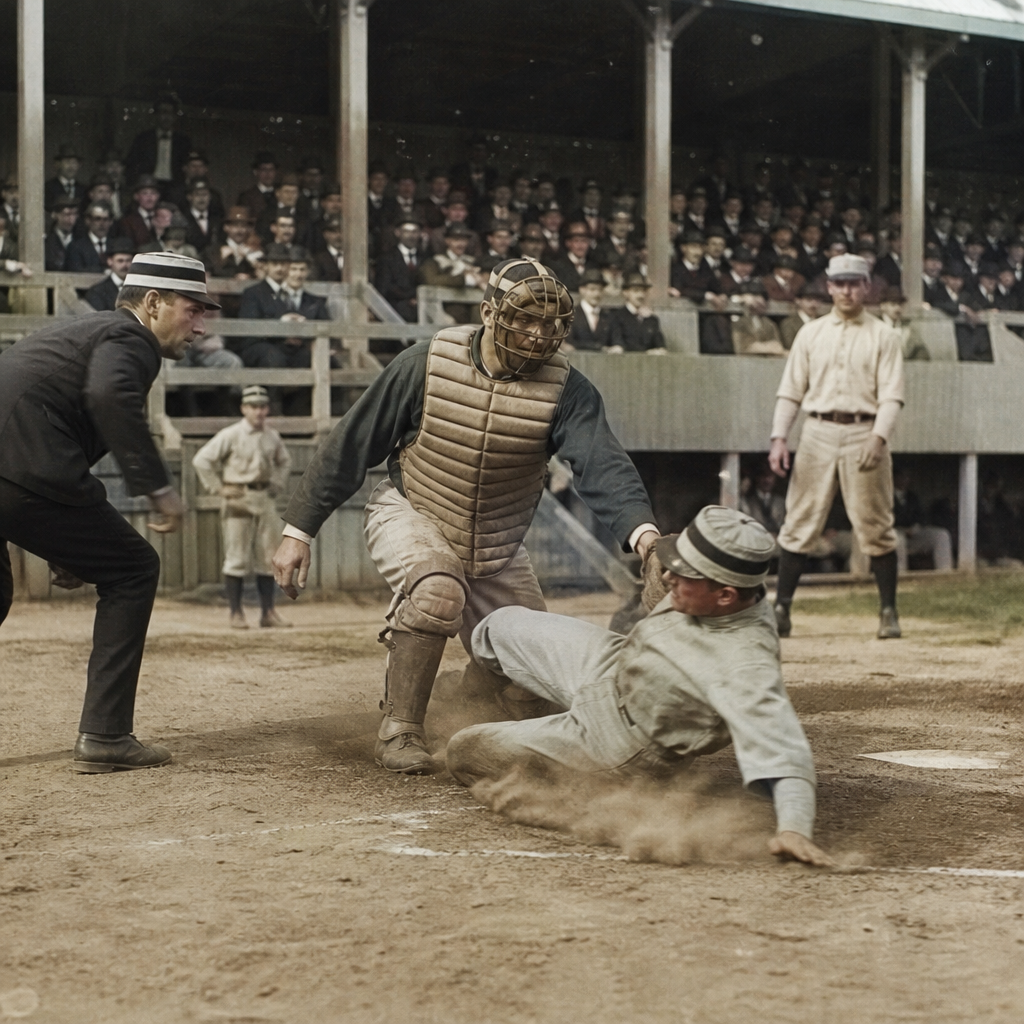
Baseball in the 1890s was noisy, improvisational, commercially ambitious, and far closer to the modern sport than many fans realize. The decade sat at the hinge point between rough-edged nineteenth-century baseball and the more standardized major league game that emerged in the twentieth century. To understand why the 1890s matter, it helps to define the forces shaping the era: rowdy play referred to aggressive baserunning, bench-jockeying, collisions, trick tactics, and frequent arguments with umpires; rule experiments meant active changes to pitching distance, foul strike treatment, roster structure, and league governance; and the road to the modern game describes the long transition from loosely organized professional clubs toward a regulated national entertainment business. When I work through nineteenth-century box scores, rule books, and sporting papers, the 1890s always stand out because so many familiar features of baseball took durable form then. The National League consolidated power, the Players’ League briefly challenged ownership control, the American Association disappeared, and ballparks became major urban attractions tied to transit lines and newspaper coverage. Stars such as Cy Young, Cap Anson, King Kelly, Ed Delahanty, Hugh Duffy, John McGraw, and Wee Willie Keeler turned the game into personality-driven spectacle. At the same time, the decade exposed baseball’s deep faults, including gambling concerns, uneven umpiring, labor conflict, and the hard color line that kept Black stars out of the major leagues. As a hub for the 19th Century within Baseball Eras, this article connects the final phase of nineteenth-century baseball to what came before: the amateur origins of the 1840s and 1850s, the Civil War era spread of the game, the rise of professionalism in the 1870s, and the major league instability of the 1880s. The 1890s did not appear out of nowhere. They were the culmination of fifty years of experimentation, and they supplied the structures, expectations, and tensions that the next era inherited.
The 1890s in context: how 19th-century baseball reached a turning point
By 1890, baseball had already passed through several distinct nineteenth-century stages. Early clubs such as the Knickerbockers treated the sport as a gentleman’s pastime governed by local custom. After the Civil War, the game spread nationally, and paid players became an open secret before professionalism was formally accepted. The National Association of Professional Base Ball Players, founded in 1871, proved that professional baseball could draw crowds, but it also showed how weak central authority could undermine credibility. The National League, formed in 1876, responded with tighter scheduling, membership standards, and owner control. Yet even that league faced rivals, franchise collapses, player revolts, and public skepticism through the 1880s.
The 1890s inherited all of those unresolved issues. Clubs still depended heavily on gate receipts. Travel remained demanding despite improving rail networks. Contracts bound players tightly through the reserve system, which restricted movement and salaries. Fan behavior could be unruly, and many ballparks lacked the safety features and crowd management practices later considered basic. Newspapers were central to the sport’s popularity, but sportswriters also amplified feuds and controversies. In other words, the decade began with baseball popular but unsettled.
That instability created the conditions for innovation. Owners wanted reliable profits, so they pushed for standard rules and stronger league discipline. Players wanted leverage and better pay, so they tested collective action. Fans wanted action, speed, and drama, so teams rewarded daring baserunning and tactical offense. Because all of those pressures converged at once, the 1890s became one of the most consequential laboratories in baseball history.
Rowdy play: why the game looked rougher, faster, and more confrontational
If a modern viewer dropped into a major league game from 1893 or 1897, the first surprise would be the texture of play. Baseball then was not merely strategic; it was openly combative. Baserunners crashed into fielders, infielders blocked paths, catchers absorbed punishment at the plate, and players relentlessly tested umpires with verbal pressure. Bench-jockeying was constant. So were hidden-ball tricks, dekes, delayed steals, and attempts to rattle opponents psychologically.
Part of that rowdiness reflected the rules and equipment. Gloves were improving but still offered less protection and web support than modern designs. Fields were often uneven, with unpredictable hops that rewarded quick reactions and nerve. Fences, foul territory dimensions, and ground conditions varied widely from park to park. Umpiring crews were smaller, which meant one or two officials had to police a game full of close plays, crowd noise, and deliberate gamesmanship. Under those conditions, players stretched every edge.
The style also reflected what teams believed won games. The 1890s prized the hit-and-run mindset before the term became common language. Clubs emphasized bunting, chopping the ball, taking extra bases, and forcing hurried throws. Baltimore’s great teams under Ned Hanlon became famous for precisely this style. With players such as John McGraw, Hughie Jennings, and Willie Keeler, the Orioles mastered aggressive baserunning and situational hitting. Their approach looked chaotic, but it was drilled and intentional. They pressured defenses into mistakes, and in a high-error environment, that pressure was often decisive.
Fans loved the spectacle, but critics frequently complained that the sport bordered on disorder. Sporting papers described fights, crowd invasions, and endless arguments. Owners worried that too much roughness hurt baseball’s respectability, especially as they courted middle-class audiences and families. That tension between spectacle and control became a defining feature of the decade and a major reason rules kept changing.
Rule experiments that reshaped the sport
The single most important rules shift of the 1890s was the 1893 move of the pitcher’s box to a pitching plate set sixty feet six inches from home. Before that change, pitchers worked from a shorter distance, and even earlier they had been more restricted in delivery style. The 1893 adjustment radically altered the contest between pitcher and batter. From my experience comparing statistics before and after the change, this is the decade’s clearest line of demarcation. Offense jumped because hitters gained more reaction time, while pitchers had to develop better command, movement, and deception rather than relying as heavily on raw proximity.
Other experiments mattered too. The infield fly rule had arrived earlier, but its spirit fit the decade’s drive to curb cheap tricks. The foul strike rule, adopted in the National League in 1901 after long debate in the 1890s and used in some contexts earlier, grew from dissatisfaction with batters endlessly spoiling pitches. Discussions over roster size, coaching from the baselines, umpire authority, and player conduct all intensified in these years. Even when a proposed rule did not stick immediately, the 1890s usually supplied the argument that later carried it through.
| Change or debate | Why it mattered | Effect on the modern game |
|---|---|---|
| 1893 pitching distance set at 60’6″ | Balanced pitcher and batter after years of pitcher dominance swings | Still the standard distance in professional baseball |
| Stronger umpire authority discussions | Reduced delays, disputes, and intimidation | Supported the modern expectation of centralized game control |
| Ongoing foul strike debate | Addressed stalling and endless defensive batting tactics | Helped define the strike zone battle of the twentieth century |
| Conduct and rough-play scrutiny | Protected spectatorship and league reputation | Encouraged safer, more orderly professional standards |
These rule experiments were not abstract legal tweaks. They changed roster construction, strategy, and even the fan experience. When pitching distance increased, clubs needed fielders who could handle more balls in play. When umpire authority grew, theatrical intimidation became riskier. When league officials pushed back on stalling tactics, games moved more crisply. The modern sport’s rhythm began emerging through these adjustments.
Leagues, labor, and business: baseball becomes a modern industry
No account of baseball in the 1890s is complete without the Players’ League of 1890. Led in spirit by the Brotherhood of Professional Base Ball Players and figures such as John Montgomery Ward, the league challenged the reserve system and owner dominance. It drew real talent and public interest, proving that players could organize and that fans would support a credible alternative. But the new circuit was expensive, divided management attention, and collapsed after one season. Even in failure, it changed baseball. Owners learned they faced serious labor resistance, and players learned how difficult it was to sustain a rival league without deep capital and unified leadership.
The decade also brought contraction and consolidation. The American Association, once a major competitor, disappeared after the 1891 season, leaving the National League in a stronger position. By the end of the 1890s, the league controlled a twelve-club circuit but also faced criticism for syndicate ownership, in which the same interests controlled multiple teams. That practice damaged competitive balance and public trust. When one ownership group effectively influenced player movement between clubs, pennant races looked less legitimate.
Business methods improved anyway. Clubs marketed star players, sold scorecards, scheduled Ladies’ Days, and tied attendance to streetcar access. Urban growth mattered enormously. Boston, Baltimore, Cleveland, Chicago, New York, Philadelphia, and St. Louis could support larger crowds because transportation and newspaper networks connected neighborhoods to ballparks. Baseball was becoming a repeatable city entertainment product, not just a local novelty. That transformation is one of the clearest bridges from nineteenth-century baseball to the major league business model that followed.
Stars, tactics, and the personalities that defined the decade
The 1890s were rich with players whose reputations still anchor baseball history. Cy Young debuted in 1890 and quickly became a model of durability and command. His career stretched far beyond the decade, but the 1890s established his stature. Ed Delahanty blended power and batting skill in a way that made him one of the era’s most feared hitters. Hugh Duffy’s remarkable 1894 season, when he batted .440 in the high-offense environment of the time, remains one of the most discussed batting marks in the record book. Wee Willie Keeler became the emblem of precision hitting with his famous philosophy of placing the ball where fielders were not.
Then there was John McGraw, who represented both the brilliance and abrasiveness of the age. As a player with Baltimore, he crowded the line between legal gamesmanship and outright needling. That edge was not unique to him, but he embodied it. Ned Hanlon’s Orioles turned such behavior into organized advantage, using hit-and-run tactics, steals, bunts, and situational pressure more coherently than most rivals. Their style showed that rowdy baseball was not merely spontaneous disorder. It could be systematized into winning strategy.
The decade also preserved older stars from earlier nineteenth-century phases. Cap Anson linked the 1870s and 1880s to the 1890s, even as age and controversy followed him. King Kelly remained a symbol of baseball celebrity culture, known as much for flair and public persona as for on-field talent. This mix of aging icons and rising specialists gave the decade unusual texture: baseball was modernizing without fully letting go of its theatrical, less regulated past.
The color line, exclusion, and the limits of progress
Any serious hub on nineteenth-century baseball must be clear about what the 1890s excluded. By the end of the nineteenth century, the color line in organized white professional baseball was firmly entrenched. Black players who had appeared in high-level professional settings in the 1880s, including Moses Fleetwood Walker, were followed not by wider inclusion but by deeper exclusion. Informal agreements, racism among owners and players, and broader social discrimination blocked Black athletes from the major leagues.
That exclusion did not reflect a lack of talent. Black baseball thrived in independent clubs, barnstorming circuits, and local powerhouses. When studying the period, I always emphasize that the story of nineteenth-century baseball is incomplete if told only through National League standings. The sport’s development also took place outside official major league structures, among players denied access to them. The road to the modern game included not just innovation and standardization, but also segregation whose consequences lasted generations.
Other inequalities mattered too. Labor rights were weak, medical care was limited, and players had little long-term security once performance declined. Even celebrated stars could be financially vulnerable after retirement. So while the 1890s helped build modern baseball, they did not produce a fair or fully professionalized system by present standards.
Why the 1890s are the bridge to the twentieth century
The strongest case for the 1890s as baseball’s hinge decade is simple: the core architecture of the modern game became recognizable then. Pitching distance settled into the familiar form. League governance, though imperfect, moved toward centralized authority. Clubs increasingly treated attendance, scheduling, publicity, and ballpark access as parts of one business model. Tactical play still featured bunts and steals more heavily than today, yet the logic of exploiting matchups, controlling pace, and maximizing roster roles was already visible.
Just as important, the problems of the next era were already on the table. How much power should owners hold over players? How should leagues police integrity and gambling? What level of roughness would spectators tolerate? How could baseball expand nationally while maintaining competitive balance? Those questions did not vanish in 1900. The 1890s framed them in ways the twentieth century spent decades answering.
For readers exploring the broader Baseball Eras theme, this 19th Century hub is the essential launching point. It connects the amateur beginnings of the game, the rise of professionalism, the league wars of the 1880s, and the sharpened commercial structure of the 1890s into one continuous story. The decade’s rowdy play gave baseball energy, its rule experiments gave baseball structure, and its business conflicts gave baseball a durable institutional shape. To understand how the modern game came to look, feel, and operate as it does, start here, then trace the earlier nineteenth-century roots and the twentieth-century reforms that followed.
Frequently Asked Questions
Why is baseball in the 1890s considered such an important turning point in the sport’s history?
Baseball in the 1890s matters because it sits directly between the game’s rough nineteenth-century origins and the more disciplined, standardized major league structure that fans would recognize in the twentieth century. It was still loud, combative, and improvisational, but many of the pressures that define modern baseball were already in place: league organization, commercial competition, rule tinkering, media attention, and growing expectations for consistency. In other words, the sport had not yet lost its rough edges, but it was moving steadily toward a more regulated and professional form.
This was a decade when owners, league officials, players, and spectators were all pushing the game in different directions at once. Teams wanted to win and draw crowds, which encouraged spectacle and gamesmanship. Players took advantage of loose enforcement and evolving rules, often stretching tactics to the limit. At the same time, league leaders were experimenting with reforms meant to make play fairer, cleaner, and more appealing to paying customers. That tension between chaos and order is what makes the 1890s so significant. The decade did not simply preserve old baseball traditions; it actively tested what kind of sport baseball was going to become.
What did “rowdy play” actually look like in 1890s baseball?
“Rowdy play” in the 1890s was not just a colorful phrase. It described a real style of baseball that was aggressive, argumentative, and often theatrical. On the bases, runners challenged fielders physically and mentally, taking wide turns, sliding hard, trying to distract defenders, and forcing hurried plays. At home plate and around the bags, collisions were more common and more accepted than they are today. Players also relied on deception whenever possible, using hidden-ball tricks, fake throws, decoy movements, and clever misdirection to create outs or extra bases.
Just as important was the verbal side of the game. Bench-jockeying, taunting, and constant chatter were part of the competitive atmosphere. Players argued calls, challenged umpires, and tried to unsettle opponents through noise and pressure. Crowds often joined in, giving games an unruly energy that could quickly escalate when a close call or controversial play occurred. Umpires worked in a difficult environment where authority was not always firmly established, and disputes could become central to the drama of a contest. This style of play reflected a sport that still embraced confrontation as part of its identity, even as officials increasingly tried to impose order.
What kinds of rule experiments shaped baseball during the 1890s?
The 1890s were a crucial decade for rule experimentation because baseball was trying to solve practical problems while also improving the quality and marketability of the game. Officials adjusted and refined rules to reduce confusion, limit abuses, and create a more balanced contest between pitchers and hitters. One of the most important developments of the broader era was the movement toward the modern pitching distance, which reduced some of the pitcher’s earlier mechanical advantages and helped reshape offensive strategy. The strike zone, foul rules, and other procedural details also remained subjects of attention, showing that the sport was still defining its modern framework.
These experiments were not abstract. They came directly from the way the game was being played on the field. If pitchers dominated too completely, if batters exploited loopholes, or if games became bogged down by argument and stalling, the rulebook became a tool for correction. The 1890s therefore represent a living laboratory in which baseball responded to its own excesses. Some changes stuck because they improved pace, fairness, or spectator enjoyment; others revealed just how difficult it was to legislate a fast-evolving sport. That process of testing, revising, and standardizing is one of the clearest reasons the decade points toward the modern game.
How close was 1890s baseball to the modern version fans know today?
It was closer than many people assume. While uniforms, equipment, ballparks, and player behavior could look dramatically different, the basic structure of competitive professional baseball was becoming familiar. Teams were operating in established leagues, pennant races mattered deeply, stars drew public attention, and the business side of the sport was increasingly important. Fans were already following standings, debating tactics, and reacting to controversial officiating in ways that feel recognizable today. The game was no longer just a loose pastime; it was becoming a mass spectator product with growing expectations around consistency and legitimacy.
At the same time, the differences are what make the 1890s so fascinating. Players had more freedom to improvise, games could be rougher and more disorderly, and the boundaries of acceptable conduct were far less settled. Strategies often reflected a transitional game, one in which old habits from earlier decades coexisted with the emerging logic of modern professional baseball. That is why the decade is best understood not as fully modern, but as decisively modernizing. Many of the institutions, assumptions, and competitive patterns central to twentieth-century baseball were already visible, even if they were still wrapped in the noise and unpredictability of nineteenth-century play.
Why were commercialization and spectator appeal so important to baseball’s development in the 1890s?
Commercial ambition was a major force shaping baseball in the 1890s because the sport increasingly depended on drawing paying crowds and sustaining league stability. Owners and organizers understood that exciting games, recognizable stars, and intense rivalries could translate into revenue. That economic pressure affected everything from scheduling and promotion to discipline and rule enforcement. A lively, emotional ballpark atmosphere could be good for business, but too much disorder could damage the sport’s credibility. Baseball therefore had to balance entertainment with respectability, especially as it competed for public attention in growing urban markets.
This helps explain why the decade was so important in the road to the modern game. Commercial success demanded a product that people wanted to watch repeatedly, not just occasionally. That meant making contests compelling without allowing them to dissolve into chaos. It also meant presenting baseball as a serious professional enterprise rather than a loosely managed spectacle. The 1890s show this balance being negotiated in real time: rough play still drew excitement, but standardization, stronger governance, and clearer rules increasingly looked necessary for long-term growth. In that sense, commercialization did not merely accompany baseball’s evolution; it actively drove the sport toward the more organized and recognizable form it would later take.