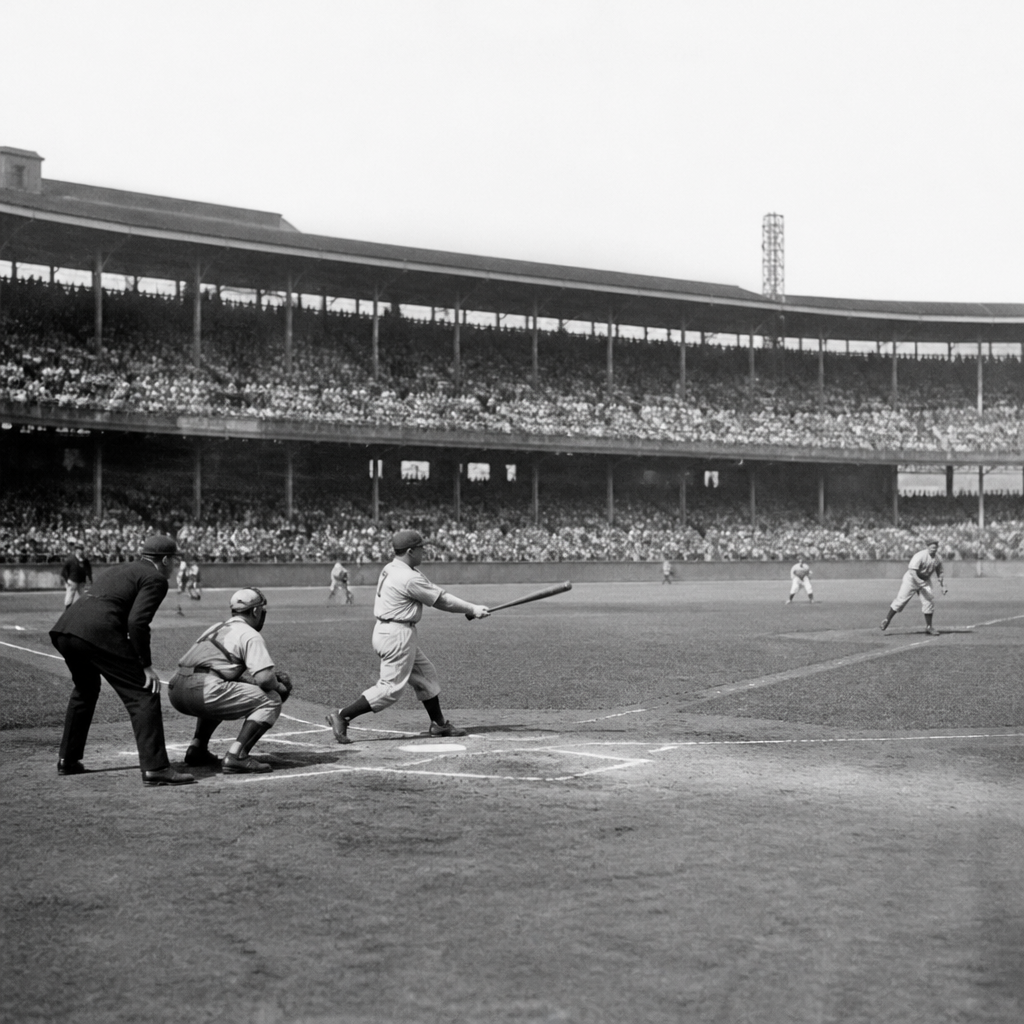
Baseball from 1901 to 1909 marks the moment the modern major league structure truly solidified, as the American League rose from ambitious rival to equal partner and the two-league system took hold across the United States. In this period, often treated as the opening phase of the Deadball Era, professional baseball established the organizational framework, style of play, labor patterns, and championship rituals that would define the sport for decades. The term “Deadball Era” usually refers to roughly 1900 through 1919, a time when scoring tended to be lower, home runs were scarce, bunting and base stealing carried unusual value, and pitchers, field conditions, and ball construction all tilted the game toward tight margins. For anyone studying baseball eras, the years 1901 to 1909 are the essential hub because they explain how league peace replaced open warfare, how the World Series became credible, and how stars such as Honus Wagner, Cy Young, Nap Lajoie, Christy Mathewson, and Ty Cobb shaped a distinct competitive culture. I keep returning to this decade when explaining baseball history because later developments make far more sense once you see how quickly owners, players, writers, and fans accepted two stable major leagues as the sport’s governing reality.
Before 1901, the National League had survived as the senior circuit, but the broader professional game was unstable, fractured, and frequently territorial. Ban Johnson, president of the Western League, recognized that dissatisfaction with National League management created an opening. He renamed his circuit the American League and, after challenging National League clubs directly, placed teams in major cities such as Boston, Chicago, Philadelphia, and Washington. The result was not simply expansion; it was a structural reset. Players jumped contracts, clubs competed for urban markets, and fans suddenly had meaningful alternatives. By 1903, the National Agreement between the leagues reduced conflict and recognized a workable coexistence. That agreement matters as much as any pennant race because it created enforceable relations among leagues, clarified player movement, and encouraged financial confidence. Once investors believed the top tier of baseball would remain intact, attendance, stadium development, and newspaper attention followed.
This era also matters because style and structure evolved together. The two-league system was not just an administrative arrangement; it rewarded a certain kind of baseball. Rosters were smaller, travel was harder, medical care was primitive, and the baseball itself was often softer and reused longer than modern fans would expect. In that environment, managers prized contact hitting, hit-and-run execution, bunting, aggressive baserunning, and durable pitching. Defensive reliability could swing pennants. A muddy infield or a misshapen ball changed strategy inning by inning. When modern readers hear “Deadball Era,” they sometimes assume dull, low-scoring games. In reality, the baseball from 1901 to 1909 was tactically rich, emotionally volatile, and intensely local. The sport became a national institution precisely because this new two-league order offered both consistency and argument: two pennant races, two sets of stars, and at last a believable way to determine supremacy between them.
The American League Challenge and the Birth of Major League Balance
The decisive break came in 1901, when the American League declared itself a major league and began raiding National League rosters. More than one hundred players reportedly changed clubs or leagues during the struggle, and several were established stars. Nap Lajoie’s move from Philadelphia in the National League to the Athletics in the American League symbolized the new circuit’s seriousness, though legal disputes later complicated where he could play. The key point is that the American League did not enter as a minor supplement. It entered with money, political strategy, and a willingness to compete in first-rate cities. In practical terms, that forced baseball’s elite level into a permanent dual structure.
Ban Johnson deserves central attention here. He was not merely an executive expanding a league map; he positioned the American League as cleaner, more disciplined, and more commercially reliable than the National League, whose contraction after the 1899 season had angered fans in cities like Baltimore, Cleveland, Louisville, and Washington. Johnson cultivated the press, emphasized order, and backed owners willing to spend. As I explain this period to readers, I stress that the two-league system succeeded because it aligned business logic with public demand. Cities large enough to support top-flight baseball wanted representation, and rival circuits offered leverage that a monopoly league could not ignore.
League peace arrived in stages. The first American League season in 1901 and the follow-up in 1902 featured lawsuits, player raids, and deep mistrust. Yet both sides eventually realized endless conflict threatened gate receipts and long-term stability. The 1903 agreement between the leagues, often folded into the broader National Agreement system, recognized each league’s status and established procedures for handling contracts and disputes. This shift is one of the foundational moments in baseball history. Without it, the sport might have remained trapped in repeating cycles of league war. With it, baseball could build schedules, pennant races, and championships that fans accepted as legitimate.
Why the Deadball Era Began This Way
The phrase “Deadball Era” describes conditions more than a single rulebook change. Baseballs were not consistently manufactured to modern standards, and once put into play they were commonly used for long stretches. That meant scuffed, softened, darkened balls that were harder to drive and harder to see. Parks were often spacious, outfield fences inconsistent, and infields uneven. Pitchers also enjoyed significant advantages, including legal and quasi-legal methods of manipulating the ball’s movement. Even before the later formal ban on the spitball, many pitchers relied on trick deliveries, control of pace, and exploitation of umpiring standards that gave them room to work inside.
Offensive strategy followed naturally. Teams sought one run at a time because one run often decided games. Bunting was not decorative; it was a weapon. The hit-and-run put middle infielders in motion and created holes. Stolen bases, while recorded differently than today and not always directly comparable, were celebrated because extra ninety-foot gains carried outsize value. Sacrifice hits, squeeze plays, and first-to-third aggressiveness fit the reality of the period. In my experience writing about this era, the common modern mistake is to judge it by home run totals alone. That misses the essential truth: this was an era of pressure baseball, where forcing a throw, taking an extra base, or deadening a bunt toward third could be as dramatic as a modern long ball.
Pitching workloads also shaped the game. Star pitchers routinely exceeded 300 innings, and complete games were expected, not extraordinary. Cy Young threw 371 1/3 innings in 1901, and many frontline pitchers carried similarly heavy burdens throughout the decade. Christy Mathewson’s precision, Mordecai Brown’s movement, Rube Waddell’s strikeout power, and Joe McGinnity’s stamina each offered different models of dominance, but all operated in a culture that demanded durability. Because substitutions were limited and relief specialization barely existed, the best pitchers influenced pennant races more directly than most modern aces can.
Pennant Races, Clubs, and the First World Series Tradition
Once the two-league system stabilized, pennant races became the sport’s central commercial drama. The Boston Americans won the first American League pennant in 1903 and then defeated the Pittsburgh Pirates in the first modern World Series, five games to three. That event was not yet guaranteed or fully standardized, but it mattered enormously. It gave fans a visible answer to the question created by the two-league system: which league was superior? The New York Giants refused to participate after winning the 1904 National League pennant, largely because owner John T. Brush and manager John McGraw dismissed the American League’s status. Yet that resistance only highlighted how important the series had already become. By 1905, the Giants played the Athletics, and the World Series quickly evolved from experiment to institution.
The leading clubs of 1901 to 1909 reveal how competitive balance and regional identity developed together. In the American League, Connie Mack’s Philadelphia Athletics emerged as a model organization, winning pennants in 1902, 1905, and 1910 just outside this range, while Boston and Detroit also rose prominently during the decade. In the National League, the Pittsburgh Pirates, Chicago Cubs, and New York Giants defined the upper tier. The Cubs were especially formidable late in the decade, winning 116 games in 1906, still one of the greatest regular seasons in major league history, then claiming World Series titles in 1907 and 1908. Those Chicago clubs were not built around one-dimensional power. They won with pitching, infield speed, tactical offense, and disciplined team defense.
| Team | League | Key 1901-1909 Achievement | Why It Mattered |
|---|---|---|---|
| Pittsburgh Pirates | National League | Won multiple early pennants, including 1901, 1902, and 1903 | Established the National League standard at the start of the decade |
| Boston Americans | American League | Won 1903 pennant and first modern World Series | Helped legitimize the American League and interleague championship play |
| New York Giants | National League | Won 1904 and 1905 pennants; captured 1905 World Series | Gave John McGraw’s tactical style national influence |
| Chicago Cubs | National League | Won 116 games in 1906 and World Series titles in 1907 and 1908 | Represented the peak of Deadball Era team efficiency |
| Detroit Tigers | American League | Won pennants from 1907 through 1909 | Showed the American League’s growing depth and star power |
The 1908 season deserves special mention because it captured the tension of the age. The Cubs, Giants, and Pirates fought one of the tightest pennant races ever, and the Merkle boner game became a permanent part of baseball language. Fred Merkle’s failure to properly touch second on what looked like a game-winning hit for the Giants led to a force play ruling and eventually a replay that the Cubs won. The incident showed how formal rules, vigilant umpires, and pennant pressure had all intensified within the new major league order. By 1909, when the Pirates beat Ty Cobb’s Tigers in the World Series behind Honus Wagner’s brilliant all-around play, the two-league championship structure no longer felt temporary. It felt like the center of the sport.
Defining Stars and the Playing Style They Represented
No hub on Deadball Era baseball is complete without the players who embodied it. Honus Wagner was the decade’s most complete star: a shortstop with power for his time, elite baserunning, throwing strength, and remarkable consistency. Nap Lajoie combined high-average hitting with infield excellence and became so popular in Cleveland that the club was briefly nicknamed the Naps. Ty Cobb, debuting in 1905 and becoming a force almost immediately, personified aggressive baserunning and relentless competitive intensity. On the pitching side, Cy Young gave the American League credibility, Christy Mathewson brought precision and poise to the Giants, and Mordecai Brown’s unusual hand structure helped produce one of the era’s most difficult deliveries.
These players mattered beyond their statistics because they demonstrated what winning baseball looked like before the live-ball revolution. Cobb pressured fielders into errors. Wagner turned doubles into triples and made hard chances look routine. Mathewson’s famous fadeaway, a screwball-like pitch, neutralized hitters without relying on overwhelming velocity. Rube Waddell led the league in strikeouts repeatedly, proving that even in a contact-oriented age, swing-and-miss dominance could shape pennants. When we evaluate this period fairly, we should resist forcing modern categories onto it. A deadened ball, rough field, distant fence, and looser equipment standards changed what excellence looked like. The great players adapted better than anyone else, and their methods were perfectly rational responses to the conditions around them.
The decade also produced managerial identities that still echo today. John McGraw’s Giants emphasized speed, situational execution, and constant pressure. Frank Chance’s Cubs, powered by the famous double-play trio of Tinker to Evers to Chance, became shorthand for coordinated infield defense and baseball intelligence. Connie Mack combined patience, scouting judgment, and roster discipline in Philadelphia. Those approaches were not abstract philosophies. They were winning systems built for the realities of 1901 to 1909.
Business, Ballparks, Labor, and the National Game
The two-league system endured because it worked economically. Urban growth, improved rail travel, and expanding newspaper circulation helped clubs reach larger audiences. Teams still faced fragile finances, but stable league structures made planning possible. Owners could market pennant races months in advance, newspapers could frame standings as daily civic drama, and fans developed stronger identification with clubs that now appeared permanent. Ballparks remained varied and often unsafe by modern standards, yet clubs increasingly understood the revenue value of better facilities and more dependable scheduling.
Labor conditions, however, remained restrictive. The reserve clause bound players tightly to clubs, salaries were negotiated with limited leverage, and jumping leagues had been one of the few ways players could improve their bargaining position. Once the two-league peace agreement took hold, that leverage narrowed. This is a crucial Deadball Era reality: organizational stability for owners often meant reduced freedom for players. The game professionalized, but not on equal terms. Understanding that tension helps explain later labor disputes and the persistent efforts of players to challenge club control.
By 1909, baseball had become the nation’s most visible team sport because the two-league structure aligned competition, commerce, and storytelling. Fans could follow league races, compare stars across circuits, and trust that championships carried genuine weight. The Deadball Era did not merely precede modern baseball; it created the sport’s durable skeleton. If you are exploring baseball eras, use 1901 to 1909 as your anchor point, then follow the connected stories of tactics, ballpark design, labor control, and star development into the 1910s. That path shows exactly how the national game learned to organize itself, how the World Series became meaningful, and why the first decade of the two-league system remains one of baseball history’s most consequential periods.
Frequently Asked Questions
What made the years 1901 to 1909 so important in the history of Major League Baseball?
The years from 1901 to 1909 were crucial because they marked the point when the modern major league structure truly became stable and recognizable. Before this period, professional baseball had seen repeated league collapses, shifting alliances, and constant disputes over players, territory, and authority. What changed in the early 1900s was the successful emergence of the American League as a full major league competitor to the older National League. Instead of one dominant circuit and a series of challengers, baseball now had two durable top-level leagues operating side by side.
This mattered far beyond league labels. The two-league arrangement created a more organized national game, with clearer schedules, more dependable franchises, stronger urban markets, and a broader fan base. It also encouraged formal cooperation between the leagues, especially after the peace agreements that ended direct conflict over player contracts and market competition. By the middle of the decade, baseball had a firmer administrative structure and a championship system that fans could follow from year to year.
Just as importantly, this era helped shape how the sport was played and understood. Teams relied heavily on pitching, defense, bunting, base stealing, hit-and-run plays, and situational strategy, all hallmarks of the early Deadball Era. The period also cemented the idea that major league baseball was a permanent national institution rather than a fragile business experiment. In that sense, 1901 to 1909 was not just a chapter in baseball history; it was the foundation for the major league system that endured for generations.
How did the American League become an equal partner to the National League?
The American League’s rise was one of the defining developments of the decade. Originally evolving from the Western League under the leadership of Ban Johnson, the American League positioned itself aggressively at the turn of the century. In 1901, it declared itself a major league and began placing clubs in important cities, some of them directly competing with National League teams. It also took advantage of dissatisfaction within the National League by attracting players with better salaries, improved treatment, and the promise of a fresh start in a rival circuit.
At first, this was a genuine baseball war. Owners fought over markets, players jumped contracts, and each league claimed legitimacy. But the American League proved it had the financial backing, administrative discipline, and public support to survive. Rather than fading like earlier challengers, it built a credible roster of teams and stars, drew strong attendance, and showed that fans were willing to embrace a second major league. That staying power forced the National League to negotiate rather than simply wait for the newcomer to fail.
The turning point came when both leagues reached accommodation and established a working relationship. They recognized one another’s contracts, reduced direct raiding, and accepted a shared place at the top of professional baseball. From that point on, the American League was no longer a rebel operation. It was a coequal major league. This new balance of power created the stable two-league system that defined the modern game, with each league maintaining its own identity while participating in a larger major league order.
Why is this period often considered the beginning of the Deadball Era?
The 1901 to 1909 period is often treated as the opening phase of the Deadball Era because the style of play during these years was shaped by low scoring, limited home run power, and an intense emphasis on strategy. Games were typically decided by singles, bunts, stolen bases, sacrifice plays, sharp defense, and strong pitching rather than by sustained slugging. Ballparks were often large, baseballs were less lively than in later decades, and teams did not build offenses around home runs in the modern sense.
The term “Deadball Era” can sometimes oversimplify things, because offense did exist and conditions varied from team to team and season to season. Still, the general character of the game was unmistakable. Pitchers held a central place in team success, fielding was critical, and managers often prioritized creating and protecting a single run. This was baseball as a tactical contest, with every baserunner carrying enormous value.
This style was also connected to the broader structure of the sport at the time. Rosters were built around speed, control, and endurance. Many pitchers threw huge workloads, and teams expected players to contribute through versatile, disciplined play rather than pure power. Fans and writers of the period understood baseball as a game of execution and nerve, not just spectacle. That is why these years are so often identified with the early Deadball Era: they established the strategic rhythm and low-scoring atmosphere that became strongly associated with baseball in the first two decades of the twentieth century.
How did the World Series and championship system develop during 1901 to 1909?
One of the most important signs that the two-league system had taken hold was the emergence of a regular championship ritual between league winners. Once the American League and National League accepted each other as coequal major leagues, it became possible to stage a true postseason meeting between their pennant winners. The World Series, first played in 1903, gave professional baseball a dramatic national finale and helped unify the sport in the eyes of the public.
The World Series was significant because it did more than crown a champion. It symbolized peace and structure. Fans could now follow a full baseball year that ended with the best club from each major league meeting on the field. That format reinforced the legitimacy of both leagues and gave added meaning to the regular-season pennant races. Even with early irregularities, including the absence of a Series in 1904, the concept quickly became central to the sport’s identity.
By 1909, the championship pattern felt increasingly established. The World Series connected cities, newspapers, and fan bases across the country, turning baseball into a broader national event. It also strengthened the business side of the game by creating additional publicity, revenue, and prestige. In historical terms, the development of the World Series during this period was one of the clearest signs that major league baseball had matured into a coordinated, enduring system rather than a loose collection of regional clubs and rival organizations.
What lasting changes to players, teams, and league organization came out of this era?
The changes were deep and long-lasting. Organizationally, baseball emerged from 1901 to 1909 with a much stronger framework for governing competition between two major leagues. Franchise stability improved, territorial claims became more settled, and league leadership gained more authority over scheduling, discipline, and business arrangements. That stability helped clubs think in longer terms, build fan loyalty, and invest more confidently in their teams and ballparks.
For players, the era reinforced labor patterns that would shape the sport for decades. Although athletes were more visible and valuable than before, owners and league officials still held the upper hand through contract controls and the reserve system. Players had some leverage during the league war, when jumping to a rival club could bring better offers, but once the two leagues made peace, that freedom narrowed considerably. In practical terms, the settlement that stabilized baseball also contributed to a labor structure that limited player mobility for a very long time.
On the field, teams increasingly reflected the strategic assumptions of the Deadball Era. Clubs valued pitching depth, defensive reliability, speed on the bases, and players who could execute tactical plays under pressure. Managers became key strategic figures, and the everyday rhythms of the sport grew more consistent from city to city and season to season. Taken together, these developments created the basic operating model of modern Major League Baseball: two major leagues, established franchises, a championship series, centralized governance, and a recognizable professional style of play. That is why the 1901 to 1909 period remains one of the true turning points in baseball history.