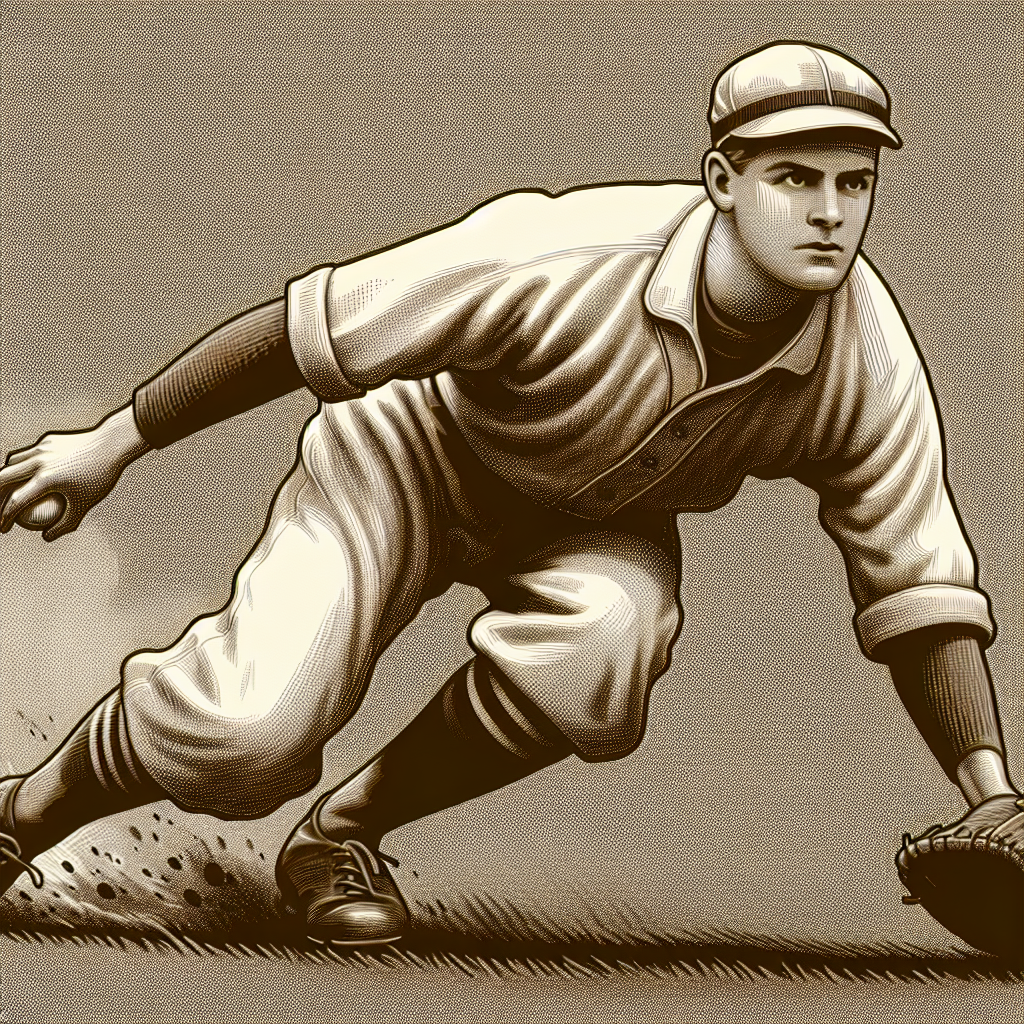
The history of baseball is adorned with names that echo through the ages—Babe Ruth, Lou Gehrig, and Joe DiMaggio, to name a few. Yet, amid these legends, there are those whose brilliance has been unjustly overshadowed by more prominent stars. Among these seemingly forgotten heroes is Arky Vaughan, an extraordinary talent from the 1930s whose impact on the game warrants greater recognition. Vaughan’s journey through baseball, marked by consistent excellence, remarkable athleticism, and unwavering dedication, is a testament to his understated greatness.
Joseph Floyd Vaughan, known popularly as Arky Vaughan, was born on March 9, 1912, in Clifty, Arkansas. His early years in rural America instilled in him a robust work ethic and a love for baseball that would follow him throughout his life. Standing at 5 feet 10 inches and weighing 180 pounds, Vaughan was not the most imposing figure on the diamond, but what he lacked in size, he more than made up for with skill and grit.
Vaughan’s professional career began in earnest when he was signed by the Pittsburgh Pirates in 1932, entering the Major Leagues as a shortstop. It didn’t take long for him to make an impact. In just his second season, Vaughan led the National League in batting average, hitting an impressive .385—a feat made even more remarkable considering the era’s pitching prowess. His fleet-footedness, sharp defensive skills, and consistent hitting quickly established him as one of the game’s premier shortstops. But perhaps what made Vaughan truly special was his approach to the game—a blend of strategic acumen and natural talent that seemed almost effortless.
Early Career and Major League Debut
Arky Vaughan’s entrée into Major League Baseball was nothing short of spectacular. After a successful stint in the minor leagues, where he honed his skills and gained a reputation for his exceptional batting, Vaughan joined the Pittsburgh Pirates in 1932. As a rookie, Vaughan made an immediate impact, showcasing a batting prowess that was rare for a player so new to the league. He ended his first season with a respectable .318 batting average—a harbinger of the consistent performance that would define his career.
In his sophomore season, Vaughan truly announced his arrival. The year 1933 saw him lead the National League in both batting average and on-base percentage. His .385 average that season remains one of the highest ever recorded by a shortstop, a record that underscores his offensive capabilities. Vaughan’s success at the plate was complemented by his stellar defense, making him an invaluable asset to the Pirates. Beyond the numbers, his calm demeanor and unwavering focus set him apart from his peers, earning him the respect of teammates and opponents alike.
Despite the pressures of being a major league athlete, Vaughan maintained a level of humility that was rare for the time. He often credited his success to his upbringing and the foundational skills he developed growing up in Arkansas. His quiet confidence and dedication to the game soon made him a favorite among fans. Vaughan’s early years with the Pirates laid the groundwork for what would be an illustrious career, one that would see him rise to the pinnacle of baseball success.
Peak Years with the Pittsburgh Pirates
The mid-1930s marked the peak of Arky Vaughan’s career, as he solidified his reputation as one of the league’s premier shortstops. From 1934 to 1938, Vaughan consistently posted impressive numbers, showcasing his ability to hit for both average and power. He regularly ranked among the top hitters in the league, and his adeptness at getting on base made him a critical player in the Pirate’s lineup. His 1935 season was particularly notable, as he recorded a .385 batting average and led the league in on-base percentage, slugging, and OPS—an extraordinary trifecta that highlighted his all-around excellence.
Vaughan’s contributions were not limited to his offensive output. He was also a defensive stalwart, known for his range, sure hands, and quick reflexes. His ability to make difficult plays look routine earned him widespread admiration and cemented his status as an elite shortstop. Vaughan’s blend of offensive and defensive prowess made him a perennial All-Star, and he was selected to nine consecutive All-Star games—a testament to his sustained excellence and impact on the game.
One of the defining moments of Vaughan’s career came in the 1938 All-Star Game, where he hit two home runs—a rare feat that underscored his ability to perform on the biggest stages. Despite his individual success, the Pirates struggled to achieve team success during this period. Nonetheless, Vaughan’s unwavering commitment to his team and his exceptional performance earned him the respect of baseball aficionados and solidified his legacy as one of the game’s greats.
Transition to the Brooklyn Dodgers
After nearly a decade with the Pittsburgh Pirates, Arky Vaughan’s career took a significant turn when he was traded to the Brooklyn Dodgers in 1942. This move marked the beginning of a new chapter for Vaughan, one that would see him adapt to a different team dynamic and continue to showcase his remarkable skills. Although his statistics with the Dodgers were not as eye-popping as his peak years with the Pirates, Vaughan remained a key player and a steady presence on the field.
The transition to Brooklyn was not without its challenges. Vaughan had to acclimate to a new team environment and a different style of play. However, his professionalism and versatility allowed him to make the transition smoothly. He continued to be a reliable hitter, posting solid batting averages and contributing significantly to the Dodgers’ offense. His defensive prowess remained intact, and he provided veteran leadership to a relatively young Dodgers team.
Vaughan’s tenure with the Dodgers was interrupted by World War II, as he took a brief hiatus from baseball to serve his country. Upon his return in 1947, he found himself in a diminished role, primarily serving as a utility player. Despite the reduced playing time, Vaughan’s love for the game never waned, and he continued to give his best whenever called upon. His time with the Dodgers, though less heralded than his years with the Pirates, further demonstrated his resilience and unwavering dedication to baseball.
Legacy and Hall of Fame Induction
Arky Vaughan’s contributions to baseball have not gone unnoticed, even if his name is not as widely recognized as some of his contemporaries. His consistent excellence and remarkable achievements eventually led to his induction into the Baseball Hall of Fame in 1985. This honor was a fitting recognition of a career marked by sustained brilliance and a profound impact on the game.
Vaughan’s statistical accomplishments are truly eye-catching. Over his 14-season career, he posted a lifetime batting average of .318, with 2,103 hits, 96 home runs, and 926 RBIs. His career on-base percentage of .406 and a slugging percentage of .453 underscore his ability to get on base and drive in runs at an impressive rate. These stats, combined with his defensive acumen, paint the picture of a player who excelled in every facet of the game.
Beyond the numbers, Vaughan’s influence on baseball is evident in the respect and admiration he garnered from his peers and those who followed him. His approach to the game—marked by dedication, humility, and excellence—set a standard for future generations of players. Vaughan’s legacy is further cemented by the recognition he has received in various retrospectives and rankings of the greatest shortstops in baseball history. Despite being overshadowed during his playing days, Vaughan’s contributions have stood the test of time, earning him a place among baseball’s elite.
Conclusion
Arky Vaughan was more than an exceptional baseball player; he was a symbol of the game’s enduring values. His career, spanning the 1930s and beyond, was characterized by a rare combination of offensive prowess, defensive excellence, and an unwavering commitment to his teams. Vaughan’s quiet but consistent contributions to the sport have earned him a place in the annals of baseball history, even if his name is not as universally recognized as some of his peers.
Vaughan’s story is a poignant reminder of the many unsung heroes in sports—those whose brilliance may not always be captured in headlines but whose impact is deeply felt by those who appreciate the game’s nuances. His induction into the Hall of Fame stands as a testament to his contributions and a validation of a career that was nothing short of extraordinary. Arky Vaughan, the underrated great of the 1930s, remains a beacon of excellence and a reminder of what it means to play the game with passion, skill, and integrity.
As we continue to celebrate and remember the legends of baseball, it is important to shine a light on players like Vaughan, whose legacies deserve to be honored and preserved. His story enriches the tapestry of baseball history and serves as an inspiration for future generations of players and fans. Arky Vaughan may not have garnered the same level of fame as some of his contemporaries, but his greatness, by any measure, is undeniable.