
Born as Napoleon Lajoie in 1874, this baseball prodigy hailed from Woonsocket, Rhode Island, to French Canadian parents. From early on, Nap, as he was affectionately called, had an extraordinary affinity for the game of baseball. He joined the ranks of professional players when he was signed by the Philadelphia Phillies in 1896. During his flourishing career, spanning from 1896 to 1916, Lajoie became one of baseball’s most legendary figures. His striking prowess, commanding presence on the field, and influence on the game have cemented his legacy in baseball history. This article delves into the life and career of Nap Lajoie, highlighting his significant impact on the game and the mastery of batting that left an indelible mark in the annals of baseball.
The Early Years and Rise to Stardom
Nap Lajoie’s path to baseball stardom began in Woonsocket, where he showed early promise in local leagues. His professional debut with the Philadelphia Phillies in 1896 marked the beginning of a remarkable career. In his first year, he batted .326, showcasing a natural talent for hitting that would define his career. By 1898, Lajoie’s offensive production had made him one of the game’s finest hitters. His keen eye at the plate, combined with powerful hitting and versatility in playing multiple infield positions, quickly elevated his status. The year 1901 was a groundbreaking one for Lajoie, as he became the centerpiece of the newly formed American League by joining the Cleveland Bronchos – later the Cleveland Indians. His .426 batting average in that inaugural American League season remains one of the highest in baseball history and is a testament to his exceptional skill.
Legacy with the Cleveland Indians
Nap Lajoie’s tenure with the Cleveland Indians – a team that even renamed itself the Cleveland Naps in his honor – was marked by incredible performances both offensively and defensively. His loyalty to Cleveland and his continuous outstanding play were unmatched. From 1902 to 1915, he was the heart and soul of the team, leading by example with his consistent batting. In 1903, he won his second triple crown, with a .336 average, 7 home runs, and 93 RBIs. Lajoie’s skill at second base was equally impressive, as he redefined the expectations for infielders with his deft fielding and powerful arm. He continually dazzled fans and perplexed opponents, setting standards that aspiring players admired and sought to emulate.
Batting Mastery and Technique
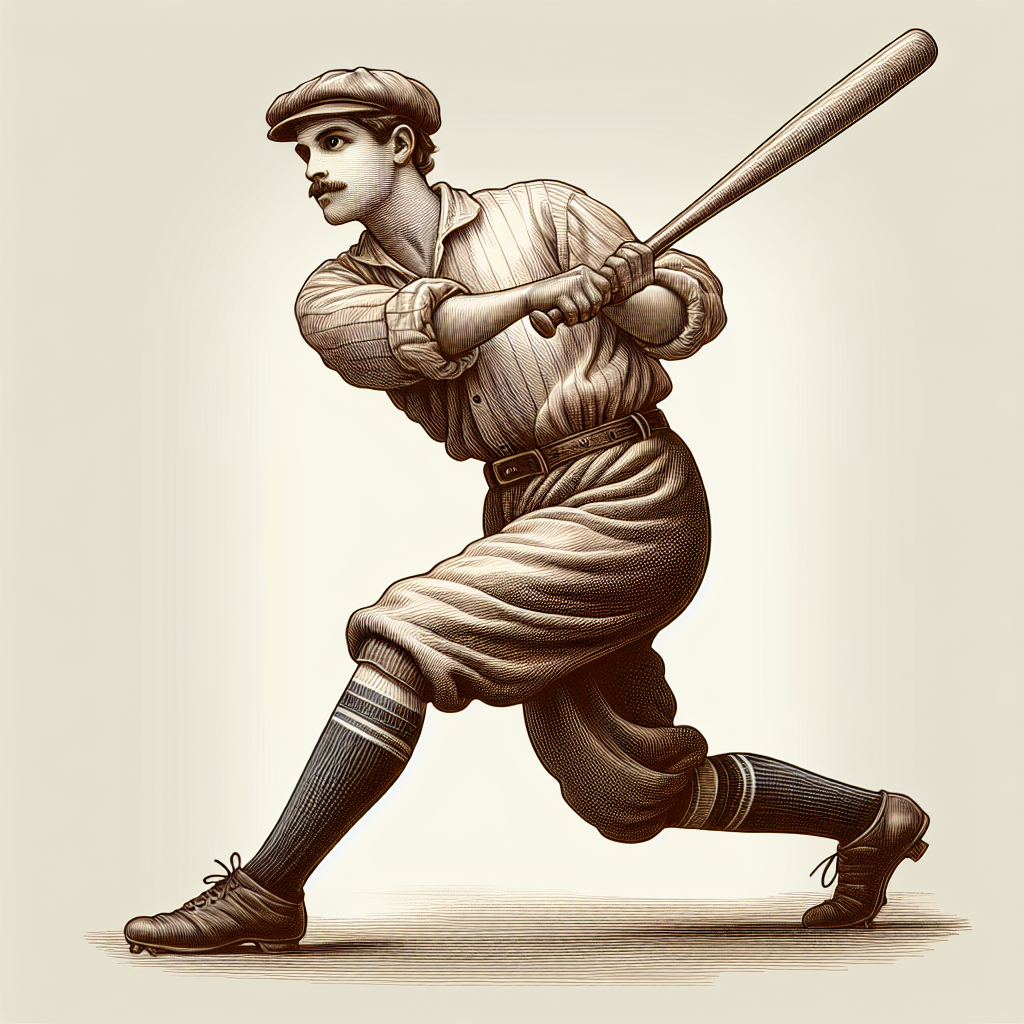
Nap Lajoie was not just a great hitter – he was a master of the craft. His batting technique was a blend of patience, precision, and power. Unlike many power hitters of his time, Lajoie emphasized contact, using a wide stance and quick, controlled swing to drive the ball with authority. His ability to read pitchers and predict their throws set him apart, allowing him to excel even against the toughest competition. Lajoie’s batting average of .338 over his 21-year career attests to his consistent effectiveness. He led the league in batting numerous times, including achieving a legendary .426 average in 1901. This mastery at the plate earned him the nickname “La Grand Nap,” endearing him to fans and securing his place as one of baseball’s batting legends.
Influence on Future Generations
Nap Lajoie’s influence on baseball extended beyond his playing years. His exemplary technique and professional demeanor served as a model for future generations of players. Notably, his ability to excel at various positions and his pioneering style transformed how later players approached the game. The respect he commanded on and off the field also contributed to the evolving professional standards in baseball, defining qualities such as sportsmanship, dedication, and skill. Many players from the Golden Age of Baseball, including Joe DiMaggio and Ted Williams, acknowledged Lajoie’s influence on their own careers. His legacy lives on, with his techniques and philosophies still being studied by players and coaches aiming to master the art of batting.
The Hall of Fame and Beyond
In 1937, Nap Lajoie’s illustrious career received the ultimate recognition with his induction into the Baseball Hall of Fame. This honor highlighted his numerous achievements and his undisputed status among the game’s greats. Beyond his lifetime, Lajoie continued to be celebrated for his contributions to baseball, with numerous accolades and commemorations in his name. He was often featured in baseball retrospectives and honored in ceremonies for his historic contributions. The city of Cleveland, where Lajoie spent the most productive years of his career, continues to honor his memory, and his name is synonymous with baseball excellence. Even a century after his career ended, Nap Lajoie’s influence persists, reminding us of a time when a Frenchman mastered the American pastime to become one of the greatest hitters of all time.
Conclusion
Nap Lajoie’s career is the story of a player who transformed the game of baseball with his exceptional hitting and fielding prowess. From his early days in Woonsocket to becoming a household name across America, Lajoie’s journey is one of dedication, skill, and true love for the game. His batting mastery, underscored by his .426 average in 1901 and multiple batting titles, remains a benchmark for players even today. Nap’s influence extended beyond his playing years, as his techniques and approach to the game continue to inspire and inform baseball at all levels. As we look back on the era of Nap Lajoie, we celebrate not just a player, but a legend whose achievements and influence shaped the history of baseball. His legacy is enshrined not just in the record books, but in the hearts and minds of baseball enthusiasts who recognize and honor the Frenchman’s mastery of batting.