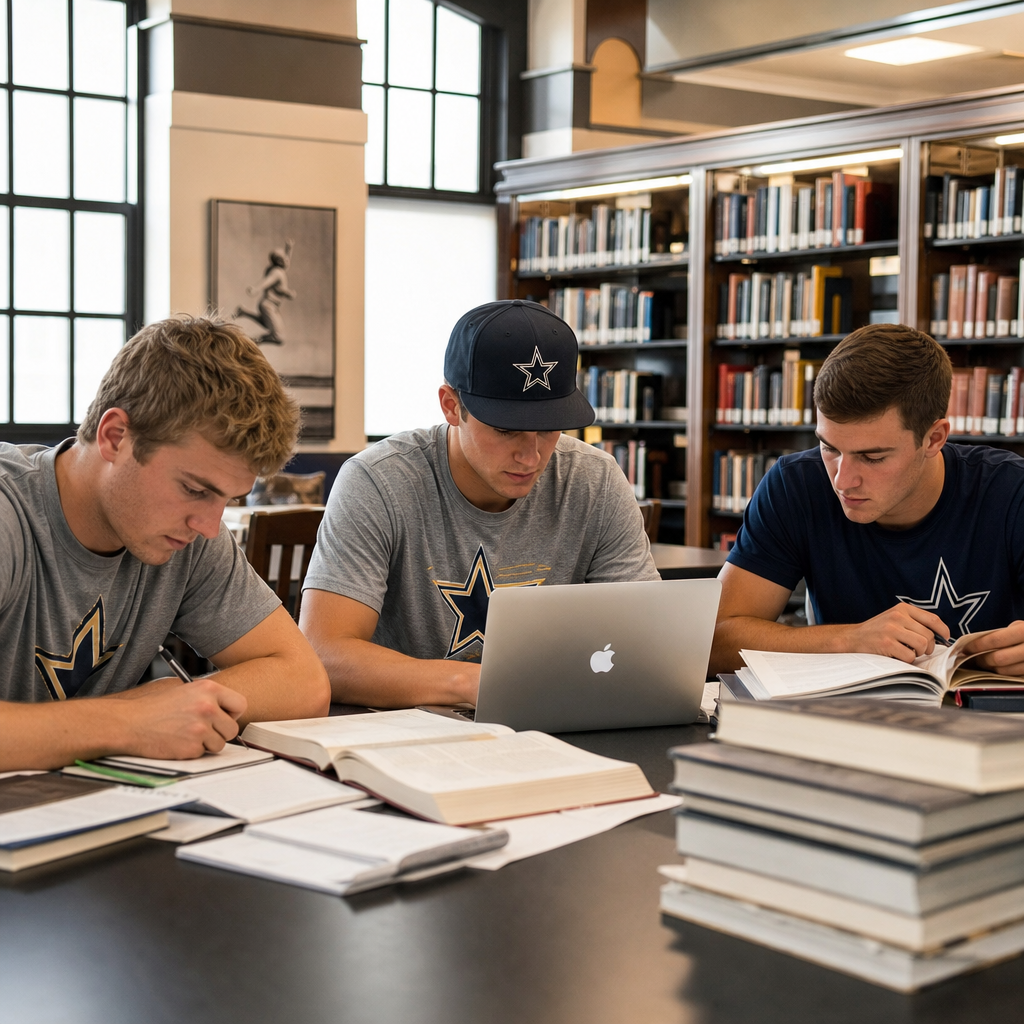
Academic achievements of college baseball players matter because they show how athletes succeed in classrooms, degree programs, and long term career planning while managing one of the most demanding schedules in college sports. In college baseball, academic achievement includes grade point average, progress toward a degree, conference and national scholar awards, graduation rates, postgraduate scholarships, and the practical habits that allow players to balance travel, training, labs, and exams. I have worked with college baseball operations staffs and academic support units, and one pattern is consistent: the strongest programs do not treat school as a compliance box. They build systems around study hall, advising, tutoring, attendance monitoring, and communication between coaches and faculty. That matters for players who will never sign a professional contract, and it also matters for prospects because disciplined academic routines often mirror disciplined development habits on the field. For families researching minor leagues and college baseball, this topic is a useful hub because it connects recruiting, eligibility, transfer decisions, scholarship strategy, player development, and life after baseball.
The public usually notices batting average, velocity gains, and draft status, but college programs are judged academically as well. The NCAA tracks Academic Progress Rate and Graduation Success Rate, conferences name all-academic teams, and schools promote team GPAs as evidence of program culture. Academic success also affects roster stability. A player who becomes ineligible can lose development time, and a transfer with poor progress-toward-degree standing may face limited options. In practical terms, academic performance influences whether a player can stay available, retain aid, enter graduate school, qualify for internships, and build a network beyond the clubhouse. That is why a hub on miscellaneous academic achievements should cover awards, standards, support systems, common obstacles, and the real outcomes seen across Division I, Division II, Division III, NAIA, and junior college baseball. Understanding those pieces helps players make better decisions before and during college.
What Academic Achievement Means in College Baseball
Academic achievement for college baseball players is broader than a transcript. It starts with eligibility basics, including full-time enrollment and progress toward a degree, but serious evaluation goes further. Programs look at semester GPA, cumulative GPA, credit completion, class attendance, major selection, graduation timeline, and whether athletes can handle periods when travel collides with midterms. Conferences and national organizations then layer recognition on top. Players may earn conference all-academic honors, College Sports Communicators Academic All-District distinction, Academic All-America consideration, NCAA postgraduate scholarships, and institutional awards for leadership or community engagement. Baseball programs also celebrate team milestones such as a 3.0 semester GPA, a department honor roll placement, or a near perfect academic term during the season.
There is also a practical side that rarely makes headlines. A catcher taking a required science lab must coordinate around weekday travel. A transfer infielder may need careful credit evaluation to avoid losing progress toward his degree. A pitcher in engineering or finance may use summer terms to stay on pace. These are academic achievements too, because they reflect planning and execution under time pressure. In my experience, players who thrive academically usually have clear weekly structures: they front-load assignments before road trips, use tutoring before problems become crises, and communicate early with professors. Athletic departments with dedicated academic advisors, learning specialists, and monitored study hall make this easier, but players still have to do the work. The achievement is not just intelligence. It is consistency.
Standards, Awards, and Benchmarks That Matter
When families ask what signals strong academic performance in college baseball, the answer usually begins with recognized benchmarks. The NCAA Academic Progress Rate measures term by term eligibility and retention, while Graduation Success Rate tracks whether scholarship athletes complete degrees within a defined window. Neither metric is perfect, but both shape institutional accountability. At the team level, a baseball program with a solid APR and stable retention usually reflects effective advising and fewer eligibility disruptions. Individual recognition comes from conference offices, which often require a minimum GPA, sophomore standing, and participation criteria for all-academic teams. Nationally, College Sports Communicators honors combine academic strength with athletic contribution, making those awards especially meaningful because they validate performance in both environments.
Institutional awards can matter just as much. Many campuses recognize scholar-athletes by semester, by cumulative GPA threshold, or by graduation distinction such as cum laude. Postgraduate scholarships are another major category. The NCAA and many conferences offer competitive funding for athletes pursuing advanced study, and baseball players who build strong academic records, leadership profiles, and service histories can stand out. This is one reason coaches increasingly highlight internship placement, graduate admissions, and alumni career outcomes in recruiting materials. The message is clear: academic achievement is not only about staying eligible. It creates measurable credentials. For a player considering law school, physical therapy, business analytics, education, or sports administration, those credentials can shape the next decade more than a summer league stat line.
| Academic marker | What it measures | Why baseball players should care |
|---|---|---|
| Semester GPA | Short-term classroom performance | Shows whether current routines work during season and travel |
| Cumulative GPA | Long-term consistency across terms | Affects honors, internships, graduate school, and awards |
| Progress toward degree | Credits completed in required academic path | Protects eligibility and transfer options |
| APR | Team eligibility and retention trend | Signals program structure and academic risk level |
| Graduation outcomes | Degree completion over time | Reflects whether players finish with usable credentials |
How Players Balance Baseball Demands With Serious Coursework
College baseball creates academic pressure points that athletes in some other sports do not face in the same way. The season is long, travel often starts on Thursdays, and nonconference schedules can produce missed Friday classes before conference play begins. Fall practice, strength work, individual skill sessions, and mandatory team activities reduce open hours even outside the season. Add treatment, lift groups, video review, and recovery work, and the calendar gets tight fast. Players who handle this well usually rely on disciplined time blocking. They schedule reading between classes, finish discussion posts before bus departures, and know exactly which assignments are due during each travel weekend. On successful teams, captains often normalize this behavior by making academic preparation part of clubhouse expectations.
Support structures matter, but they work only when used correctly. Academic centers commonly provide mandatory study hall for first-year players, tutoring in high-failure courses, and weekly check-ins based on grade reports. Learning management systems such as Canvas, Blackboard, and Moodle help athletes track deadlines remotely, while shared travel calendars reduce surprises. Some programs use peer mentors who have already navigated majors with heavy lab or internship requirements. Real balance also means making smart academic choices, not easy ones. I have seen players succeed in biology, accounting, engineering technology, and communications, but they did so by understanding constraints early. If a major requires rigid afternoon labs every spring, baseball may force summer coursework or a sequence change. Good advising turns potential conflicts into manageable plans instead of eligibility emergencies.
Program Culture, Coaching, and the Role of Academic Support
Academic achievement in college baseball is strongly influenced by culture set from the top. Coaches who say academics matter but only reward on-field output create predictable problems. Coaches who ask about class attendance, require communication after missed assignments, and celebrate all-academic recognition send a different signal. The best staffs integrate academic expectations into the same accountability framework used for strength standards and team rules. That does not mean micromanaging every paper. It means establishing clear baselines: attend class, respond to advisors, use tutoring early, and stay ahead before travel weeks. When players see veterans maintain strong GPAs without losing competitive edge, academics become part of performance identity rather than a separate burden.
Academic support staff translate that culture into daily practice. Advisors monitor eligibility, map degree plans, and help athletes understand registration timing, transfer credit issues, and progress-toward-degree rules. Learning specialists can identify reading, writing, or attention challenges before they derail a season. Faculty liaisons and early alert systems are especially valuable in baseball because a missed week of classes during road trips can snowball quickly. Parents should ask programs specific questions during recruiting: How often do players meet advisors? What tutoring is available for STEM courses? How are missed labs handled? What is the team GPA trend? How many seniors graduate on time? Vague promises are not enough. Strong programs can describe their systems in detail and usually have evidence to back them up.
Why Academic Success Shapes Recruiting, Transfers, and Life After Baseball
Academic achievement affects nearly every decision point in the college baseball pipeline. In recruiting, strong high school grades widen options because coaches trust that academically reliable players will stay eligible and manage college demands. At academically selective schools, transcript strength can be as important as showcase metrics. For junior college players, classroom performance often determines whether they can move cleanly into four-year programs without credit loss. For transfers, academic standing can either preserve flexibility or narrow the market dramatically. A player entering the portal with weak progress toward a degree may find that baseball opportunity exists but practical admission and eligibility pathways do not. That reality is often overlooked when transfer moves are discussed only through roster and playing-time lenses.
Long term, academic success protects players from the volatility of baseball careers. Only a small share of college players reach affiliated professional baseball, and even fewer sustain long professional careers. Degrees, internships, faculty relationships, and graduate school admissions become the durable assets. I have seen former players move into finance, coaching, medical sales, law enforcement, data analysis, education, and physical therapy because they used baseball structure to build professional habits. Their academic records opened doors when the game stopped. That is the central benefit of academic achievement for college baseball players: it expands options without reducing competitive ambition. If you are building your understanding of minor leagues and college baseball, use this hub as a starting point, then explore eligibility, recruiting, scholarships, transfer rules, and player development with academics at the center of every decision.
Frequently Asked Questions
What counts as academic achievement for college baseball players?
Academic achievement for college baseball players goes well beyond simply maintaining eligibility. It includes core measures such as grade point average, progress toward a degree, successful completion of major requirements, and on-time graduation. It also includes formal recognition like conference academic honor rolls, College Sports Communicators Academic All-District and Academic All-America honors, NCAA postgraduate scholarships, and team or department scholar-athlete awards. For many players, academic success is also reflected in less visible milestones, such as completing demanding lab courses during the season, staying on track in majors with strict sequencing, or earning admission into graduate or professional programs after college.
What makes these accomplishments especially meaningful is the context in which they happen. College baseball players manage early workouts, practices, strength sessions, frequent travel, missed class time, and long competitive weekends, often while taking full academic loads. Because of that, strong performance in the classroom demonstrates discipline, planning, and consistency. Academic achievement in this setting is not just about a transcript; it is evidence that a player can handle competing priorities, meet institutional standards, and prepare for long-term opportunities beyond the game.
Why are the academic achievements of college baseball players important?
The academic achievements of college baseball players matter because they show that athletic participation and serious educational progress can coexist at a high level. Baseball is one of the most time-intensive college sports due to travel, midweek games, conference series, fall development work, and year-round conditioning. When players perform well academically under those conditions, it highlights valuable traits such as accountability, time management, resilience, and maturity. These traits matter to coaches, athletic departments, faculty, employers, and graduate schools because they suggest that the student-athlete can succeed in demanding environments.
Academic success is also important because only a small percentage of college baseball players will make a long-term living in professional baseball. A degree, strong academic record, and career planning are essential for life after college athletics. Players who earn scholar-athlete recognition, maintain strong GPAs, and complete internships or advanced coursework position themselves for careers in business, education, healthcare, engineering, law, sports administration, and many other fields. In that sense, academic achievement is not separate from athletic development; it is a crucial part of a player’s overall success and future stability.
How do college baseball players balance school with such a demanding schedule?
Most academically successful college baseball players rely on structure, communication, and disciplined daily habits. They use detailed calendars to map out class deadlines, travel days, exam dates, tutoring sessions, practice times, and recovery windows. Because baseball players often miss class for road trips, they usually have to work ahead rather than simply trying to catch up afterward. That may mean submitting assignments early, communicating with professors before travel, attending office hours regularly, and using bus rides, flights, and hotel time for study sessions. Players who stay organized tend to treat academic responsibilities with the same seriousness they bring to training and competition.
Support systems also play a major role. Many athletic departments provide academic advisors, study halls, tutoring, mentoring, and learning specialists who help players stay on pace for graduation. Coaches can influence this balance as well by reinforcing expectations about class attendance and academic accountability. Just as important, players often learn to make practical choices about sleep, technology use, and free time. The most effective student-athletes usually develop repeatable routines: reviewing class materials after practice, breaking large assignments into smaller tasks, and using every available block of time productively. Over a long season, those small habits often make the difference between merely staying eligible and achieving genuine academic distinction.
What academic awards and honors can college baseball players earn?
College baseball players can earn a wide range of academic honors at the institutional, conference, and national levels. At the campus level, universities often recognize scholar-athletes based on GPA thresholds, dean’s list performance, or excellence within a specific college or department. At the conference level, players may be named to academic honor rolls or all-academic teams, which typically require a combination of academic standing, GPA minimums, and participation in the sport. Nationally, some of the most recognized distinctions include College Sports Communicators Academic All-District and Academic All-America honors, which reward both athletic and academic excellence, as well as NCAA postgraduate scholarships and other national scholar-athlete awards.
These honors carry value because they reflect sustained performance rather than one strong semester. In many cases, players must demonstrate consistency over multiple terms while also contributing meaningfully to their teams. Awards can strengthen a resume, graduate school application, scholarship application, or professional profile because they provide outside validation of a player’s discipline and achievement. They also help tell a fuller story about the athlete. A player recognized for both on-field performance and academic excellence stands out as someone who has maximized the college experience and built a foundation for success after baseball.
How do academic achievements help college baseball players after graduation?
Academic achievements can have a direct and lasting impact on a college baseball player’s opportunities after graduation. A strong GPA, completed degree, academic honors, and evidence of progress in a challenging major can improve access to graduate school, law school, medical and health-related programs, business careers, and competitive entry-level jobs. Employers often view former student-athletes favorably because they understand the demands of balancing sports with academics, but that positive impression is much stronger when backed by concrete academic results. Strong academic performance shows that the athlete did not just participate in college sports; he also built knowledge, credentials, and habits that translate to professional success.
Academic achievement also supports long-term career planning by expanding a player’s options. Even for athletes who pursue professional baseball after college, academic preparation matters because playing careers can be short and unpredictable. A completed degree and strong educational record provide security and flexibility if an athlete transitions into coaching, finance, sales, teaching, healthcare, engineering, or another field. In practical terms, academic success helps players leave college with more than memories and statistics. It gives them credentials, confidence, and a clearer path forward, which is why the academic achievements of college baseball players remain such an important measure of the full student-athlete experience.