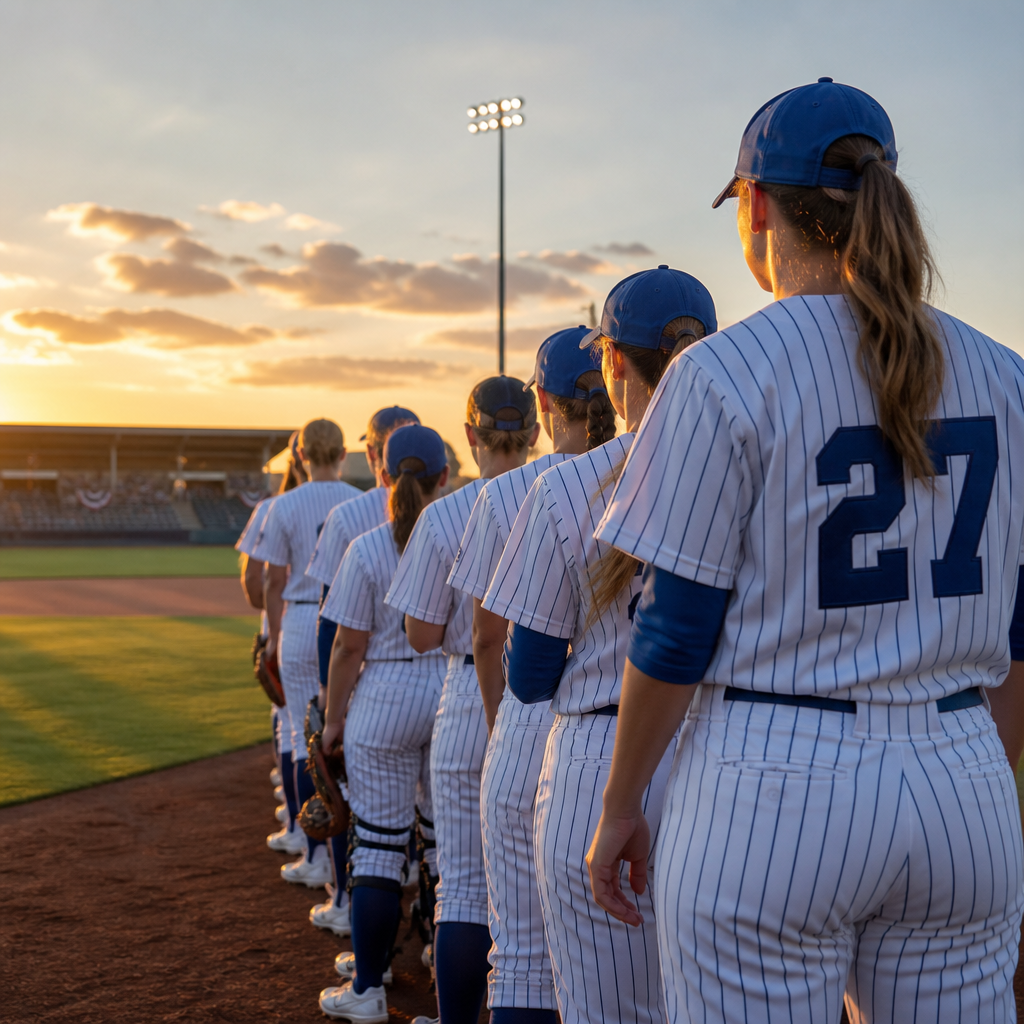
The legacy of women’s baseball leagues reaches far beyond nostalgia, because these leagues reshaped who could play, who could lead, and who could imagine a place in baseball. In practical terms, a women’s baseball league is an organized competition built for female players under formal rules, schedules, and governance, whether amateur, professional, national, or international. That definition matters because women have played baseball for more than a century, yet their history is often compressed into one wartime story. From my work reviewing baseball archives, museum collections, and player interviews, the pattern is clear: women’s leagues were never a novelty. They were a response to exclusion, a proving ground for elite skill, and a foundation for today’s growth in girls baseball, national teams, and global tournaments. This topic matters now because participation pathways remain fragile. Softball still absorbs much of the available funding and visibility, while baseball opportunities for girls and women vary sharply by region, age group, and governing body. Understanding the legacy of women’s baseball leagues helps parents, coaches, journalists, and fans see the real issue: access, not ability. It also creates a central guide for the broader women in baseball conversation, connecting history, development, media, policy, and future opportunity into one practical view.
How women’s baseball leagues began and why they endured
Women’s baseball leagues emerged wherever women wanted competitive baseball and existing institutions refused to include them. In the late nineteenth and early twentieth centuries, women played on barnstorming teams, factory clubs, school teams, and local semiprofessional circuits. These games were often marketed as entertainment, but the players’ commitment and baseball intelligence were genuine. Reporters routinely blurred the line between stunt and sport, yet box scores, travel schedules, and repeat opponents show structured competition. That distinction matters for anyone researching women in baseball, because it corrects the old assumption that meaningful women’s baseball started only in the 1940s.
The most famous league, the All-American Girls Professional Baseball League, operated from 1943 to 1954 and demonstrated that women could sustain a professional baseball product under major pressure. Founded when World War II threatened men’s professional baseball rosters, the league initially blended softball and baseball elements before moving steadily toward standard baseball play. Players developed stronger throwing mechanics, longer basepaths, overhand pitching, and more advanced strategic systems as the game evolved. Attendance peaked in the late 1940s, and the league drew hundreds of thousands of fans annually in several Midwestern cities. Its teams were community institutions, not a temporary sideshow.
What allowed these leagues to endure was not sentiment but infrastructure. Successful clubs had owners, travel budgets, field access, local promotion, coaches, and rule enforcement. They also had athletes willing to train seriously despite social expectations about femininity, work, and public conduct. The endurance of women’s baseball has always depended on this same equation: talent plus organizational commitment. Whenever one side weakens, leagues struggle. That pattern appears repeatedly from early touring teams to modern adult leagues and national team programs.
The AAGPBL was pivotal, but it was never the whole story
The AAGPBL dominates public memory because it left the strongest documentary trail and reached a professional scale rare in women’s baseball. It created identifiable stars, durable team brands, and a labor structure that included scouting, contracts, and centralized administration. Players such as Dottie Wiltse Collins, Sophie Kurys, and Connie Wisniewski were not symbolic figures; they were elite competitors with measurable on-field value. Kurys, for example, became known for aggressive baserunning and tactical intelligence that consistently changed games. The league also proved that women’s baseball could support specialized roles, from pitchers and catchers to middle infielders and managers.
Still, reducing the legacy of women’s baseball leagues to one league distorts the record. After 1954, women continued to play in regional and international formats, often with far less media attention. In Canada, Cuba, Japan, Venezuela, Australia, and other countries, women and girls kept baseball alive through school systems, community clubs, and national federations. In the United States, adult women’s leagues, youth development groups, and tournament circuits maintained participation even when no major professional structure existed. The modern perspective must therefore be broader than one wartime chapter.
This wider view also changes how hub coverage should work within a women in baseball site. A page on history should naturally connect readers to deeper articles on pioneering players, wartime baseball, women in Negro Leagues contexts, girls youth development, modern national teams, coaching, and media representation. As a sub-pillar hub, the miscellaneous category is where these threads meet. It should frame women’s baseball as an ecosystem rather than a single famous anecdote.
What these leagues changed in the culture of baseball
Women’s baseball leagues changed baseball culture by forcing institutions and audiences to confront a simple fact: skill is visible. A player who turns a double play, executes a hit-and-run, or paints the outside corner demonstrates baseball ability in ways that are difficult to dismiss. Even when coverage was patronizing, fans could still recognize competence. That public visibility mattered because baseball had long been coded as male space, from sandlots to front offices. Women’s leagues made that coding unstable.
The cultural effect extended beyond the field. Players modeled a form of athletic professionalism during eras when women were expected to remain decorative, domestic, or strictly amateur. League rules sometimes imposed charm school expectations, beauty standards, and restrictive conduct policies, which reflected the sexism of the time. Yet athletes worked within and against those constraints, building credibility through performance. Their legacy is therefore double-edged: women gained visibility, but often under conditions designed to soften or regulate that visibility.
That tension still shapes women in baseball today. Girls are often welcomed in baseball at very young ages, then pushed toward softball as competition intensifies. Media still asks whether women “belong” in baseball roles that men occupy without scrutiny. The historical leagues matter because they provide evidence against this gatekeeping. They show that exclusion has always been social and institutional, not rooted in a lack of baseball aptitude.
Modern pathways: where women’s baseball stands now
Today, women’s baseball exists through a patchwork of youth initiatives, national teams, adult leagues, showcases, and international tournaments. The Women’s Baseball World Cup, organized under the World Baseball Softball Confederation, is the clearest international benchmark. Japan has been especially influential, combining strong domestic development with repeated international success. Japanese players benefit from deeper school-based baseball culture, better technical repetition, and wider social acceptance of baseball as a serious option for girls. That system produces cleaner defensive play and more advanced game awareness at younger ages.
In the United States, USA Baseball has expanded girls baseball programming through development camps, identification events, and national team pathways. Those efforts matter because talent identification is often the first bottleneck. Many girls who can play baseball never receive position-specific coaching, regular competition against peers, or sustained encouragement to stay in the sport through adolescence. Once a player leaves baseball for lack of opportunity, the pipeline shrinks at every later stage, including college club play, national team depth, and future coaching talent.
The modern landscape is best understood by looking at the functions leagues and programs serve.
| Level | Main Purpose | Typical Challenge | Why It Matters |
|---|---|---|---|
| Youth baseball programs | Early skill development and retention | Girls often lack same-age peers and regular teams | Creates the first durable entry point into baseball |
| Adult women’s leagues | Provide ongoing competitive play | Limited geography and funding | Keeps players active and visible |
| National teams | Identify elite talent and represent the country | Narrow player pool in some nations | Raises standards and media attention |
| International tournaments | Benchmark quality across countries | Uneven federation support | Proves women’s baseball has global legitimacy |
One hard truth from working around player development is that interest is not the same as access. A girl can love baseball, follow Major League Baseball, and still have nowhere suitable to play by age thirteen. That gap is where leagues matter most. They turn abstract enthusiasm into innings, repetitions, coaching, and competition.
The biggest barriers are structural, not athletic
When people ask why women’s professional baseball is not yet stable at scale, the answer is usually structural. Facilities are scheduled around boys and men first. Sponsorship follows visibility, and visibility follows existing investment. Coaching networks often know softball pathways better than baseball pathways for girls. Equipment access, travel costs, and tournament concentration in a few regions add another layer of friction. None of these barriers prove weak demand; they show how opportunity is rationed.
Another barrier is category confusion. Many general sports audiences use women’s baseball and women’s softball interchangeably, even though they are separate sports with different skill profiles, rules, cultures, and development systems. Softball has deservedly created strong collegiate and professional identities in some markets, but its relative strength has sometimes obscured the need for women’s baseball infrastructure. A girl wanting to throw a baseball from sixty feet six inches or learn middle-infield footwork on a full diamond is not asking for a softball substitute. She is asking for baseball.
Media framing can also limit growth. Coverage too often centers novelty, firsts, or inspirational tone while neglecting mechanics, tactics, and competitive context. Serious baseball coverage should discuss pitch shape, swing decisions, arm action, roster construction, and development environments just as it would for men’s baseball. That shift in language is essential because analysis grants legitimacy. Once women players are discussed as baseball players rather than exceptions, audiences understand the sport more clearly.
Why this legacy matters for coaching, scouting, and leadership
The legacy of women’s baseball leagues is not confined to players. It informs how baseball organizations should think about coaching, scouting, leadership, and talent evaluation. One lesson I have seen repeatedly is that baseball IQ develops where athletes are trusted with real tactical responsibility. Women’s leagues historically required players to adapt quickly, master situational baseball, and self-advocate in under-resourced environments. Those are leadership skills as much as playing skills.
For coaches, the practical takeaway is simple: stop assuming girls need a fundamentally different baseball curriculum. Good instruction still means balance, sequencing, bat path efficiency, transfer speed, footwork angles, pitch recognition, and game awareness. What often changes is not the technical content but the delivery environment. Coaches may need to build confidence after years of subtle exclusion, ensure equal reps, and create competitive schedules that prevent isolation. Those are management challenges, not evidence of lesser ability.
For scouts and administrators, women’s baseball history offers another clear lesson. Talent can remain invisible for years if the evaluation system is built around narrow pipelines. Baseball has missed or delayed seeing many capable women because it looked only where tradition told it to look. Expanding camps, combining data with live evaluation, and creating more women-led baseball operations roles are not symbolic gestures. They improve the quality of talent discovery and decision-making.
Where the future of women’s baseball can grow next
The future of women’s baseball will depend less on one breakthrough league than on coordinated layers of opportunity. Sustainable growth usually starts locally: community programs, girls tournaments, coach education, and partnerships with parks departments and schools. It then scales through regional competition, federation support, and media habits that treat women’s baseball as standard baseball content. Professionalization may eventually expand, but it will only last if the base beneath it is broad.
There are several promising signals. More governing bodies now recognize girls baseball as distinct from softball. Documentary projects, archives, and the National Baseball Hall of Fame’s ongoing interpretation work have preserved earlier generations more seriously. Digital media makes niche coverage easier to sustain, allowing player stories, scouting clips, and tournament reporting to reach global audiences without legacy gatekeepers. This matters because discoverability often precedes investment.
For readers exploring the broader women in baseball topic, this miscellaneous hub should point in several directions: the history of the AAGPBL and prewar teams, biographies of major players, girls baseball development, international competition, women coaches and umpires, women in front offices, and the relationship between baseball and softball opportunities. Together, those areas explain the full legacy. Women’s baseball leagues proved the concept long ago. The modern task is not to ask whether women can play baseball, lead baseball, or build baseball institutions. The task is to build enough durable structure that their presence is normal, visible, and continuous. If you cover, coach, support, or simply follow the game, use that history as a guide and help create one more clear path for the next generation.
Frequently Asked Questions
What is a women’s baseball league, and why does that definition matter when discussing its legacy?
A women’s baseball league is an organized baseball competition created for female players under established rules, schedules, and governing structures. That can include amateur leagues, professional circuits, school-based programs, national teams, and international tournaments. The definition matters because it moves the conversation beyond novelty or nostalgia and places women’s baseball where it belongs: inside the formal history of the sport. For much of baseball’s popular storytelling, women’s participation has been treated as a side note, even though women have played the game for generations in structured, competitive environments.
Defining women’s baseball clearly also helps separate it from assumptions that women’s involvement in bat-and-ball sports begins and ends with softball. Softball has its own rich tradition, but women’s baseball is not simply a variation of that story. It represents women competing in baseball itself, often while navigating limited access to fields, coaching, funding, media attention, and institutional support. When historians, fans, and organizations use precise language, they make it easier to track achievements, preserve records, recognize pioneers, and understand how these leagues helped challenge long-standing ideas about who baseball is for.
How did women’s baseball leagues influence the broader history of baseball?
Women’s baseball leagues influenced the broader history of baseball by proving that the game’s talent pool, leadership structure, and audience were always larger than traditional gatekeepers admitted. These leagues created real opportunities for women to compete at serious levels, and in doing so, they challenged the idea that baseball was naturally or exclusively a men’s sport. Their presence expanded the sport’s cultural imagination, showing that women could not only play, but also draw crowds, build rivalries, sustain teams, and shape communities around baseball.
Historically, women’s leagues also kept important conversations alive about access and legitimacy. They pushed baseball institutions to confront exclusion, whether that exclusion was based on gender norms, limited development pipelines, or lack of visibility. In many cases, women’s leagues served as proof of concept: if given structure and support, female athletes could perform at high levels and develop dedicated fan bases. That legacy extends to coaching, administration, scouting, and youth development as well. The influence of these leagues is not just found in old standings or memorable players; it is found in the ongoing dismantling of narrow definitions of who belongs on the diamond and who gets to shape baseball’s future.
Why are women’s baseball leagues still relevant from a modern perspective?
From a modern perspective, women’s baseball leagues remain deeply relevant because the questions they raised in the past are still active today: Who gets opportunity? Who gets seen? Who gets funded? And who is assumed to belong in baseball spaces? Their legacy matters now because contemporary efforts to grow the game for girls and women depend on understanding both the progress made and the barriers that continue to exist. Women’s leagues offer a historical foundation for current advocacy, showing that the demand for women’s baseball is not new, temporary, or symbolic. It has deep roots and lasting legitimacy.
They are also relevant because they provide a model for representation that goes beyond a single inspirational moment. When girls see women playing baseball in organized leagues, coaching teams, managing programs, or competing internationally, they receive a much stronger message than abstract encouragement. They see a pathway. In today’s sports culture, where equity, visibility, and access are central conversations, women’s baseball leagues stand as evidence that inclusion requires infrastructure, not just applause. Their continued relevance lies in what they teach modern baseball organizations: meaningful change happens when institutions build sustained opportunities rather than waiting for exceptional individuals to overcome every obstacle alone.
What challenges have limited the recognition of women’s baseball leagues over time?
One major challenge has been historical compression, where long and diverse histories of women in baseball get reduced to a few familiar references while entire leagues, teams, and players are overlooked. That kind of incomplete storytelling affects public memory, media coverage, and even academic research. When records are poorly preserved or achievements are treated as exceptions instead of part of a broader tradition, recognition becomes fragmented. As a result, many people incorrectly assume women’s baseball was brief, rare, or primarily ceremonial, rather than organized, competitive, and persistent across different eras and regions.
Other barriers have been structural. Women’s baseball leagues have often operated with fewer resources, less promotional backing, limited sponsorship, inconsistent field access, and narrower development systems than men’s programs. Media attention has also played a major role. Sports culture tends to validate what it repeatedly shows, measures, and archives. If women’s leagues are underreported, they appear less significant, even when the quality of play and historical importance are substantial. Recognition has also been limited by gender expectations that steered girls toward other sports, especially softball, regardless of their interest in baseball. Taken together, these factors did not erase women’s baseball, but they did make its legacy easier to understate. That is why modern reassessment is so important: it restores continuity to a history that was never as marginal as many narratives suggest.
What does the legacy of women’s baseball leagues mean for the future of the sport?
The legacy of women’s baseball leagues points toward a future in which baseball becomes more complete, more representative, and more honest about its own possibilities. Their history shows that women do not need to be “added” to baseball as a new idea; they need to be recognized as part of baseball’s continuing story. That distinction matters because it shifts the focus from symbolic inclusion to practical investment. The future shaped by this legacy includes stronger youth pipelines for girls in baseball, more competitive leagues, better coaching and development opportunities, wider media coverage, and more visible leadership roles for women throughout the sport.
Just as importantly, this legacy changes how baseball measures progress. Success is not only about celebrating pioneers from the past, but about building systems that make participation normal, sustainable, and respected in the present. That means schools, local leagues, governing bodies, and professional organizations all have a role to play. When the sport takes women’s baseball seriously at every level, it gains new players, new audiences, and a richer understanding of its own identity. In that sense, the legacy of women’s baseball leagues is not merely historical. It is strategic, cultural, and forward-looking. It reminds the baseball world that expanding opportunity does not weaken tradition; it strengthens it.