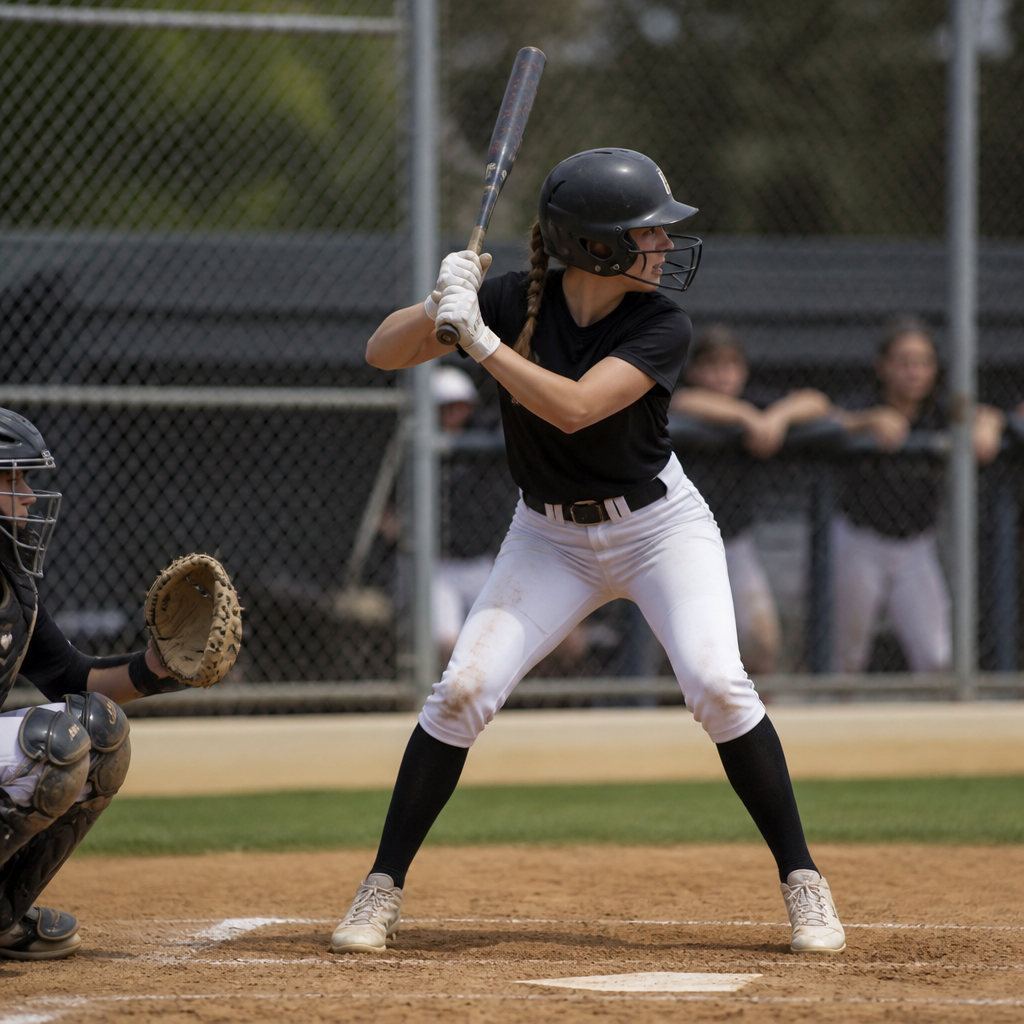
Women in the batter’s box have challenged baseball’s gender norms for more than a century, forcing the sport to confront who gets to play, who gets to lead, and who gets remembered. In baseball, the batter’s box is the marked area beside home plate where a hitter stands, but the phrase also works as a symbol for participation itself: stepping in, being seen, and claiming space in a game long framed as male by tradition rather than rule. I have worked on baseball content and historical research projects long enough to see the same misconception repeated across youth leagues, media coverage, and fan conversations: many people assume women in baseball are a recent novelty. They are not. Women have played professionally, coached, scouted, umpired, front-office managed, broadcast, and trained at high levels for generations. What is recent is the growing willingness of institutions to document their contributions and remove barriers that were often informal, cultural, or financial rather than explicitly written.
This matters because baseball remains one of the clearest mirrors of broader social norms. When girls are told softball is the default while boys keep baseball, that division shapes access to coaching, facilities, scholarships, media attention, and professional pathways. Understanding women in baseball requires defining a few key terms. Gender norms are the social expectations that assign certain activities, behaviors, or careers to men or women. Representation refers not just to visibility, but to meaningful participation at every level of a sport. Access means the practical conditions that allow entry and progress, including league rules, travel budgets, equipment, instruction, and network support. A hub article on this subject must therefore do more than list famous names. It should connect history, player development, culture, governance, and the still-unfinished work of building baseball structures that welcome women without treating them as exceptions.
History shows women were always part of baseball, even when the record tried to exclude them
Women have been involved in baseball since the nineteenth century. The Bloomer Girls teams, active in the late 1800s and early 1900s, traveled widely and played men’s teams, often drawing large crowds. They were part entertainment, part genuine competition, and they proved there was public interest in women playing hardball. In the 1940s and 1950s, the All-American Girls Professional Baseball League gave women a more visible professional platform during and after World War II. Although the league mixed baseball and softball elements, its players were elite athletes who trained intensely, traveled constantly, and performed under scrutiny that men rarely faced. Their legacy matters because it preserved a public image of women as legitimate diamond athletes at a moment when organized baseball could have erased them completely.
Beyond the United States, women have built baseball traditions in Japan, Canada, Australia, Cuba, Venezuela, and several European countries. Women’s Baseball World Cup competition under the World Baseball Softball Confederation has helped standardize international pathways and validate national team programs. That global perspective is important. When people ask whether women can play baseball at a high level, the factual answer is yes, and international tournaments provide repeated evidence. The challenge has never been female athletic incapacity. It has been the thin pipeline between childhood participation and advanced competition. History makes that clear: women kept appearing wherever opportunities existed, and disappearing from public view when institutions narrowed those opportunities again.
The biggest barrier is not talent but the pipeline from first swing to advanced competition
Most girls who love baseball run into the same structural problem early. Recreational leagues may allow coed participation, but as players get older, social pressure and league design often redirect girls into softball whether they want that switch or not. Softball is a demanding sport with its own culture and deserves respect, yet it is not simply baseball for girls. The pitching mechanics, field dimensions, tempo, defensive reads, and hitting adjustments differ significantly. For a girl committed to baseball, being told to switch sports can interrupt development in ways many adults underestimate. I have seen families spend years piecing together travel teams, private coaching, and distant tournaments because local systems offered no sustained baseball pathway for daughters after childhood.
Development depends on repetition against quality competition, and that is where the pipeline narrows further. Players need regular game reps, strength training, position-specific instruction, and coaches who believe they belong. They also need places to fail, adjust, and improve without being cast as proof that girls as a group can or cannot play. This burden of representation is one of the most exhausting hidden barriers. A boy who strikes out is an individual prospect. A girl who strikes out is too often judged as a referendum. Better structures reduce that distortion by normalizing participation. National girls baseball events run by organizations such as Baseball for All have been influential because they create peer groups, scouting visibility, and developmental benchmarks. Those environments help athletes measure themselves against standards of play, not stereotypes.
Visibility matters because examples change expectations for players, parents, and decision-makers
When a woman appears in baseball media, many audiences still treat the moment as inspirational first and baseball second. Inspiration has value, but overreliance on that frame can flatten skill, strategy, and labor into symbolism. Real visibility is more concrete. It means broadcasters discussing mechanics, scouts evaluating tools, coaches assigning responsibility, and journalists covering performance with the same seriousness given to men. Kim Ng’s tenure as Miami Marlins general manager mattered not because it solved inequality, but because it placed a highly qualified baseball executive in one of the sport’s most scrutinized decision-making roles. Alyssa Nakken coaching on the field for the San Francisco Giants mattered for similar reasons: players, staff, and viewers could see baseball authority embodied by a woman in real time.
Role models are especially powerful when they span many jobs. Some athletes will dream of playing professionally; others may be drawn to analytics, sports medicine, biomechanics, player development, broadcasting, or umpiring. A broad map of visible careers tells girls that baseball is not a closed ecosystem. It also helps parents invest earlier and more confidently. In my experience, family support often changes once parents can point to actual pathways, whether that means college club baseball, national team opportunities, professional staff roles, or international competition. Visibility works best when institutions support it with data, hiring, and funding rather than one-off ceremonies. Celebrating women in baseball is useful. Building systems in which their presence stops being unusual is the real objective.
Women are influencing baseball far beyond playing roles, and that influence changes how the sport functions
Baseball culture often centers players, but the game’s modern infrastructure depends on a wide set of specialized roles where women are making measurable impact. Front offices now rely on analysts, coordinators, mental skills specialists, athletic trainers, and operations executives whose work shapes roster construction and on-field outcomes. In player development, communication and trust are as important as technology. Coaches using tools such as TrackMan, Hawk-Eye, Rapsodo, and force plates must translate data into actionable adjustments. Many women in these settings have advanced because they pair technical fluency with strong teaching ability, helping players connect metrics like exit velocity, spin efficiency, chase rate, and bat path to repeatable habits.
Broadcasting and journalism also matter because they determine which stories become part of baseball’s accepted memory. Reporters, beat writers, play-by-play announcers, and analysts influence public understanding of tactics, labor issues, injuries, and leadership. Women in these roles have expanded the kinds of expertise audiences hear associated with baseball. Umpiring provides another revealing example. It is one of the sport’s most authority-driven positions, and women working professional games challenge the idea that command on a field must look masculine to be credible. These contributions are not side notes. They affect talent evaluation, clubhouse communication, public accountability, and the sport’s long-term direction. A serious discussion of women in baseball must therefore include the entire baseball ecosystem, not only the lineup card.
What progress looks like in practice: access, policy, investment, and accountability
Meaningful progress is visible when organizations move from symbolic inclusion to operational change. That starts with access: girls should be able to register for baseball without friction, find age-appropriate competition, and advance without being rerouted by assumption. It continues with policy. Leagues need clear nondiscrimination standards, equitable facility scheduling, reporting procedures for harassment, and coach education that addresses bias in everyday decisions such as position assignment and playing time. Investment matters just as much. Travel support, qualified coaching, tournament opportunities, and strength programs determine whether participation becomes development. Without resources, inclusion remains a slogan.
| Area | Common Problem | Practical Fix | Why It Matters |
|---|---|---|---|
| Youth entry | Girls steered to softball by default | Offer baseball-specific registration and outreach | Keeps the initial pathway open |
| Competition | Too few teams after age twelve | Create regional girls baseball circuits and showcases | Provides regular reps and visibility |
| Coaching | Low expectations or token treatment | Train coaches on evaluation standards and bias | Improves development and retention |
| Facilities | Inferior practice times and fields | Publish equitable scheduling policies | Signals institutional seriousness |
| Leadership | Few women in decision-making roles | Build hiring pipelines and mentorship programs | Changes culture from the top down |
Accountability requires measurement. Organizations should track registration by gender, retention rates, coaching assignments, advancement opportunities, and leadership representation. They should also study experience, not just participation. Are girls receiving the same quality of instruction? Are they being evaluated by the same performance standards? Are women staff members concentrated in lower-status roles while strategic jobs remain male-dominated? These questions produce usable answers. The best programs I have seen treat inclusion as a management function. They assign responsibility, review outcomes annually, and correct weak points quickly. That approach is less glamorous than a ceremonial first pitch, but it is far more effective.
The future of women in baseball depends on normalizing belonging rather than celebrating exceptions
The central lesson of women in baseball is simple: the sport has never lacked capable women; it has lacked consistent structures that recognize and advance them. History disproves the myth that women are newcomers. International competition disproves the myth that high-level baseball by women is too rare to matter. Modern front offices, coaching staffs, and media booths disprove the myth that baseball expertise belongs to one gender. What remains is the work of connecting these truths into durable systems. That means preserving baseball choice for girls, funding development, hiring women into authority, and documenting contributions with the same rigor applied elsewhere in the game.
For readers exploring the broader women in baseball topic, this miscellaneous hub should serve as the connective tissue linking player stories, league histories, careers beyond the field, and policy debates about access and equity. The most important takeaway is that gender norms in baseball are not natural facts. They are patterns built by habit, and habits can be changed through rules, resources, and repeated exposure to women excelling in every corner of the sport. If you lead a league, coach a team, cover baseball, or support a young player, audit one part of your environment this season and remove a barrier you can actually control. That is how the batter’s box gets wider for the next generation.
Frequently Asked Questions
What does “women in the batter’s box” mean beyond the literal baseball definition?
Literally, the batter’s box is the chalked area beside home plate where a hitter stands to face a pitch. In the context of baseball history and gender, though, the phrase carries a much larger meaning. It represents access, visibility, and the right to participate in a sport that has often been culturally labeled as male, even when formal rules did not always explicitly exclude women. To say that women stepped into the batter’s box is to say they claimed a place in the game itself: as players, coaches, owners, executives, umpires, journalists, historians, and fans whose presence could no longer be ignored.
That symbolism matters because baseball has long been shaped as much by tradition and storytelling as by written policy. Women have repeatedly appeared in baseball’s history, but they were often treated as novelties, exceptions, or temporary figures rather than full participants. The “batter’s box” therefore becomes a useful metaphor for public participation: stepping into a visible space, accepting scrutiny, and insisting on legitimacy in front of an audience. In an article about challenging baseball’s gender norms, the phrase helps connect the on-field act of hitting with the broader struggle to be recognized, remembered, and taken seriously in a sport that often celebrated masculinity as part of its identity.
Have women really been part of baseball history for more than a century?
Yes, absolutely. Women’s involvement in baseball is not a recent development or a modern invention; it stretches back well over 100 years. Women played baseball in local clubs, barnstorming teams, schools, industrial leagues, and semiprofessional settings long before most mainstream histories gave them serious attention. In the nineteenth and early twentieth centuries, women’s baseball teams drew crowds, generated newspaper coverage, and demonstrated that interest in the game was never confined to men. While some coverage was dismissive or sensationalized, the historical record makes clear that women were present, active, and invested in baseball culture from an early stage.
One reason this history can feel unfamiliar is that it was often fragmented or poorly preserved. Male major league history became the central narrative, while women’s contributions were pushed to the margins or framed as side stories. Even famous chapters, such as the All-American Girls Professional Baseball League during World War II, are sometimes treated as isolated moments rather than part of a longer continuum. In reality, women’s baseball existed before that league, continued after it, and has evolved globally through amateur, professional, and international competition. Recognizing this longer timeline is essential because it shows that women have not been asking to enter baseball from the outside; they have been part of the game all along, even when institutions failed to honor that fact.
How have women challenged baseball’s gender norms as players and leaders?
Women have challenged baseball’s gender norms in two interconnected ways: by demonstrating skill on the field and by asserting authority off it. As players, they undermined the assumption that baseball ability belonged naturally to men. Every woman who competed in a game, earned a roster spot, developed as a pitcher or hitter, or sustained a career in organized baseball confronted the idea that the sport’s demands were inherently masculine. Their very participation forced audiences, coaches, and executives to rethink what baseball talent looked like and who should be allowed to display it.
As leaders, women challenged even deeper structures. Baseball has historically been a gatekept institution, with power concentrated in male-dominated networks. Women who became managers, coaches, owners, front office professionals, scouts, broadcasters, or umpires did more than take on jobs; they entered decision-making spaces that helped define the sport’s culture. In those roles, they challenged assumptions about authority, expertise, and leadership style. The significance lies not only in firsts, though firsts matter, but in the broader shift they create. Once women are seen teaching mechanics, evaluating talent, running operations, or shaping historical interpretation, it becomes harder to claim that baseball knowledge and legitimacy belong to men by default. Their presence changes expectations for everyone who comes after them.
Why has baseball been so resistant to fully recognizing women’s contributions?
Baseball’s resistance comes from a mix of tradition, mythmaking, institutional habits, and unequal visibility. The sport often presents itself as a guardian of continuity, and that reverence for the past can be both meaningful and limiting. When a culture repeatedly tells the story of baseball as a male inheritance passed from father to son, women can be written out even when they were clearly present. This is not just about individual prejudice; it is also about how museums, media, league structures, Hall of Fame discussions, and popular memory decide whose stories count as central and whose are treated as peripheral.
Another reason is that women’s baseball history has often been preserved unevenly. Records are harder to find, accomplishments were underreported, and many women were covered through novelty narratives rather than serious athletic analysis. That distorted the archive from the beginning. On top of that, opportunities have not been distributed equally. If women were denied sustained access to training, competition, pay, leadership pipelines, and institutional support, then later observers could point to their relative absence in top positions as if it reflected ability instead of exclusion. Recognizing women’s contributions therefore requires more than celebrating isolated pioneers. It requires questioning how baseball has defined merit, whose achievements it has documented, and why the sport has so often confused long-standing custom with natural order.
What does a more inclusive future for women in baseball actually look like?
A more inclusive future means moving beyond symbolic gestures and creating durable pathways for participation, advancement, and recognition. At the youth level, that includes equal encouragement, access to coaching, opportunities to stay in baseball rather than being redirected automatically elsewhere, and environments where girls are treated as ballplayers first rather than exceptions. At higher levels, inclusion means serious investment in women’s baseball development, stronger amateur and professional structures, broader scouting, and more consistent media coverage that evaluates women as athletes instead of curiosities.
It also means expanding representation in positions of authority. When women are visible as coaches, executives, trainers, analysts, and officials, inclusion becomes part of baseball’s everyday functioning rather than a special headline. Equally important is historical repair. A more inclusive future depends on a more accurate past, one that restores women to the story of baseball not as footnotes but as participants who shaped the game in meaningful ways. That combination of access, authority, and memory is what truly changes a sport’s culture. The goal is not simply to let women into baseball’s existing framework on limited terms. It is to recognize that baseball is richer, more honest, and more complete when women are fully acknowledged in the batter’s box and everywhere else the game is played, governed, and remembered.