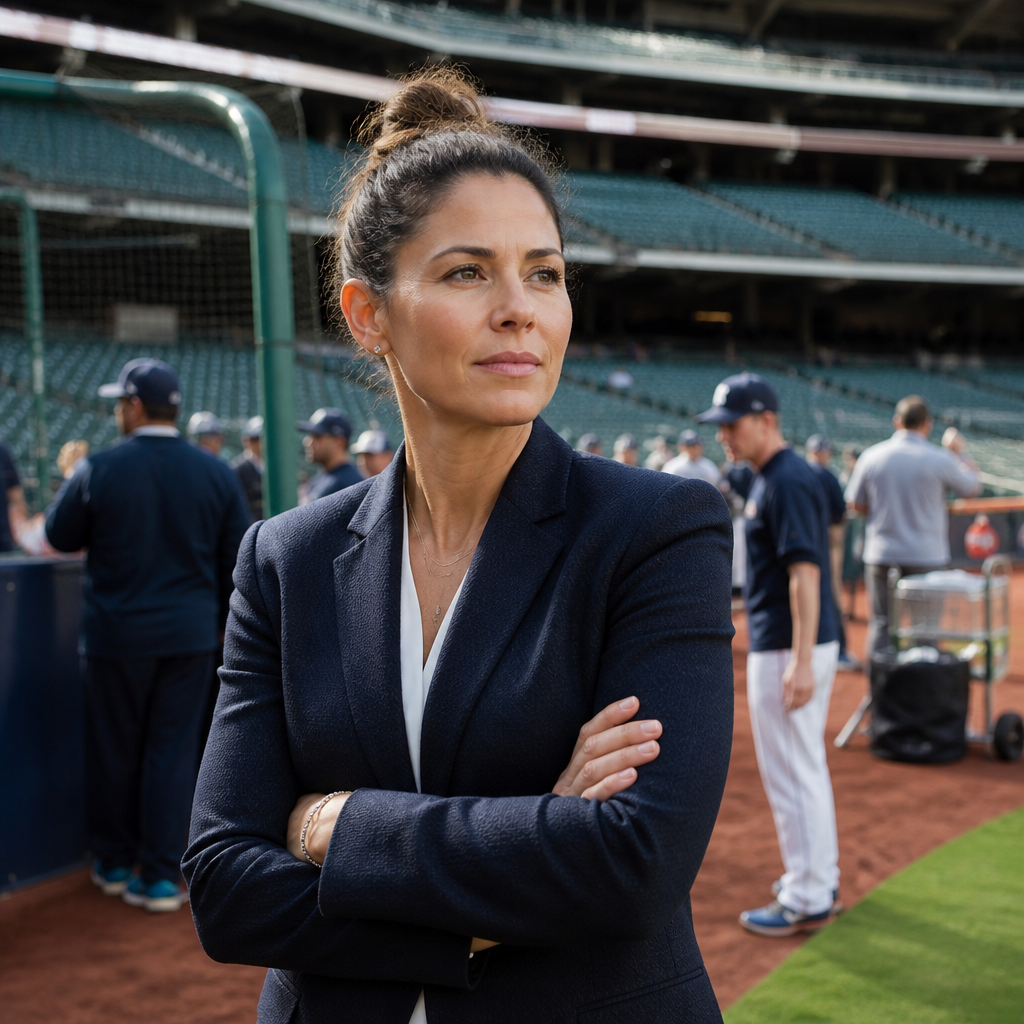
From gloves in dugouts to seats in front offices, women’s leadership in baseball has expanded from isolated milestones into a broad, measurable force shaping how the sport is played, managed, marketed, and governed. Women’s leadership in baseball refers to women influencing decisions across the game, including coaching, player development, scouting, analytics, umpiring, ownership, league administration, media strategy, and community programs. That definition matters because baseball has long been framed as a men’s institution, even though women have participated in it for more than a century as players, owners, executives, writers, trainers, and organizers. In my work covering baseball operations and organizational strategy, I have seen that leadership is rarely only about who occupies the top title; it is about who controls information, sets priorities, hires talent, allocates resources, and defines culture. When women gain authority in those areas, the effects reach far beyond symbolism.
This topic also matters because baseball is an ecosystem, not a single field-level experience. A fan may think first of managers or general managers, but governance begins earlier and runs deeper: youth access, hiring pipelines, equal treatment in facilities, anti-harassment policies, investment in girls’ baseball, and representation in decision rooms all influence who remains in the sport. The rise of women in baseball leadership is therefore both a fairness issue and a performance issue. Organizations make better decisions when they widen the pool of experience and challenge stale assumptions. Recent decades have produced visible examples, from Kim Ng becoming Major League Baseball’s first female general manager with the Miami Marlins in 2020, to Raquel Ferreira helping shape player development and administration with the Boston Red Sox, to Janet Marie Smith redefining ballpark planning and operations with clubs such as the Baltimore Orioles, Atlanta Braves, and Los Angeles Dodgers. These are not side stories. They are central to how modern baseball works.
For a hub article under Women in Baseball, the miscellaneous label should not imply minor importance. It should function as the connective tissue linking every part of the subject. Some readers want a clear answer to a basic question: what kinds of leadership roles do women hold in baseball today? The short answer is nearly every category except that access remains uneven at the highest volume levels. Others ask what barriers persist. The answer is equally direct: hiring networks still skew male, advancement often depends on informal sponsorship, and girls’ baseball pathways remain underfunded compared with softball and boys’ baseball. Understanding both progress and friction is essential if you want a realistic view of the sport.
The Many Forms of Leadership in Baseball
Women’s leadership in baseball cannot be reduced to a single title because the sport runs through interconnected departments. On the baseball side, women work in scouting, research and development, biomechanics, medical services, player development, mental performance, and coaching. On the business side, they lead ticketing, sponsorship, legal affairs, communications, public policy, and venue operations. At the league and federation level, they influence rules, safety standards, competition structures, and international growth. Governance includes owners, presidents, commissioners’ office staff, board members, and the people who design inclusion policies that affect every club.
A practical example is player development. A farm system is not improved only by drafting talent; it is improved by the coordinators who standardize instruction, the analysts who model swing decisions, the trainers who reduce injury risk, and the administrators who move players efficiently through affiliates. Women have contributed in each of these layers. Rachel Balkovec’s path through strength and conditioning, biomechanics, and eventually managing the New York Yankees’ Low-A affiliate showed how technical expertise can convert into direct on-field authority. Her hiring was historically significant, but the deeper lesson was operational: organizations increasingly value skill in communication, data interpretation, and development design, regardless of old assumptions about who belongs in uniform.
Another example is governance through infrastructure. Janet Marie Smith is often associated with iconic ballparks, yet her influence reaches beyond architecture. Ballpark design determines fan access, clubhouse quality, broadcast functionality, revenue opportunities, and civic relationships with surrounding neighborhoods. Those choices affect competitive resources and long-term franchise stability. Leadership in baseball therefore includes the people who shape physical environments and public trust, not only those who write lineup cards.
Historic Foundations and Why They Still Matter
Women did not suddenly enter baseball leadership in the twenty-first century. Effa Manley, co-owner and business manager of the Newark Eagles in the Negro Leagues, remains one of the clearest early examples of baseball governance at the highest level. She handled contracts, promoted games, advocated for civil rights, and helped build one of the most successful Black baseball organizations of the era. Her later induction into the National Baseball Hall of Fame was not a ceremonial correction; it was recognition that ownership, labor management, and community leadership are fundamental baseball work.
The All-American Girls Professional Baseball League also demonstrated that women could sustain professional baseball institutions as players, ambassadors, and organizers, even if the league emerged under wartime circumstances and operated within strict gender norms. Many women who stayed close to the game after that era did so without the titles typically granted to men. They served as unofficial advisors, local organizers, scorekeepers, promoters, and baseball educators. That hidden labor matters because modern leadership pipelines often begin in these overlooked roles.
In recent years, MLB has created more visible avenues, including development programs, internships, and events such as the Trailblazers Series, which introduces girls to baseball rather than steering them automatically into softball. USA Baseball’s women’s national team, the Women’s Baseball World Cup structure under the World Baseball Softball Confederation, and the work of groups like Baseball For All have further legitimized girls’ and women’s baseball as a serious competitive pathway. These foundations matter because leadership grows where participation is normalized. When girls see women coach, scout, umpire, and direct operations, baseball becomes legible as a career, not just a pastime.
Where Women Lead Today Across the Baseball Ecosystem
The current landscape is broader than many fans realize. Clubs now employ women in baseball operations, player health, high performance, communications strategy, and community impact at levels that would have been rare a generation ago. Alyssa Nakken’s coaching role with the San Francisco Giants became a major public milestone because it placed a woman in uniform on a major league coaching staff. Kim Ng’s tenure as general manager mattered because roster construction, contract strategy, and organizational philosophy sit near the center of club power. Bianca Smith broke ground in professional coaching with the Boston Red Sox system. Rachel Balkovec managed in the Yankees system. Each case expanded precedent, which matters in baseball because hiring committees often rely on precedent when they claim to be minimizing risk.
Women also lead in areas less visible to television audiences but no less influential. Baseball analysts build projection systems and opponent plans. Athletic trainers and physical therapists design return-to-play protocols. Legal and compliance teams navigate labor rules, immigration issues, licensing, and workplace standards. Team presidents and chief revenue officers determine how clubs invest in facilities and fan development. In youth and amateur baseball, women direct tournaments, govern leagues, and shape coaching education. If you are building a complete Women in Baseball hub, these roles deserve equal weight because they control inputs that determine future opportunity.
| Leadership Area | What It Controls | Why It Matters | Example |
|---|---|---|---|
| Baseball Operations | Roster decisions, transactions, strategic planning | Directly affects winning and organizational direction | Kim Ng with the Miami Marlins |
| Coaching and Player Development | Instruction, performance routines, advancement | Shapes player growth from rookie ball to majors | Rachel Balkovec, Alyssa Nakken |
| Scouting and Analytics | Talent evaluation, models, draft preparation | Improves talent acquisition and risk management | Women in R&D and pro scouting departments |
| Ballpark and Business Leadership | Facilities, revenue, operations, fan experience | Funds baseball priorities and public credibility | Janet Marie Smith |
| League and Grassroots Governance | Policy, access, tournaments, participation pathways | Creates the pipeline for future players and leaders | Baseball For All, USA Baseball initiatives |
Barriers That Still Limit Advancement
Progress is real, but baseball remains structurally uneven. The first barrier is pipeline design. Boys who play baseball often move through school, travel, college, and summer systems that are familiar to scouts and hiring managers. Girls who want baseball rather than softball still face fewer teams, fewer tournaments, and less visibility. That early separation influences who later enters coaching, scouting, and administrative roles with recognized credentials.
The second barrier is informal hiring culture. Baseball remains relationship-driven. Front-office jobs are often filled through recommendations, seasonal internships, and prior club ties. Those systems can reward trust, but they also reproduce sameness. I have seen organizations claim they want broader candidate pools while posting roles with narrow timelines or vague criteria that effectively advantage insiders. Real change requires transparent job descriptions, structured interviews, and promotion standards tied to measurable work, not clubhouse familiarity.
Third, women in baseball often face burden stacking. They must excel technically while also serving as educators, symbols, and internal advocates. Men are more often permitted to be specialists; women are often expected to justify their presence and mentor others simultaneously. Add travel demands, seasonal instability, and uneven parental leave policies, and retention becomes harder. None of this means women lack resilience. It means organizations still rely too much on individual endurance instead of fixing systems.
A final barrier is credibility bias. In baseball, where tradition is often mistaken for evidence, authority can be granted based on who looks familiar rather than who demonstrates competence. This is why visible firsts matter. Every successful woman in a leadership role reduces the mental friction of the next hire. But relying on firsts is slow. Durable progress comes when clubs build repeatable hiring and development processes that outlast any single pioneer.
What Effective Organizations Do Differently
The clubs and governing bodies that make meaningful progress usually treat inclusion as an operational discipline rather than a public-relations project. First, they widen recruitment channels. That means posting roles publicly, attending broader career events, building relationships with women’s baseball organizations, and valuing transferable expertise from sports science, data analysis, medicine, law, or education. Second, they standardize evaluation. Scorecards, interview rubrics, and work-sample tests reduce the power of unchecked bias and make hiring decisions easier to defend.
Third, effective organizations invest in mentorship and sponsorship. Mentorship helps someone learn the system; sponsorship means a senior leader uses political capital to create opportunity. Baseball needs both. A woman in player development may receive good advice for years and still stall if no executive advocates for her promotion. Fourth, serious organizations audit workplace conditions. Clubhouse access, travel logistics, safety procedures, communication norms, and reporting mechanisms all influence whether a workplace is genuinely professional.
Fifth, they connect participation to leadership. If a team wants more women in baseball operations ten years from now, it should support girls’ baseball now through clinics, grants, equipment access, and partnerships with groups already doing the work. This is not charity. It is long-range talent development. Baseball understands farm systems better than almost any industry; the same logic applies to leadership pipelines. Grow the base, improve the top.
How This Hub Connects the Wider Women in Baseball Conversation
A strong hub page should help readers navigate the subject as a living network. Women’s leadership in baseball touches biography, policy, labor, youth sports, international competition, media representation, and facility design. If you are expanding this Women in Baseball subtopic, related articles should include profiles of executives and coaches, explainers on girls’ baseball versus softball pathways, histories of women’s leagues, analysis of hiring trends, and guides to organizations such as Baseball For All, USA Baseball, and the WBSC. Coverage should also address officiating, athletic training, sports science, and ownership, because leadership is strongest when readers understand the full map of influence.
Use this page as the starting point for that map. It answers the core question directly: women lead in baseball today across competitive, commercial, and governing roles, and their influence is increasing because the sport now has clearer pathways, stronger examples, and better evidence that diverse leadership improves decision-making. At the same time, progress remains incomplete because pipelines, networks, and cultural habits still filter opportunity unevenly. Readers who follow the connected topics will see that no single milestone solves the issue. Sustainable change depends on systems, not headlines.
The main takeaway is simple. Baseball gets better when leadership reflects the full range of people who understand and love the game. Women have already proved they can guide rosters, develop players, design ballparks, govern leagues, and expand access. The next step is not symbolic inclusion; it is routine inclusion backed by hiring discipline, investment, and accountability. If you are building, covering, or supporting the future of baseball, use this hub to explore the wider Women in Baseball landscape and turn interest into informed action.
Frequently Asked Questions
1. What does women’s leadership in baseball actually include?
Women’s leadership in baseball reaches far beyond a few visible breakthrough roles. It includes women shaping decisions and outcomes across nearly every part of the sport: coaching on the field, player development in the minor leagues, scouting amateur and professional talent, building analytics systems, managing medical and performance departments, leading marketing and media strategy, overseeing community outreach, serving in league administration, influencing ownership priorities, and helping define the game’s long-term business direction. In practical terms, women’s leadership means women are not only participating in baseball but helping decide how teams are built, how players are developed, how organizations communicate with fans, and how the sport responds to cultural and economic change.
That broad definition matters because baseball has historically been discussed through a narrow lens, often focusing only on players and managers. Modern baseball organizations are far more complex. Competitive success depends on interconnected systems: data analysis, biomechanics, international operations, youth development, sponsorship, legal compliance, labor relations, and fan engagement. Women in leadership roles contribute in all of these areas, and their influence is measurable in policy, performance, hiring practices, and organizational culture. When people talk about women’s leadership in baseball today, they are talking about decision-making power throughout the game, not symbolic presence alone.
2. Why is women’s leadership in baseball important to the future of the sport?
Women’s leadership is important because baseball’s future depends on stronger institutions, smarter decision-making, and broader participation. A sport that draws leadership from a wider talent pool is better positioned to innovate, solve problems, and connect with changing audiences. Baseball competes not only on the field but also in entertainment, media relevance, youth participation, and global growth. Organizations that welcome women into meaningful leadership roles benefit from more perspectives, more specialized expertise, and more adaptive thinking. That matters in a sport where success increasingly depends on integrating performance science, technology, brand strategy, and community trust.
It is also important because leadership diversity improves legitimacy. Fans, employees, players, and partners notice whether baseball reflects the communities that support it. When women hold leadership roles in front offices, dugouts, broadcast strategy, operations, and governance, the sport sends a clear message that talent and authority are not restricted by outdated assumptions. That can influence who applies for jobs, who stays in the industry, and who believes there is a future for them in baseball. Over time, that creates a healthier pipeline of coaches, executives, analysts, and administrators.
Just as importantly, women’s leadership helps baseball evolve without losing its identity. The game’s traditions are meaningful, but tradition alone does not solve attendance issues, development challenges, labor questions, or changing fan habits. Women leaders are part of the larger group of professionals helping baseball modernize its systems while preserving what people love about the sport. Their leadership is not a side story to baseball’s future; it is part of how that future is being built.
3. How have women’s roles in baseball changed over time?
Women’s roles in baseball have changed from limited participation and isolated recognition to broader influence across professional and institutional structures. For many years, women’s contributions were often pushed to the margins, acknowledged as exceptions rather than accepted as part of baseball’s normal leadership pipeline. In earlier eras, women frequently had to prove they belonged in roles that men were assumed to inherit naturally. When women did break through, those milestones were important, but they were often treated as singular moments instead of signs of structural change.
That has shifted significantly in recent decades. More organizations now employ women in baseball operations, analytics, athletic training, player development, communications, legal departments, and executive leadership. Women have taken on coaching responsibilities at high levels, contributed to scouting and roster construction, and earned positions where their judgment affects daily baseball decisions. At the same time, league offices and clubs have invested more attention in professional pathways, workplace standards, and leadership development. The result is not complete equality, but a much more visible and measurable presence than in the past.
The biggest change may be conceptual. Women are no longer discussed only as pioneers entering baseball; they are increasingly discussed as professionals shaping baseball. That distinction matters. It reflects a move away from novelty and toward normalization. The conversation is becoming less about whether women can lead in baseball and more about how their leadership strengthens the sport. That is a major cultural shift, and it signals progress from symbolic firsts toward durable institutional influence.
4. What barriers still affect women seeking leadership positions in baseball?
Despite real progress, women in baseball still face barriers that can slow advancement or limit access to the most influential roles. One of the most persistent is the legacy of old hiring networks. Baseball, like many established industries, has often relied on informal relationships, insider recommendations, and assumptions about who “fits” certain jobs. When those networks were built in less inclusive eras, they can continue to favor familiar candidates and make it harder for women to gain entry or move upward. This is especially true in competitive decision-making roles such as coaching, scouting leadership, and high-level baseball operations.
Another challenge is the burden of visibility. Women in leadership positions are sometimes judged as representatives of their gender rather than as individual professionals. That can create extra scrutiny, unfair pressure, and fewer margins for error. A man may be seen as one executive or one coach; a woman may be treated as a test case. That dynamic affects confidence, opportunity, and organizational patience. It can also discourage risk-taking by employers who still view hiring women into certain baseball roles as unconventional, even when qualifications are strong.
Workplace culture remains another important issue. Leadership advancement depends not only on formal titles but also on mentorship, trust, communication, and inclusion in strategic conversations. If women are excluded from relationship-building spaces, overlooked for stretch assignments, or left out of influential decision circles, promotion becomes harder even when performance is excellent. In addition, baseball’s demanding schedule, travel expectations, and historically rigid work patterns can create obstacles if organizations are not intentional about flexibility, professional support, and equitable career development.
The good news is that barriers are increasingly being identified clearly rather than ignored. Teams and leagues now have more tools to address them through transparent hiring practices, mentorship programs, accountability metrics, inclusive leadership training, and stronger workplace standards. Progress is most durable when organizations stop treating representation as a public-relations goal and start treating it as a core business and competitive priority.
5. How can baseball continue expanding opportunities for women leaders?
Baseball can expand opportunities for women leaders by building stronger pipelines, making hiring more transparent, and ensuring women are placed in roles with real authority. That begins with recruitment. Teams, leagues, and partner organizations should actively identify women with expertise in coaching, analytics, sports science, business operations, law, finance, media, and youth development, then connect them to meaningful baseball career pathways. Internship programs, fellowships, mentorship networks, and leadership training can all help, but they must lead to actual jobs and advancement rather than temporary visibility.
Promotion systems matter just as much as entry points. Women should have access to assignments that position them for long-term advancement: managing staff, leading projects, participating in roster and development discussions, representing departments in executive meetings, and handling high-stakes operational decisions. Experience creates credibility, and credibility often determines who gets the next opportunity. If women are hired only into support roles without strategic authority, organizations may claim progress without truly changing who leads. Real expansion happens when women are trusted with influence, resources, and responsibility.
Baseball also benefits when it treats inclusion as part of competitive excellence. Organizations should track hiring, retention, and promotion patterns; evaluate workplace culture; invest in mentorship across departments; and hold leaders accountable for building inclusive teams. Public visibility matters too. Highlighting women’s contributions in coaching, front-office work, governance, and community impact helps normalize their presence and inspires the next generation. Ultimately, the goal is not simply to create more firsts. It is to create a baseball ecosystem where women’s leadership is expected, valued, and woven into how the sport develops talent, makes decisions, and defines success.