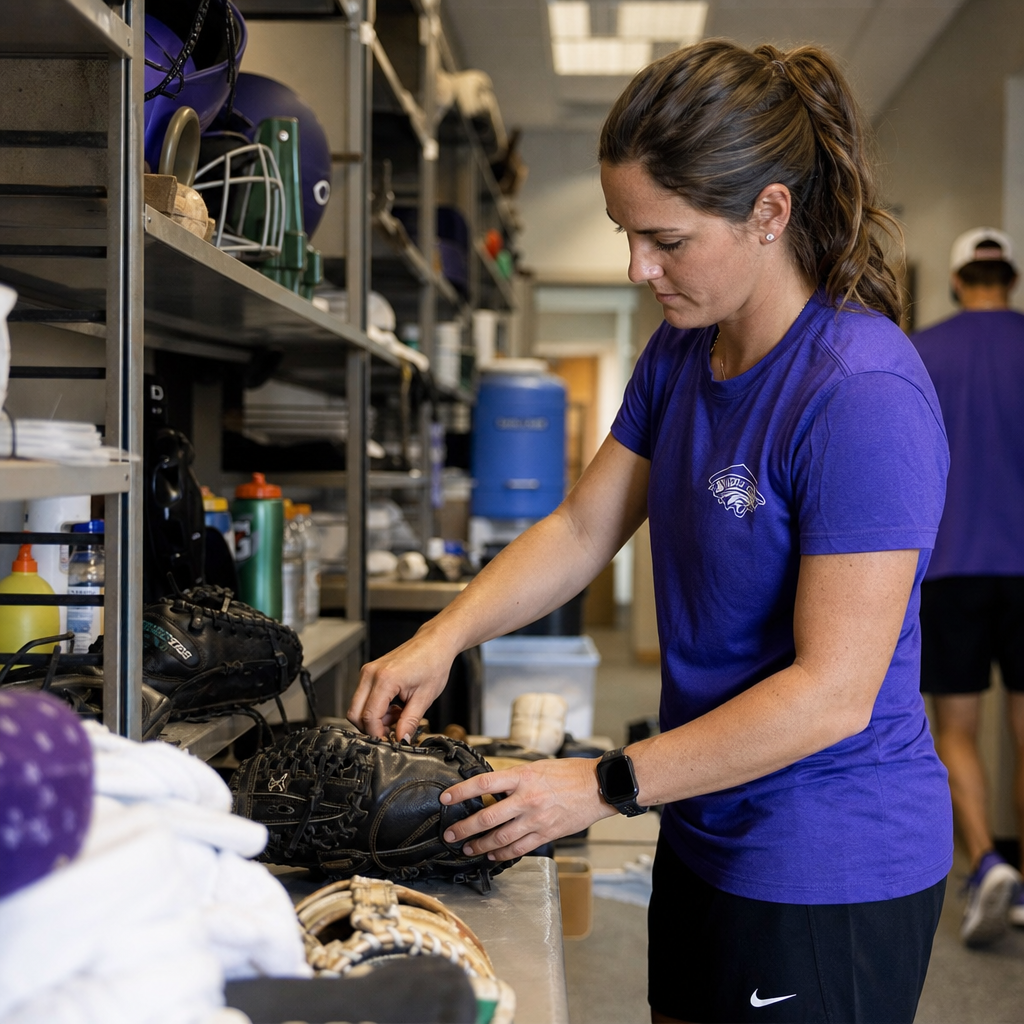
College baseball support staff rarely appear in box scores, yet they shape player health, roster readiness, travel efficiency, recruiting impressions, and the daily operations that keep a program competitive. In practical terms, support staff includes athletic trainers, strength coaches, equipment managers, operations directors, video coordinators, academic advisors, sports information contacts, nutrition staff, mental performance specialists, and student assistants. At larger Division I programs, these roles may be handled by full-time specialists. At smaller schools, one person often carries several responsibilities, and coaches rely heavily on interns, graduate assistants, and campus-wide athletic department resources.
This side of the sport matters because college baseball is a high-volume, high-detail environment. Teams train year-round, manage long road schedules, prepare for weather disruptions, track academic eligibility, and work within NCAA, conference, and school rules. I have seen firsthand that when support systems are strong, coaches spend more time coaching and players recover faster, travel better, and perform with fewer avoidable problems. When support systems are thin, small issues become competitive disadvantages: late buses, missing gear, treatment delays, class conflicts, poor fueling, and weak communication.
As a hub for miscellaneous topics within Minor Leagues and College Baseball, this article explains who these staff members are, what they actually do, how their work connects, and why their contributions deserve attention. It also helps readers understand a core reality of the college game: winning programs are not built by talent alone. They are built by organized people handling hundreds of details correctly, every day, behind the scenes.
Who Makes Up a College Baseball Support Staff
A college baseball support staff is the operational network around the head coach and players. The exact structure changes by division, budget, and institutional priorities, but the common goal is consistent: remove friction from performance. In most programs, the athletic trainer is the most visible non-coach support figure because players interact with them before practices, during games, and through rehabilitation. Strength and conditioning coaches usually handle physical development, movement assessments, and return-to-play coordination. Directors of baseball operations manage travel, schedules, meals, hotel lists, itineraries, and game-day logistics. Equipment staff maintain uniforms, bats, balls, laundry cycles, bullpen gear, and replacement inventory.
Video and analytics staff have become more important as programs rely on platforms such as Synergy, TrackMan, Rapsodo, Blast Motion, and Yakkertech. These tools support scouting reports, swing decisions, pitch design, defensive positioning, and player development meetings. Academic advisors ensure players stay on track with degree progress and eligibility standards. Sports information personnel coordinate statistics, media notes, roster updates, and publicity. Nutrition staff, whether dedicated or shared across sports, help players manage body composition, hydration, recovery meals, and supplement compliance. Mental performance specialists, increasingly common at well-resourced schools, support concentration, emotional regulation, confidence, and routine building.
Smaller details matter too. Team physicians review imaging and make medical decisions. Compliance staff clear recruiting and eligibility questions. Facility crews maintain fields and cages. Student managers chart bullpens, set up batting practice, organize dugout supplies, and complete jobs that save hours each week. A support staff is not a luxury layer. It is the structure that allows a baseball program to function at college speed.
Athletic Training and Sports Medicine: Availability Is a Competitive Edge
The athletic trainer is often the busiest person in a college baseball program. Baseball creates repetitive stress, especially in shoulders, elbows, hips, hamstrings, obliques, and lower backs. Position players need maintenance across long practice blocks and dense game weekends. Pitchers need workload monitoring, post-throw care, arm recovery protocols, and communication around soreness versus injury. A good trainer does not merely tape ankles and react to emergencies. They build daily systems: treatment windows, screening procedures, hydration checks, recovery plans, referral pathways, and documentation.
At serious programs, sports medicine coordination starts well before first pitch. Preseason physicals, medical histories, baseline movement screens, concussion procedures, and emergency action plans must be in place. During the season, trainers communicate with strength staff, coaches, physicians, and sometimes parents on timelines and restrictions. If a pitcher reports forearm tightness, the trainer helps determine whether that is expected fatigue, mechanical overload, or an early warning sign requiring shutdown and imaging. The difference between proactive monitoring and delayed action can determine whether a player misses two days or an entire season.
I have watched teams with excellent athletic training staffs keep injuries from spiraling simply because players trusted the process and reported issues early. That trust is built through consistency. The trainer is there for 6 a.m. lifts, rainy practice adjustments, long bus arrivals, and rehab on travel days. In a sport where roster depth can evaporate quickly, availability is a competitive edge, and support staff drive it.
Strength, Conditioning, and Performance Development Beyond the Weight Room
Strength and conditioning in college baseball is not about generic lifting plans or chasing big numbers in the squat rack. It is about force production, rotational power, sprint efficiency, joint integrity, workload tolerance, and timing those qualities across fall practice, preseason buildup, conference play, and the postseason. The best baseball strength coaches design around position demands and injury history. A catcher, starting pitcher, middle infielder, and two-way player should not be managed identically.
Modern programs combine traditional training with testing and monitoring. That may include jump testing, sprint timing, range-of-motion checks, wellness questionnaires, GPS outputs for certain movements, and throwing workload logs. The purpose is simple: know when to push, when to maintain, and when to back off. If a team plays four games in three days and gets home at 3 a.m., the next lift should not look like a normal developmental day. Smart staff adjust for fatigue without sacrificing long-term gains.
Strength coaches also bridge communication gaps. When a player says his hamstring feels “tight,” the performance staff may compare prior sprint outputs, soft tissue history, and movement quality to decide whether he needs treatment, reduced volume, or normal work. These decisions improve practice quality and reduce guesswork. Programs with integrated performance departments are usually better at turning raw recruits into durable, stronger, faster college players over three or four years.
Operations, Travel, and Equipment: The Invisible Work That Prevents Chaos
Fans see the game, but operations staff see every moving part required to make the game happen. The director of baseball operations often handles buses, flights, rooming lists, meal coordination, practice slots, visiting team communication, compliance paperwork, and contingency planning. In spring baseball, weather can wreck schedules with almost no notice. That means finding indoor space, shifting batting practice times, extending hotel stays, changing bus departures, and updating players quickly. A calm operations office protects a team from distractions that drain focus.
Equipment management is equally critical. Uniform sets, laundry cycles, batting gloves, catcher’s gear, bullpen bags, helmets, fungos, weighted balls, training aids, and replacement cleats all have to be tracked. At richer programs this may be a dedicated baseball equipment role; elsewhere it falls to athletic department equipment staff plus student managers. Either way, reliability matters. Nothing reveals organizational weakness faster than missing road jerseys, broken helmet inventories, or a bullpen lacking essentials in the seventh inning.
| Support role | Primary responsibility | Direct impact on team performance |
|---|---|---|
| Director of operations | Travel, scheduling, itineraries, meals, logistics | Reduces fatigue, confusion, and missed details on game weekends |
| Equipment manager | Uniforms, gear inventory, laundry, dugout and bullpen setup | Keeps players prepared and limits preventable disruptions |
| Video or analytics coordinator | Game coding, reports, data management, presentation support | Improves scouting, player development, and decision-making |
| Academic advisor | Class scheduling, progress checks, eligibility monitoring | Protects availability and supports retention |
| Sports information contact | Statistics, media notes, records, publicity | Shapes recruiting visibility and external reputation |
Even routine details influence outcomes. A well-timed postgame meal helps recovery. A smart rooming plan supports sleep. A clean itinerary prevents missed treatments and study hall conflicts. Good operations are not glamorous, but they keep a baseball season from becoming an administrative fire drill.
Video, Analytics, and Information Flow in the Modern Program
College baseball now depends on information systems that were once limited to professional organizations. Video coordinators and analytics staff collect bullpen footage, tag games, edit clips, distribute opponent reports, and organize data from tools such as TrackMan and Rapsodo. For hitters, that can mean swing-decision review, contact quality trends, chase rates, and pitch-type performance. For pitchers, it may include vertical break, horizontal movement, release consistency, spin efficiency, extension, and command plots. Used correctly, these metrics sharpen coaching. Used poorly, they create noise.
The support staff role here is translation. Players do not need a flood of jargon before a Friday night start. They need useful, actionable information. For example, instead of delivering twenty charts, a strong staff might tell a left-handed hitter that an opposing righty steals strike one with a backdoor slider and finishes putaways above the zone when ahead. That is a scouting report the player can apply immediately. Likewise, a pitcher might be shown that his best four-seam shape plays at the top rail when his release height stays within a narrow band, connecting feel to measurable output.
Video also supports recruiting, injury review, and internal development plans. Some schools maintain shared databases where coaches, trainers, and performance staff can reference bullpens, rehab throws, and practice notes. The common thread is clarity. Better information flow leads to better decisions, and modern support staff are the custodians of that flow.
Academic, Mental, Nutrition, and Communications Support
College baseball players are students first in ways that directly affect team success. Academic advisors help with registration, class attendance planning, tutoring, study hall structure, and degree progress monitoring. This is not paperwork for its own sake. Eligibility rules, institutional standards, and transfer realities mean one missed requirement can cost a team a contributor. Advisors also reduce stress by helping athletes navigate travel absences, exam conflicts, and faculty communication. In my experience, players perform better when academic expectations are clear and support arrives early rather than after grades dip.
Mental performance support is another area where programs separate themselves. Baseball is a failure-heavy sport with constant evaluation, role uncertainty, and long stretches between opportunities. A reliever may wait two weekends, then be asked to enter with the bases loaded. A hitter can strike the ball hard three times and still go 0-for-3. Specialists in this area teach routines, breathing methods, self-talk management, attentional control, and reset strategies after mistakes. Teams that normalize these conversations usually see better emotional steadiness over a full season.
Nutrition support has become more sophisticated as schools recognize the link between fueling and performance. Even without a full-time baseball dietitian, many departments now provide hydration plans, recovery shakes, body-composition monitoring, meal timing guidance, and supplement education aligned with third-party certification standards such as NSF Certified for Sport. Communications staff also matter more than outsiders assume. Sports information contacts maintain records, support broadcasts, pitch storylines to local media, and preserve the public profile that helps recruiting, alumni engagement, and postseason recognition.
How Support Staff Differ Across Divisions and Why This Hub Matters
Not every college baseball program can build a large support department, and that context matters. In power conference baseball, a team may have dedicated analysts, full-time operations personnel, multiple strength coaches within the department, extensive sports medicine access, and technology-rich player development labs. At many mid-major, Division II, Division III, NAIA, and junior college programs, staffing is leaner. One athletic trainer may cover multiple sports. A graduate assistant may handle video and operations. Coaches may wash practice gear in shared facilities and rely on student managers for charting and setup. Resource gaps are real, but effective organization still creates advantages.
This is why a miscellaneous hub page is valuable under Minor Leagues and College Baseball. Many readers search for coaches, players, scholarships, rankings, or pro pathways, but the hidden infrastructure of college baseball explains how those visible outcomes happen. Support staff influence recruiting visits, injury rates, player retention, transfer adaptation, clubhouse culture, and even how a prospect is perceived by scouts who value polished routines and physical readiness. They also shape the fan experience through cleaner game operations, better broadcasts, and more accessible information.
The big lesson is straightforward: college baseball is a coordinated enterprise. If you want to understand why one program feels professional and another feels scattered, start behind the scenes. Learn who handles medicine, strength, logistics, equipment, data, academics, nutrition, communications, and mental skills. Then follow how those people work together. Explore the related articles in this subtopic hub to see how these roles connect with recruiting, development, and the broader baseball pipeline.
Frequently Asked Questions
What does the support staff of a college baseball team actually do day to day?
The support staff handles much of the work that allows coaches and players to focus on preparation and performance. On a typical day, athletic trainers monitor injuries, manage treatment plans, tape players, and coordinate return-to-play decisions. Strength and conditioning coaches oversee lifting schedules, mobility work, recovery sessions, and individualized development programs designed to build power, durability, and movement quality over a long season. Equipment managers prepare uniforms, maintain bats, balls, protective gear, and practice equipment, and make sure everything needed for a workout, road trip, or game is ready before players arrive.
Behind that visible layer, operations staff manages travel logistics, hotel arrangements, meals, practice schedules, compliance-related coordination, and facility access. Video coordinators film practices and games, organize clips, and help staff break down mechanics, pitch usage, opponent tendencies, and defensive alignments. Academic advisors help players balance classes, study hall, eligibility requirements, and missed time caused by travel. Sports information and communications staff handle statistics, media requests, game notes, and the public image of the program. Nutrition professionals, mental performance specialists, and student assistants add another level of support by helping athletes fuel correctly, manage stress, and keep daily routines efficient. In short, support staff members make the baseball operation function smoothly long before the first pitch and long after the final out.
Why are support staff so important if they are not the ones coaching on the field?
Support staff matter because winning baseball games depends on far more than in-game strategy. A talented roster can be undermined by poor recovery, travel problems, preventable injuries, disorganized equipment, weak academic support, or inconsistent communication. Support personnel reduce those risks and create stability across the season. When athletic trainers catch a minor issue before it becomes a major injury, when strength coaches keep pitchers on sound workload plans, or when operations staff eliminates travel headaches, the team performs better even if those contributions never show up in a box score.
They also create the environment that sustains a program over time. Recruits and their families often judge a school not just by the head coach, but by the full ecosystem around the players. A well-run program signals professionalism, player care, and long-term development. Support staff influence player retention, daily morale, and overall trust in the program. At larger Division I schools, these roles may be highly specialized, while smaller programs may ask a few staff members to wear multiple hats. Either way, their impact is substantial. They help keep athletes healthy, eligible, organized, and mentally prepared, which is why strong support staffs are often a hidden advantage in successful college baseball programs.
Which support staff roles have the biggest impact on player health and performance?
Several roles directly shape health and performance, but the most influential usually include athletic trainers, strength and conditioning coaches, nutrition staff, and mental performance specialists. Athletic trainers are often the first line of defense in keeping players available. They evaluate injuries, manage rehabilitation, communicate with team physicians, track soreness and workload trends, and help determine when an athlete is truly ready to return. In baseball, where overuse injuries and repetitive stress are common, that work is critical. A trainer’s ability to catch warning signs early can preserve a player’s season and, in some cases, long-term career trajectory.
Strength and conditioning coaches are equally important because they build the physical foundation for performance. They tailor programs for pitchers, catchers, infielders, and outfielders based on positional demands, movement patterns, and development goals. Their work often includes speed training, rotational power, arm-care integration, recovery planning, and in-season maintenance. Nutrition professionals support body composition goals, hydration, game-day fueling, and recovery habits, all of which influence energy, durability, and readiness. Mental performance staff help players handle slumps, pressure, failure, confidence, and routine, which is especially valuable in a sport built around repetition and resilience. While position coaches teach baseball skills, these support roles often determine whether athletes can stay healthy enough, strong enough, and mentally steady enough to use those skills consistently.
How do support staff affect recruiting and a program’s reputation?
Support staff can make a major difference in recruiting because recruits are evaluating the total player experience, not just the baseball field. Families want to know who will help their son stay healthy, grow stronger, succeed academically, and manage the demands of college life. When a program can show organized travel operations, quality medical care, thoughtful strength training, structured academic support, and a professional day-to-day environment, it becomes easier to build credibility. Recruits notice whether facilities are clean and prepared, whether practice runs on time, whether communication is clear, and whether players seem supported outside of games. Those details often reflect the quality of the staff working behind the scenes.
A strong support system also shapes a program’s reputation over the long term. Players talk to former teammates, summer-ball contacts, high school coaches, and prospects about what life in the program is actually like. If athletes feel neglected, overworked, or disorganized, that information spreads quickly. On the other hand, when players speak highly of trainers, academic advisors, operations directors, and development staff, the program earns trust. Sports information contacts and communications staff help amplify that reputation by presenting the team professionally to media, alumni, and recruits. In many cases, support staff do not just help close recruiting battles; they help build a brand of professionalism, care, and competitiveness that sustains recruiting success year after year.
How does support staff structure differ between large Division I programs and smaller college baseball programs?
At larger Division I programs, support staff is often more specialized. A school may have multiple athletic trainers, a dedicated strength coach for baseball, a full-time director of operations, separate video and analytics personnel, sports dietitians, academic support staff assigned by sport, communications professionals, and specialists in mental performance or sports science. That structure allows each person to focus deeply on a specific area, which can raise the level of detail and efficiency across the program. Players may receive more individualized plans, faster access to resources, and more comprehensive daily support. The result is often a polished operation that mirrors aspects of professional baseball.
Smaller programs, including many mid-major, Division II, Division III, NAIA, or junior college teams, often operate with fewer resources and more overlap in responsibilities. One staff member may handle operations and equipment, a trainer may cover multiple sports, and coaches themselves may take on tasks that larger programs delegate. Student assistants can become especially important in these environments, helping with practice setup, laundry, technology, charting, and travel prep. That does not mean smaller programs are less effective; in many cases, they succeed because staff members are adaptable, efficient, and deeply invested. The main difference is usually scale and specialization, not commitment. No matter the level, the best programs are the ones where support staff roles are organized clearly and aligned around player development, team readiness, and the daily standards that keep the season moving forward.