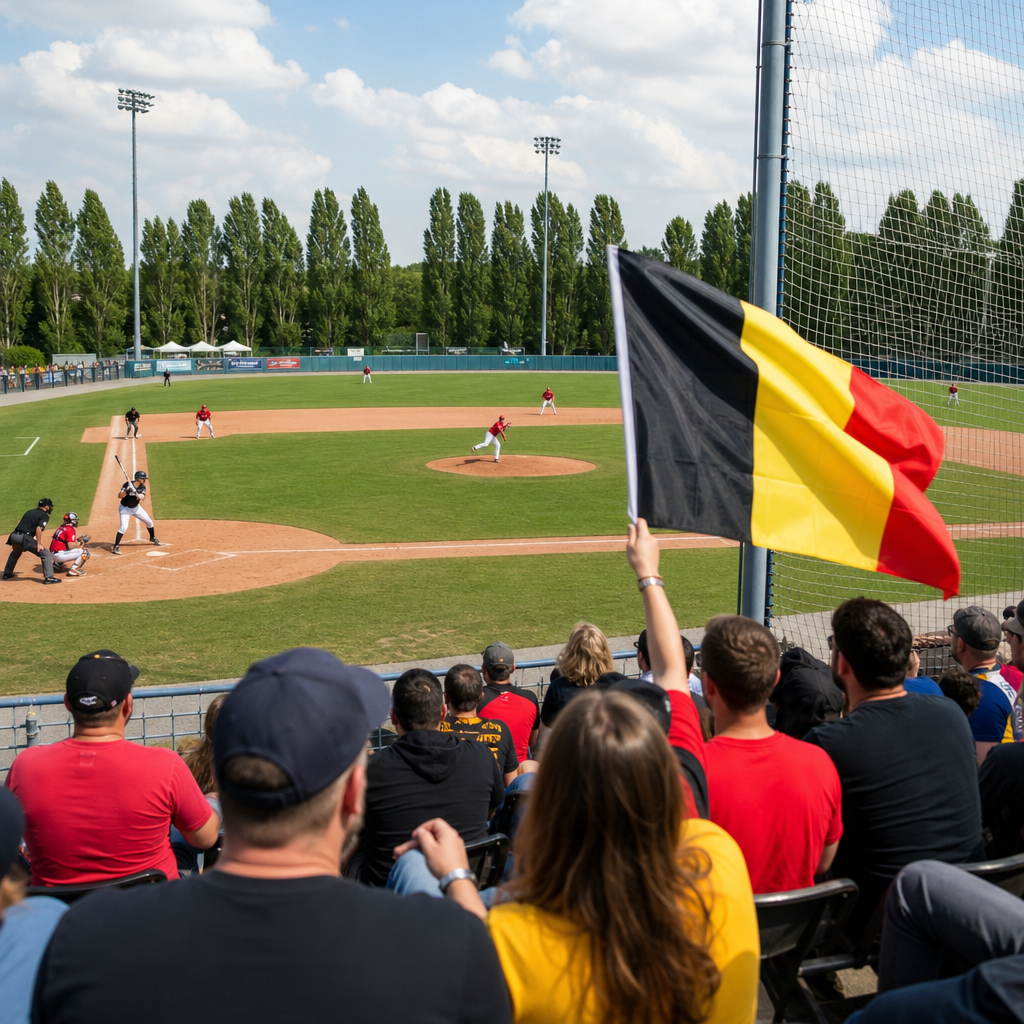
Belgium’s baseball scene is no longer a curiosity tucked behind football and cycling; it is a steadily developing part of the country’s wider sporting culture. In practical terms, Belgium baseball refers to the network of clubs, youth programs, governing bodies, competitions, facilities, coaches, and international pathways that support both baseball and its close sibling, softball across the country. While Belgium is not yet a European heavyweight on the level of Italy or the Netherlands, I have seen firsthand that interest has broadened meaningfully over the last decade through local clubs, school exposure, social media, and cross-border influence. That matters because smaller baseball nations often grow in stages: first through committed communities, then through better coaching and facilities, and finally through wider public recognition. Belgium is clearly in the middle phase. For readers exploring international baseball, Belgium offers a useful case study in how the sport develops outside traditional strongholds. Its progress shows how volunteer-run clubs, federation structure, and regional identity can create durable momentum even without massive media coverage. Understanding Belgium’s baseball landscape helps explain not only where the sport stands today, but also where future European growth may come from.
How Baseball Is Organized in Belgium
Baseball in Belgium sits within a structured but relatively compact ecosystem. The national governing framework has historically covered both baseball and softball, with club competition organized through regional and national leagues. Because Belgium is divided linguistically and administratively, sports development often reflects that reality. In baseball, that means clubs and programs may align with Dutch-speaking Flanders, French-speaking Wallonia, or the Brussels region, yet still compete under national structures. From an operational standpoint, this creates both friction and strength. Coordination can be slower, but local identity often helps clubs build loyal membership bases.
Most Belgian baseball clubs are community-centered organizations. They rely heavily on volunteers for field maintenance, youth coaching, scorekeeping, event operations, and sponsorship outreach. In my experience following European baseball systems, this volunteer foundation is typical and often underrated. A club can survive limited media exposure if it has reliable parents, experienced senior players, and a board that understands both sport and administration. Belgium has produced exactly that type of stability in several hubs, allowing leagues to function even when participation numbers fluctuate.
The domestic structure generally includes adult competition, youth categories, and development activity tied to club academies or introductory programs. Promotion and relegation principles, common in European sport, shape baseball culture too. That format gives clubs a concrete competitive target and makes every season meaningful beyond a championship race. For developing players, the setup provides a ladder: youth baseball, senior domestic competition, and then possible national-team or foreign-league opportunities.
Why Interest in Belgium Baseball Is Growing
The growth in Belgian baseball is tied to several reinforcing factors rather than one breakthrough moment. First, visibility has improved. Streaming platforms, YouTube highlights, MLB social clips, and game explainers have made the sport easier to discover. A teenager in Antwerp or Liège can now watch pitching breakdowns, bat-speed analysis, or World Baseball Classic highlights within minutes. That changes the entry barrier. Baseball once depended on direct personal introduction; now digital exposure does part of the work.
Second, Belgium benefits from geography. The Netherlands has one of Europe’s strongest baseball traditions, and proximity matters. Cross-border games, coaching influence, and regional awareness help Belgian players imagine a pathway that feels realistic. When a neighboring country sustains successful clubs and sends talent into elite European tournaments, the sport stops looking exotic. It becomes attainable.
Third, the game appeals to families seeking alternatives to crowded mainstream sports. Baseball offers a different rhythm, less continuous contact, and defined skill roles. I have seen parents gravitate toward it because children who are not drawn to football still find a place in baseball, whether through pitching mechanics, defensive instincts, base running, or game intelligence. The sport can include varied body types and personalities better than many assume.
Finally, international baseball itself has become easier to follow. Events such as the World Baseball Classic, European championships, and Olympic-related coverage create moments of relevance. Even when Belgium is not central to those headlines, global attention raises local curiosity and gives clubs a chance to convert viewers into participants.
Clubs, Cities, and Grassroots Development
Belgium’s baseball scene grows club by club, not through a single national spotlight. The most important centers are the places where fields are maintained well, youth practices are consistent, and newcomers are welcomed quickly. In smaller baseball markets, that last point is decisive. A beginner who feels lost during the first two sessions often never returns. The best Belgian clubs understand this and simplify onboarding with loaner equipment, beginner clinics, and mixed-skill training groups.
Baseball development in Belgium is strongest where clubs do three things consistently: recruit children, retain teenagers, and create a pathway into adult play. Many European clubs succeed with the first step but fail at the second. Adolescence is where player loss typically occurs because football, studies, and social schedules compete for time. Belgian clubs that keep juniors engaged usually offer more games, clearer coaching standards, and social belonging beyond pure training.
Another important trend is multi-sport participation. Unlike in the United States, where specialization often starts early, Belgian athletes frequently divide time across sports. That can slow technical baseball development in the short term, but it also produces better general movement skills and reduces burnout. Coaches who understand this reality adapt by focusing on efficient practices: more repetitions, clearer drill design, and measurable skill progress.
Grassroots growth also depends on practical access. A quality baseball field is harder to build and maintain than a simple grass pitch. Clubs need backstops, mounds, dugouts, safe infield surfaces, and storage for gear. Where municipalities support that infrastructure, baseball becomes sustainable. Where clubs must constantly improvise, growth is fragile.
Competition Levels and Player Pathways
For a player entering Belgium baseball, the pathway usually starts locally and expands outward. Youth divisions provide the basic rules, hitting reps, defensive fundamentals, and game awareness needed for long-term progress. From there, talented players move into stronger domestic competition and, in some cases, national development environments. The ceiling is not limited to Belgium. Ambitious athletes may pursue opportunities in the Netherlands, Germany, France, college systems abroad, or independent and developmental programs that offer higher-level exposure.
What matters most is not whether Belgium can immediately produce major league talent; it is whether the country can consistently produce well-trained players. That distinction is essential. Strong baseball nations are built on technical depth, not rare exceptions. In Belgium, progress is visible when more players throw with clean mechanics, make routine defensive plays reliably, understand situational baseball, and face better velocity earlier in their development.
The domestic competitive environment still has limits. Talent is distributed unevenly, and some clubs have deeper rosters than others. Travel can also affect scheduling and player availability. Yet those constraints are common in emerging baseball countries. The practical solution is regular inter-club competition, selective all-star or academy environments, and coaching exchanges that expose players to better standards.
| Development Area | What Strong Belgian Clubs Do | Why It Matters |
|---|---|---|
| Youth recruitment | Run school clinics, open days, and beginner camps | Creates a steady intake of new players |
| Teen retention | Offer competitive games, social identity, and visible progression | Prevents dropout during key development years |
| Coaching quality | Use structured plans, certified instruction, and video feedback | Improves fundamentals and game understanding |
| Facility standards | Maintain safe infields, batting areas, and equipment access | Makes regular practice possible and professional |
| Advanced pathways | Build links to national teams and neighboring leagues | Gives top players realistic next steps |
Coaching, Facilities, and the Quality Gap
If Belgium wants to accelerate baseball growth, coaching and facilities are the leverage points. I have watched enough European programs to say this confidently: participation numbers can rise for a while on enthusiasm alone, but standards only improve when instruction becomes systematic. Good coaching means more than enthusiasm and former-player instinct. It requires age-appropriate planning, throwing-load awareness, repeatable hitting progression, defensive footwork teaching, and game-context communication. Tools such as Rapsodo, Blast Motion, and video analysis can help, but they are only useful when coaches understand what they are measuring.
Facilities present a similar challenge. Baseball cannot be developed efficiently on poorly lined fields with inconsistent mounds and limited batting space. Players need repetition, and repetition depends on infrastructure. Indoor training capacity is especially important in Belgium’s climate. Rain and cold weather can erase development time unless clubs have cages, covered areas, or gym partnerships for winter work.
There is also a quality gap within the country. Some clubs are relatively advanced in coaching organization and player support; others are still dependent on a handful of committed individuals. That gap is not unique to Belgium, but narrowing it is central to long-term growth. Federation-led coach education, shared practice frameworks, and regional clinics are practical ways to raise the floor without waiting for every club to solve the problem alone.
National Team Relevance and International Context
National teams matter enormously in smaller baseball countries because they create visibility, aspiration, and a benchmark for standards. For Belgium, international competition is both a challenge and a development tool. Results against stronger European opponents can expose weaknesses quickly: command under pressure, defensive consistency, offensive approach against better pitching, and roster depth. That feedback is valuable. It tells federations and clubs where the domestic game still needs work.
Belgium operates in a competitive European environment shaped by established programs in the Netherlands, Italy, Germany, Spain, France, and the Czech Republic. Those countries provide useful reference points. The Netherlands demonstrates what sustained baseball culture can look like. Germany shows how infrastructure and club scale can boost participation. The Czech Republic has proven that patient development can produce meaningful international credibility. Belgium does not need to copy any one model perfectly, but it does need to study what works.
International baseball also helps with legitimacy at home. A strong showing in European competition can attract local media coverage, municipal support, and youth curiosity in a way that routine domestic fixtures rarely can. Even modest success matters if it is communicated well through club channels, federation updates, and accessible storytelling around players and coaches.
The Outlook for Belgium’s Baseball Future
Belgium’s baseball future is promising if stakeholders stay realistic about what growth actually requires. The sport does not need overnight transformation. It needs steadier recruitment, better coach education, safer and more functional facilities, and clearer player pathways from youth entry to senior competition. Those are manageable goals. They also align with how successful second-tier European baseball countries have grown over time.
The key takeaway is simple: Belgium baseball is growing because committed clubs have built a genuine base, and that base is now strong enough to support broader interest. The scene remains niche compared with football, cycling, and tennis, but niche does not mean stagnant. It means targeted opportunity. For readers following international baseball, Belgium is a hub worth watching because it shows how the sport expands through local credibility, not hype. If you want to understand European baseball beyond the obvious powers, start with Belgium’s clubs, competitions, and development efforts, then follow the players and programs connected to them. That is where the next phase of growth will be visible first. Explore the local teams, watch the leagues, and use this hub as your starting point for the wider miscellaneous side of international baseball.
Frequently Asked Questions
How popular is baseball in Belgium compared with other sports?
Baseball in Belgium remains a developing sport rather than a mainstream national obsession, especially when compared with football, cycling, tennis, and some indoor team sports that traditionally receive far more media coverage and public attention. That said, the sport has built a stable and increasingly visible presence through local clubs, youth academies, regional competitions, and the work of national governing structures. In many parts of the country, baseball is no longer seen as an obscure import; instead, it is becoming recognized as a legitimate participation sport with strong community roots and a clear developmental pathway for young players.
Its popularity is best understood through steady growth rather than headline-grabbing scale. Belgian baseball benefits from a dedicated base of players, volunteers, coaches, and families who help sustain the game at grassroots level. Clubs often serve as the heart of the sport, introducing children to baseball and softball, organizing training sessions, and building a social environment that keeps players involved over time. While overall participation numbers remain below Europe’s leading baseball nations, the trend is encouraging because interest tends to deepen where clubs have consistent coaching, access to fields, and youth outreach.
Another important point is that baseball’s profile in Belgium is helped by its close connection to softball. In practice, the two sports often share infrastructure, development systems, and club culture. This broadens the base of participation and strengthens the overall ecosystem. So while baseball may not rival the country’s top spectator sports, it occupies a growing and increasingly organized place in Belgium’s wider sporting culture.
What is driving the growth of baseball in Belgium?
Several factors are contributing to the growth of baseball in Belgium, and most of them come down to better organization at the grassroots level. One major driver is the expansion of youth development. When clubs invest in junior training, school outreach, beginner-friendly sessions, and age-appropriate coaching, they create a sustainable pipeline of new players. This is especially important in a sport like baseball, where many fundamentals must be taught early and practiced consistently. The more young players enter the system, the stronger the future standard of play becomes.
Club structure also matters enormously. Belgian baseball has grown where clubs have built reliable routines around coaching, competition, and community involvement. A well-run club does more than field a senior team; it provides beginner entry points, development squads, volunteer support, and a welcoming environment for families. That kind of stability turns occasional interest into long-term participation. In practical terms, a child who starts at a local club today may move through youth levels, receive more advanced instruction, and eventually compete at a higher domestic or international level.
International influence is another important factor. Belgium sits close to stronger baseball countries, including the Netherlands, which creates opportunities for competitive exposure, coaching exchange, and higher performance benchmarks. Even when Belgium is not yet competing at the same level, proximity to stronger baseball environments can raise standards. In addition, global access to MLB content, online training resources, and social media highlights has made the sport more accessible and appealing to younger audiences who may not have grown up with baseball in their immediate family or local area.
Finally, the sport’s growth reflects persistence. Baseball often expands gradually, through committed volunteers, patient coaching, and local success stories rather than sudden national breakthroughs. In Belgium, that patient work is beginning to pay off. More people understand the sport, more clubs are developing players systematically, and more athletes can now see a genuine pathway from grassroots participation to representative competition.
How is baseball organized in Belgium, and what role do clubs play?
Baseball in Belgium is organized through a network of governing bodies, regional structures, clubs, coaches, and competitions that together form the foundation of the sport. At the top, national administration helps coordinate rules, development, competition standards, and international representation. Beneath that, clubs do the day-to-day work that actually keeps the sport alive. They are where players learn the game, where teams are formed, where practices take place, and where baseball culture is built over time.
Clubs are especially important because Belgian baseball is not large enough to rely on passive popularity. Growth depends on active local engagement. A club may run youth sessions, recruit new players, train coaches, host games, maintain facilities, and support both baseball and softball programs. In many cases, volunteers are essential to this process. Parents, former players, and local supporters often contribute as team managers, scorers, groundskeepers, organizers, and event coordinators. That community effort is one of the sport’s biggest strengths.
Competitions are typically structured by age group and skill level, allowing players to progress gradually. Youth leagues introduce fundamentals in a competitive setting, while senior divisions give more experienced athletes a chance to play at a higher level. The best clubs tend to combine player development with a strong internal culture, ensuring that competitive ambition does not come at the expense of accessibility. That balance is crucial in an emerging baseball country, where retaining new players is just as important as producing elite ones.
In short, clubs are the backbone of Belgian baseball. Without them, there is no meaningful pathway from first contact with the sport to sustained participation or international opportunity. They are not simply teams; they are the institutions that connect grassroots enthusiasm with long-term development.
Does Belgium have a pathway for talented baseball players to reach higher levels?
Yes, Belgium does offer a pathway for talented baseball players, although it is more selective and less extensive than in Europe’s strongest baseball nations. The journey typically begins at club level, where players develop basic skills, game understanding, and physical habits through regular training and competition. As players improve, they may enter stronger domestic environments, participate in regional or national development programs, and attract attention for representative opportunities. For ambitious athletes, the key is not only talent but also access to quality coaching, consistent competition, and a club environment that supports long-term growth.
National team involvement is one of the clearest steps upward. Players who perform well domestically may be identified for age-group or senior representative squads, depending on the structure and calendar in a given period. These opportunities are valuable because they expose players to a higher standard of play, more structured preparation, and stronger opponents. International competition can quickly reveal what separates good domestic players from those capable of performing at a broader European level.
There are also pathways beyond Belgium. Because the country is part of a wider European baseball landscape, standout players may seek opportunities abroad for stronger club competition, advanced coaching, or further exposure. For some, that can mean joining organizations or programs in neighboring countries with deeper baseball traditions. Others may pursue academic and athletic routes where baseball remains part of their development. While these pathways are not automatic, they are increasingly realistic for players who combine ability with discipline and the right support network.
The important takeaway is that Belgium may not yet have the same depth as a major baseball nation, but the route upward does exist. It requires commitment, patience, and often some initiative from the player and family, yet the structure is strong enough to reward serious talent. As the domestic game continues to mature, those pathways are likely to become clearer and more accessible.
What challenges does Belgian baseball still face as it continues to grow?
Belgian baseball’s biggest challenges are scale, visibility, and resources. Because the sport operates outside the country’s most dominant sporting traditions, it often has to compete for attention, funding, facilities, and media coverage. This can affect everything from youth recruitment to field availability to sponsor interest. In a sport where player development depends heavily on repetition and specialist coaching, limited infrastructure can slow progress. If clubs do not have reliable access to well-maintained diamonds, indoor training spaces, or enough qualified instructors, growth becomes uneven.
Another challenge is retention. Attracting curiosity is one thing; keeping players involved over several years is another. Baseball has a learning curve, and beginners may need more time before they feel fully confident and competitive. That means clubs must work hard to make the sport welcoming, well-taught, and socially rewarding. A strong first impression matters, but so does long-term support. The clubs that succeed are usually the ones that combine technical development with a real sense of belonging.
Competitive depth is also an issue. In countries with larger baseball traditions, players benefit from a broad base of high-level competition every week. In Belgium, the pool is smaller, so the strongest athletes may need extra challenges to continue progressing. That makes coaching quality, cross-border competition, and development planning especially important. Without enough advanced opportunities, talented players can plateau.
Even so, these challenges are not signs of weakness so much as signs of a sport in transition. Belgian baseball has already moved beyond novelty and into a more serious stage of organization and development. The next steps involve strengthening youth systems, expanding facilities, improving coach education, and increasing public awareness. If those areas continue to improve, Belgium’s baseball scene will become not just larger, but more competitive and more sustainable over the long term.