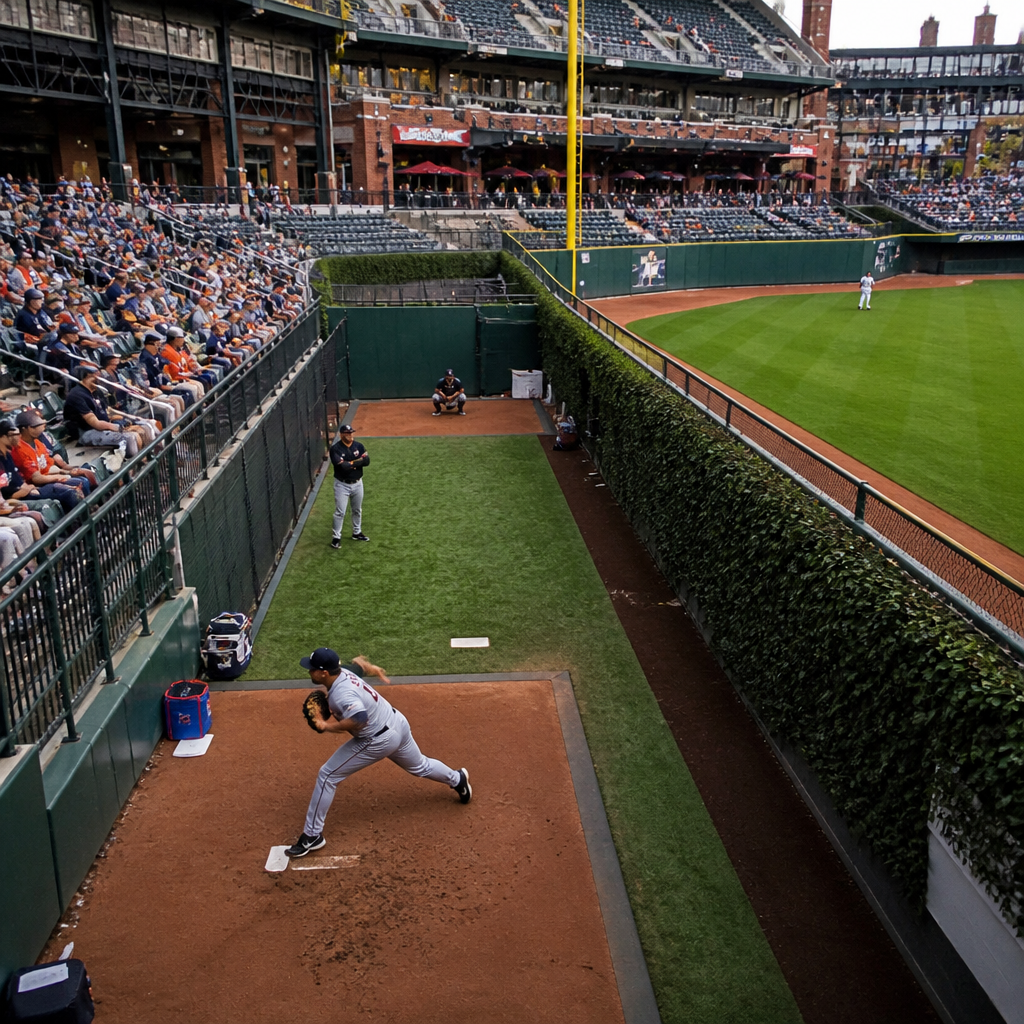
Bullpens in baseball are the designated areas where relief pitchers warm up, but their placement has never been a trivial architectural detail. In older parks, bullpens often sat in foul territory along the outfield lines, fully visible and only a few strides from live play. In newer parks, they usually sit beyond the outfield fence, separated from the field by walls, camera wells, and sponsored signage. That shift changed far more than sightlines. It altered pitcher preparation, manager timing, player safety, fan interaction, and even the rhythm of late innings.
As someone who has spent years studying ballpark design and watching games from both scout seats and upper decks, I have seen how bullpen location affects everything from a reliever’s first fastball to the crowd’s emotional involvement. Ballpark design and features are not cosmetic. They shape strategy. They create constraints for architects and coaches. They influence how teams allocate roster spots and how television presents leverage situations. A bullpen tucked behind the fence produces a different baseball experience than one in foul ground where fans can hear every warmup pitch and fielders can crash into mounds while chasing a pop fly.
This hub article examines the full design question: why bullpens were once in foul territory, why most modern parks moved them beyond the fence, what teams gained, what they lost, and how the change fits into the broader history of iconic ballparks. Along the way, it also connects bullpen placement to related ballpark features such as foul territory dimensions, wall geometry, sightlines, player circulation, and spectator proximity. Understanding that network matters because relief pitching has become central to winning. In today’s game, where starters rarely finish what they begin and leverage often peaks in the sixth through ninth innings, the bullpen is not a side note. It is a tactical engine, and where it lives inside the stadium matters.
Why early ballparks put bullpens in foul territory
For much of baseball history, bullpen placement reflected practical construction rather than a polished master plan. Early and midcentury ballparks were inserted into tight urban footprints or expanded in phases. Designers prioritized grandstands, dugouts, clubhouses, and field dimensions first. The warmup area was often whatever rectangle remained along the foul lines in left or right field. That made foul territory bullpens common in parks such as Oakland Coliseum and earlier versions of many multipurpose stadiums. Teams valued direct field access, short walking distance for relievers, and clear lines of communication between coaches and pitchers.
There was also a strategic logic. Managers and bullpen coaches could monitor game action without delay. A reliever warming in foul ground could feel the inning’s pace, hear the catcher’s mitt pop over crowd noise, and be at the dugout rail almost immediately when summoned. Before today’s dense video infrastructure and widespread in-ear communication aids, physical proximity mattered more. It reduced friction in an era when bullpen carts were novel and many stadium back corridors were narrow, crowded, or poorly designed for quick movement.
Yet foul territory bullpens created obvious hazards. Outfielders chasing a slicing fly ball or a tailing line drive had to navigate mounds, benches, screens, and bodies. Fans remember crashes into bullpen slopes and awkward leaps near warming pitchers. Those spaces also invited interference concerns, dead-ball complications, and inconsistent boundaries. The design worked, but it asked live defenders and idle relievers to coexist in the same active zone. As the sport became faster, stronger, and more specialized, that compromise became harder to justify.
Why teams moved bullpens beyond the fence
The move beyond the outfield fence was driven by three primary forces: safety, cleaner field geometry, and a changing entertainment model. Safety came first. Once clubs and architects accepted that foul-territory bullpens exposed fielders and relievers to preventable risk, relocation became the straightforward solution. By shifting warmup mounds behind the wall, designers removed obstacles from playable territory and gave pitchers a controlled environment with defined footing, fencing, and training access.
Field geometry improved too. Modern parks emphasize intentional dimensions and consistent carom behavior. When bullpens sit beyond the fence, the outfield becomes a more coherent defensive surface. Wall heights can be engineered for gameplay and spectator views rather than interrupted by bullpen cutouts. Grounds crews maintain cleaner transitions, and teams can use warning tracks, padded walls, and camera angles more effectively. That matters in a sport where inches influence extra-base hits and defensive routes.
The entertainment model changed just as significantly. The retro-classic ballpark era, accelerated by Oriole Park at Camden Yards in 1992, reimagined baseball venues as immersive spectator environments. Every square foot had revenue and storytelling value. Beyond-the-fence bullpens could become fan destinations, with standing-room railings, social spaces, and close-up views of relievers getting hot. In many parks, fans now gather behind the bullpen to track velocity, hear catchers set targets, and anticipate pitching changes like a pregame ritual compressed into a few pitches.
How bullpen placement changed relief pitching itself
Relief pitching evolved for reasons larger than architecture, but ballpark design reinforced that evolution. When bullpens moved beyond the fence, teams began treating the area less like overflow space and more like a specialized workstation. Better mound construction, dedicated training tables, video monitors, TrackMan or Hawk-Eye data feeds, and direct support from athletic trainers made warmups more precise. A reliever can now mirror game conditions, review scouting notes, and calibrate pitch shape before entering.
That refinement supports modern bullpen roles. Closers, setup men, left-on-left specialists before the three-batter minimum, and multi-inning weapons all benefit from predictable preparation. I have watched coaches use bullpen cameras and stopwatch timing to coordinate a reliever’s buildup to the minute. A pitcher may begin with plyo work, then flat-ground catch, then a first mound phase around twenty pitches, then a second shorter burst if the inning extends. That process is easier in a controlled space behind the fence than in a foul-ground bullpen disrupted by nearby field action and fan traffic.
There is a tradeoff, though. Distance can delay entry. In some parks, the run from the bullpen gate to the mound is long enough that managers must act one hitter earlier than instinct suggests. That influences tactical choices, especially in postseason games where one batter can define a series. Architecture does not replace strategy, but it shapes timing windows. Good teams account for that in advance.
Examples from iconic ballparks and what they reveal
Different stadiums show how bullpen design expresses broader ballpark philosophy. Dodger Stadium has long featured outfield bullpen areas beyond the fence, aligning with its spacious geometry and clean sightlines. Oracle Park uses bullpen placement as part of a layered outfield composition that balances defensive play, fan visibility, and waterfront aesthetics. At Wrigley Field, the relocation of bullpens from foul territory to beneath the bleachers before the 2022 season reflected a modern priority for safety and cleaner playability while preserving historic character elsewhere.
Oakland Coliseum offered the classic counterexample for years. Its foul-territory bullpens were deeply woven into the stadium’s identity, producing unusual in-play moments and emphasizing how multipurpose-era compromises lingered into the specialized baseball age. Fans could see relievers up close, but the arrangement constantly reminded observers that functional adequacy is not the same as optimal design.
Camden Yards helped normalize the idea that bullpen areas could be visually integrated attractions rather than leftover corners. Later parks expanded that concept with open concourses, drink rails, and premium standing zones near warmup mounds. Once teams saw bullpen visibility as an amenity, beyond-the-fence placement became not just a safety solution but a product feature.
| Design choice | Main advantage | Main drawback | Ballpark example |
|---|---|---|---|
| Foul territory bullpen | Fast field access and close manager visibility | Higher collision risk and obstructed playable space | Oakland Coliseum |
| Beyond-the-fence bullpen | Safer field geometry and controlled warmup area | Longer entry path in some parks | Dodger Stadium |
| Hidden or enclosed bullpen | Reduced distractions and more private preparation | Less fan engagement and weaker visual drama | Some renovated modern parks |
What bullpen design means for fans, broadcasters, and stadium operations
For fans, bullpen location changes access and narrative. In-foul-ground bullpens put relievers inside the game picture at all times, but they usually reserve the closest views for a limited slice of the crowd. Beyond-the-fence bullpens often create intentional public vantage points, letting thousands more spectators monitor warmups. That visibility adds suspense. A crowd notices a closer rising, and the mood shifts before the scoreboard announces anything.
Broadcasters benefit as well. Television can isolate a reliever warming with tighter, cleaner shots when the bullpen is outside live territory. Producers use those images to telegraph strategy, explain pitch mix changes, and build tension in late innings. Radio crews also gain from clearer logistics because they can describe a pitcher’s activity without worrying that a foul pop might immediately involve the same space.
Operations staff prefer cleaner separation. Security, ball attendants, grounds crews, and medical teams can work more efficiently when warmup zones are dedicated spaces rather than semi-playable edges. Clubhouses connect more logically to service corridors. Training supplies, hydration, rosin, and data equipment stay organized. These details sound minor until a one-run game in August requires three relievers warming, a trainer checking a shoulder, and a camera crew sharing the same footprint. Design either absorbs that complexity or magnifies it.
The broader lesson for ballpark design and features
Bullpen placement is one case study in a larger truth about iconic ballparks: design features are interdependent. Move the bullpen, and you affect foul territory, outfield walls, premium seating, circulation routes, camera positions, ADA planning, maintenance access, and the psychological feel of the game. That is why this subject belongs at the center of any serious discussion of ballpark design and features.
The best stadiums solve multiple problems with one decision. A beyond-the-fence bullpen can improve safety, create a fan destination, support modern pitching prep, and clean up defensive sightlines simultaneously. A foul-territory bullpen may preserve tradition and immediacy, but it usually does so by accepting operational compromises. There is no law that every park must look the same, and baseball is healthier when stadiums retain local character. Still, the industry trend is rational. Relief pitching became too important, and player movement too explosive, for shared foul-ground workspaces to remain the standard.
When you evaluate any iconic ballpark, look at the bullpen not as a background feature but as evidence of the park’s era and priorities. It reveals whether architects were solving for land constraints, television, fan immersion, safety, or pitching infrastructure. That perspective opens the door to the entire subtopic of ballpark design and features, from wall angles and rooflines to dugout depth and batter’s-eye construction.
The change from bullpens in foul territory to bullpens beyond the fence tells a clear story about baseball’s evolution. Stadiums shifted from improvised utility toward integrated design. Teams recognized that relief pitching required specialized preparation space, and architects learned that safer geometry could also produce better fan experiences. The result is a modern ballpark where the bullpen is both a high-performance workspace and a visible stage for one of the game’s most decisive moments.
For readers exploring iconic ballparks, this is the key takeaway: small design choices can reshape strategy, safety, and atmosphere all at once. Bullpen placement affects when managers make moves, how relievers prepare, how broadcasters build drama, and how fans connect with late-inning tension. It is one of the clearest examples of why ballpark design and features deserve close attention, not casual mention.
If you want to understand stadiums more deeply, use bullpen location as your starting point. Then follow the chain into foul territory dimensions, wall design, sightlines, and circulation patterns. That approach will make every ballpark visit sharper, and it will reveal why the most memorable parks are not just beautiful places to watch baseball, but carefully engineered environments that shape the game itself.
Frequently Asked Questions
Why did teams move bullpens from foul territory to beyond the outfield fence?
Teams moved bullpens off the field and behind the outfield wall for a mix of safety, strategy, and design reasons. In older stadiums, foul-territory bullpens were simply part of a more compact and improvised architectural style. Parks often had unusual dimensions, less uniform outfield space, and fewer concerns about maximizing fan amenities. A bullpen tucked along the foul line was practical because it kept relievers close to the dugout and gave managers a clear visual on who was warming up. But it also placed pitchers, coaches, and sometimes even equipment directly next to live action, where line drives, overthrown balls, and players chasing foul pop-ups could create obvious hazards.
As newer ballparks were built, clubs began prioritizing cleaner field geometry, improved spectator sightlines, and safer working conditions for both active players and warming relievers. Relocating the bullpen beyond the fence removed nonparticipants from the field of play and reduced the chance of interference during live balls near the corners. It also opened up more design flexibility in foul territory, where teams could add seating, camera positions, and better access routes for staff. Over time, what started as a practical redesign became a standard feature of modern stadium planning. The bullpen beyond the fence fit the broader trend toward controlled, segmented ballpark spaces in which every area had a specialized purpose.
How did bullpen placement affect the way relief pitchers warmed up?
Bullpen placement changed the entire rhythm of relief preparation. When bullpens sat in foul territory, pitchers were physically and psychologically closer to the game. They could hear every pitch, feel the crowd response in real time, watch hitters from a direct angle, and get into the action almost instantly. That proximity sometimes made it easier to match warm-up pace to game urgency. A reliever could begin loosening, increase intensity quickly, and be only a short jog from the mound when the phone rang or the manager made a signal.
Once bullpens moved beyond the fence, warm-ups became more secluded and often more regimented. Pitchers gained a protected space with fewer risks of on-field distractions, but they also became more removed from the immediate flow of the inning. Depending on the park, they might need to rely more heavily on bullpen catchers, coaches, radar feedback, and communication devices rather than direct field awareness. That separation encouraged a more structured pre-entry routine: stretching, long toss, mound work, pitch sequencing, and timing the final throws so the pitcher arrived ready but not overthrown. In effect, the modern off-field bullpen helped professionalize relief preparation, but it also made timing more dependent on communication and anticipation rather than simple physical closeness to the action.
Did moving bullpens beyond the fence change managerial strategy?
Yes, and in subtle but important ways. When relievers warmed up in foul territory, managers and bench coaches could often monitor them with a quick glance. That made bullpen management feel more immediate and intuitive. A manager could assess body language, arm speed, and readiness without depending entirely on a coach’s report. Because the reliever was also just steps away from entering, late changes could be made more easily. If a starter unexpectedly escaped trouble, a manager could slow things down with minimal disruption. If trouble escalated fast, the reliever was close enough to enter quickly.
With bullpens beyond the fence, decision-making became more systematized. Managers relied more on phones, signals, intermediaries, and preplanned timelines. They had to account not just for whether a pitcher was hot, but how long it would take him to finish warming, leave the bullpen, cross access lanes, and reach the mound. That encouraged earlier decisions and often reinforced the modern habit of matching relievers to situations before the crisis fully arrived. In that sense, architecture influenced tactics. The physical distance between bullpen and mound helped push relief usage toward the highly coordinated, role-based style seen in contemporary baseball, where setup men, specialists, and closers are deployed with carefully managed lead times rather than pure improvisation.
Were foul-territory bullpens actually dangerous or disruptive during games?
They could be both. From a safety standpoint, foul-territory bullpens exposed warming pitchers and staff to live baseball in a way that seems striking by modern standards. A reliever might be throwing while a batter hooked a screaming liner down the line, or while a fielder chased a pop-up directly toward the bullpen area. Even when major collisions were rare, the risk was built into the layout. There was also the possibility of distraction for fielders, especially near the corners where a few feet could determine whether a catch was made or a ball dropped into foul ground.
From a competitive standpoint, these bullpen locations could create awkward interactions with live play. Players might have to navigate around benches, mounds, screens, or personnel in pursuit of a ball. Spectators loved the intimacy and oddity of those old arrangements because they made the ballpark feel quirky and alive, but from an operational perspective they introduced variables that modern designers generally try to eliminate. Moving bullpens beyond the fence simplified the field environment. It reduced clutter, clarified boundaries, and made the active playing surface feel more controlled. That shift reflects a larger change in baseball architecture: older parks often accepted irregularity as part of the game’s charm, while newer parks tend to favor consistency, risk reduction, and cleaner competitive conditions.
How did the change in bullpen design influence the evolution of modern relief pitching roles?
The relocation of bullpens did not by itself create the modern relief specialist, but it supported the broader evolution of bullpen usage. As relief pitching became more specialized, teams needed spaces that matched that specialization. A modern bullpen beyond the fence functions almost like a staging area. It gives relievers room to prepare in sequence, allows coaches to monitor multiple arms at once, and supports a process-oriented approach to entering games. That environment fits the rise of inning-specific roles, matchup-based decisions, and carefully controlled workloads.
In earlier eras, when pitchers often worked longer and bullpen roles were less rigid, the bullpen’s closeness to the field reinforced a more reactive style. Relievers could be summoned on shorter notice and operate more as emergency support. But as analytics, velocity training, and matchup strategy reshaped pitching staffs, teams increasingly treated each relief appearance as a planned event. The separated bullpen complemented that mindset. It gave pitchers a more stable routine, insulated them from on-field chaos, and made the act of warming up part of a repeatable performance system. In practical terms, ballpark design helped baseball move from the old image of the reliever as a spare arm waiting nearby to the modern reality of a highly managed bullpen hierarchy with defined preparation windows, communication chains, and tactical deployment.