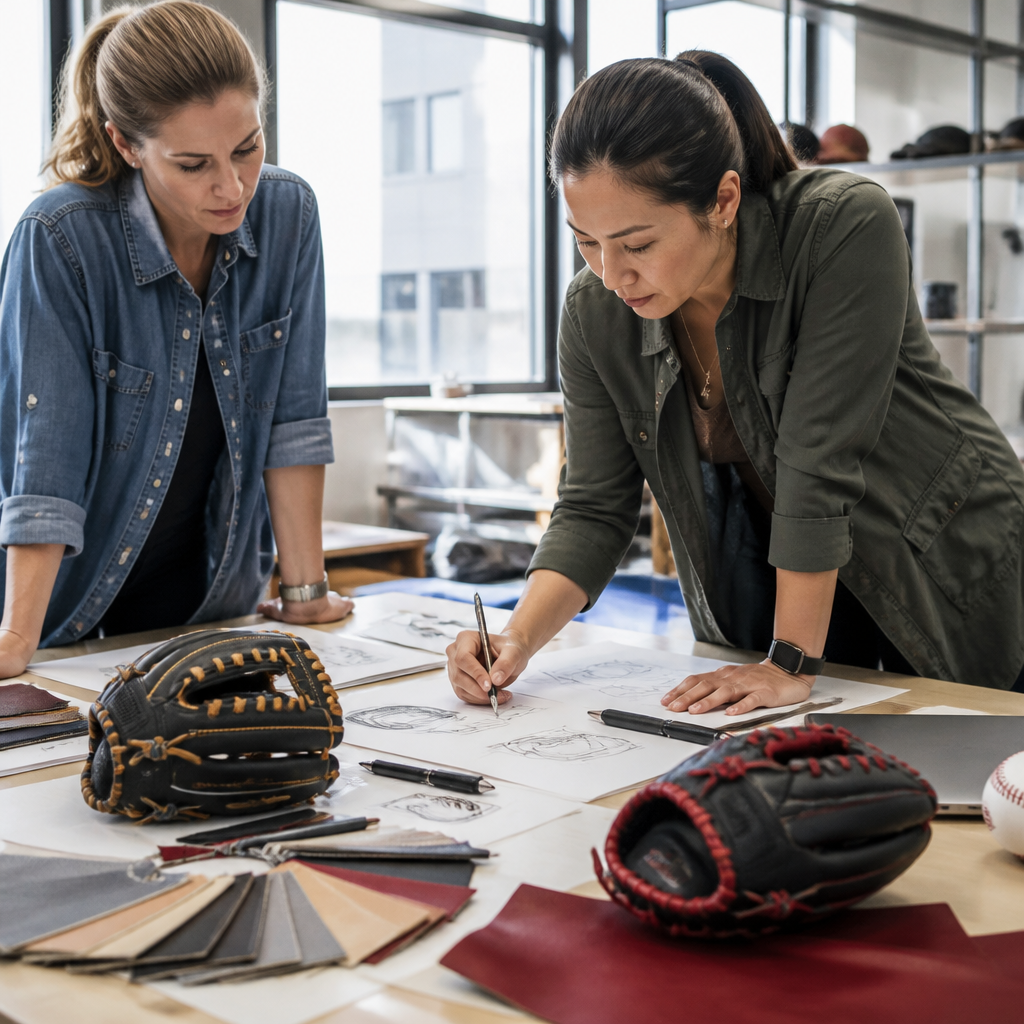
Women’s influence in baseball equipment and apparel design has moved from the margins to the center of product development, changing how gloves fit, how cleats support movement, how uniforms perform, and how brands think about athletes. In this context, equipment means the tools used to play, including gloves, bats, helmets, catchers’ gear, and cleats, while apparel covers uniforms, base layers, training wear, outerwear, and fan merchandise. Design includes sizing, materials, biomechanics, safety standards, aesthetics, and the feedback systems that shape future products. This matters because baseball participation by women and girls has expanded across youth leagues, school programs, collegiate clubs, national teams, and professional pathways, yet for decades most products were simply downsized versions of men’s gear. I have seen the practical cost of that approach in fittings, team purchasing meetings, and field testing sessions: poor glove closure, heel slip in cleats, chest protectors that shift during catching, and uniforms that restrict sprinting or throwing mechanics. When gear ignores the athlete, performance, comfort, confidence, and safety all suffer. When design reflects women’s actual needs, the game becomes more accessible, more competitive, and more inclusive.
How women changed the product design conversation
The biggest shift women brought to baseball equipment and apparel design was not cosmetic; it was methodological. Instead of assuming a single standard athlete, brands and team outfitters increasingly began with athlete-specific data, direct wear testing, and task-based use cases. Women players, coaches, athletic trainers, and product developers pushed manufacturers to ask better questions: How does hand span affect glove break-in? Does cleat volume match forefoot width and heel shape? How do chest protector contours interact with throwing mechanics? Which fabrics stay opaque under sweat and slide abrasion? These are design questions, not marketing questions, and they changed product roadmaps.
Historically, many female baseball players had to shop in boys’ or men’s categories because baseball-specific women’s lines were limited. Some still do, especially for bats and protective gear where performance certification standards govern dimensions and materials. But across the category, women’s influence has forced a move away from the old “shrink it and pink it” model. Better companies now separate style decisions from fit architecture. They use anthropometric measurements, pressure mapping, motion capture, and repeated field interviews to refine patterns and components. In practical terms, that means narrower heel counters in some cleats, revised rise and hip shaping in baseball pants, alternative inseam options, smaller wrist openings in batting gloves, and chest and shoulder adjustments in upper-body protection.
This design evolution also reflects a broader truth about baseball: skill execution depends on repeatable movement. A player cannot field cleanly if her glove pocket collapses or her fingers cannot fully control the stall. A catcher cannot transfer efficiently if gear placement interferes with stance mobility. A base runner loses first-step efficiency when cleats create instability. Women’s feedback has improved these products not only for women, but often for younger players and anyone outside the traditional size assumptions that once dominated baseball manufacturing.
Equipment fit, biomechanics, and performance
Fit is the most important variable in baseball equipment performance, and women have pushed the industry to treat it with more precision. Take gloves. For years, many players with smaller hands used bulky youth patterns or attempted to modify standard adult gloves with extra wraps and aftermarket inserts. Product teams now pay more attention to finger stall diameter, wrist adjustability, hand opening circumference, and pocket depth relative to position. Middle infielders often want quick transfers and controlled pocket shape, while outfielders may prefer longer patterns with deeper pockets. Women athletes helped brands realize that hand size and wrist proportion can materially affect closure efficiency, especially in stiffer full-grain leather models.
Cleat design offers another clear example. In wear tests I have reviewed, female players regularly flagged heel lift, forefoot pressure, and arch mismatch as recurring issues. These are not minor comfort complaints. Heel instability can compromise acceleration and change-of-direction control, while pressure hotspots raise blister risk and alter movement patterns over a long tournament weekend. Better cleat design accounts for stud geometry, plate stiffness, upper lockdown, ankle collar shape, and the actual distribution of force during sprinting, cutting, and rotating through a swing. Brands such as Nike, adidas, Under Armour, and New Balance have all expanded women-informed fit work in field sports, and that influence is increasingly visible in baseball and softball crossover product decisions.
Protective equipment has also improved because women insisted that safety and mobility are inseparable. Batting helmets must pass certification requirements such as those set by NOCSAE, but certified does not always mean optimized for every athlete. Hair volume, head shape variation, jaw comfort, and facemask positioning can affect whether a player wears a helmet consistently and correctly. Catchers’ gear raises even more complex design issues. Chest protectors need sternum coverage, rib protection, and secure anchoring without impeding throwing or blocking mechanics. Leg guards must articulate through squats and lateral drops. Shin plate alignment, knee stack placement, and strap systems matter as much as padding density. Female catchers and coaches have been especially influential in making these pain points visible to manufacturers.
Apparel design: uniforms, movement, and durability
Uniform design shapes performance more than casual observers realize. Baseball apparel must withstand sliding friction, repeated laundering, heat stress, and full-range athletic movement. Women helped force a reappraisal of how uniforms are patterned and tested. Traditional baseball pants were often graded from men’s blocks, creating fit problems at the waist, hip, seat, and thigh. If pants pull across the hips, they can restrict stride length and crouch depth. If the rise is wrong, players constantly adjust during play, which is both distracting and unprofessional. Better women-informed patterns now use different grading logic, stretch zones, and waistband construction.
Fabric selection has changed too. Performance textiles now commonly blend polyester with elastane or spandex for stretch recovery, but not all fabrics perform equally under baseball demands. Designers evaluate abrasion resistance for slides, opacity under perspiration, seam strength at high-stress points, and moisture management in hot conditions. Flatlock seams, gusseted panels, and articulated knees are no longer niche upgrades; they are expected in serious teamwear. Women athletes repeatedly highlighted another issue that brands had underestimated: many white or light-colored pants became transparent under game conditions. Solving that required changes in fabric weight, lining strategy, and dye process, not just better styling.
Jerseys and base layers have seen parallel improvements. Shoulder mobility matters for throwing, so sleeve attachment, armhole depth, and fabric stretch all affect comfort. Compression garments and sports bras are also part of the baseball apparel ecosystem, even when sold by adjacent sports brands. If an athlete’s base layer system is unstable, overheated, or restrictive, it can alter mechanics and concentration. That is why women’s influence extends beyond visible uniforms into the entire apparel stack players use for practice, travel, strength training, and recovery.
Where women’s influence appears across the category
Women have shaped design through many channels: as players giving wear-test feedback, coaches specifying team needs, equipment managers evaluating failure points, medical staff identifying injury trends, and designers building new product briefs. The influence is broad, not isolated to one item or one league.
| Category | Design issue identified | Women-driven improvement |
|---|---|---|
| Gloves | Large hand openings and weak closure for smaller hands | Tighter wrist systems, refined finger stalls, position-specific patterns |
| Cleats | Heel slip and pressure hotspots | Revised lasts, better lockdown, more considered plate stiffness |
| Helmets | Poor comfort with varied hair volume and head shapes | Improved padding layouts and more usable fit options |
| Catchers’ gear | Shift during crouch and throw transitions | Better articulation, contouring, and strap placement |
| Pants and jerseys | Restricted movement and inconsistent coverage | Updated grading, stretch fabrics, and reinforced high-stress zones |
| Training apparel | Overheating, opacity, and poor layering function | Moisture-managing textiles and more stable base-layer systems |
These improvements often begin with simple observations from athletes: where a seam rubs, where a guard rotates, where a toe box pinches after six innings. The best product teams treat those observations as technical inputs, then validate them through repeat testing. That cycle of athlete feedback, prototype adjustment, and retesting is where women have had their deepest impact.
Leadership beyond the field: designers, founders, and decision-makers
Women’s influence in baseball design is not limited to end-user feedback. It also comes from women working inside the product pipeline. Female designers, developers, merchandisers, biomechanists, and brand executives have helped reframe what counts as good design. They have argued, correctly, that fit and function for women are not specialty concerns to be addressed after launch. They are primary design requirements that should appear at concept stage, sample review, and production signoff.
In practice, internal advocates change outcomes by demanding broader size runs, requiring female athlete wear tests before bulk production, and challenging assumptions inherited from men’s category templates. They also influence merchandising and distribution. A well-designed women’s baseball pant does little good if team dealers do not stock it, if online size charts are inaccurate, or if schools bundle only men’s cuts in standard uniform contracts. I have watched sourcing and purchasing decisions erase months of good design work. Women in leadership help protect against that by connecting product design to actual access.
Independent founders and niche brands matter as well. Smaller companies often move faster when they identify underserved athletes. Some focus on sliding shorts, sports bras, or catchers’ gear; others specialize in custom uniforms or inclusive fan apparel. Their market share may be smaller than global brands, but they frequently act as innovation laboratories. Larger companies then adopt similar features once demand is proven. That pattern has repeated across sportswear for decades, and baseball is no exception.
Market trends, retail gaps, and the future of women’s baseball gear
The market for women’s baseball equipment and apparel is growing, but it is still uneven. Participation data from youth and amateur organizations show persistent interest among girls who want baseball, not only softball, pathways. International competition, women’s national teams, and increased media attention have made that demand more visible. Yet retail availability still lags in many regions. Players can often find generic training apparel more easily than true baseball-specific products designed around their needs. That mismatch creates friction at every level, from first-time participation to elite competition.
Several trends will define the next phase. First, data-led fit systems will improve. Three-dimensional foot scanning, digital last development, and body-measurement tools can produce better cleats and uniforms with less guesswork. Second, modular protection will expand, especially for catchers and hitters seeking personalized fit. Third, sustainability will influence material choices, with more recycled polyester and longer-lasting construction, though durability must remain the priority in baseball. Fourth, customization will become more normal in teamwear, letting programs choose cuts, inseams, and rise options without treating women’s patterns as exceptions.
The most important future change, however, is organizational. When brands build women into research panels, advisory boards, marketing plans, dealer education, and inventory forecasts, better design becomes routine rather than reactive. That is how categories mature. For readers exploring the broader women in baseball landscape, this miscellaneous hub connects naturally to deeper articles on player development, coaching, media representation, league history, and participation barriers. Equipment and apparel are not side issues. They are infrastructure. If the gear fits, protects, and performs, athletes stay in the game longer and play it at a higher level.
Women’s influence in baseball equipment and apparel design is best understood as a structural improvement to the sport, not a niche trend. By pushing manufacturers to focus on fit, biomechanics, protection, and real movement demands, women changed how products are conceived, tested, and sold. Gloves now account more carefully for hand size and closure mechanics. Cleats increasingly address heel security, pressure distribution, and acceleration. Catchers’ gear and helmets are improving because comfort and safety are treated together. Uniforms perform better because patterning, fabric choice, and coverage are based on actual play conditions rather than assumptions.
The practical benefit is straightforward: better gear supports better baseball. Players move more freely, experience fewer distractions, and gain confidence that their equipment will respond when the game speeds up. Coaches and programs also benefit because thoughtful design improves athlete retention, purchasing efficiency, and team professionalism. There are still gaps in availability, sizing depth, and retail education, but the direction is clear. Women are no longer adapting quietly to products built for someone else. They are shaping the standards the industry uses.
If you are a player, parent, coach, buyer, or brand manager, treat equipment and apparel decisions as performance decisions. Ask who was included in the wear testing, how fit was validated, what standards were used, and whether the product truly matches women’s baseball needs. Then use this hub to explore the wider women in baseball topic and make better-informed choices on and off the field.
Frequently Asked Questions
How has women’s influence changed baseball equipment and apparel design in practical terms?
Women’s influence has shifted baseball product design from a one-size-fits-all mindset to a more research-driven approach that accounts for real differences in body proportions, movement patterns, comfort needs, and performance expectations. In practical terms, that means gloves are being designed with hand shape, finger length, and wrist fit in mind rather than simply shrinking a men’s model. Cleats are being refined to improve stability, pressure distribution, and traction for athletes whose biomechanics may differ in stride, hip alignment, and lower-body loading. Helmets, catchers’ gear, and protective equipment are also benefiting from better fit systems, more thoughtful padding placement, and adjustability that helps players stay protected without sacrificing mobility.
On the apparel side, women’s influence has pushed brands to rethink uniform cuts, base layers, training gear, and outerwear so they perform under competitive conditions instead of merely offering cosmetic variations. Better moisture management, stretch fabrics, reinforced seams, more functional waistbands, and cuts that allow throwing, sprinting, sliding, and rotational movement all come from paying closer attention to the needs of women athletes. Just as importantly, women have influenced the design process itself. More companies now involve female players, coaches, product testers, and designers earlier in development, which results in products shaped by lived experience rather than assumptions. That has elevated both quality and credibility across the category.
Why does fit matter so much in baseball gloves, cleats, and protective gear for women players?
Fit matters because baseball is a precision sport, and even small mismatches between the athlete and the equipment can affect control, safety, comfort, and confidence. A glove that is too wide in the hand stall, too loose at the wrist, or poorly balanced can make it harder to secure the ball cleanly and transfer it quickly. For women players, historically being forced into equipment designed around male sizing standards often meant compromising on feel and function. A better-fitting glove improves pocket control, hand security, and responsiveness, which directly supports fielding performance. The same principle applies to bats, where grip circumference, weight distribution, and swing feel can influence mechanics and fatigue.
Cleats are especially sensitive to fit because they affect every movement on the field. If a cleat does not align well with the foot shape, it can create hot spots, instability, reduced power transfer, and an increased risk of blisters or overuse issues. Proper fit supports acceleration, cutting, stopping, and rotational movements essential in baseball. Protective gear also depends on fit for effectiveness. A helmet that shifts during play, a chest protector that restricts movement, or leg guards that do not stay in place can undermine both safety and performance. Women’s influence has helped manufacturers recognize that good fit is not a luxury feature; it is fundamental engineering that impacts how well players move, react, and stay protected.
What role do biomechanics and performance research play in women’s baseball apparel design?
Biomechanics and performance research are now central to better apparel design because they help brands understand how athletes actually move in baseball settings. Women’s influence has encouraged more attention to the realities of sprinting out of the box, rotating through a swing, reaching for difficult plays, sliding, throwing at full extension, and training across varied weather conditions. When brands study those motions closely, they can place stretch panels where mobility is most needed, reinforce stress points that experience repeated strain, and choose fabric weights that balance durability with breathability. Instead of designing around appearance first, companies are increasingly designing around movement efficiency, thermoregulation, and recovery.
This research also shapes details that may seem small but have a major impact in use. Waistbands can be engineered to stay secure without digging in. Base layers can be constructed to reduce bunching under uniforms and gear. Ventilation zones can be positioned to release heat during intense play. Outerwear can be cut to layer properly without limiting shoulder rotation or arm speed. Even fan merchandise benefits from this shift because consumers increasingly expect the same quality of fit, fabric, and comfort seen in performance apparel. In short, biomechanics gives designers measurable insight, and women’s participation in testing and feedback ensures that insight becomes products that perform better in real baseball environments.
How have safety and protection standards evolved because of women’s input in baseball product development?
Women’s input has helped broaden the conversation around safety from basic compliance to true usability. Protective equipment is only effective when athletes can wear it correctly, move naturally in it, and trust it during competition. Female players have brought important attention to fit-related safety gaps, such as helmets that do not sit securely, catchers’ gear that does not accommodate body shape comfortably, and chest or lower-body protection that can shift during movement. As a result, brands are investing more in adjustable systems, ergonomic shaping, lighter materials, and padding configurations that maintain coverage while improving range of motion.
This evolution also reflects a more athlete-centered philosophy. Instead of assuming that smaller versions of existing products are sufficient, designers are asking how protection interacts with posture, speed, impact zones, and repeated movement over time. That can lead to better strap placement, more effective ventilation that encourages consistent wear, and construction choices that reduce distraction and fatigue. Safety in apparel matters too. Uniforms and training wear now more often incorporate abrasion resistance for sliding, thermal management for hot conditions, and layering strategies for cold-weather play. Women’s influence has made it clear that protection is not just about passing a standard; it is about creating equipment and apparel that athletes can use confidently at full intensity.
What does women’s influence in baseball design mean for the future of the industry?
It means the industry is moving toward smarter, more inclusive, and more performance-focused innovation. As women continue to shape baseball equipment and apparel design, brands are likely to expand research, refine sizing systems, and create products based on a wider range of athlete data rather than relying on legacy assumptions. That benefits women directly, but it also improves products overall. Better fit systems, more adaptive materials, stronger user testing, and more precise performance design tend to raise standards for everyone. In many cases, innovations inspired by underrepresented athletes become best practices across the industry.
It also means women will increasingly influence not just the final product, but the full design ecosystem. More women in roles such as industrial design, apparel development, biomechanics, sports science, product testing, and brand leadership can reshape priorities from the ground up. That can affect everything from how gloves are patterned and how cleat plates are engineered to how uniforms are marketed and how fan merchandise reflects real consumer demand. The future is not simply about adding more women’s versions of existing products. It is about recognizing women as key drivers of innovation whose perspectives can make baseball gear safer, more functional, more comfortable, and more relevant to the athletes and communities it serves.