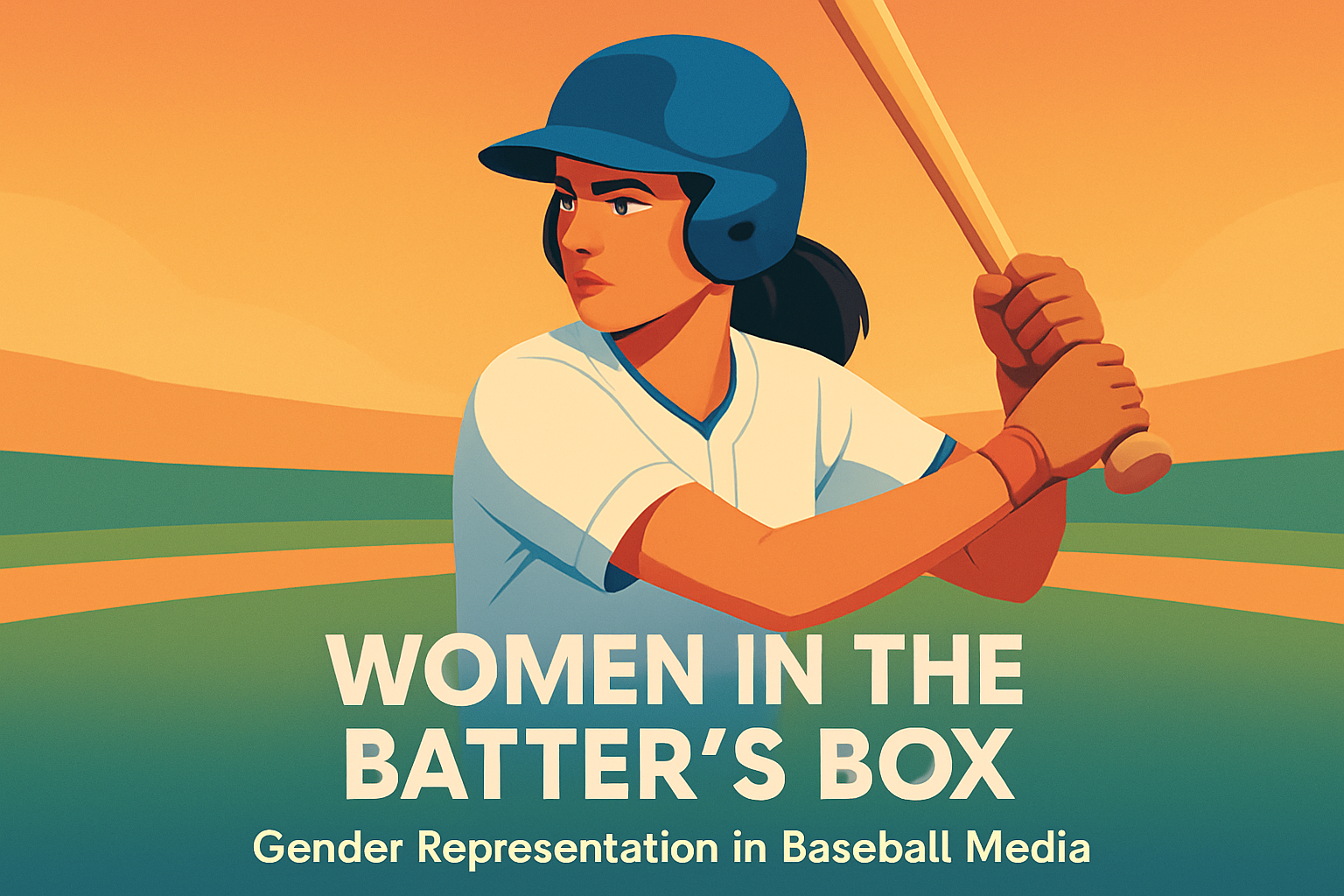
Women in the batter’s box have long occupied a complicated place in baseball media, visible enough to shape public imagination yet too often framed through novelty, exclusion, or stereotype. In this sub-pillar hub for Baseball in Literature and Film, gender representation in baseball media refers to how women are depicted across novels, memoirs, newspapers, radio, film, television, documentaries, comics, and now digital platforms. That includes women as players, fans, owners, journalists, broadcasters, scouts, executives, and symbolic figures used to define masculinity. The topic matters because media does not merely reflect baseball culture; it actively teaches audiences who belongs in the game, whose labor counts, and which stories deserve preservation. After years of working through baseball archives, reviewing sports films, and comparing newsroom coverage with on-screen portrayals, I have seen a repeating pattern: women are frequently present at pivotal moments in baseball history, but media often narrows them into supporting roles. Correcting that distortion improves criticism, scholarship, and fan understanding.
Baseball has always carried outsized cultural meaning in the United States and beyond. Because the sport is routinely described as a national pastime, representations within baseball media become arguments about citizenship, labor, race, class, sexuality, and family. When women are minimized in those narratives, audiences inherit an incomplete version of baseball history. When women are included with seriousness and specificity, the game looks more accurate and more interesting. Readers searching this topic usually want answers to practical questions: How have films portrayed women in baseball? Why does A League of Their Own matter? Are women shown only as spectators or romantic interests? How have women sportswriters and broadcasters changed coverage? This hub addresses those questions directly while pointing to broader themes that connect miscellaneous works across literature and film.
Any serious discussion starts with a clear distinction between participation and representation. Women have participated in baseball for more than a century through barnstorming teams, the All-American Girls Professional Baseball League, Negro Leagues contexts, youth baseball, front-office leadership, and sports media professions. Representation concerns the stories told about that participation. A film may feature women prominently while still relying on conventional gender scripts. A novel may barely place women on the field yet reveal the pressures surrounding fandom, domestic life, or newsroom access. Evaluating gender representation means looking at screen time, narrative agency, camera framing, dialogue, marketing, historical accuracy, and whose viewpoint organizes the story. It also means asking what is omitted. Omission is one of the most powerful storytelling choices in baseball media, especially when women are treated as peripheral to a sport they have continuously helped build.
This hub covers those omissions and recoveries across several recurring categories: women as athletes, women as narrative symbols, women behind the microphone and typewriter, women in family baseball stories, and women in contemporary revisionist works. It also considers how race and sexuality complicate gender representation, since no single account of “women in baseball media” is adequate without that nuance. The best baseball literature and film does not insert women as an afterthought; it shows how gender structures access to the field, the clubhouse, the newsroom, and the archive itself. Understanding that structure helps readers evaluate classic texts, discover overlooked works, and follow internal paths into adjacent subjects such as women in sports journalism, girls’ athletic fiction, queer readings of baseball film, and historical depictions of the AAGPBL. As a hub, this article maps the field and establishes the standards useful for reading the pieces linked from it.
Women as Players on Screen and on the Page
The most direct form of gender representation in baseball media is the depiction of women playing baseball. This may sound straightforward, but the framing varies sharply. Some works treat women players as exceptional curiosities, emphasizing femininity tests, romance, or spectacle. Better works present women as competitors dealing with mechanics, stamina, travel, team hierarchy, and public scrutiny. Penny Marshall’s 1992 film A League of Their Own remains the central reference point because it brought the AAGPBL into mainstream memory and gave women baseball players comic range, tactical competence, and emotional depth. Its cultural impact is measurable: for many viewers, it was the first time women were shown turning double plays, debating sacrifice, and negotiating professional ambition within a baseball setting. The 2022 television adaptation widened that frame by foregrounding queer identity, racial exclusion, and the limits of wartime nostalgia.
Literature has often been less generous than film, especially in older works where women ballplayers appear as gimmicks or inspirational devices. Yet memoir, historical fiction, and young adult fiction have gradually corrected that pattern. Good baseball writing about women players attends to physical detail: the wear on hands, the speed differential between leagues, the economics of travel, and the social cost of public athleticism. Those details matter because they move representation from symbol to lived experience. In my own reading across midcentury profiles and later retrospectives, the strongest pieces avoid asking whether women can play “like men.” They ask instead how institutions controlled opportunity and how media language shaped public judgment. That shift is essential. It replaces biological cliché with analysis of rules, labor, and visibility.
Stereotypes, Story Functions, and What Gets Left Out
Baseball media has repeatedly used women in three limiting story functions: the supportive wife or girlfriend, the disapproving spouse who threatens the hero’s devotion to the game, and the decorative fan whose purpose is atmosphere rather than insight. These roles are familiar because baseball narratives have long centered male coming-of-age, paternal reconciliation, and masculine nostalgia. In such stories, women become emotional scenery. Even acclaimed films can slip into this structure. The Natural, Bull Durham, and Field of Dreams all give women memorable presences, but each channels female characters toward the male protagonist’s destiny, self-belief, or redemption. That does not make them worthless texts; it makes them useful case studies in how baseball storytelling can grant visibility without equal agency.
What gets left out is often more revealing than what appears. Clubhouse reporting barriers kept women journalists out of key spaces for decades, which affected the stories audiences received. Histories of scouting and front-office strategy frequently ignored women’s labor even when women handled administrative, analytical, or promotional work critical to team operations. Fan culture coverage has also minimized women’s expertise by portraying them as family attendees rather than statisticians, scorekeepers, collectors, fantasy players, or historians. Once you start looking for these patterns, they appear across formats, from newspaper feature writing to prestige documentaries. Representation improves when a work allows women to possess baseball knowledge, make baseball decisions, and disagree about baseball itself. Expertise on the page or screen is a form of power.
| Pattern | Common media treatment | Stronger alternative |
|---|---|---|
| Women players | Novelty, glamour, romance-first framing | Skill, labor, strategy, and institutional barriers |
| Women fans | Background color or family audience | Knowledgeable participants with distinct viewpoints |
| Women journalists | Outsiders facing sexism as side plot | Professionals shaping coverage and access |
| Women in families | Support system for male baseball dreams | Independent ambitions tied to baseball culture |
Journalists, Broadcasters, and the Authority to Narrate Baseball
One of the most important shifts in gender representation has come not from fictional characters but from women who narrate the game professionally. When women appear in baseball media as reporters, columnists, play-by-play announcers, analysts, or documentarians, they alter both content and authority. Claire Smith’s Hall of Fame career is a landmark example. Her reporting did more than break barriers; it changed who could be recognized as a legitimate interpreter of baseball. Likewise, broadcasters such as Jessica Mendoza, Melanie Newman, and Suzyn Waldman have expanded public expectations about who can explain mechanics, roster construction, and in-game strategy. Media representation is not only about being seen but about being trusted as a source of baseball knowledge.
Film and television have only intermittently captured this reality. Fiction often dramatizes sexism in broad strokes, but the deeper issue is professional gatekeeping. For years, women in sports media were denied routine access, then judged for lacking the access they were denied. That paradox shaped everything from quote quality to promotion opportunities. Strong baseball nonfiction addresses these structural obstacles directly, naming policies, union rules, and clubhouse customs rather than reducing the problem to a few rude individuals. In practical terms, readers using this hub should pay attention to works that center perspective. Who asks the questions? Who interprets the game? Who gets to decide what counts as a baseball story? When women control narration, the archive expands.
Race, Sexuality, and the Limits of a Single Story
No useful account of women in baseball media can treat gender as an isolated category. Race is fundamental. The standard popular memory of women’s baseball was shaped heavily by white wartime imagery, especially through celebrations of the AAGPBL. That story has value, but it can crowd out Black women’s baseball histories, including the Toni Stone, Mamie “Peanut” Johnson, and Connie Morgan narratives tied to the Negro Leagues. Their representation in media remains thinner than it should be, despite the obvious dramatic and historical richness of their lives. When baseball films and books fail to integrate these stories, they perpetuate a segregated memory of the game. Recent documentaries and museum initiatives have begun to address this gap, but the imbalance remains significant.
Sexuality also matters because baseball media has long disciplined acceptable femininity. Many historical depictions emphasized skirts, charm school, makeup, and heterosexual romance to reassure audiences that athletic women remained conventionally feminine. Contemporary works have challenged that packaging by acknowledging queer desire, coded friendships, and the pressure to perform gender respectability. The recent A League of Their Own series did this explicitly, but queer readings of baseball stories have existed much longer in criticism and fan communities. These interpretations are not niche add-ons; they help explain why certain silences and symbols recur. A complete hub on miscellaneous gender representation must therefore include intersectional analysis as a baseline, not as a special topic saved for the margins.
Why This Hub Matters for Baseball in Literature and Film
As a hub page within Baseball in Literature and Film, this topic connects multiple article pathways. Readers interested in women players can move into AAGPBL history, Negro Leagues representation, biographical criticism, and adaptations across media. Readers focused on sports journalism can branch into clubhouse access, broadcast history, memoir, and documentary authority. Those studying family narratives can examine how baseball stories assign emotional labor to mothers, daughters, wives, and sisters, often while celebrating male inheritance. This hub is “miscellaneous” only in the sense that gender representation crosses every baseball genre; in practice, it is central to understanding how the sport has been narrated.
The key takeaway is simple: women have never been incidental to baseball media, but media has often treated them that way. The best criticism notices who is centered, who speaks with authority, which histories are repeated, and which are still waiting for full treatment. If you are building a reading list or viewing syllabus, start with works that give women agency, baseball intelligence, and historical specificity. Then compare them with canonical texts that sideline or stereotype female characters. That contrast sharpens interpretation quickly. Use this hub as your starting point for deeper articles across the subtopic, and revisit baseball stories with a sharper eye for who is really in the batter’s box.
Frequently Asked Questions
Why does gender representation in baseball media matter so much?
Gender representation in baseball media matters because media does more than reflect the sport; it actively shapes how people understand who belongs in baseball, whose stories are worth telling, and what kinds of authority are recognized. For generations, baseball has been promoted as a national pastime and a cultural archive of American identity, so when women appear only rarely, or primarily as exceptions, love interests, comic relief, or symbols of inspiration rather than fully developed participants, the message is powerful. It suggests that men are the default subjects of baseball history while women remain peripheral to it, even though women have always been part of the game as players, fans, executives, owners, journalists, broadcasters, family members, laborers, and cultural interpreters.
In literature, film, television, and journalism, these portrayals influence collective memory. A novel that omits women from baseball culture, a broadcast that trivializes a woman analyst’s expertise, or a documentary that treats women’s participation as a novelty all contribute to a narrower historical record. On the other hand, richer depictions can expand the public imagination by showing women as strategic thinkers, skilled athletes, critical commentators, and community builders. That matters not only for fairness but also for accuracy. Baseball media is at its strongest when it acknowledges the full range of people who have shaped the game.
This issue also matters because representation affects opportunity. Media narratives can legitimize women’s presence in baseball institutions or undermine it. When women are consistently portrayed as knowledgeable and central to the sport, audiences become more likely to accept women in leadership, reporting, coaching, and on-field roles. In that sense, representation is not merely symbolic. It helps determine who gets hired, who gets heard, who gets remembered, and who gets imagined as the future of baseball.
How have women traditionally been portrayed in baseball literature and film?
Traditionally, women in baseball literature and film have often been portrayed through limiting narrative frames rather than as fully autonomous baseball subjects. In many classic and popular works, women appear as supportive wives, patient girlfriends, devoted mothers, or attractive spectators positioned around the emotional lives of male players. Even when they are central to the plot, they are frequently defined by their relationship to men in the game rather than by their own baseball ambitions, expertise, or agency. This pattern helped reinforce the idea that baseball itself was a masculine world and that women entered it only from the margins.
Another common pattern has been novelty framing. Women players, women executives, or women reporters are often presented as unusual interruptions to the “real” story of baseball rather than as part of its long history. This can be seen in stories that celebrate women’s presence but do so in a way that emphasizes exceptionality over continuity. A female character may be treated as groundbreaking, yet the narrative still implies that she is rare because baseball is fundamentally not a space for women. While some works use this framing to challenge sexism, others unintentionally reproduce it by making women’s participation seem temporary, decorative, or implausible.
There is also a long history of stereotype. Women in baseball media have been depicted as distractions, romantic prizes, moral stabilizers, or emotional correctives to male competitiveness. In journalism and broadcasting narratives, women have at times been portrayed as lacking technical knowledge or needing to prove credibility in ways men do not. In visual media, appearance has often been emphasized over expertise, especially in portrayals of female broadcasters, reporters, and fans. These patterns can flatten women into symbols rather than characters.
That said, there have also been important counterexamples. Some memoirs, novels, and films have offered nuanced portrayals of women as athletes, laborers, historians, and interpreters of the game. These works show that women’s baseball stories are not side stories; they are baseball stories. The broader trend, however, has been uneven, with representation frequently oscillating between visibility and marginalization.
What are the most common stereotypes or biases women face in baseball media?
The most common stereotypes women face in baseball media tend to cluster around credibility, appearance, and belonging. One of the most persistent biases is the assumption that women must prove they truly understand the game. Male players, commentators, or fans are often presumed to have baseline baseball knowledge, while women are more likely to be portrayed as casual observers unless they visibly demonstrate expertise. This double standard appears in fiction, interviews, commentary, and screen portrayals, where women may be tested, doubted, or framed as surprising exceptions when they speak authoritatively about strategy, history, or performance.
A second major bias is the emphasis on appearance over substance. Female broadcasters, journalists, and public-facing baseball figures are often discussed in terms of how they look, what they wear, or how they present themselves on camera in ways that overshadow their skill, preparation, and insight. In film and television especially, women connected to baseball may be visually stylized to fit familiar gender expectations, which can reduce them to symbolic roles rather than letting them function as complex professionals or participants in the sport.
Another recurring stereotype casts women as emotional outsiders to baseball rather than institutional insiders. They may be shown as fans who love the atmosphere but not the mechanics, or as people who humanize the sport without being allowed to define it. Women reporters may be framed as intrusive or vulnerable in clubhouse settings. Women executives may be depicted as unusual authority figures whose legitimacy is always under review. Women athletes, when represented at all, may be romanticized as inspirational but denied the same technical seriousness given to male athletes.
These biases are especially significant because they accumulate across media forms. A stereotype repeated in newspaper columns, films, television commentary, and digital discourse begins to feel natural even when it is historically inaccurate. Challenging these biases requires more than adding women into baseball stories; it requires changing the narrative assumptions about who gets to speak, analyze, compete, lead, and embody baseball culture.
How has gender representation in baseball media changed over time?
Gender representation in baseball media has changed substantially, though not evenly or completely. Earlier baseball coverage and storytelling often rendered women secondary, symbolic, or invisible. In print culture, women were frequently treated as adjuncts to male baseball life rather than as creators of baseball meaning in their own right. In classic radio and television eras, women were present as audiences, family figures, or occasional novelties, but far less often as authoritative analysts, central athletes, or institutional leaders. The overall pattern was one of selective visibility: women were visible enough to support the mythology of baseball, but rarely centered within its official narratives.
Over time, social change, feminist scholarship, archival recovery, and broader media shifts helped challenge that structure. Works revisiting women’s baseball leagues, women sportswriters, women owners, and women fans expanded the historical frame. Film and documentary began to recover stories that had been neglected or minimized. Memoirs and criticism also made it easier to examine how baseball culture had excluded women while still relying on them as workers, caretakers, and audiences. This change was not simply about adding more female characters. It involved rethinking baseball history itself and asking who had been left out of the record.
In more recent years, digital media has accelerated both visibility and critique. Women now participate in baseball discourse across podcasts, social platforms, independent journalism, video essays, and fan communities, often outside traditional gatekeeping institutions. This has created more room for women to shape baseball conversation directly rather than waiting to be represented by legacy media. At the same time, digital visibility can intensify harassment, scrutiny, and backlash, especially for women in prominent public roles.
The current landscape is therefore mixed but more dynamic than in earlier eras. There is greater recognition of women as broadcasters, beat writers, documentarians, scholars, front-office professionals, and subjects of baseball storytelling. Yet many old habits remain, including underrepresentation, tokenism, and the tendency to treat women’s authority as conditional. The key historical change is that gender representation in baseball media is now more openly contested, analyzed, and revised than it once was.
What should readers look for when evaluating whether baseball media represents women fairly?
Readers should begin by asking a simple but revealing question: are women portrayed as fully realized baseball subjects, or only as supporting figures around men’s stories? Fair representation means more than visibility. A work can include women and still rely on stereotype, tokenism, or narrative imbalance. Readers should look at whether women are given agency, expertise, and complexity. Do they make decisions, interpret the game, and occupy meaningful roles in the baseball world, or are they present mainly to inspire, soften, admire, or challenge male characters?
It is also useful to pay attention to range. Fair representation does not mean every portrayal must be positive, but it should reflect the diversity of women’s experiences in baseball culture. That includes women as players, fans, owners, journalists, broadcasters, novelists, memoirists, filmmakers, and digital creators. A strong piece of baseball media recognizes that women’s relationship to the sport is not singular. It varies by class, race, profession, generation, sexuality, and historical context. If a work presents one narrow version of womanhood as universal, it is probably simplifying a much more complicated reality.
Another important standard is whose perspective organizes the story. Are women allowed to narrate baseball, interpret its meaning, and define its stakes, or are they being observed from the