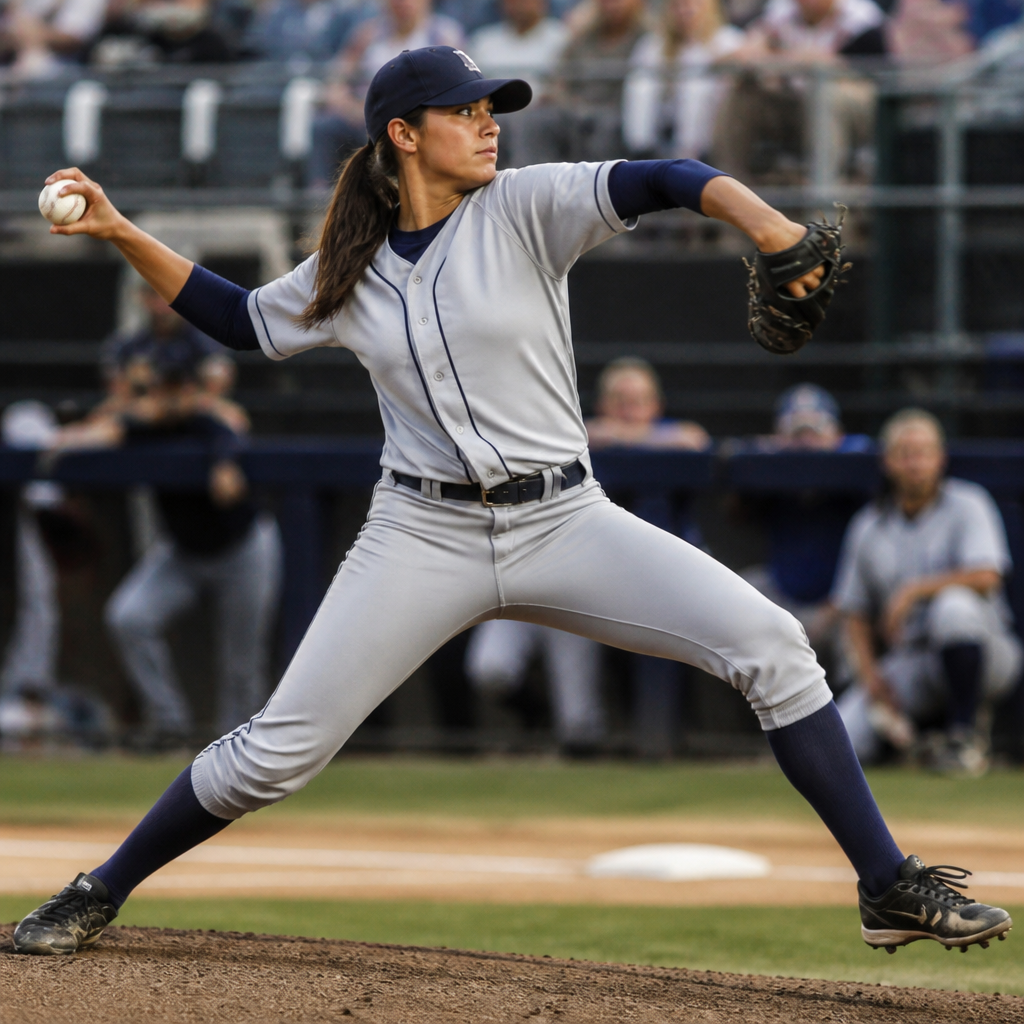
Women in baseball have moved from the margins of public imagination to the center of important conversations about talent, access, leadership, and representation. The phrase includes players, coaches, umpires, executives, broadcasters, trainers, scouts, analysts, and community organizers whose work shapes the sport at every level. A hub article on this miscellaneous branch of the topic matters because many readers arrive with broad questions rather than one narrow query: Have women played professional baseball, not softball? What barriers still exist? Which leagues, jobs, and pathways are open today? After years of covering and studying the game, I have seen that the most persistent obstacle is not ability but assumption. Baseball culture has often treated women as exceptions, even when history shows a long record of participation. Challenging stereotypes requires more than celebrating a few headline names. It requires understanding how perceptions were built, how institutions reinforce them, and how visible success changes expectations for the next generation. This overview brings those strands together and serves as a starting point for deeper reading across the wider women in baseball subject.
The historical record is broader than many fans realize
One common stereotype says women are new to baseball. The record says otherwise. Women played baseball in the nineteenth century on barnstorming teams, in schools, and in local clubs. Bloomer Girls teams toured the United States from the 1890s into the 1930s, mixing women players with male ringers to draw crowds and prove that women could handle the game’s demands. During World War II, the All-American Girls Professional Baseball League became the most visible example of women competing in organized professional baseball, not softball, with overhand pitching eventually replacing the original underhand style. More recently, players such as Ila Borders, who pitched in men’s independent leagues in the 1990s, and Eri Yoshida, who played professionally after developing a knuckleball, showed that women could compete in modern professional settings under real scrutiny.
These examples matter because stereotypes thrive when history is forgotten. When audiences think women have never been in baseball spaces, every breakthrough appears unnatural or symbolic rather than earned. In practice, the story is one of interrupted opportunity. Women were present, institutions narrowed access, and later generations had to fight to re-enter systems that had become male coded. That distinction changes the conversation. The issue is not whether women belong in baseball; history already answered that. The real question is why pathways remained so limited for so long, despite repeated evidence of competence and public interest.
Why stereotypes in baseball persist
Stereotypes in baseball persist because the sport is deeply tied to tradition, and tradition can become a shield for exclusion. Many people still confuse baseball and softball, assuming softball is the natural or only route for girls who want to play with a bat and ball. While softball is a distinct and valuable sport, treating it as a substitute for baseball erases a genuine preference many girls have for baseball’s field dimensions, pitching style, strategy, and culture. I have spoken with players who were told to switch sports not because they lacked skill, but because adults thought baseball was socially inappropriate for them.
Physical assumptions also distort judgment. Critics often cite average differences in size and strength without acknowledging baseball’s reliance on diverse tools: command, pitch design, plate discipline, reaction time, decision making, framing, anticipation, and mechanics. The game has always accommodated different body types and skill profiles. A successful pitcher may win with movement and sequencing rather than velocity. A middle infielder may excel through footwork and reads. A front office leader may change a franchise through player development systems, roster construction, and data interpretation. Stereotypes flatten all of that complexity into one simplistic question of power, then wrongly apply it to every role in the sport.
Women are changing the game on the field and in the dugout
The clearest way perceptions change is through visible performance. In recent years, women have taken on roles that were once described as impossible. Kim Ng became the first woman general manager of a Major League Baseball team when the Miami Marlins hired her in 2020, and her tenure included a postseason appearance that underlined her credibility as a baseball executive rather than a novelty appointment. Alyssa Nakken became the first woman to coach on an MLB field in a regular-season game with the San Francisco Giants. Rachel Balkovec broke another barrier by becoming the first woman to manage a Minor League Baseball team, leading the New York Yankees’ Low-A affiliate. Bianca Smith became the first Black woman to coach in professional baseball when the Boston Red Sox hired her for a minor league role.
These milestones are significant not just because they are firsts, but because each happened inside mainstream baseball systems with measurable performance demands. Coaches are judged on player improvement, game preparation, communication, and instruction. Executives are judged on talent acquisition, development pipelines, payroll efficiency, and competitive results. When women succeed in these jobs, they challenge the claim that baseball knowledge and leadership are inherently male. They also create a practical feedback loop. Young women can now point to specific job titles, organizations, and career paths instead of relying on abstract inspiration alone.
Barriers start early in youth baseball and continue through the pipeline
If readers ask why there are still so few women in baseball, the answer begins with the pipeline. Access problems appear early. In many communities, girls who want to play baseball face subtle discouragement long before tryouts become selective. Some are steered toward softball programs. Others struggle to find coaches who take their ambitions seriously or peers who see them as teammates rather than exceptions. Equipment, travel costs, and the privatization of development through showcases, private lessons, and club teams create added friction for all families, but those costs can hit harder when a player also has to search for a welcoming environment.
Later, the pipeline narrows further. College baseball opportunities for women are limited because there is no broad, established women’s college baseball structure equivalent to NCAA softball. USA Baseball and the Women’s National Team have created important elite opportunities, and events like the Women’s Baseball World Cup provide international competition under the World Baseball Softball Confederation. Even so, the route from youth participation to high-level adult baseball remains fragmented. That fragmentation feeds the false perception that low numbers prove low capability, when they often reflect low opportunity, weak institutional support, and a lack of visible development pathways.
Representation behind the scenes is transforming baseball operations
When people think about women in baseball, they often focus only on players. That misses where much of the structural change is happening. Baseball operations departments now rely on analysts, biomechanics specialists, mental skills coaches, sports scientists, video coordinators, strength staff, medical personnel, and player development coordinators. Women are increasingly present in these jobs, and their influence is substantial because modern baseball decisions are collaborative. A pitching plan might involve TrackMan data, high-speed video, force-plate testing, and scouting notes. A player development meeting may combine Rapsodo metrics, performance psychology, swing decisions, and injury-risk management.
In my experience, once organizations adopt evidence-based processes, biased assumptions become harder to defend. The quality of work is visible. A coordinator either improves communication across affiliates or does not. An analyst either builds a useful model or does not. A medical or performance staff member either earns trust and keeps athletes prepared or does not. Results do not erase bias overnight, but they narrow the space where empty stereotypes survive. That is why hiring matters at every level, from internships and fellowship programs to senior leadership roles.
What progress looks like across different baseball roles
Progress is uneven, but it is visible when measured by role, pathway, and institutional support.
| Area | Example of Progress | Main Ongoing Barrier | What Helps Most |
|---|---|---|---|
| Playing | USA Baseball Women’s National Team and international competition | Limited domestic professional pathways | Youth access, tournaments, scouting visibility |
| Coaching | MLB and MiLB women coaches | Hiring bias and narrow networks | Apprenticeships, formal development, mentorship |
| Front office | Women leading departments and serving as GM | Slow promotion into top decision roles | Transparent hiring and measurable performance criteria |
| Umpiring | Women working in affiliated and independent baseball | Retention under constant scrutiny | Training, evaluation consistency, professional support |
| Media | Women broadcasters, reporters, and analysts covering MLB | Harassment and credibility challenges | Editorial backing, access, and visible expertise |
This comparison shows a simple truth: progress is real, but it accelerates only when organizations build repeatable systems rather than celebrating isolated breakthroughs. Role models open doors; institutions keep them open.
Media coverage shapes public perception more than many teams admit
Perception is not formed only on the field. It is built through broadcasts, headlines, documentaries, social media clips, and the language commentators choose. Media can normalize women in baseball by focusing on preparation, strategy, and outcomes instead of novelty. It can also undermine progress by treating every woman’s presence as a curiosity piece. Readers should pay attention to framing. Does a profile describe technical skill, leadership style, and career progression? Or does it linger on whether a woman “belongs” in the room? That distinction matters because repeated framing influences how fans, parents, and hiring managers think.
Broadcast and digital media have improved in this area. Women now appear not only as sideline reporters but as play-by-play announcers, analysts, and national baseball writers with deep subject expertise. That visibility broadens authority. A young fan hearing a woman break down pitch tunneling, leverage index, or defensive positioning absorbs a new normal. Over time, normality is powerful. It reduces the burden on every individual woman to represent an entire gender and lets her simply do the job.
What organizations can do to make baseball more inclusive
Baseball organizations do not need vague diversity statements; they need operational changes. First, they should track participation and retention at each level, because what gets measured gets managed. If girls leave baseball between certain age groups, leagues should ask why, then address coaching quality, scheduling, facilities, and social climate. Second, hiring should rely on structured interviews and clear competencies. Unstructured hiring often reproduces old networks, which have historically excluded women.
Third, development opportunities must be visible. MLB, clubs, colleges, and amateur organizations can expand clinics, coaching fellowships, internships, and talent identification programs specifically connected to baseball, not folded into broader messaging that blurs baseball with softball. Fourth, anti-harassment policies need real enforcement. Talented people do not stay where respect is optional. Finally, storytelling matters. Teams should highlight women’s baseball work with the same analytical seriousness used for men’s careers: player development goals, scouting reports, leadership responsibilities, and measurable outcomes.
How fans, parents, and local coaches influence the next decade
Cultural change is not driven only by leagues and front offices. Fans, parents, teachers, and volunteer coaches influence who feels welcome enough to stay in the game. A parent who signs up a daughter for baseball instead of assuming softball is the only option changes a life course. A coach who gives equal reps, instruction, and accountability sets a standard that players remember. A local league that markets girls’ baseball openly tells families they do not need permission to participate.
For fans, support can be practical. Attend women’s baseball events when they are available. Follow organizations such as USA Baseball’s women’s programs. Read and share reporting that treats women in baseball as serious professionals. Challenge lazy commentary that confuses tradition with exclusion. The next decade will be shaped by whether baseball communities move from passive approval to active support. The talent exists. The need is not to invent it, but to recognize, develop, and retain it.
Women in baseball are challenging stereotypes because their presence exposes how weak those stereotypes always were. History shows women have long played, coached, organized, and promoted the game. Modern examples show they can lead in professional clubhouses, front offices, dugouts, and broadcast booths. The remaining barriers are mostly structural: narrow pipelines, outdated assumptions, limited visibility, and inconsistent institutional support. That is important because structural problems require structural solutions. Good intentions alone do not create access, jobs, or staying power.
The biggest perception shift happens when baseball is discussed in terms of skill, preparation, and opportunity rather than gendered expectation. Once that shift occurs, the conversation becomes more accurate and more useful. Readers looking for a clear takeaway should remember this: women belong in baseball because they have always been part of baseball, and the sport is stronger when participation and leadership reflect the full range of available talent. Use this hub as a starting point, explore the related articles in the women in baseball topic, and bring that knowledge back to your team, league, classroom, or community.
Frequently Asked Questions
1. What does “women in baseball” actually include?
“Women in baseball” is a much broader category than many readers initially assume. It certainly includes female players, both historically and in the present day, but it also refers to women working throughout the sport as coaches, managers, umpires, front-office executives, owners, scouts, player-development staff, athletic trainers, broadcasters, analysts, statisticians, photographers, writers, and grassroots organizers. In other words, it covers the full baseball ecosystem, from the field and dugout to the booth, clubhouse, and boardroom.
This broader definition matters because stereotypes often reduce women’s relationship to baseball to fandom or novelty. In reality, women have long contributed expertise, labor, leadership, and innovation to the game. Some have broken visible barriers in professional settings, while many others have strengthened baseball through local leagues, youth development, nonprofit programs, media coverage, and community outreach. Looking at the full picture helps readers understand that women are not newcomers to baseball; they are essential participants whose impact spans generations and job titles.
2. Have women played baseball professionally or at high levels of competition?
Yes. Women have played baseball at serious competitive levels for many decades, even if their stories have not always received the same attention as men’s baseball history. One of the best-known examples is the All-American Girls Professional Baseball League, which operated during the 1940s and 1950s and demonstrated that women could perform in a professional baseball environment under public scrutiny and high expectations. Beyond that league, women and girls have played in amateur, semi-professional, international, collegiate, developmental, and national-team settings around the world.
It is also important to distinguish baseball from softball. Many girls and women have been steered toward softball by custom, school structures, or limited baseball pathways, not because baseball ability was absent. In recent years, greater recognition of women’s baseball internationally has helped challenge the old assumption that baseball is only a men’s sport. National teams, international tournaments, and development programs have created more visible opportunities, but access still varies widely by region. So the accurate answer is not only that women have played baseball, but that they have continued to do so despite inconsistent support, fewer resources, and narrower development pipelines.
3. Why have stereotypes about women in baseball lasted for so long?
Stereotypes persist because sports culture has historically been shaped by ideas about gender, tradition, and visibility. Baseball in particular is often framed as a symbol of heritage and masculinity, which has made it harder for many people to imagine women as central figures in the sport. When audiences have seen few women on the field, in leadership roles, or in broadcast positions, those absences can wrongly appear to “confirm” the stereotype, even when the real issue is exclusion, not lack of talent or interest.
Another reason these assumptions last is that women’s baseball stories have often been underreported, miscategorized, or treated as exceptions instead of part of baseball’s core history. If people only hear about women in baseball during barrier-breaking moments, they may miss the everyday reality that women have long been studying the game, coaching it, officiating it, and helping run it. Media habits, hiring practices, youth opportunities, and cultural expectations all reinforce one another. Changing perceptions therefore requires more than celebrating a few milestones; it requires sustained visibility, accurate historical storytelling, and equal respect for women’s baseball knowledge and leadership.
4. How are women changing perceptions of baseball today?
Women are changing perceptions of baseball by being visible, effective, and influential across virtually every part of the sport. When women work as coaches, analysts, scouts, executives, umpires, and broadcasters, they directly challenge outdated assumptions about who holds expertise in baseball. Their presence matters not just symbolically, but practically: they help make decisions, develop players, interpret data, enforce rules, shape team culture, and communicate the sport to fans. Each of these roles expands public understanding of what baseball leadership and authority can look like.
Perceptions are also changing because younger generations are seeing more pathways than before. Girls who love baseball now have more examples of women competing, teaching, commenting on games, and leading organizations. Community-based programs, advocacy groups, women’s baseball initiatives, and more inclusive development systems are helping create a stronger pipeline. At the same time, digital media has made it easier for overlooked stories to reach larger audiences. Instead of waiting for traditional gatekeepers to grant attention, women in baseball can build communities, share expertise, and document progress in real time. That combination of representation, performance, and access is gradually reshaping what many fans, parents, and industry leaders believe is possible.
5. Why does representation of women in baseball matter beyond symbolism?
Representation matters because it influences opportunity, credibility, and the future health of the sport. When women are seen and respected in baseball roles, it signals to players, families, employers, and fans that talent and knowledge are not limited by gender. That can affect who gets hired, who feels welcome in a clubhouse or front office, who receives mentorship, and which young athletes decide to stay in the game. Representation is not just about being seen; it is about changing structures that determine who gets to belong and advance.
It also matters because baseball benefits from broader perspectives and a larger talent pool. Organizations become stronger when they are open to skilled people from different backgrounds and experiences. Women in baseball contribute insights in player development, communication, leadership, performance analysis, community engagement, and organizational strategy. More inclusive participation can lead to better decision-making and a healthier culture overall. In that sense, the conversation is not only about fairness. It is also about improving the sport itself by recognizing that excellence in baseball has never belonged to just one type of person.