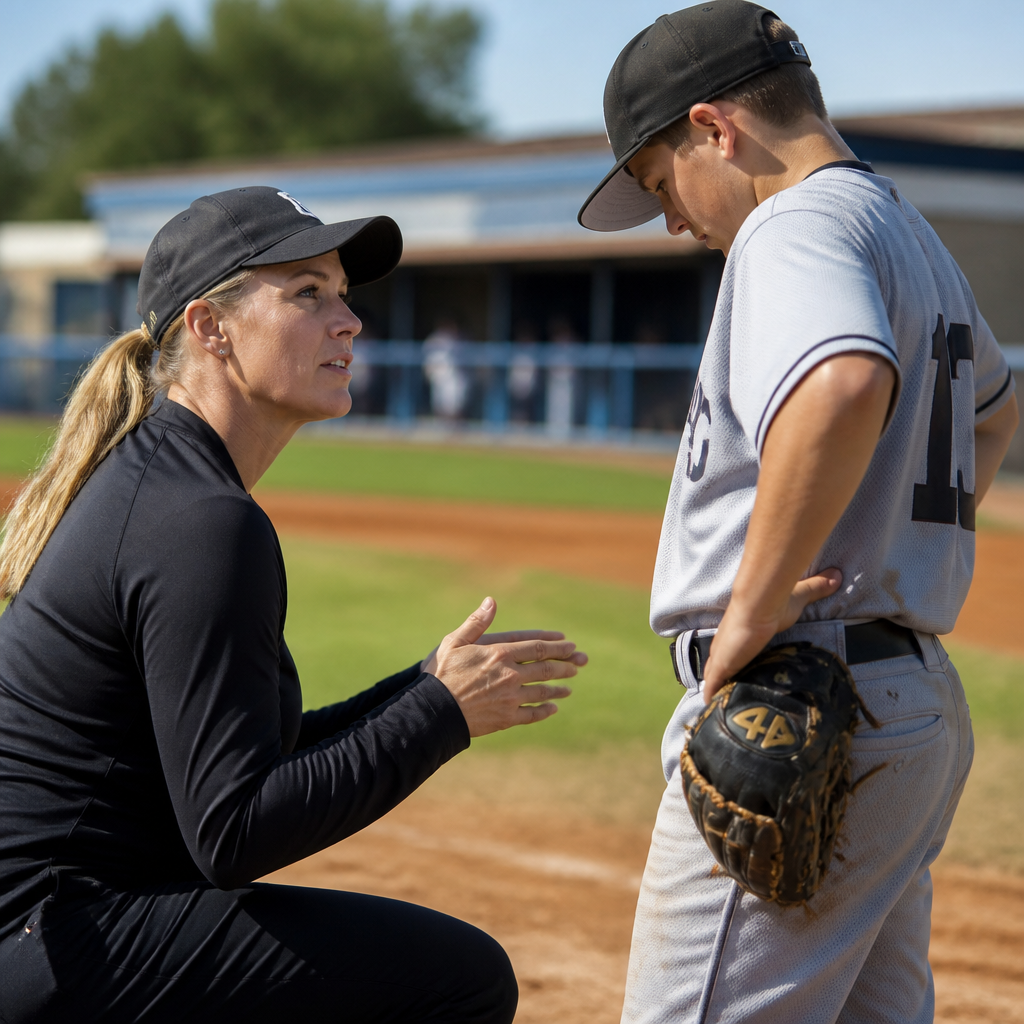
Women have shaped baseball training and development for far longer than most histories admit, and their influence now reaches every layer of the game, from youth instruction and biomechanics labs to front-office player plans and major league coaching staffs. In this context, training means the systems used to build athletic skill, physical capacity, decision-making, and recovery, while development refers to the long-term process of helping players improve over seasons and careers. That includes batting mechanics, pitch design, strength and conditioning, injury prevention, mental performance, analytics, scouting feedback, and teaching methods. I have worked with baseball content and coaching frameworks long enough to see one pattern repeatedly: when women enter the room as coaches, trainers, analysts, sports scientists, physicians, or educators, the conversation gets broader, sharper, and more player-centered. Their impact matters because baseball is no longer won by tradition alone. It is won by integrating evidence, communication, and individualized development plans that help athletes perform consistently under pressure.
The influence of women on baseball training and development matters especially now because the sport is in the middle of a knowledge revolution. Teams use force plates, motion-capture systems, high-speed cameras, bat sensors, and pitch-tracking tools such as Hawk-Eye, TrackMan, and Rapsodo to evaluate movement and outcomes. Yet data only becomes useful when someone can translate it into actionable instruction. Many women have become essential translators between complex information and athlete behavior. They help players understand why a change is needed, how to apply it, and how to repeat it in competition. This article serves as a hub for the miscellaneous side of women in baseball by covering the full range of contributions that do not fit neatly into one lane. It explains where women have changed baseball development, what methods they use, what barriers remain, and why their presence improves the sport for players, teams, and future generations.
Women expanded who gets to teach baseball and how teaching is delivered
One of the clearest contributions women have made is expanding the idea of who is qualified to teach baseball. For decades, coaching authority was often linked to a narrow image: a former male player instructing by anecdote. That model still exists, but it is no longer enough. Today, effective instruction is built on observation, communication, feedback loops, and measurable progress. Women have entered baseball training through formal coaching, kinesiology, athletic training, sports psychology, teaching, and data analysis, then applied those disciplines to player development. The result is a more complete coaching environment.
Kim Ng, while best known for front-office leadership, represents the broader point that women have helped normalize expertise in baseball operations and development pathways. Rachel Balkovec became the first woman to manage a Yankees-affiliated minor league club after years working in strength and conditioning and player development. Her rise mattered because it demonstrated that authority in baseball can come from technical skill, instructional clarity, and player trust, not from matching an old stereotype. Alyssa Nakken’s work with the San Francisco Giants has similarly shown that on-field coaching responsibilities can be performed at the highest level by women who understand drill design, game preparation, and communication under competitive pressure.
In youth and amateur baseball, women have influenced training even more quietly but just as powerfully. Many lead hitting clinics, run strength programs, coordinate team logistics, and teach the foundational habits that keep players healthy. In practical terms, that means organizing throwing progressions, teaching proper warmups, correcting posture in fielding drills, and communicating with parents about workload and recovery. Good development begins with consistency, and many female coaches and trainers have become anchors of that consistency. Players benefit when instruction is organized, specific, and repeatable, regardless of the coach’s gender.
Sports science, medicine, and performance systems became stronger through women’s leadership
Baseball development is no longer limited to batting practice and bullpen sessions. It is a performance system that depends on sports medicine, rehabilitation, nutrition, workload management, and biomechanics. Women have become central to those systems across professional organizations, colleges, private labs, and medical centers. Their contributions are especially important because baseball creates repetitive stress on shoulders, elbows, hips, hamstrings, and the lower back. Preventing injury while preserving performance requires precise assessment and coordinated planning.
In high-performance environments, I have seen the best development staff operate like integrated departments rather than isolated specialists. A pitching coach may notice velocity loss, but a physical therapist may connect it to thoracic mobility restrictions, while a strength coach identifies fatigue trends and a sports scientist confirms reduced force output. Women working in these roles have helped baseball move toward that integrated model. They contribute not only through direct treatment, but also by building processes for screening, communication, and return-to-play decisions.
Dr. Meredith Wills, known publicly for her work examining baseball construction and aerodynamics, illustrates the value of scientific rigor in the sport. While her specialty is equipment analysis rather than daily player training, the lesson is the same: baseball improves when evidence replaces assumption. Similar evidence-based thinking drives injury prevention programs, sleep protocols for travel-heavy schedules, hydration standards in hot-weather tournaments, and post-throw recovery plans. Teams that monitor acute and chronic workload, range of motion, and soreness trends make better decisions than teams relying only on instinct.
Women have also influenced how strength and conditioning is delivered. Modern baseball performance is not about adding size indiscriminately. It is about rotational power, force transfer, deceleration, sprint efficiency, and tissue resilience. Effective programs often use medicine-ball throws, trap-bar deadlifts, unilateral lower-body work, shoulder stability circuits, and individualized mobility plans. Female performance coaches have helped normalize this more sophisticated approach, especially for younger athletes who used to be pushed toward generic weight-room routines. Better programming means fewer overuse problems and more transferable athletic gains.
Analytics and technology changed player development, and women helped make the numbers teachable
Data has transformed baseball, but numbers by themselves do not develop players. The real challenge is turning outputs into coaching cues. Women working as analysts, coordinators, and technology specialists have played a major role in that translation process. They build reports, design dashboards, tag video, interpret movement data, and communicate findings in language athletes can use. If a hitter sees that his attack angle is too steep or that his contact quality drops against high velocity, he still needs a coach or analyst who can connect that information to setup, timing, and swing decisions.
Some of the most effective development environments use technology in short, focused feedback cycles. A pitcher throws on a Rapsodo unit, sees spin efficiency and vertical break, then works with a coach on seam orientation or wrist position. A hitter uses Blast Motion or bat-tracking tools, compares bat speed and connection metrics, then reviews synchronized high-speed video. Women in player development roles often excel here because they bridge technical systems and human learning. They understand that a player can only process a few priorities at once.
| Development Area | Common Tool | What It Measures | How Coaches Apply It |
|---|---|---|---|
| Pitching | Rapsodo | Velocity, spin rate, movement profile | Adjust grip, release, and pitch mix |
| Batted ball quality | HitTrax | Exit velocity, launch angle, spray patterns | Refine swing path and approach |
| Biomechanics | Hawk-Eye or motion capture | Kinematic sequencing and movement efficiency | Improve timing, posture, and force transfer |
| Strength readiness | Force plates | Jump output, asymmetry, fatigue markers | Adjust workload and recovery plans |
This shift matters beyond professional baseball. College programs and advanced youth academies now use lower-cost versions of the same tools, and women are frequently the staff members who organize, interpret, and present those findings. Their impact is practical: fewer vague cues, clearer benchmarks, and better accountability. Development improves when technology supports teaching instead of replacing it.
Communication, psychology, and learning design are core training advantages
One reason women have influenced baseball development so strongly is that many have elevated the quality of communication inside training environments. Baseball is a failure-heavy sport. Even elite hitters make outs most of the time, pitchers lose command, and prospects plateau. In that setting, communication is not a soft skill; it is a performance skill. Players improve faster when feedback is specific, emotionally controlled, and tied to a clear objective.
Female coaches, mental performance specialists, and player-development staff have often excelled at creating psychologically safe but demanding environments. That combination matters. Psychological safety does not mean low standards. It means athletes can ask questions, admit confusion, and respond to failure without shutting down. When that happens, instruction becomes more efficient. A struggling infielder is more likely to say that a footwork drill feels rushed. A rehabbing pitcher is more likely to report soreness honestly instead of hiding it. Better information produces better decisions.
Learning design also matters. Effective coaches use blocked practice for introducing a movement, variable practice for adaptability, and game-like constraints for transfer. They understand external versus internal cues, attentional focus, and the role of video delay in motor learning. Many women in baseball instruction bring educational training or interdisciplinary experience that strengthens these methods. For example, a hitting coach may pair tee work with decision-training rounds, then finish with competitive at-bats to test transfer under pressure. That structure develops both mechanics and game performance.
Mental performance is another area where women have influenced development significantly. Routines for breathing, visualization, self-talk, and between-pitch reset strategies are now common in advanced programs. They help hitters return to neutral after a strikeout and help pitchers execute after defensive errors. These practices are not motivational extras. They are trainable skills that improve consistency over a long season.
Representation changes opportunity, and opportunity changes the talent pipeline
Women influence baseball training not only through direct instruction but also by changing who believes they belong in the system. Representation has a measurable developmental effect because it broadens the pipeline of future coaches, analysts, trainers, and players. When girls see women coaching on fields, analyzing video in player meetings, or leading strength sessions, baseball stops looking like a closed world. That matters for access, confidence, and career imagination.
Organizations such as Baseball For All have been important in this shift. By creating tournaments, development experiences, and visibility for girls in baseball, they support both participation and long-term leadership. The Women’s National Team program has also provided a clearer competitive pathway, which matters because serious athletes need serious structures. The more girls stay in baseball, the more future instructors, medical professionals, and development leaders the sport gains.
Representation also affects boys and male athletes. Players who regularly learn from women become more adaptable and less attached to outdated assumptions about authority. In club, college, and professional settings, I have seen athletes respond best when staff members are credible, prepared, and clear. Once those standards are met, skepticism fades quickly. Over time, that cultural adjustment benefits teams because it widens the pool of excellent teachers and specialists available to them.
There are still barriers. Women in baseball often face higher scrutiny, fewer informal networking opportunities, and slower promotion tracks. Some are expected to prove technical competence repeatedly in ways male peers are not. Those constraints are real, and they affect retention. But the trend line is unmistakable: as more organizations prioritize merit, formalized hiring, and development infrastructure, women gain more opportunities to contribute where their skills are most valuable.
What the future of baseball development should look like
The next phase of baseball training should not treat women’s influence as symbolic. It should embed that influence into hiring, education, and system design. Teams need broader recruiting pipelines for coaching, sports science, medicine, and analytics roles. They should use clear competency-based evaluations, not informal gatekeeping, when selecting staff. Coaching education should include biomechanics literacy, communication training, injury risk management, and technology interpretation. When organizations build those standards, talented women are more likely to enter, stay, and advance.
Player development should also become more individualized. The best programs already build profiles around movement patterns, pitch characteristics, batted-ball tendencies, sleep quality, and learning style. Women have helped drive this athlete-centered model, and baseball should lean further into it. A high-spin pitcher may need a different strength emphasis than a sinkerballer. A contact hitter may need different cage design than a pull-power prospect. A recovering catcher may need workload modifications that preserve offensive output. Development works when staff members collaborate across specialties and adapt plans to the player in front of them.
For readers exploring women in baseball, this miscellaneous hub points to a simple conclusion: women are not adjacent to baseball development. They are part of its modern foundation. Their influence appears in coaching language, rehab protocols, technology workflows, player confidence, and the pathways that bring new talent into the game. The benefit is better baseball: smarter instruction, healthier athletes, stronger organizations, and a wider future for everyone who loves the sport. If you manage a program, audit who teaches, who decides, and who gets opportunities. If you follow the game, keep learning from the women already improving it every day.
Frequently Asked Questions
How have women influenced baseball training and development historically?
Women have influenced baseball training and development for much longer than many traditional baseball histories suggest. Their contributions have appeared in formal and informal settings alike, including youth instruction, physical conditioning, sports medicine, data analysis, skill acquisition, and player mentoring. In earlier eras, women often worked around the edges of organized baseball because leadership and coaching opportunities were limited, yet they still shaped how players learned the game through school programs, community teams, family instruction, and athletic education. In many cases, women were the people building foundational skills such as throwing mechanics, movement patterns, discipline, preparation habits, and confidence long before players entered elite systems.
Over time, that influence became more visible and more institutional. As baseball organizations expanded their understanding of performance, they increasingly relied on expertise in areas where women have made major contributions, including strength and conditioning, nutrition, rehabilitation, biomechanics, psychology, and long-term athlete development. Women have also helped challenge outdated training models that relied too heavily on repetition without context, conditioning without recovery, or rigid instruction without accounting for how different athletes learn. In that sense, their impact is not limited to a few high-profile coaching positions. It extends to the broader evolution of baseball development into a more interdisciplinary, evidence-based process focused on sustainable improvement over an entire career.
What areas of modern baseball training are most affected by women’s contributions?
Women’s contributions can now be seen across nearly every major area of modern baseball training. One of the most important is player development design: the process of creating individualized plans for how an athlete improves physically, technically, and mentally over time. Women working in coaching, performance science, analytics, and medical support have helped organizations move away from one-size-fits-all instruction and toward systems built around each player’s body, role, workload, and stage of development. That shift matters because baseball performance depends on coordination, timing, recovery, and decision-making just as much as raw talent.
Biomechanics is another major area of influence. Women in sports science and applied performance roles have helped teams better understand how pitchers generate force, how hitters sequence movement, and how small adjustments can improve both efficiency and durability. In strength and conditioning, their work has supported smarter programming that balances power, mobility, movement quality, and recovery instead of simply chasing volume. In sports medicine and rehabilitation, women have contributed to injury prevention strategies, return-to-play protocols, and workload management systems that protect players while still supporting growth. Their influence is also strong in mental performance, where communication style, emotional regulation, focus, confidence, and learning environments are increasingly recognized as central to development. Put simply, women have helped baseball training become more complete, more individualized, and more aligned with how athletes actually improve.
Why does representation of women in baseball coaching and development matter?
Representation matters because it changes both who gets to contribute and how the game itself evolves. When women are included in baseball coaching and development roles, organizations gain access to a wider range of expertise, teaching methods, problem-solving approaches, and leadership styles. That diversity of thought is especially important in training environments, where improvement depends on communication, observation, adaptability, and trust. Players do not all respond to the same cues, the same feedback style, or the same developmental structure. Expanding who teaches the game makes it more likely that teams can meet athletes where they are and help them progress efficiently.
Representation also matters symbolically and structurally. It signals that baseball values knowledge and effectiveness over outdated assumptions about who belongs in the sport. That opens doors for future coaches, analysts, therapists, and performance specialists while helping normalize women’s leadership at every level of the game. Just as important, visible representation can improve accountability inside organizations. It encourages broader conversations about player welfare, healthy training culture, long-term planning, and inclusive hiring. In practical terms, more women in baseball development roles means more talent entering the system and more perspectives helping players improve. For a sport that is constantly looking for competitive edges, that is not just a cultural benefit. It is a performance advantage.
How have women helped change the way baseball players are developed over the long term?
Women have helped reshape long-term baseball development by emphasizing that progress is rarely linear and that athlete growth must be managed across seasons, not just measured from week to week. Older development models often focused too narrowly on immediate results such as radar gun readings, batting averages, or short-term mechanical fixes. Women working in development systems have helped advance a broader view that includes movement quality, recovery capacity, learning pace, emotional resilience, adaptability, and injury risk. This long-range approach is essential because a player’s career is built through thousands of decisions about workload, skill progression, training intensity, and support systems.
That influence shows up in practical ways. Players are more likely now to receive integrated plans that connect the weight room, the cage, the mound, video review, medical feedback, and game performance into one developmental process. Women have helped support that integration by working across departments and asking better questions about what development actually means. Is a pitcher improving because velocity increased, or is he also developing command, durability, and recovery habits? Is a hitter getting stronger, or is he learning to make better swing decisions under pressure? These are the kinds of long-term questions that produce better outcomes over time. By reinforcing the value of individualized progress, sustainable workloads, and whole-athlete development, women have helped baseball move closer to a smarter and more durable model of player growth.
What does the future look like for women’s influence on baseball training and development?
The future is likely to involve deeper influence, broader authority, and more visible leadership. Women are already contributing in player development, coaching, analytics, high-performance operations, rehabilitation, scouting support, and front-office planning. As organizations continue to invest in evidence-based development systems, the value of interdisciplinary expertise will only increase, and that creates more opportunities for women to shape how baseball teaches, measures, and sustains performance. We can expect to see more women leading departments, designing organizational training philosophies, overseeing return-to-play systems, and contributing directly to major league game preparation and player growth.
Just as importantly, the future will likely bring a more normalized view of women as central baseball educators rather than exceptions to the rule. That shift matters because it changes the pipeline. When young athletes, students, and professionals can see women thriving in baseball development roles, more qualified people enter the field, and the sport benefits from a larger and stronger talent base. The long-term effect is a better developmental ecosystem: one that is more collaborative, more innovative, and more responsive to the actual needs of athletes. In that environment, women’s influence will not simply be a notable trend. It will be a defining part of how baseball continues to improve its training methods, player care, and competitive development at every level.