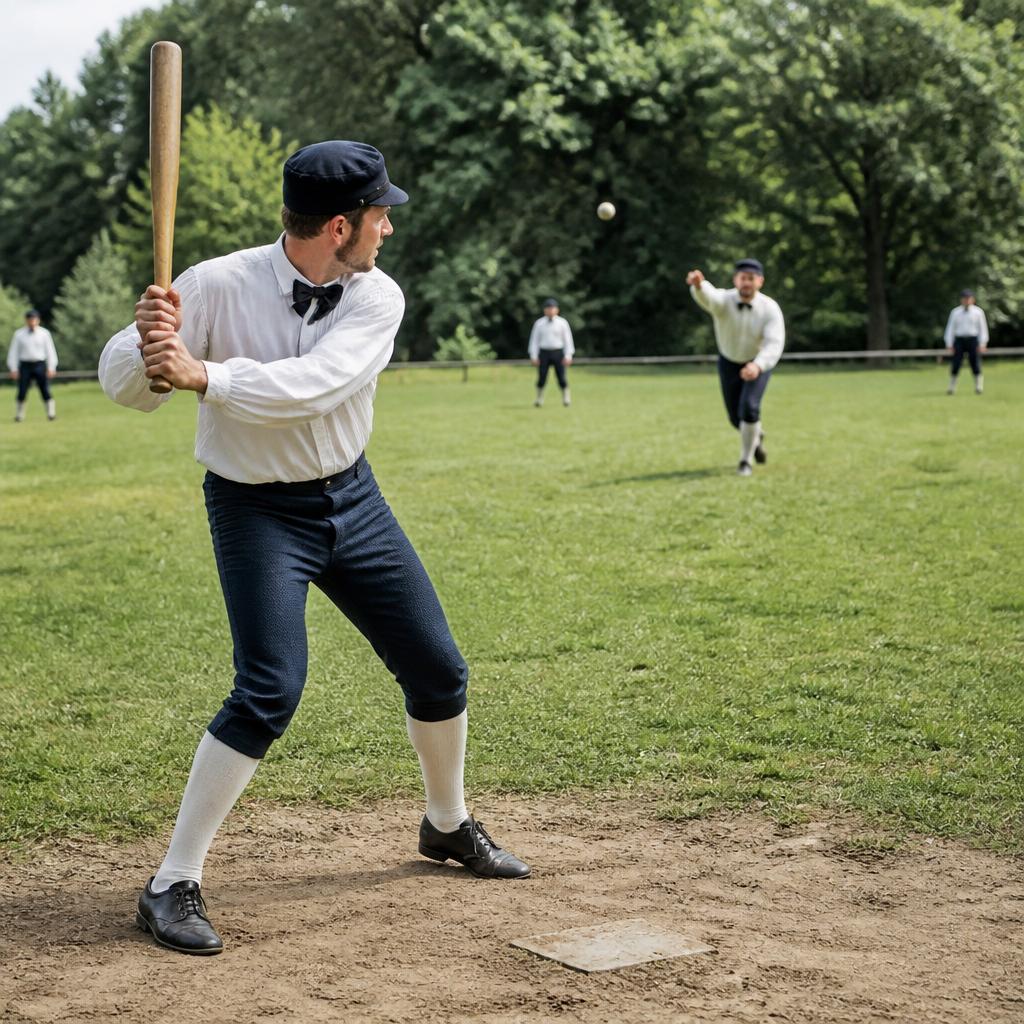
Town ball was the broad American family of bat-and-ball games played before modern baseball standardized rules, positions, and equipment. In the early nineteenth century, communities across the United States used the term for local games that shared a simple structure: one side batted, the other fielded, runners advanced around agreed points, and outs ended turns. Yet town ball was never one single code. It was a practical label for regional versions, house rules, and inherited customs adapted to available space, local taste, and player age. Understanding town ball matters because it explains how baseball emerged from lived play rather than appearing fully formed in one place or year.
In research and museum work, I have found that people often ask a direct question: was town ball just an old name for baseball? The accurate answer is no. Town ball was a predecessor and a cousin, not a perfect synonym. Some versions used four bases, others varied the layout, and many allowed soaking, also called plugging, where a fielder could put out a runner by striking him with a thrown ball. Pitching was generally underhand and intended to start action, not dominate it. Teams could be large, innings flexible, and fields irregular. Those differences are not trivia. They reveal a game culture built around participation and community before codified competition.
As a hub within the early history of baseball, this article maps the wider bat-and-ball origins behind town ball and shows how historians connect children’s games, English precedents, American regional play, and nineteenth-century club rules. It also clarifies why labels such as rounders, base ball, town ball, one old cat, and cricket sometimes overlap in period sources. For readers exploring baseball’s beginnings, town ball is the key bridge between folk play and organized sport, linking scattered local traditions to the New York game that eventually became modern baseball.
What town ball was and how it was played
Town ball was a loosely organized American bat-and-ball game in which players struck a pitched or tossed ball, ran to designated goals, and scored before being retired by the fielding side. That core answer captures the basic idea, but the details changed from town to town. Contemporary accounts describe games on commons, schoolyards, pasture edges, and village greens. The equipment was modest: a handmade or commercially produced ball, a bat that could be flat or round depending on local practice, and markers for bases or bounds. Because no single national rulebook governed play, agreement before the first pitch mattered as much as any inherited custom.
Most forms divided players into batting and fielding sides and awarded a change of side after a set number of outs or after all batters had their turn. In many places, a batted fair ball entitled the striker to run, while fielders tried to force runners, catch fly balls, or retire them by soaking. Soaking is one of the clearest ways town ball differed from later baseball. In a crowded field with players of mixed age and skill, it was an efficient, visible method. It also made speed, evasive movement, and accurate throwing central skills. Some local codes reduced or barred soaking because of safety concerns, especially with harder balls.
The field itself was flexible. Unlike the ninety-foot square of modern baseball, town ball could be compressed for younger players or stretched across open ground for adults. Bases might be stakes, posts, stones, or scratched marks. Team sizes often exceeded nine, which reflects the game’s social function. It welcomed whoever showed up. That inclusiveness helps explain why town ball remained popular even after more regulated forms of base ball began spreading through clubs in the 1840s and 1850s.
Bat-and-ball origins before town ball
Town ball did not emerge in isolation. It belonged to a much older transatlantic tradition of striking a ball and running to safety points. English games such as rounders, stoolball, and cricket supplied recognizable ingredients, though none should be treated as the single parent of baseball. Rounders is often mentioned because it features batting, running, and retiring players between posts, but the relationship is best understood as family resemblance rather than direct duplication. Migrants carried habits of play, children adapted them, and American communities blended those habits with local innovation.
Children’s informal games were especially important. One old cat, two old cat, and similar bat-and-ball drills taught striking, catching, and running with very few players. Those small-sided games made sense on farms, in alleys, and on school grounds where a full contest was impractical. Over time, repeated local habits hardened into recognizable community games. In that setting, town ball became both a catchall term and a real playing tradition. The path from folk recreation to organized sport usually works this way: repetition first, standardization later.
Cricket also mattered, though in a different way. It was more formally codified and had stronger institutional backing in parts of the Atlantic world. American players knew cricket, and clubs existed in major cities, yet cricket required more equipment, more prepared space, and longer playing time. Bat-and-ball games closer to town ball were easier to stage spontaneously. That practicality helps explain why baseball’s ancestors took root so broadly in the United States. A game that can be organized quickly with uneven numbers and rough boundaries travels faster than a game dependent on specialized conditions.
Regional variations and local rules
No serious history of town ball can ignore regional variation. In Pennsylvania, New England, the Mid-Atlantic, and the Midwest, period descriptions show similar principles but different details. The Massachusetts Game, for example, preserved features that looked older than the New York code, including larger teams and the use of soaking in some formulations. In Philadelphia, forms of town ball and related base ball coexisted while clubs experimented with rule sets. On the frontier and in small towns, people often used the same name for games that would not have been identical if played side by side.
This is why historians read newspapers, diaries, club constitutions, and rule pamphlets carefully instead of assuming terminology is stable. When a source says “base ball” in the 1830s or 1840s, it may describe something closer to town ball than to the later professional game. Likewise, “town ball” could signal a children’s pastime in one place and a serious adult club game in another. In my experience reviewing nineteenth-century descriptions, the most reliable approach is to track actual playing features: number of bases, method of retiring runners, team size, pitching style, and innings structure.
| Feature | Typical Town Ball Pattern | Modern Baseball Pattern |
|---|---|---|
| Rules | Local and negotiated before play | Standardized and formally governed |
| Team size | Variable, often more than nine | Nine players |
| Runner putouts | Force, catch, tag, or soaking | Force, catch, or tag |
| Pitching | Underhand, action-starting delivery | Overhand or varied delivery, strategic duel |
| Field | Irregular dimensions | Fixed diamond and measured lines |
These differences mattered because they shaped the experience of play. Town ball emphasized broad participation and adaptable rules. Modern baseball emphasized repeatability, records, and fair competition across clubs. Neither approach was accidental; each fit the social needs of its moment.
How town ball shaped early baseball
The development of baseball depended on reducing variation without losing the appeal of bat-and-ball play. That balancing act is visible in the Knickerbocker rules of 1845 and later revisions adopted by New York-area clubs. Those rules did not invent baseball from nothing. They selected among existing practices, rejecting some and preserving others. The ban on soaking was one of the most consequential choices. It made the game safer, more orderly, and better suited to adult club competition. Standardized foul territory, fixed numbers of players, and clearer base paths served the same purpose.
Even as the New York game gained influence, older habits persisted. The Massachusetts Game remained active in New England into the 1850s, and references to town ball continued in newspapers and reminiscences. During the Civil War era, soldiers from different states encountered one another’s games, which helped spread the more standardized baseball code. That military mixing is often overstated as the sole cause of baseball’s rise, but it did accelerate familiarization. A game with published rules, recognizable club structure, and intercity competition had advantages that local town ball could not match indefinitely.
The shift also changed the meaning of skill. In town ball, versatility and improvisation mattered most. In baseball, specialized fielding positions, tactical pitching, and consistent scoring environments became more important. Standard dimensions allowed comparison. Box scores, standings, and championships only make sense when rules are shared. That is why town ball belongs at the center of baseball history: it supplied the cultural base from which standardization could emerge.
Sources, myths, and how historians study the game
Town ball sits inside a part of sports history where myths thrive. The best-known myth is that baseball was invented in a single moment by Abner Doubleday in Cooperstown. Historians have rejected that story for decades because no contemporary evidence supports it. More persuasive evidence points to gradual development through many bat-and-ball games, including town ball. The Mills Commission popularized a neat origin story in the early twentieth century, but neat stories are often weaker than messy records.
Reliable reconstruction depends on primary sources and cautious interpretation. Key evidence includes newspaper match reports, club bylaws, letters, memoirs, juvenile literature, and early rule books such as the 1860 Beadle guides. Scholars also use material culture: surviving bats, balls, illustrations, and field diagrams. Institutions like the National Baseball Hall of Fame and academic historians of sport have emphasized that baseball evolved through adaptation, urban club culture, and regional exchange. That conclusion fits the documentary record far better than a single-inventor claim.
One challenge is that memory sources were often written decades later. Former players remembered games fondly but not always precisely. Another challenge is vocabulary drift. A writer might call a childhood game “town ball” in retrospect even if local players had used another term at the time. Good history therefore compares multiple sources, dates language carefully, and separates confident conclusions from reasonable inference. The strongest conclusion is simple: town ball was not a footnote. It was a major channel through which older bat-and-ball customs flowed into baseball.
Why town ball still matters today
Town ball matters because it restores the human scale of baseball’s beginnings. Before leagues, media rights, and statistical databases, there were neighbors improvising a game that fit their ground, numbers, and time. That fact is historically important, but it is also useful for modern readers trying to understand why baseball became culturally durable. Sports that last usually balance structure with playfulness. Town ball supplied the playfulness; organized baseball added durable structure.
It also matters for anyone exploring the early history of baseball as a connected topic. If you want to understand rounders comparisons, the Massachusetts Game, the Knickerbockers, Civil War baseball, or why nineteenth-century rules changed so quickly, town ball is the hub that ties those subjects together. The game explains the transition from local custom to national pastime better than any single anecdote can.
The key takeaway is direct. Town ball was the American bat-and-ball game before modern baseball, but it was more than a primitive draft. It was a flexible, widely played tradition with its own logic, rules, and social purpose. Study it closely and baseball’s early history becomes clearer, richer, and more believable. Use this hub as your starting point, then continue into the linked subjects within bat-and-ball origins to see how each thread contributed to the game that followed.
Frequently Asked Questions
What was town ball, and how was it different from modern baseball?
Town ball was a broad American family of bat-and-ball games played before baseball became standardized in the nineteenth century. Rather than describing one fixed sport with a universal rulebook, the term usually referred to local or regional games that shared the same basic pattern: one side batted, the other side fielded, runners moved between agreed markers or bases, and outs eventually ended the batting side’s turn. In that sense, town ball was less a single game than a category of related games that communities recognized as familiar, practical, and easy to organize.
The biggest difference from modern baseball is that town ball did not operate under one accepted national code. Rules could vary from place to place, and even from one gathering to the next, depending on who was playing and what customs they preferred. The number of players might differ, the layout of the field might change, the distance between bases or goals could be adjusted, and methods of recording outs often reflected older traditions rather than the later baseball model. Equipment was also less standardized. Balls, bats, and playing spaces were often improvised, which made the game accessible but also highly variable.
Modern baseball, by contrast, is defined by consistency: nine players per side, a diamond-shaped infield, regulated innings, foul lines, standardized equipment, and codified ways to retire batters and runners. Town ball belonged to an earlier stage in American sporting culture, when local custom mattered more than formal regulation. That is exactly what makes it historically important. It shows how organized baseball emerged from a much looser world of community games, negotiated rules, and regional traditions.
Was town ball one specific game, or a general name for many local versions?
Town ball was generally a name for many local versions rather than one precise game. In early America, communities often used the term loosely to describe bat-and-ball play that looked familiar but was not governed by a single official system. Two groups in different towns might both say they were playing town ball, yet the details of their games could differ in meaningful ways. One version might use four bases, another might rely on different markers or posts, one might allow certain methods of putting runners out that another rejected, and the batting order or number of players could shift according to local preference.
This flexibility was typical of folk and community sports before national organizations imposed uniformity. People learned games from family members, neighbors, schoolmates, militia companions, or coworkers, and they carried those habits with them when they moved. As a result, town ball functioned as a practical label for a cluster of related customs rather than a tightly defined sport. The name suggested a recognizable style of American bat-and-ball play, but not a universal set of rules.
That is why historians are careful when describing town ball. It should not be treated as if it were identical everywhere or as if every reference points to the exact same game. Instead, it is better understood as part of a broader pre-baseball landscape in which communities shared common ideas about batting, running, and fielding while preserving their own house rules. This localism is central to the story of how baseball eventually developed: the push toward standard rules was, in part, a response to a sporting culture where terms were familiar but gameplay was still highly negotiable.
How was town ball actually played?
Although the rules varied, town ball usually followed a simple and recognizable structure. Two sides took turns batting and fielding. A batter attempted to strike a pitched or tossed ball and then run to one or more agreed points, often understood as bases, goals, or posts, before returning safely or advancing as far as possible. The fielding side tried to recover the ball and retire the runner or runners according to the customs in use. Once a certain number of outs were made, or once the batting side had completed its turn under locally accepted conditions, the sides switched roles.
Because there was no single standard code, many details could change. Some games used arrangements that resembled the later baseball diamond, while others used different spacing or positioning. In some versions, putting runners out could involve older methods that disappeared from modern baseball, including striking a runner with the ball under agreed conditions. In others, outs might be recorded through catches, force-like plays, or tagging, depending on what the players had settled before the game began. Teams were not always fixed at nine players, and the playing field itself might be adapted to an open common, schoolyard, pasture, or village lot.
That combination of structure and flexibility was one of town ball’s defining features. It was organized enough to be competitive, but flexible enough to accommodate local conditions, age differences, uneven numbers of players, and available equipment. A game could be arranged quickly because participants did not need a carefully prepared field or factory-made gear. In practical terms, town ball was a communal game: easy to explain, easy to modify, and rooted in shared agreement rather than strict formal enforcement.
Why is town ball important in the history of baseball?
Town ball matters because it helps explain where modern baseball came from. Baseball did not appear fully formed with one inventor, one date, or one original rulebook. Instead, it emerged from a wider culture of bat-and-ball games already being played across the United States. Town ball represents that earlier stage vividly. It shows that Americans were already familiar with the core ingredients of the later national pastime: batting, fielding, base running, side-based competition, and the idea that runs were earned through successful advancement around a set course.
Its importance also lies in what it reveals about standardization. Before baseball organizations and clubs began promoting written rules, players relied on memory, habit, and local consensus. Town ball therefore illustrates the transition from informal recreation to regulated sport. As clubs interacted more often, especially in growing towns and cities, the need for common rules became more pressing. Teams could not compete efficiently if every locality brought a different understanding of fair play, field dimensions, or how outs should be made. The codification of baseball can be seen, in part, as an effort to bring order to a game culture that had previously been diverse and decentralized.
For historians, town ball is valuable not because it was simply “baseball before baseball,” but because it preserves evidence of the game’s plural origins. It reminds us that the national pastime developed through adaptation, compromise, and regional exchange. In other words, baseball’s history is not just the story of official rules; it is also the story of countless local games played by ordinary people who helped shape the sport long before it was standardized.
Why did town ball fade as modern baseball became dominant?
Town ball declined because modern baseball offered something town ball generally did not: a consistent and portable set of rules. As the nineteenth century progressed, clubs, newspapers, urban leagues, and athletic organizations increasingly favored games that could be played the same way from place to place. Standardization made scheduling matches easier, reduced disputes, encouraged broader competition, and gave spectators a clearer understanding of what they were watching. A codified game was better suited to expansion beyond one town’s customs.
Baseball also benefited from growing institutions that reinforced its rules and identity. Clubs published regulations, influential playing groups modeled accepted practice, and sporting culture in cities helped spread a more uniform version of the game. Once baseball developed recognized positions, predictable field dimensions, regularized innings, and common methods for recording outs and scoring runs, it became more attractive as a competitive sport. That did not mean town ball had been unimportant; rather, its flexibility, which had once been an advantage, became a limitation in a world that increasingly valued intercommunity competition and formal organization.
Even so, town ball did not simply vanish overnight. Local traditions often persisted alongside emerging baseball codes, and older forms of play could survive in rural districts, schools, or informal gatherings long after standardized baseball had gained prestige. Its decline was gradual and tied to larger cultural changes: urbanization, improved transportation, wider communication, and the rise of organized sport. In historical terms, town ball faded because the sporting world around it changed. What had once worked perfectly well as a local community game gave way to a version of bat-and-ball play that was easier to regulate, compare, promote, and eventually celebrate as the national game.