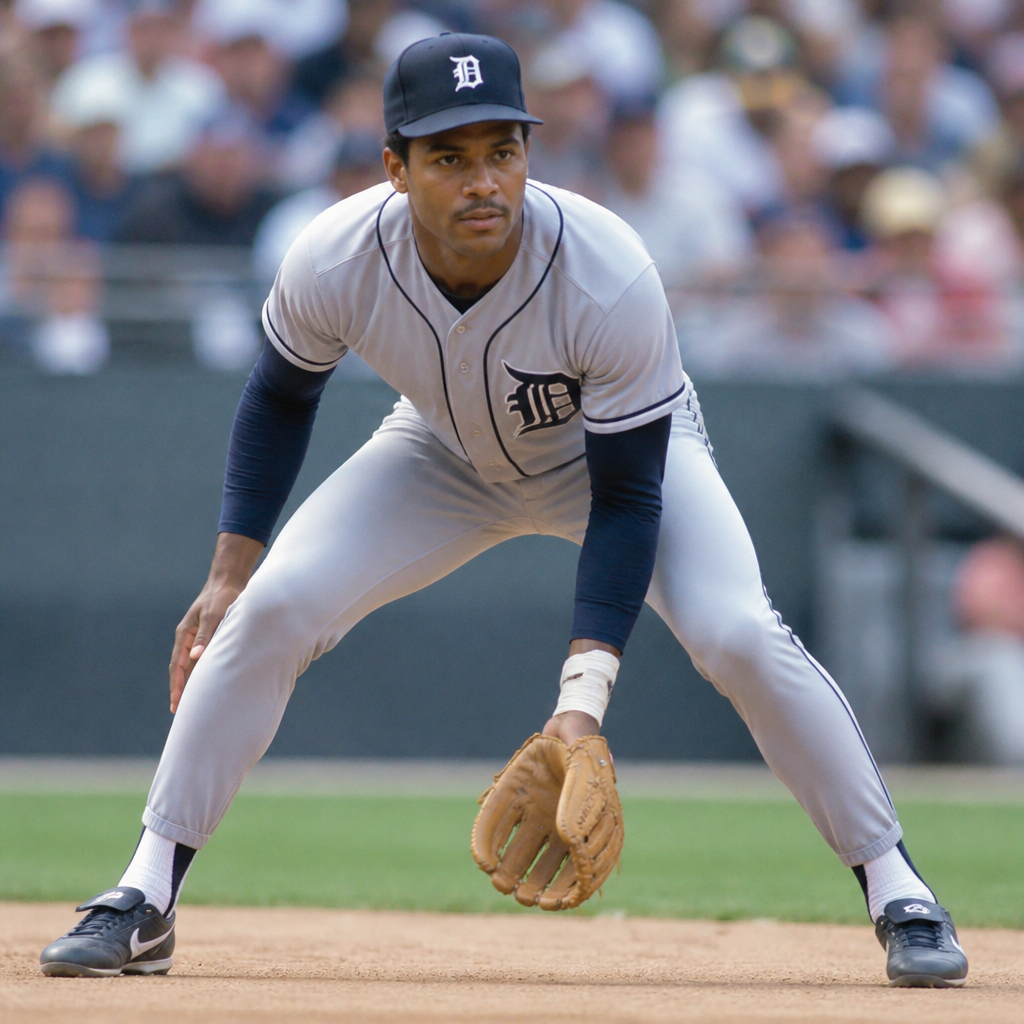
Lou Whitaker’s reputation has improved dramatically in the twenty-first century because modern baseball analysis measures the full value of a player who hit, fielded, ran the bases, and won for a long time, and that description fits the Detroit second baseman almost perfectly. In player profile work, Whitaker is one of the clearest examples of how Hall of Fame debates change when the conversation moves beyond batting average and RBI totals. He spent his entire major league career with the Detroit Tigers, formed one of the longest and best double-play partnerships in baseball history with Alan Trammell, and helped anchor the 1984 championship club. Yet for years, he sat outside Cooperstown while less complete players advanced. Today, a serious review of Lou Whitaker’s Hall case starts with modern metrics such as WAR, JAWS, on-base percentage, defensive value, and positional context, then works backward to the traditional record. That process does not inflate his résumé; it reveals what older voting habits missed. As a hub within Legendary Players, this player profile explains who Whitaker was, what he accomplished, why his candidacy gained strength over time, and how to evaluate his career against Hall of Fame standards with clear evidence rather than nostalgia.
Born in Brooklyn and raised in Martinsville, Virginia, Whitaker reached the majors in 1977 and won the American League Rookie of the Year award immediately. He was nicknamed “Sweet Lou,” a label that matched his easy-looking left-handed swing and smooth play around second base. In practical terms, he combined patience at the plate, gap power that later grew into home-run power, durable defense, and unusual consistency. Hall of Fame discussions often hinge on a simple question: was this player great at his peak, valuable over time, or both? Whitaker scores well on all three fronts. He made five All-Star teams, won four Silver Slugger Awards, claimed three Gold Gloves, and played 19 seasons for one franchise. More important, he delivered value in ways that modern tools capture cleanly. WAR, or Wins Above Replacement, estimates how many wins a player adds compared with a readily available substitute. JAWS compares a player’s career and peak WAR to Hall of Fame standards at his position. By those measures, Whitaker looks not like a borderline candidate but like a legitimate Hall of Fame second baseman whose case was undervalued when older voters focused too narrowly on round-number milestones.
The shape of Lou Whitaker’s career
Whitaker debuted with Detroit in September 1977, then took over as the regular second baseman in 1978. That season he hit .285 with strong defense and enough all-around value to edge out more publicized rookies for the league’s top first-year honor. From that point forward, Detroit had stability at second base for nearly two decades. In an era before clubs aggressively optimized lineups through platoons and constant roster churn, Whitaker gave managers a rare asset: dependable quality every year. He exceeded 150 games 11 times, topped 70 walks in 13 seasons, and remained productive into his late thirties.
His offensive profile matured in a way that modern analysts appreciate. Early in his career, Whitaker was viewed as a table-setter because he reached base, controlled the strike zone, and used the whole field. As the 1980s progressed, he added more pull-side power without sacrificing discipline. He finished with 244 home runs, 1,386 runs scored, 2,369 hits, and a .363 on-base percentage. Those are not empty totals accumulated by hanging on too long. They reflect sustained quality at a middle-infield position where offense has historically been scarce. During his career, second basemen were not expected to produce like corner outfielders or first basemen. Whitaker outperformed many expectations while still handling a demanding defensive role.
The 1984 Tigers provide the most visible snapshot of his value. Detroit started 35-5, finished 104-58, and won the World Series behind a roster built on balance rather than one-dimensional star power. Whitaker hit 13 home runs, drew 81 walks, posted an .801 OPS, and paired with Trammell in one of the game’s best middle infields. When I review championship clubs from that era, the teams that aged best analytically are the ones with players who contributed in several phases, and Whitaker fits that model exactly. He was never just riding a stacked roster. He was one of the reasons the roster worked.
Why modern metrics changed the conversation
The strongest reason Lou Whitaker’s Hall case grew is that modern metrics capture comprehensive value better than the older stats that shaped ballot results in the 1990s and early 2000s. Traditional measures favored batting average, RBI, 3,000 hits, 500 home runs, and flashy MVP finishes. Whitaker retired with a .276 average and 1,084 RBI, numbers that looked very good but not automatic. Modern evaluation asks broader questions. How often did he avoid outs? How much defensive value did he create? How difficult was his position? How many wins did he add compared with a replacement-level player?
By Baseball-Reference WAR, Whitaker produced 75.1 career WAR. That places him ahead of many Hall of Famers and in the company of clear stars. His seven-year peak WAR, a key component in JAWS, also compares favorably with inducted second basemen. On FanGraphs, which uses a different defensive framework and run environment model, he remains comfortably in Hall-level territory. The agreement across systems matters. When different models built from different assumptions still view a player as elite, the conclusion becomes harder to dismiss as a quirk of math.
Modern metrics also reward skills Whitaker possessed in abundance. His .363 OBP means he reached base at a rate significantly better than league average for much of his career. He walked 1,197 times, a total that older summaries often buried beneath hit counts. He also provided defensive value at second base, where turns on the double play, positioning, range to both sides, and clean transfers all affect run prevention. Defensive metrics for older eras are not perfect, and responsible analysis should say that plainly. Even so, every serious review of Whitaker’s fielding—from awards, to reputation, to play-by-play-based estimates, to the testimony of contemporaries—supports the same bottom line: he was an asset, not a passenger.
| Measure | Whitaker | Why it matters |
|---|---|---|
| Career WAR | 75.1 | Shows total value across offense, defense, and baserunning |
| Home Runs | 244 | Strong power for a long-career second baseman |
| On-Base Percentage | .363 | Captures plate discipline and run creation better than batting average alone |
| Gold Gloves | 3 | Confirms long-recognized defensive quality |
| Silver Sluggers | 4 | Reflects offensive excellence relative to his position |
| Seasons with Detroit | 19 | Demonstrates durability, consistency, and franchise impact |
Comparing Whitaker to Hall of Fame second basemen
The best way to evaluate a Hall case is by position, not by vague star aura. Second base has a distinct offensive and defensive baseline, and Whitaker compares extremely well within it. His career WAR exceeds that of several inducted second basemen, including players whose reputations were boosted by batting average, pennant-winning visibility, or Veterans Committee support. The JAWS system, created by Jay Jaffe and now widely used in Hall of Fame analysis, was designed for this exact purpose. It balances career length and peak performance to see whether a candidate meets the established standard at his position. Whitaker has long rated at or above the average Hall second baseman by that method.
That positional comparison is essential because middle infielders historically age differently and accumulate value differently than sluggers at easier positions. A second baseman who posts an .800 OPS while handling defense capably may be more valuable than a corner player with superficially bigger counting stats. Whitaker’s blend of offense and defense is why his numbers age so well. He was not compiling lesser value in bulk; he was creating premium value in a premium role.
Alan Trammell’s eventual election sharpened this point. For decades, Whitaker and Trammell were discussed as a duo, yet Trammell usually received more Hall momentum because shortstop carried added prestige and his postseason moments were more memorable. Once modern metrics helped voters appreciate Trammell’s full value, many analysts revisited Whitaker and found the same pattern of under-recognition. In several seasons, the gap between their total value was modest. The partnership was famous, but the Hall treatment was not equal. Looking at the data now, Whitaker’s omission became harder to justify.
Style, skills, and the value beyond headlines
One reason Whitaker was underrated is stylistic. He was excellent without demanding constant attention. He did not chase batting titles, produce 130 RBI seasons, or dominate highlight reels with dramatic outward flair. Instead, he controlled at-bats, made pitchers work, turned the pivot efficiently, and kept posting four-to-six win seasons. Those players often gain appreciation later, when analysts study how teams actually win over 162 games.
His offensive game was especially sophisticated. Whitaker understood the strike zone, rarely looked rushed, and punished mistakes to the pull side. In today’s language, he combined swing decisions with contact quality before those phrases became standard. He was not a pure leadoff hitter or a traditional run producer; he could occupy multiple lineup roles because he reached base, hit for extra bases, and avoided prolonged slumps. Managers value that flexibility even if awards voting does not.
Defensively, Whitaker’s hands and footwork stand out on film and in scouting accounts. Around second base, small efficiencies decide whether a team records an out and whether a shortstop trusts his partner enough to attempt difficult feeds. Whitaker excelled at those details. On double plays, he positioned himself well, released the ball quickly, and maintained body control under contact. That kind of middle-infield reliability saves runs in ways box scores rarely show. It also supports pitchers by converting more balls in play into outs, an effect modern run-prevention models are designed to capture.
Why the voting process missed him for so long
Whitaker’s Hall of Fame ballot history remains one of the most striking examples of a mismatch between player value and election results. In 2001, he fell off the BBWAA ballot after receiving less than five percent of the vote in his first year of eligibility. That result looks especially jarring now because his statistical case was already strong enough to deserve sustained debate. The voting environment simply was not ready. Many writers still leaned heavily on batting average, 2,000 RBI-type framing, MVP hardware, and visible superstardom.
Ballot crowding and category bias also hurt him. The Hall process often favors players who are easy to summarize in one sentence. Whitaker required synthesis. His case depended on understanding positional scarcity, defensive contribution, on-base skills, and long-term consistency. Those ideas are common in current analysis but were less influential at the time. A player who was very good at everything and elite in total value could still be mislabeled as merely solid if voters lacked the tools or habits to weigh all dimensions together.
Committee pathways later reopened the discussion, and that change was deserved. When reviewing overlooked players from the expansion era, Whitaker belongs near the front of the line. His résumé clears the threshold by multiple methods: traditional honors, team importance, rate and counting stats, advanced value metrics, and peer comparison. There are always Hall debates at the margins, but his candidacy is no longer best understood as a sentimental cause. It is a rigorous, evidence-based correction.
Whitaker’s place in Detroit history and player-profile research
Within Tigers history, Whitaker ranks as a franchise cornerstone. He played more than 2,300 games for Detroit, helped define a winning era, and represented the organization with unusual steadiness. For fans building out a Legendary Players reading path, his profile connects naturally to articles on Alan Trammell, the 1984 Tigers, underrated Hall candidates, and great double-play combinations. He is central to all of those subjects because he was central to Detroit’s identity for nearly two decades.
As a player profile subject, he also teaches a larger lesson about baseball history. Evaluation methods evolve, but the player on the field does not change. What changes is our ability to measure the value he already produced. Whitaker was the same player in 1985, 1995, and today’s databases. The difference is that current tools explain his impact more accurately. That is why his Hall case kept growing after retirement. New metrics did not invent excellence; they identified it with better resolution.
Lou Whitaker stands as one of the strongest examples of a Hall of Fame candidate elevated by clearer analysis rather than revisionist hype. His career combined longevity, plate discipline, power for the position, quality defense, postseason relevance, and franchise-defining consistency. Traditional awards and memories always hinted at that value, but modern metrics made it impossible to ignore. When measured against Hall standards for second basemen, he belongs in the conversation at minimum and, for many evaluators, comfortably across the line.
For readers exploring Player Profiles under Legendary Players, Whitaker is an essential hub subject because his story links biography, team history, and the evolution of baseball evaluation. He shows how great players can be hidden in plain sight when the wrong standards dominate public debate. If you are building a deeper understanding of baseball’s overlooked stars, start with Whitaker, then follow the connections to Trammell, the 1984 Tigers, and other players whose value became clearer as the game learned to measure itself better.
Frequently Asked Questions
Why has Lou Whitaker’s Hall of Fame case grown stronger in the modern analytics era?
Lou Whitaker’s case has strengthened because modern analysis does a much better job of capturing the complete value of a player, and Whitaker was exactly the kind of player who benefited from that broader lens. For many years, Hall of Fame discussions leaned heavily on traditional milestones such as 3,000 hits, 500 home runs, batting average, and RBI totals. Whitaker was excellent, but he was not packaged in the obvious, headline-friendly way that often drove old-school debates. He did not chase gaudy counting stats at the level some voters expected, and his value was spread across many areas rather than concentrated in one flashy category.
Advanced metrics changed that conversation. Modern evaluation tools measure offense, defense, baserunning, positional difficulty, and longevity in a more integrated way. Whitaker scores well because he brought positive value in all of those areas for a very long time. He hit for power relative to his position, got on base, played strong defense at second base, ran the bases effectively, and remained productive over an extended career. That combination is extremely valuable, especially at a middle-infield position where two-way excellence is harder to find than at first base or a corner outfield spot.
Another important factor is context. Whitaker played in an era and at a position where offensive expectations were different. Modern metrics adjust for league and ballpark environment, making it easier to see how much he truly contributed compared with his peers. Once analysts began comparing him to Hall of Fame second basemen through tools like WAR and similar value frameworks, his résumé looked not merely respectable, but genuinely Cooperstown-worthy. In short, the analytics era did not invent Whitaker’s greatness; it simply made it easier to see.
What made Lou Whitaker such a complete player beyond his traditional batting numbers?
Whitaker’s greatness came from balance. He was not just a hitter, not just a fielder, and not just a player who hung around for a long time. He was a second baseman who offered quality in every major part of the game, which is exactly why modern evaluation has been so kind to his legacy. At the plate, he provided more than people sometimes remember. He hit for useful power for a middle infielder, drew walks, and contributed offense in a way that went beyond batting average alone. That matters because getting on base consistently has real run-scoring value, even if it does not stand out in the way a high RBI total might.
Defensively, Whitaker was a major asset. Second base is a demanding position that requires range, reliability, and constant involvement in the game, from turning double plays to positioning and reacting quickly off the bat. Strong defense there has a significant effect on winning, but it is often underappreciated unless a player is making spectacular highlights every night. Whitaker’s reputation as a steady, intelligent, effective defender fits well with the data-driven view that he saved value with his glove over many seasons.
He also added value on the bases and through durability. Smart baserunning can quietly create runs by taking extra bases, avoiding mistakes, and putting pressure on defenses. Longevity matters too, especially when that longevity comes with sustained quality rather than empty years at the end of a career. Whitaker was not a one-dimensional star with a brief peak. He was a complete player whose all-around game helped Detroit win year after year, and that type of profile often looks even better the deeper you examine it.
How does Lou Whitaker compare to other Hall of Fame second basemen?
One of the strongest arguments for Whitaker is that, when measured against the standards of Hall of Fame second basemen, he belongs in the conversation very comfortably. Modern metrics place him alongside, and in some cases ahead of, a number of inducted players at the position. That is a critical point, because Hall of Fame cases are not evaluated in a vacuum. Voters and historians ultimately ask whether a player was one of the best of his era and whether his overall value matches the level already represented in Cooperstown. In Whitaker’s case, the answer increasingly appears to be yes.
His value is especially impressive because second base has historically been a position where offense and defense must be weighed together carefully. Some Hall of Fame second basemen are remembered for batting titles, some for speed, some for defense, and some for durability. Whitaker brought a little of everything. He had a long career, provided above-average offense for his position, and contributed meaningful defensive value. That kind of broad-based excellence often produces a Hall-caliber statistical profile even if it lacks one single, dramatic signature number that dominates casual discussion.
His candidacy also benefits from consistency across multiple forms of comparison. Whether the conversation focuses on career value, peak value, positional rankings, or era-adjusted performance, Whitaker holds up well. That does not mean every Hall of Fame voter will rank him the same way, but it does mean his case is based on more than nostalgia or revisionism. The evidence supports the idea that he was not merely very good for a long time; he was one of the most accomplished second basemen in major league history, and his standing looks stronger the more thoroughly it is studied.
Why didn’t Lou Whitaker receive stronger Hall of Fame support earlier in the process?
Whitaker’s early Hall of Fame reception reflects how differently players were judged in earlier voting eras. For a long time, the Hall debate favored players with obvious milestone numbers, MVP-style narratives, and traditional stat lines that were easy to summarize. Whitaker had an excellent career, but his greatness was more subtle. He was a complete player rather than a stat-category champion, and subtle greatness is often harder to reward when the voting culture is built around batting average, RBI totals, and visual fame.
There was also the issue of perception. Whitaker spent his whole career in Detroit and was enormously respected, but he was not always framed nationally as a larger-than-life superstar in the same way some contemporaries were. Players who are consistently very good, rather than loudly dominant in one visible area, can be underrated when awards voting, media attention, and Hall discussions are driven by reputation as much as by total value. In many cases, players like Whitaker are appreciated more fully after retirement, when analysts can step back and evaluate the full shape of the career.
Another factor is that older defensive and baserunning contributions were simply harder to quantify. If a voter could not easily measure those parts of the game, they often defaulted to what was most visible on the back of a baseball card. As baseball analysis evolved, that gap narrowed. Better data and more sophisticated methods revealed how much Whitaker was contributing outside the traditional spotlight. That is why his case has gained momentum over time: the standards changed, the tools improved, and the fuller story of his career became much harder to ignore.
What role did Lou Whitaker’s long career with the Detroit Tigers play in his Hall of Fame case?
Whitaker’s long career with the Tigers is central to understanding both his value and his legacy. Playing an entire major league career with one franchise has historical and emotional weight on its own, but in Whitaker’s case it also underscores how consistently useful he was. Teams do not keep a middle infielder in a major role for that long unless he is helping them win in multiple ways. His longevity was not ceremonial. He stayed relevant because he continued to hit, field, and contribute to winning baseball over a long stretch of time.
That sustained contribution matters enormously in Hall of Fame evaluation. A long career can sometimes be misleading if a player compiles numbers through many mediocre seasons, but Whitaker’s reputation is stronger because his longevity was paired with quality. He was a foundational player on competitive Detroit teams and a key part of the club’s identity for years. Durability at second base is especially meaningful because it is a physically demanding position, and maintaining performance there over time is an accomplishment in itself.
His franchise loyalty also reinforced the steadiness of his profile. Whitaker was not a player whose narrative depended on brief peaks in different cities or late-career chasing of milestones. His case is built on a stable, coherent body of work: one team, one position, a long prime, and broad two-way value. That makes his career easier to appreciate in retrospect, particularly when paired with modern metrics that show just how much he was contributing year after year. For Detroit fans, he was a constant presence. For Hall of Fame analysis, that consistency has become one of the most persuasive parts of the argument.