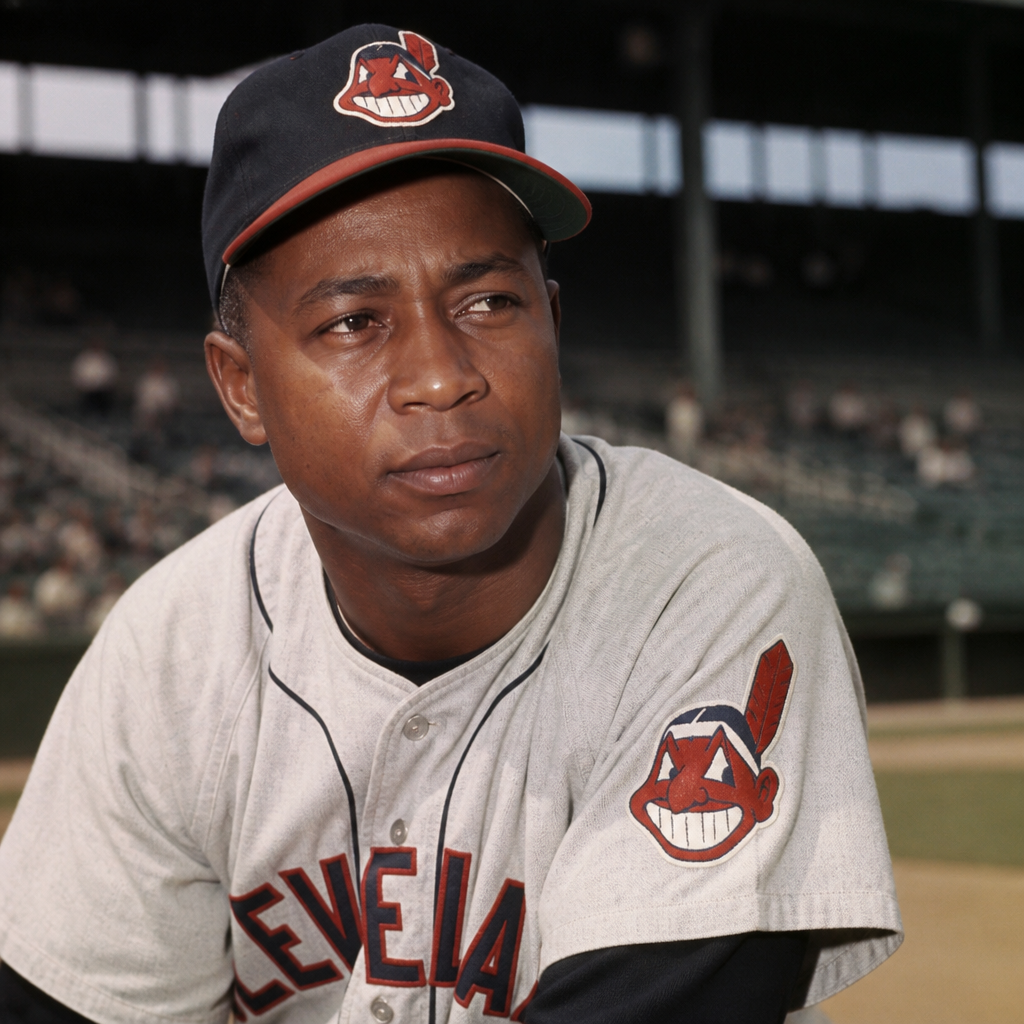
Larry Doby changed Major League Baseball in a way that still deserves fuller recognition. Best known as the first Black player in the American League, Doby broke that league’s color barrier on July 5, 1947, less than three months after Jackie Robinson debuted for the Brooklyn Dodgers. That timing matters because it shaped how history remembers him: close enough to Robinson to invite comparison, yet far enough behind to receive only a fraction of the public attention. For readers exploring legendary players through a player profiles hub, Doby represents an essential subject because his story connects talent, courage, military service, labor conditions, racial integration, and Hall of Fame legacy in one career.
When I have worked through old box scores, oral histories, and Hall of Fame records, Doby’s career consistently stands out as one of baseball’s most under-told major stories. He was not simply a symbolic figure inserted into history by circumstance. He was an elite center fielder with power, patience, speed, and postseason impact. He was also a man asked to endure enormous pressure with less institutional support than many stars who came after him. Understanding Doby requires defining a few key terms clearly. Integration in baseball means the end of formal racial exclusion that had kept Black players out of the major leagues for decades. The American League is one of the two leagues that make up Major League Baseball. A player profile, in this context, is more than a biography; it is a full assessment of performance, context, reputation, and long-term significance.
This article serves as a hub for player profiles because Doby’s life opens pathways to many adjacent baseball subjects. His rise from Newark, New Jersey, to the Newark Eagles of the Negro Leagues and then to the Cleveland Indians links him to discussions of Negro League excellence, postwar America, executive leadership under Bill Veeck, and the way memory elevates some pioneers while muting others. He matters to baseball history not only because he arrived first in the American League, but because he proved immediately that integration was compatible with winning. Cleveland was not conducting a social experiment detached from competition. The club was trying to win pennants, and Doby became central to that mission.
His statistical record reinforces that point. Doby was a seven-time All-Star, a two-time American League home run leader, and a key contributor on Cleveland’s 1948 World Series championship club. He later drove in 126 runs in 1954 as Cleveland won 111 games, one of the great regular seasons in American League history. Those are not ceremonial accomplishments. They are the markers of a genuine star. Yet many fans know only a shorthand version of his story: first Black player in the American League, later Hall of Famer, somehow less famous than Robinson. The fuller story is richer and more revealing. It shows how baseball change happened unevenly, how excellence can be hidden by timing, and why Doby deserves a central place in any serious legendary players collection.
Early life, military service, and Negro Leagues foundation
Larry Doby was born on December 13, 1923, in Camden, South Carolina, and grew up largely in Paterson, New Jersey. Like many Black Americans of his generation, his early life was shaped by migration, segregated opportunity, and the need to develop resilience quickly. At Eastside High School in Paterson, he was a multi-sport standout in baseball, basketball, football, and track. That breadth matters because it explains the athletic ease that later defined his game in center field. Doby was not a one-skill player who learned the game narrowly. He came through a broad athletic background that sharpened balance, acceleration, hand-eye coordination, and competitive poise.
Before reaching the majors, Doby played for the Newark Eagles of the Negro National League. The Negro Leagues were not a sideshow to major league history; they were a parallel top-level baseball ecosystem built under exclusion. Players traveled hard, played intense schedules, and performed before knowledgeable crowds. The competition was real, and the best evidence is the number of stars who succeeded immediately once given major league access. Doby’s development there was foundational. He learned to hit quality pitching, adapted to constant scrutiny, and gained experience in games where every mistake was magnified. In 1946, he helped the Newark Eagles win the Negro League World Series, a direct reminder that he entered the majors as a proven winner.
World War II also shaped him. Doby served in the U.S. Navy from 1943 to 1945. Military service interrupted many careers, but it also hardened discipline and broadened perspective. For Black servicemen, the contradiction was especially sharp: they defended a country that still denied full rights at home. That reality helps explain Doby’s controlled public bearing. He was often described as quiet, but quiet did not mean passive. It meant measured. He had already learned how institutions worked, where dignity had to be protected, and how composure could become a survival tool. When Cleveland signed him in 1947, he brought far more than talent. He brought maturity under pressure.
Breaking the American League color barrier in Cleveland
Bill Veeck purchased the Cleveland Indians in 1946 and moved more aggressively than most American League owners toward integration. On July 3, 1947, he bought Doby’s contract from Newark, and on July 5 Doby debuted against the Chicago White Sox at Comiskey Park. Unlike Robinson, who had a full spring training period with Montreal in the International League before joining Brooklyn, Doby was pushed almost directly from the Negro Leagues into the major leagues during the season. That difference is critical. He had little time to adjust to new pitchers, new travel patterns, new clubhouse dynamics, or the concentrated hostility that came with being a racial pioneer.
The reception was difficult even by the standards of the era. Several Cleveland teammates initially did not welcome him. Opponents taunted him. Hotels and restaurants in some cities remained sites of humiliation. Reporters covered him through a racial lens before a baseball one. In practical terms, integration meant daily negotiations over where he could sleep, where he could eat, and whether teammates would shake his hand. One of the most powerful images in baseball history is Joe DiMaggio’s former teammate and later Cleveland player-manager Lou Boudreau eventually embracing Doby after a home run, but those moments of acceptance came after strain, not before it.
Doby’s first stint in 1947 was uneven at the plate, which should surprise no one. He appeared in only 29 games and batted .156. Small samples can distort ability, and context matters even more here. He was learning major league pitching on the fly while carrying the emotional burden of integration. Cleveland did not panic, and that patience paid off. By 1948 he had become a productive regular, hitting .301 with 14 home runs and helping the Indians win the World Series. The lesson is straightforward: real player evaluation requires more than a glance at a debut line. It requires understanding adjustment curves, opportunity, and circumstances. Doby’s breakthrough was not just historical; it quickly became competitive value for a championship team.
How good was Larry Doby? The player profile that settles the question
If the question is whether Larry Doby was merely important or truly great, the record answers clearly: he was both. Over 13 major league seasons, primarily with Cleveland, he hit 253 home runs, posted a .283 batting average, and produced a .386 on-base percentage with a .494 slugging percentage. His 136 OPS+ means he was 36 percent better than league average offensively after adjusting for park and era. That is star-level production. Modern evaluation strengthens the case. Baseball-Reference credits him with 49.8 WAR, a total that places him comfortably within serious Hall of Fame territory when combined with his historical significance and peak performance.
Doby’s skills translated across evaluation styles. Traditional observers saw a dangerous left-handed bat with pull power and the ability to drive the ball to all fields. Managers respected his strike-zone judgment and his ability to deliver extra-base damage without selling out every at-bat. Defensively, he was an athletic center fielder before later spending time in the corners and at first base. The center-field piece is important because premium defense at a premium position raises the overall value of his offense. He was not a stationary slugger occupying a less demanding role. At his best, he contributed in multiple phases of the game.
| Category | Larry Doby | Why it matters |
|---|---|---|
| All-Star selections | 7 | Shows sustained respect from his era, not a one-year peak |
| Home run titles | 2 | Confirms league-leading power, including in 1952 and 1954 |
| 1948 World Series | Champion | Integration and winning were linked in Cleveland immediately |
| 1954 RBI total | 126 | Middle-of-the-order production on a historically strong team |
| Career OPS+ | 136 | Adjusts for era and park; marks him as well above average |
His peak was especially strong from 1948 through 1955. In 1950, he hit .326 with 25 home runs and finished second in American League MVP voting behind Phil Rizzuto. In 1952, he led the league with 32 home runs. In 1954, he led the league again with 32 and added that 126-RBI season for the 111-win Indians. Those facts matter because historical memory often treats Doby as a pioneer first and a player second. The better interpretation is that his pioneering role obscured a star career that, on merit, stands comfortably beside many more frequently discussed postwar outfielders.
Overshadowed by timing, narrative, and the way baseball history is told
Doby is too often overshadowed not because his résumé lacks weight, but because historical storytelling tends to compress integration into a single face and a single date. Jackie Robinson’s place is secure and deserved. He faced extraordinary pressure, transformed the National League first, and became an international icon. The problem comes when Robinson’s prominence becomes a reason to flatten everyone else who followed immediately. Doby arrived in the same year, entered with less preparation, joined a less glamorous media market, and had a more reserved public style. Those factors combined to reduce his visibility even while he was making history of equal structural importance for the American League.
Market and media context mattered. Cleveland was a powerful baseball town, but it did not carry the same national press machinery as Brooklyn and New York. Robinson also played under Branch Rickey’s carefully staged integration strategy, which, for all its harsh demands on Robinson personally, was deliberate in rollout and publicity. Doby entered under more abrupt conditions. He did not receive the same runway to establish narrative familiarity with the public. By the time his star-level production fully emerged, the “first” storyline had already been attached elsewhere in the broader culture.
There is also the question of personality. Doby was dignified, private, and not inclined toward self-mythology. In my experience reviewing how baseball memory forms, quieter stars are often at a disadvantage unless a city, franchise, or media industry actively protects their story. Cleveland honored him over time, but for decades his profile remained smaller than his achievements warranted. That imbalance is now being corrected through museum exhibits, Hall of Fame education, and better Negro Leagues scholarship. Still, any legendary players hub should treat Doby as a central figure, not a sidebar, because he reveals how history can be both accurate in facts and incomplete in emphasis.
Legacy, Hall of Fame case, and why this player profile belongs in every hub
Doby was elected to the Baseball Hall of Fame in 1998 by the Veterans Committee, a deserved recognition that came later than it should have. His case rested on the combination of performance, pioneering significance, postseason value, and the simple reality that his prime compared favorably with many enshrined outfielders. After his playing career, he also became the second Black manager in the majors when the Chicago White Sox named him interim manager in 1978, another reminder that his place in integration history extends beyond one debut date. He kept opening doors, even when the sport did not always celebrate him loudly in the moment.
His broader legacy reaches beyond Cleveland. Doby helps explain why player profiles matter within a legendary players framework. A strong profile does not isolate statistics from circumstance, or biography from competition. It asks harder questions. What barriers did a player face? How quickly did he adjust? Did his teams win with him in major roles? Do modern metrics confirm what contemporaries saw? With Doby, the answers are unusually strong. He faced severe barriers, adjusted rapidly, starred on pennant-winning clubs, and is supported by both traditional numbers and advanced measures. That is the profile of a foundational baseball figure.
The most useful takeaway is simple. Larry Doby should be remembered as an American League integration pioneer and as one of the best players of his era. Those truths reinforce each other. He did not merely arrive; he excelled. He did not simply symbolize change; he helped Cleveland win at the highest level. If you are building a deeper understanding of legendary players, start with Doby and follow the connections his career opens to Negro League history, postwar baseball, civil rights progress, and Hall of Fame standards. Then keep exploring related player profiles with the same standard of context and rigor. Baseball history becomes clearer when Larry Doby is placed where he belongs: near the center.
Frequently Asked Questions
Why is Larry Doby such an important figure in baseball history?
Larry Doby holds a foundational place in American sports history because he became the first Black player in the American League, breaking that league’s color barrier on July 5, 1947. While Jackie Robinson rightly receives recognition for integrating Major League Baseball earlier that same year in the National League, Doby’s role was equally historic within the American League’s separate power structure, clubhouse culture, travel routines, and fan environments. His debut was not symbolic alone; it represented a major institutional breakthrough in one of the most visible and segregated areas of American life. Doby stepped into the major leagues at a time when Black players faced open hostility, exclusion, and scrutiny that extended far beyond the field.
His importance also comes from what he accomplished after that debut. Doby was not simply a barrier-breaker who appeared briefly and faded into history. He developed into an elite player, helping the Cleveland Indians become one of the strongest teams in baseball. He was a standout center fielder with power, speed, and defensive skill, and he played a key role in Cleveland’s 1948 World Series championship. That matters because it reinforces a larger historical truth: Black players were not merely being “given opportunities”; they were transforming the quality and competitiveness of the game itself. Doby’s career therefore stands at the intersection of civil rights, baseball excellence, and the long struggle for proper historical recognition.
Why is Larry Doby often overshadowed by Jackie Robinson?
The simplest answer is timing, visibility, and narrative. Jackie Robinson debuted first, on April 15, 1947, and naturally became the central figure in the story of baseball integration. Firsts tend to dominate public memory, especially when they involve a national institution like Major League Baseball. By the time Doby arrived less than three months later, the broad historical storyline had already begun to solidify around Robinson as the face of integration. Doby’s achievement was monumental, but it came close enough to Robinson’s to be seen as a follow-up rather than a parallel breakthrough, even though it carried its own risks and significance.
There were also important contextual differences that affected how each man was remembered. Robinson entered the Brooklyn Dodgers under Branch Rickey’s carefully planned strategy and in one of the nation’s biggest media markets. Doby joined the Cleveland Indians with far less buildup and support, and he did so without a minor league apprenticeship to ease the transition. He was sent almost immediately into a major league environment that could be isolating and openly hostile. Because public memory often favors simplified stories centered on one iconic figure, Doby became the overlooked pioneer despite enduring many of the same pressures and helping integrate an entirely different league. His relative absence from popular retellings says less about the scale of his accomplishment and more about how history is often packaged for mass audiences.
What challenges did Larry Doby face when he entered the American League?
Doby faced a punishing combination of racial hostility, professional pressure, and personal isolation. As the first Black player in the American League, he encountered many of the same barriers that early Black pioneers across sports and public life faced: exclusion from normal social spaces, resistance from teammates and opponents, racist taunts from fans, and the constant burden of representing far more than himself. He had to perform under conditions in which every mistake could be unfairly magnified and every success could still be denied full appreciation. That kind of pressure can be difficult to overstate. Doby was not just trying to stay in the major leagues; he was navigating a system that had only reluctantly begun to change.
One especially difficult aspect of his experience was how abruptly he was brought into the majors. Unlike Robinson, who spent time with Montreal in the minor leagues before his major league debut, Doby was signed from the Negro Leagues and inserted directly into American League competition. That meant he had less time to adjust to the style, pace, and politics of integrated professional baseball at the highest level. He also lacked the full organizational preparation and public framing that Robinson had received. Even so, Doby persevered and ultimately excelled. His resilience is central to understanding his legacy: he succeeded not because conditions were welcoming, but because his talent, discipline, and determination overcame conditions that were stacked against him.
How successful was Larry Doby as a player beyond his role as an integration pioneer?
Larry Doby’s playing career was outstanding on its own merits, and that point is essential because his legacy should never be limited to symbolism. He became one of the American League’s premier players, known for his power at the plate, athleticism in center field, and ability to contribute in high-pressure moments. Doby was a multiple-time All-Star and one of the major offensive forces of his era. He helped lead the Cleveland Indians to the 1948 World Series title, making him one of the first Black players to play a major role on a championship team in the integrated major leagues. That championship contribution alone would secure him an important place in baseball history.
His achievements continued well beyond that milestone season. Doby twice led the American League in home runs and consistently proved that he belonged among the elite players in the game. He was not a ceremonial pioneer retained for appearances; he was a star. That distinction matters because it challenges the tendency to discuss integration-era players only in terms of social struggle while overlooking their athletic excellence. Doby’s career reminds readers that the integration of baseball was not just a moral necessity but also a baseball transformation driven by extraordinary talent. He earned his Hall of Fame place through performance as much as through historical importance, and any fair assessment of his career has to account for both.
Why does Larry Doby’s story still matter today?
Larry Doby’s story matters because it reveals how history often remembers change through a single famous name while overlooking other people who made equally brave and essential contributions. His experience helps readers understand that integration was not one moment, one team, or one player. It unfolded unevenly across leagues, cities, organizations, and clubhouses, and each breakthrough required someone willing to bear enormous pressure. Doby’s story broadens the public understanding of baseball’s integration by showing that the American League had its own pioneer, its own resistance, and its own turning point. Recognizing him more fully creates a more accurate and more complete account of both baseball and American history.
His legacy also speaks to larger themes that remain relevant today: recognition, fairness, and the way public memory is constructed. Doby achieved something historic, then went on to build a superb playing career, yet he still became “too often overshadowed” in mainstream narratives. That makes his story especially powerful for modern readers interested in how deserving figures can be minimized when history is simplified. Revisiting Doby is not about taking anything away from better-known legends. It is about giving proper credit where it has long been due. In that sense, learning about Larry Doby is not just an act of baseball remembrance; it is an act of historical correction.