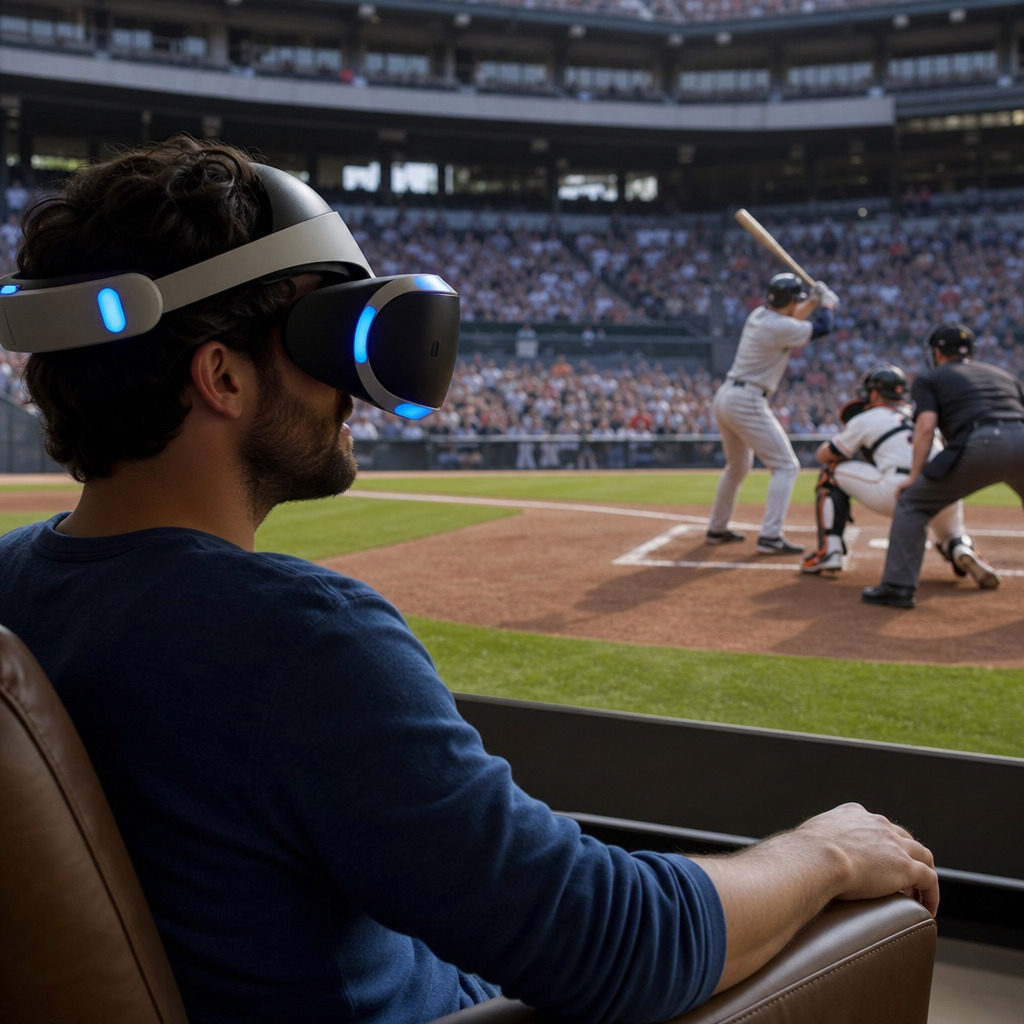
Virtual reality broadcasting is changing baseball from a screen-based pastime into an immersive media experience that places fans inside the stadium, around the dugout, and even near the strike zone without requiring a ticket. In practical terms, virtual reality broadcasting uses 180-degree or 360-degree cameras, spatial audio, real-time graphics, and headset-based viewing to simulate presence during a live game or related baseball programming. That differs from standard streaming, which frames one director-selected angle at a time, and from augmented reality, which layers digital information onto a live view rather than replacing the viewer’s environment. For baseball, a sport built on atmosphere, spacing, anticipation, and subtle tactical shifts, that distinction matters because fans do not just want to see the ball in play; they want to feel the geometry of the field, hear the crowd swell, and sense how time unfolds between pitches.
Baseball has always been shaped by media innovation. Radio created intimate storytelling, television standardized camera language, cable expanded regional fandom, and mobile streaming made every game portable. Virtual reality broadcasting represents the next step in that evolution because it redefines where the viewer sits and how much control the viewer has over attention. Instead of passively accepting a feed, the fan can look toward the bullpen, study infield positioning, or focus on a pitcher’s release point. In my experience working with digital sports formats, that shift in control is the single biggest change: once viewers can explore a live environment, production decisions, commentary, advertising, and measurement all have to be rebuilt around immersion rather than interruption.
This matters beyond novelty. Teams, leagues, broadcasters, and sponsors are all searching for durable digital products that deepen engagement and justify premium pricing. Younger audiences are comfortable with interactive media, international fans often cannot attend games in person, and rights holders need new inventory that does not simply cannibalize traditional television. A strong virtual reality baseball broadcast can answer those pressures by extending the stadium product into homes, training better habits around second-screen statistics, and creating new premium tiers for subscriptions, sponsorships, and remote events. As the hub for broadcasting and media in the digital age, this article explains how virtual reality broadcasting works, why baseball is especially suited to it, where the business opportunities and constraints sit, and what the next phase of baseball media will likely look like.
How virtual reality broadcasting works in baseball
At its core, a virtual reality baseball broadcast combines capture, transmission, rendering, and interface design. Capture starts with specialized camera rigs placed in positions that approximate desirable seats or impossible broadcast locations, such as behind home plate, above first base, in the outfield concourse, or near the dugout rail. Many productions use 180-degree stereoscopic cameras for higher fidelity in a forward-facing view, while others use 360-degree systems when total environmental coverage matters more than pixel density. Audio is equally important. Spatial microphones record crowd directionality, bat cracks, umpire calls, and public-address announcements so that sound shifts naturally when the viewer turns their head. If the audio is flat, the illusion breaks quickly.
Those feeds then move through an encoding pipeline designed to handle high resolution and low latency. Baseball poses a specific challenge here because the action is episodic but decisive. A viewer can tolerate a little delay while a pitcher takes signs, but if the decisive moment of contact appears blurry or late, the product feels compromised. Producers therefore balance bitrate, field of view, and network stability carefully. Adaptive streaming helps by delivering higher detail where the viewer is looking, a technique often called foveated or viewport-aware delivery when supported by the platform. On the user side, the headset or app renders the environment and overlays optional elements such as pitch velocity, count, win probability, defensive alignment, and player identifiers.
Good virtual reality broadcasting also requires a different production grammar from conventional television. Traditional baseball direction depends on rapid cuts: center-field camera to batter close-up, then replay, then crowd shot, then manager reaction. In VR, too many cuts can disorient viewers because each transition resets their spatial awareness. Producers instead rely more on stable vantage points, gentle transitions, guided highlights, and timed graphic prompts. Commentary has to adapt as well. Announcers cannot assume every viewer is looking at the same place, so they need more precise verbal cues, such as “look toward shallow right” or “notice the catcher setting up outside.” When done well, the result feels less like watching a packaged show and more like occupying a curated seat with expert guidance.
Why baseball is uniquely suited to immersive media
Not every sport translates equally well to virtual reality, but baseball has several structural advantages. First, the field is spatially legible. The diamond, basepaths, mound, and foul lines create a clear geometry that viewers can understand from many angles. Second, baseball alternates between stillness and bursts of action. That pace gives fans time to explore the environment, read data overlays, and appreciate context without missing everything important. In a continuous sport such as hockey, immersion can become overwhelming because the puck and the camera-worthy action move constantly. Baseball gives immersion room to breathe.
Third, atmosphere matters in baseball in a way that standard broadcasts often flatten. The hum before a full count, the sound of infield chatter, the distance between outfielders, and the changing light in a late inning are all meaningful parts of fandom. Virtual reality broadcasting restores some of those dimensions. A headset view from near home plate can communicate pitch speed and movement more convincingly than a standard center-field camera, while an outfield or bullpen placement can reveal positioning decisions that casual viewers seldom notice on television. During spring training and minor league games, immersive broadcasts can be even more compelling because access feels intimate rather than overly produced.
Baseball also benefits from its data-rich culture. Fans already expect pitch tracking, launch angle, exit velocity, spray charts, and situational probabilities. In VR, those statistics can be placed contextually instead of interruptively. A strike-zone visualization can appear beside the pitcher’s lane of attack, or a defensive shift overlay can sit transparently on the grass before the pitch. That creates a cleaner learning environment for newer fans and a more analytical one for experienced fans. From years of watching experimental sports products, I have found that immersive media works best when information feels native to the scene. Baseball provides exactly that opportunity because its strategy is heavily tied to position, sequence, and measurable outcomes.
What fans gain from virtual reality baseball broadcasts
The most obvious gain is presence. Fans who cannot travel can still experience meaningful versions of premium seating, ceremonial moments, batting practice, and crowd energy. For international audiences, that matters enormously. A supporter in Seoul, London, or Mexico City can attend a live Yankees-Red Sox game virtually with a stronger sense of place than a flat stream provides. For fans with mobility limitations, immersive access can also be more inclusive than navigating a crowded ballpark. This is not a complete substitute for attendance, but it is a stronger emotional product than standard remote viewing.
Another gain is control. In a standard telecast, the producer decides what matters. In VR, the viewer shares that power. A fan interested in catcher framing can stay focused behind the plate. A youth pitcher can study tempo and mechanics. A parent introducing a child to baseball can use overlays that explain outs, counts, and base-running situations in plain language. This flexibility makes virtual reality broadcasting valuable across skill levels, from casual fans to advanced learners. It also supports time-shifted education. Broadcasters can package key innings, postseason classics, or historical recreations as immersive lessons rather than simply archived games.
Community is the third gain, and it is often underestimated. The strongest platforms are not solo experiences only; they include synchronized watch parties, avatar-based suites, voice chat, and co-viewing tools. In other words, virtual reality baseball broadcasting can merge the social energy of a sports bar with the control of a premium digital product. If a broadcaster builds smart moderation and low-friction invitations, friends in different cities can react to a ninth-inning rally together in real time. That kind of shared presence is one reason media companies continue to invest in immersive formats despite hardware adoption challenges.
| Fan need | Traditional broadcast | Virtual reality broadcast |
|---|---|---|
| Sense of being at the ballpark | Limited to selected camera angles and crowd audio mix | Seat-like perspective with spatial sound and environmental scale |
| Control over viewpoint | Producer decides every angle | Viewer can look around or choose immersive camera positions |
| Learning the game | Graphics appear separately from field context | Stats and explanations can sit directly in the field of view |
| Watching with friends remotely | Second-screen texting or external video call | Shared virtual suites and synchronized social viewing |
| Premium remote access | Usually limited to higher resolution or fewer ads | Exclusive vantage points, pregame access, and interactive features |
The business model for teams, leagues, and broadcasters
Virtual reality broadcasting will not matter long term unless the economics work. The clearest revenue path is premium subscription packaging. A league or regional sports network can offer immersive access as an add-on tier that includes select live games, condensed replays, batting practice sessions, alternate commentary feeds, and postseason extras. Because the product is differentiated by experience rather than only by convenience, it can support premium pricing better than another generic stream. Teams can also package sponsor integrations inside virtual environments, including branded lounges, interactive stat panels, or virtual collectibles tied to attendance milestones.
Advertising requires careful handling. In immersive media, intrusive pop-ups feel worse than in standard apps because they break presence. The better approach is context-aware placement: outfield wall signage rendered accurately, sponsored data segments, branded replay zones, or optional commerce layers users can open rather than endure. Measurement can be stronger than in television because platforms can track dwell time, gaze direction, interaction rates, and feature usage. That said, these metrics need governance. If users feel watched too aggressively, trust declines. The right model is transparent data collection with clear value exchange, such as better personalization, loyalty rewards, or tailored camera presets.
Rights management is another business consideration. Baseball media rights are fragmented across national networks, regional partners, team-controlled channels, and streaming packages. A successful VR strategy must fit those agreements instead of ignoring them. In some cases, immersive rights will be licensed separately; in others, they will be bundled with digital streaming rights or carved out for special events such as the All-Star Game, spring training, or international series. I have seen digital projects stall not because the technology failed, but because contractual language around alternate feeds, clipping rights, and sponsorship categories was vague. For baseball organizations, operational alignment between media, legal, sponsorship, and technology teams is just as important as the headset experience itself.
The technical and editorial challenges holding adoption back
The biggest obstacle remains friction. Headsets are improving, but many fans still prefer the simplicity of turning on a television. Even modern standalone devices require charging, fitting, account setup, and tolerance for wearing hardware through a long game. Comfort matters because baseball games can run well past three hours. If the headset feels heavy or the video causes eye strain, retention drops quickly. Producers address this by designing shorter immersive sessions, offering companion mobile modes, and letting users jump between VR and standard views. In the near term, hybrid products will likely outperform VR-only broadcasts.
Bandwidth and production complexity are also significant. High-quality immersive video demands more data than a conventional stream, especially when the goal is crisp detail on a small baseball traveling at high speed. Camera placement inside active venues introduces safety, sightline, and union workflow concerns. Replay construction is harder, and live graphics must be legible without overwhelming the scene. Editorially, there is a constant tension between viewer freedom and narrative clarity. Fans want agency, but sports broadcasting still depends on storytelling. The solution is not to abandon direction; it is to guide more subtly through audio prompts, interface cues, and well-timed alternate angles.
There are also accessibility and equity considerations. Any major baseball media innovation should account for captions, audio description, language options, and device affordability. If immersive access becomes a premium product available only to affluent fans with expensive hardware, its audience ceiling stays low. Broadcasters can reduce that risk by supporting multiple tiers: full headset experiences, browser-based 360 playback, mobile gyroscope modes, and selected free showcase events. Adoption in sports media has repeatedly shown that broad sampling drives long-term conversion better than strict gatekeeping.
Where virtual reality fits in the future of baseball media
Virtual reality broadcasting is best understood not as a replacement for television, but as a high-value layer in a broader baseball media ecosystem. Standard broadcasts will remain essential for reach, habit, and simplicity. Mobile clips will continue to drive discovery. Podcasts, newsletters, and social video will still frame opinion and community. The role of VR is to deepen engagement where attention is strongest: premium live games, rivalry series, postseason moments, behind-the-scenes content, and educational formats that benefit from spatial understanding. That makes it especially important for broadcasters building digital subscriptions around loyalty rather than mass casual viewing.
Over time, the most successful baseball media companies will connect immersive broadcasts with adjacent products. A fan may watch a live game in VR, receive a personalized highlight package afterward, review a 3D defensive alignment breakdown the next morning, and purchase tickets from the exact virtual section they explored during the game. Youth coaches may use licensed immersive clips to teach base-running decisions. Sponsors may host remote hospitality suites for clients. Teams may produce virtual clubhouse tours, Hall of Fame experiences, and historical recreations that turn archival footage into living environments. This is how broadcasting and media in the digital age evolves: not through one device, but through connected experiences that extend the meaning of the game.
The key takeaway is simple. Virtual reality broadcasting gives baseball a new way to deliver presence, understanding, and premium value at a time when attention is fragmented and fan expectations are rising. It works because baseball’s pace, geometry, atmosphere, and statistical depth naturally suit immersive storytelling. It will grow where producers respect comfort, rights structures, editorial clarity, and accessibility instead of treating VR as a gimmick. For teams, leagues, and broadcasters, the opportunity is to create remote experiences that feel meaningfully closer to the ballpark. For fans, the benefit is a richer, more participatory way to follow the sport. If you are mapping the future of baseball media, start by evaluating where immersive broadcasts can add real value to your audience journey and build from there.
Frequently Asked Questions
What is virtual reality broadcasting in baseball, and how is it different from regular streaming?
Virtual reality broadcasting in baseball is a live or on-demand viewing format designed to make fans feel as if they are physically present inside the ballpark rather than simply watching a flat video feed on a phone, tablet, or television. Instead of relying on a single framed camera angle chosen entirely by a traditional production team, VR broadcasts use 180-degree or 360-degree camera systems, spatial audio, immersive graphics, and headset-based viewing to create a stronger sense of presence. That means a viewer may feel as though they are sitting behind home plate, standing near the dugout, or looking out across the field from premium seating, with the ability to look around naturally by moving their head.
The biggest difference from standard streaming is perspective. Conventional baseball coverage presents the game through a sequence of edited shots, replays, and commentary windows. VR broadcasting still includes production choices, but it shifts the experience from watching a curated screen to occupying a virtual position inside the environment. Spatial audio is another key distinction because crowd reactions, bat cracks, umpire calls, and stadium ambience can be placed directionally, making the soundscape feel more realistic. In short, traditional streaming shows you the game, while virtual reality broadcasting is built to make you feel like you are inside it.
How does virtual reality make watching baseball more immersive for fans?
Baseball is especially well suited to virtual reality because so much of the sport’s appeal comes from atmosphere, anticipation, and field-level detail. A VR broadcast can place the viewer in locations that most fans rarely experience in person, such as near the batting cage, behind the catcher, along the first-base line, or inside premium seating areas with a wide view of the action. That type of access transforms the game from a passive viewing session into an interactive-feeling event where the fan can look around the stadium, follow defensive positioning, notice player movement between pitches, and absorb the scale of the ballpark.
The immersive effect is strengthened by more than visuals alone. Spatial audio can recreate the layered sounds of a live game, from the crowd swelling during a full count to dugout chatter and the echo of a ball off the bat. Real-time graphics can also be integrated in ways that feel native to the virtual environment, such as floating pitch data, player stats, strike zone overlays, or situational information that appears without fully interrupting the scene. For many fans, this combination creates a stronger emotional connection to the game because it mirrors the rhythm and texture of being at the stadium in a way that standard broadcasts cannot fully replicate.
What technology is needed to watch a virtual reality baseball broadcast?
In most cases, fans need a compatible VR headset, a stable high-speed internet connection, and access to a platform or service that supports immersive baseball content. Popular standalone headsets are often the easiest entry point because they do not require a separate gaming computer or external sensors. Some broadcasters may also offer limited immersive experiences through mobile devices or web-based players, but the most complete version of VR baseball usually comes through a headset that can properly display 180-degree or 360-degree video and track head movement in real time.
On the production side, the technology is much more complex. Broadcasters may use specialized multi-lens camera rigs, low-latency transmission workflows, spatial audio capture, cloud processing, and real-time rendering tools to deliver a seamless experience. Because live sports demand speed and reliability, VR baseball broadcasts must also manage challenges like camera placement, field-of-view optimization, bandwidth requirements, and synchronization between audio, video, and graphics. For viewers, however, the process is becoming increasingly simple: subscribe, launch the app, select the game or experience, and enter a virtual seat inside the stadium.
Can virtual reality broadcasting replace going to a live baseball game?
For most fans, VR broadcasting is better understood as an alternative access point rather than a complete replacement for attending in person. Nothing fully duplicates the physical experience of walking into a ballpark, feeling the weather, smelling the food, and sharing the moment with thousands of other fans in the same space. Live attendance has a social and sensory dimension that remains unique. However, virtual reality can come remarkably close in terms of visual presence and atmosphere, especially for people who cannot travel, face ticket costs, live far from their favorite team, or want behind-the-scenes perspectives that even stadium attendees do not get.
In fact, one of VR broadcasting’s greatest strengths is that it can deliver experiences that go beyond what a seat in the stands typically offers. A fan may be able to switch among premium viewpoints, access enhanced data overlays, revisit key moments from immersive replay positions, or explore ballpark content before and after the game. That makes VR less of a substitute and more of a complementary evolution in sports media. It expands access, deepens engagement, and creates new ways to follow baseball without eliminating the appeal of the live event itself.
What are the biggest benefits and challenges of virtual reality broadcasting for baseball?
The benefits are significant for both fans and the broader baseball media ecosystem. For viewers, VR broadcasting can increase engagement by making games feel more immediate, personal, and memorable. It opens the door to premium remote experiences, deeper storytelling, and more flexible viewing options. For leagues, teams, and broadcasters, it creates opportunities for new subscription products, sponsorship formats, virtual hospitality packages, international audience growth, and enhanced fan retention. It can also appeal to younger or more tech-oriented audiences who expect media to be interactive and immersive rather than purely linear.
At the same time, several practical challenges remain. Producing a high-quality live VR baseball experience is expensive and technically demanding, especially when balancing camera placement, comfort, image resolution, latency, and reliable distribution at scale. Not every fan owns a headset, and some users may experience motion discomfort if the presentation is not carefully designed. There are also editorial questions about how much control viewers should have versus how much the production team should guide the experience. Even with these hurdles, the direction is clear: as hardware improves, connectivity gets faster, and production workflows mature, virtual reality broadcasting is positioned to become an increasingly important part of how baseball is experienced in the future.