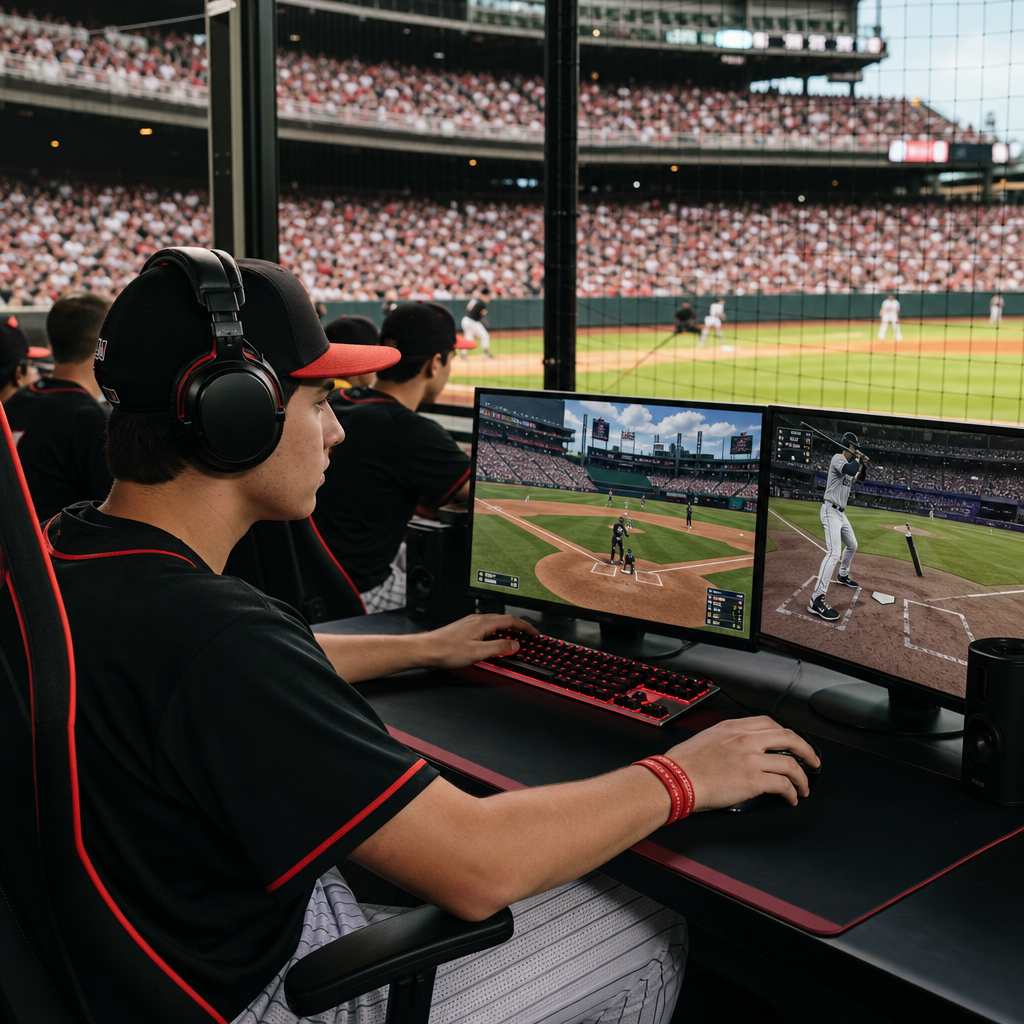
Esports and baseball now share a practical, fast-growing connection through digital broadcasting, streaming culture, interactive media, data-rich storytelling, and younger fan acquisition. In the broader conversation about innovations and changes in baseball, this relationship matters because media habits have shifted from one-way television viewing to multi-platform participation, where fans watch, chat, clip, wager, compare stats, and follow creators in real time. Baseball organizations that once relied on regional sports networks, highlight shows, and radio now operate in an environment shaped by Twitch streams, YouTube creators, Discord communities, mobile-first viewing, and competitive gaming ecosystems. When I have worked on digital sports content planning, the clearest lesson has been simple: baseball grows when it behaves less like a fixed broadcast product and more like a living media network.
To understand the link, define the terms clearly. Esports refers to organized competitive video gaming supported by leagues, publishers, teams, streaming platforms, sponsors, and event operators. Baseball in this context includes Major League Baseball, Minor League Baseball, college baseball, international leagues, clubs, broadcasters, rights holders, and the creators who package the sport for digital audiences. Broadcasting and media in the digital age means far more than televising games. It includes over-the-top streaming, social video distribution, live chat, second-screen analytics, fantasy integrations, micro-content, creator partnerships, interactive watch parties, virtual events, direct-to-consumer subscriptions, and algorithm-driven discovery. The synergy comes from a shared need: both industries must hold attention in an overcrowded entertainment market.
That shared need is especially important for baseball because the sport faces structural media challenges. A full season is long, local markets are fragmented, and younger viewers often prefer highlights, personalities, and participatory formats over three-hour appointment viewing. Esports solved many of these problems early by building communities around access, constant content, and creator-led engagement rather than around linear schedules alone. Baseball has not copied esports wholesale, nor should it, but it has borrowed important habits: platform-native broadcasting, chat-centered audience interaction, influencer amplification, game-like overlays, and audience segmentation by interest. This hub article explains how esports and baseball reinforce each other across streaming, fan behavior, rights strategy, advertising, data presentation, and future media models, while pointing toward the operational decisions teams and leagues need to make now.
Why esports and baseball fit together in digital media
Esports and baseball look different on the field or screen, yet they align as media products because both reward deep knowledge, statistics, strategy, and community discussion. Baseball has always been a sport of probabilities, matchup analysis, and narrative accumulation across a long season. Esports audiences also follow meta changes, player form, roster construction, and tactical adaptation over time. That means the same digital tools that work for esports viewers often work for baseball fans: live dashboards, clipped moments, influencer breakdowns, alternate broadcasts, and always-on commentary. In practice, I have seen baseball content perform better when producers stop assuming every viewer wants a traditional booth call and start offering multiple entry points, from analytics-heavy streams to personality-driven reactions.
The demographic overlap also matters. Many younger sports fans do not separate gaming media from sports media; they move fluidly between both. A fan might watch a professional baseball game on a connected television, follow a creator breaking down pitch tunneling on YouTube, play MLB The Show, and then open Twitch to watch a gaming tournament or a player stream. That behavior collapses old distinctions between sports broadcast, gaming content, and social entertainment. Baseball benefits when it accepts this blended media diet. Teams that produce short-form vertical video, collaborate with creators, and treat highlights as discovery assets rather than as mere promotional leftovers are adapting to how audiences already consume content.
There is also a technical fit. Esports normalized low-latency streaming, live audience chat, real-time polling, co-streaming, and direct measurement of engagement. Baseball can use those same capabilities to enrich game coverage and shoulder programming. Spring training, prospect showcases, batting practice, draft coverage, and minor league games are especially suitable because they carry lower rights pressure and invite experimentation. Several clubs and media partners have used player mics, stat overlays, and social-first clips to make these events feel more participatory. The result is not a replacement for traditional broadcasts but a wider media funnel that brings new viewers into the ecosystem and gives existing fans more reasons to stay connected between marquee games.
Streaming platforms changed baseball distribution
Digital distribution changed baseball by weakening the old assumption that local television carriage alone could sustain reach. Regional sports networks historically delivered consistent inventory and habitual viewing, but cord-cutting reduced household penetration and exposed a basic vulnerability: fans cannot watch regularly if access is confusing or expensive. Esports grew up in a different environment, building audiences on open or low-friction platforms such as Twitch and YouTube. Baseball has had to catch up by expanding direct-to-consumer streaming, authenticated apps, connected-device support, and clip distribution that works as top-of-funnel discovery. MLB.TV became an early benchmark for out-of-market streaming, but blackout restrictions limited its usefulness for many local fans, illustrating how rights logic can conflict with audience expectations.
The practical lesson from esports is that accessibility drives fandom. If a viewer can quickly sample content, join a live conversation, and follow personalities, they are more likely to convert into repeat viewers or paying subscribers. Baseball broadcasts increasingly reflect this through app-based streaming options, free game windows, social simulcasts, and platform-specific packaging. YouTube game deals, Apple TV+ weekly games, and Peacock experiments showed that leagues are willing to test different audience entry points, though fragmentation remains a concern. The best strategy is not indiscriminate platform expansion; it is deliberate windowing. Premium live rights should coexist with free highlights, short recaps, behind-the-scenes creator content, and interactive shoulder programming that reaches fans where they already spend time.
Measurement standards have evolved as well. Television once prioritized average minute audiences and household ratings. Digital platforms add concurrent viewers, unique viewers, watch time, retention, engagement rate, click-through, subscriber conversion, and chat velocity. Those metrics reveal not just how many people watched but how deeply they participated. Esports operators have long optimized around these signals, adjusting segment length, talent chemistry, and content pacing based on retention curves. Baseball broadcasters can do the same. If audiences repeatedly drop during dead air, that signals a production issue. If a rules explainer, pitch design segment, or dugout camera lift retention, it should be repeated and refined. Digital broadcasting makes baseball more measurable, and measurability supports better editorial choices.
Community, creators, and the rise of participatory viewing
One of esports’ biggest contributions to modern sports media is the creator model. Fans often discover competitions through streamers, analysts, former pros, or entertainers who add context and personality. Baseball has started to embrace this approach through independent analysts on YouTube, former players on social platforms, team creators, and alternative broadcasts built around different audience interests. This matters because younger viewers often trust human curators more than institutional channels. A creator who explains why a sweeper plays off a rising four-seam fastball can hold attention longer than a generic highlight package. In my experience, digital audiences reward authenticity, specificity, and speed far more than glossy but impersonal packaging.
Participatory viewing is the second major shift. Traditional sports television was mostly passive: the producer chose the angle, the commentators framed the story, and the audience consumed. Esports developed with live chat as a native layer, making reaction itself part of the product. Baseball can use moderated chat, live polls, Q and A segments, companion streams, and social prompts to create a similar sense of collective presence. Watch parties around postseason games, draft events, and rivalry series can turn isolated viewing into community activity. Discord servers, subreddit game threads, and platform-native chat are now part of the media environment, not external side conversations. Smart operators plan for them instead of treating them as distractions.
Creator partnerships also help baseball solve a long-standing discoverability problem. A 15-second clip of an impossible catch or a pitch movement breakdown can travel across TikTok, Instagram Reels, Shorts, and X faster than a full recap can. That clip may be a fan’s first contact with a team, player, or broadcaster. The operational challenge is rights clearance and editorial discipline. Teams need workflows that enable quick clipping, captioning, versioning, and distribution without losing brand control or factual accuracy. Esports organizations mastered this because they treat every live event as a content mine. Baseball should do the same, with clear rules for asset ownership, archive access, and creator usage rights.
Data, storytelling, and interactive production formats
Baseball is uniquely suited to interactive media because the sport already runs on data. Statcast, Hawk-Eye tracking, bat speed measurements, exit velocity, spin rate, chase rate, and expected statistics provide a rich storytelling base that can be translated into visual overlays and second-screen tools. Esports broadcasts similarly depend on live statistics, player perspectives, minimaps, and economy trackers to help viewers understand complex action. The principle is identical: data should clarify strategy, not overwhelm the audience. Strong baseball production uses analytics to answer direct questions. Why did a hitter miss? Why did a bullpen decision make sense? Why is a defender positioned there? Clear visual explanation converts casual viewers into informed fans.
Alternative broadcasts are especially effective here. Instead of one universal feed, baseball can offer multiple versions: a traditional call, a stats-heavy stream, a creator-led stream for younger fans, or an educational feed aimed at new viewers. This model mirrors esports, where official broadcasts, co-streams, and regional language streams can coexist. The benefit is segmentation without abandoning scale. Not every audience wants the same tone or level of complexity. A parent watching with children may want simple explanations and player stories. A fantasy player may want lineup leverage, platoon splits, and bullpen usage probabilities. The more precisely baseball packages these experiences, the more competitive it becomes in the wider digital attention economy.
| Media element | How esports uses it | How baseball can apply it | Primary benefit |
|---|---|---|---|
| Live chat | Continuous audience reaction and meme culture | Moderated game chats, Q and A, watch parties | Higher engagement and repeat viewing |
| Co-streaming | Creator commentary on official events | Alternative broadcasts with former players or analysts | Audience expansion through trusted personalities |
| Real-time stats overlays | Economy, map control, damage, objective tracking | Pitch shape, expected stats, defensive positioning | Better understanding of strategy |
| Short-form clipping | Instant highlight circulation across platforms | Rapid distribution of plays, reactions, and explainers | Discovery and social reach |
| Direct-to-consumer platforms | Native streaming with community features | Team apps, league apps, connected-device viewing | Ownership of audience relationship |
Production innovation also extends beyond the live game itself. Pre-game tactical rooms, post-game film review, mic’d-up batting practice, bullpen camera feeds, and prospect lab content all fit modern viewing habits. These formats borrow from gaming streams, where training, review, and behind-the-scenes content are central products rather than extras. Baseball has valuable raw material in every phase of preparation and performance. Packaging that material well can extend attention beyond first pitch and reduce dependence on a small number of national windows.
Business models, sponsorship, and rights strategy
The esports-baseball media relationship is not just cultural; it is commercial. Sponsors increasingly want measurable engagement, younger demographics, and content that travels across platforms. Digital baseball inventory can deliver this through branded segments, interactive features, sponsored clips, and creator integrations that outperform static signage in attention and attribution. Esports proved that partners value targeted digital placements when they are integrated naturally into the viewing experience. Baseball should apply the same discipline. A pitching analytics segment sponsored by a data or technology brand makes more sense than generic interruption-based advertising because it aligns message, audience, and context.
Rights strategy remains the hardest issue. Baseball’s media system includes national rights, local rights, international rights, archive rights, and player likeness considerations, all of which can complicate experimentation. Esports often benefits from more centralized control because publishers own the underlying game intellectual property. Baseball does not have that advantage, so its innovation path requires negotiation among leagues, teams, broadcasters, distributors, and platforms. Still, the direction is clear. Rights packages need flexibility for clipping, alternate feeds, shoulder content, and creator involvement. If contracts preserve exclusivity but block discoverability, long-term audience growth suffers. The smartest rights structures protect premium value while allowing enough openness to meet current fan behavior.
There are risks and limits. Not every baseball property belongs on every platform, and not every esports tactic translates cleanly. Overproduction can distract from the game. Excessive fragmentation can confuse fans. Chat features require moderation. Creator partnerships require editorial standards. Betting integrations raise integrity and regulatory questions. However, these are management challenges, not reasons to resist change. Baseball’s advantage is that its core product is already rich with narrative, tension, and measurable performance. The task is to distribute and explain that product in the formats modern audiences actually use.
The future of baseball media in a gaming-shaped landscape
Over the next several years, baseball media will be shaped by personalization, interoperability, and direct audience relationships. Personalized feeds will let fans choose commentary styles, graphics packages, fantasy-relevant alerts, language options, and camera preferences. Interoperability will matter because viewers move across phone, tablet, connected TV, social platforms, and game consoles during a single event. Direct relationships will matter because first-party data supports subscription offers, retention campaigns, and smarter sponsorship sales. Esports has shown that these capabilities are not luxuries; they are table stakes for modern entertainment brands competing for attention every day.
The clearest takeaway is that esports and baseball are not rivals in media innovation. They are complementary case studies in how audiences now discover, watch, discuss, and value live competition. Baseball can preserve its traditions while adopting digital habits that make coverage more accessible, social, measurable, and creator-friendly. For teams, leagues, and media partners, the opportunity is to design broadcasts as ecosystems rather than as single telecasts. Audit your distribution, simplify access, expand alternative formats, empower creators, and treat every game as both a live event and a library of reusable content. That is how baseball stays visible, relevant, and commercially strong in the digital age.
Frequently Asked Questions
How are esports and baseball connected in today’s media landscape?
Esports and baseball are connected through the way modern audiences consume entertainment: digitally, socially, and across multiple screens at once. Traditional baseball viewing was once centered on a linear broadcast, where fans watched a game start to finish on television or listened on radio. Today, especially among younger audiences, sports engagement is far more interactive. Fans do not just watch a game; they chat in real time, follow creators, clip highlights, compare advanced stats, join fantasy contests, place wagers where legal, and move between livestreams, social platforms, team apps, and short-form video feeds. That behavior has been standard in esports for years, which is why baseball can learn so much from it.
Esports has normalized always-on digital broadcasting, personality-driven content, and community participation as core parts of the viewing experience. Baseball organizations that embrace these habits can make the sport feel more accessible and relevant without changing its identity. For example, a baseball team can stream batting practice, distribute behind-the-scenes content, feature player personalities on gaming and social platforms, and build companion experiences that run alongside live games. In that sense, the relationship is synergistic because esports offers a proven engagement model, while baseball contributes heritage, statistical depth, and a long competitive narrative that adapts well to digital storytelling.
Why does this relationship matter for attracting younger baseball fans?
This relationship matters because younger fans increasingly expect participation, not passive consumption. Esports audiences have grown up in environments where viewing is interactive from the start. They are used to live chat, direct creator access, instant replays clipped for sharing, influencer commentary, in-stream polls, co-streams, and community-driven discussion. Baseball, by contrast, has often been presented in ways that assume patience for a slower, more traditional broadcast format. That format still has value, but it no longer reaches every emerging fan segment on its own.
By adopting engagement strategies familiar to esports audiences, baseball can reduce the barrier to entry for younger viewers. A new fan may not understand every tactical detail of baseball immediately, but they may become interested through a streamer discussing a game, a short-form breakdown of a pitching matchup, an interactive stat graphic, or a live community reacting to key moments. These touchpoints create a softer landing into the sport. They also meet younger audiences where they already spend time rather than expecting them to come to baseball on baseball’s terms alone.
Just as important, esports shows that fandom can be built through personalities and communities as much as through the competition itself. Younger viewers often connect first to creators, players, or social identities, then deepen their interest in the underlying game. For baseball, that means player-driven content, gaming crossovers, creator partnerships, and digital-native storytelling are not side projects; they are increasingly essential tools for fan acquisition and retention.
What can baseball organizations learn from esports streaming and interactive media?
Baseball organizations can learn that modern engagement is most effective when it is continuous, layered, and community-centered. Esports does not rely solely on the marquee event. It builds interest before, during, and after competition through streams, clips, creator reactions, training content, community discussion, memes, and social recaps. Baseball can apply the same principle by treating each game not as a standalone broadcast, but as the center of a larger digital content ecosystem.
Streaming culture also highlights the importance of authenticity. Esports audiences respond strongly to unscripted moments, direct communication, and creator personalities. Baseball teams and leagues can benefit from showing more of the human side of the sport: clubhouse routines, player hobbies, reactions during travel, bullpen preparation, data breakdowns explained in plain language, and conversations between players and fans. This does not replace professional broadcasting; it complements it by expanding the range of ways fans can connect.
Interactive media offers another clear lesson. Esports viewers are accustomed to overlays, live data, alternate commentary, audience polls, and integrated community features. Baseball is uniquely well suited to this because it already has an exceptionally rich statistical foundation. Teams can create second-screen experiences with pitch data, defensive alignment insights, matchup history, and visualized analytics that enhance understanding rather than overwhelm viewers. Done well, this transforms baseball from a sport people simply watch into a sport people actively explore.
How do data and analytics strengthen the synergy between esports and baseball?
Data is one of the strongest bridges between esports and baseball because both thrive on measurable performance, strategic analysis, and informed storytelling. Baseball has long been one of the most statistics-rich sports in the world, with a deep tradition of evaluating players, teams, and game situations through numbers. Esports, meanwhile, has trained digital audiences to engage with performance metrics in real time, whether that means tracking efficiency, situational decisions, mechanical execution, or matchup trends. As a result, fans moving between the two spaces are often comfortable with analytical content and actively seek it out.
This creates major opportunities for baseball. Instead of treating analytics as niche or overly technical, organizations can present data in visually engaging, easy-to-understand formats modeled after interactive digital media. Pitch movement, expected outcomes, situational tendencies, swing decisions, defensive positioning, and player development arcs can all be framed as dynamic stories. These are exactly the kinds of explanatory tools that resonate with digitally native audiences, especially those already accustomed to esports dashboards, stat overlays, and analyst-driven streams.
Beyond fan education, data also deepens emotional investment. Numbers help viewers understand why a moment matters, not just that it happened. A home run becomes more compelling when fans immediately see the pitch sequence, launch angle, exit velocity, leverage index, and historical context. An esports-style presentation of baseball analytics can make the sport feel faster, smarter, and more responsive to the way audiences now learn and engage. That makes the relationship between the two more than a marketing trend; it becomes a practical framework for modern sports storytelling.
What does the future of the esports-baseball relationship look like?
The future is likely to be defined by convergence rather than simple crossover. Baseball will not become esports, and esports will not become baseball, but the two will continue to influence one another in how they build audiences, package content, and develop fan communities. Expect more creator-led programming, more second-screen and companion viewing experiences, more use of gaming and interactive platforms for fan outreach, and more digital formats designed for constant participation instead of one-way broadcasting.
We are also likely to see broader experimentation with virtual events, gaming tie-ins, alternate telecasts, social-first broadcasts, and community-driven content formats that are already common in esports. Baseball’s challenge is not merely to “get younger” by copying internet trends; it is to recognize that the habits shaping entertainment have fundamentally changed. Fans want flexibility, immediacy, and a sense of involvement. They want to move seamlessly from highlight to livestream to statistics to conversation. Organizations that understand this can create stronger loyalty and reach audiences who may never have been converted by traditional media alone.
In practical terms, the most successful baseball organizations will likely be those that combine the sport’s timeless strengths with esports-informed distribution and engagement strategies. Baseball still offers history, pace, tension, and unmatched statistical richness. Esports contributes lessons in accessibility, platform fluency, creator culture, and interactive community design. Together, they form a powerful model for how baseball can evolve in a media environment where attention is fragmented, participation is expected, and fandom is increasingly built in real time.