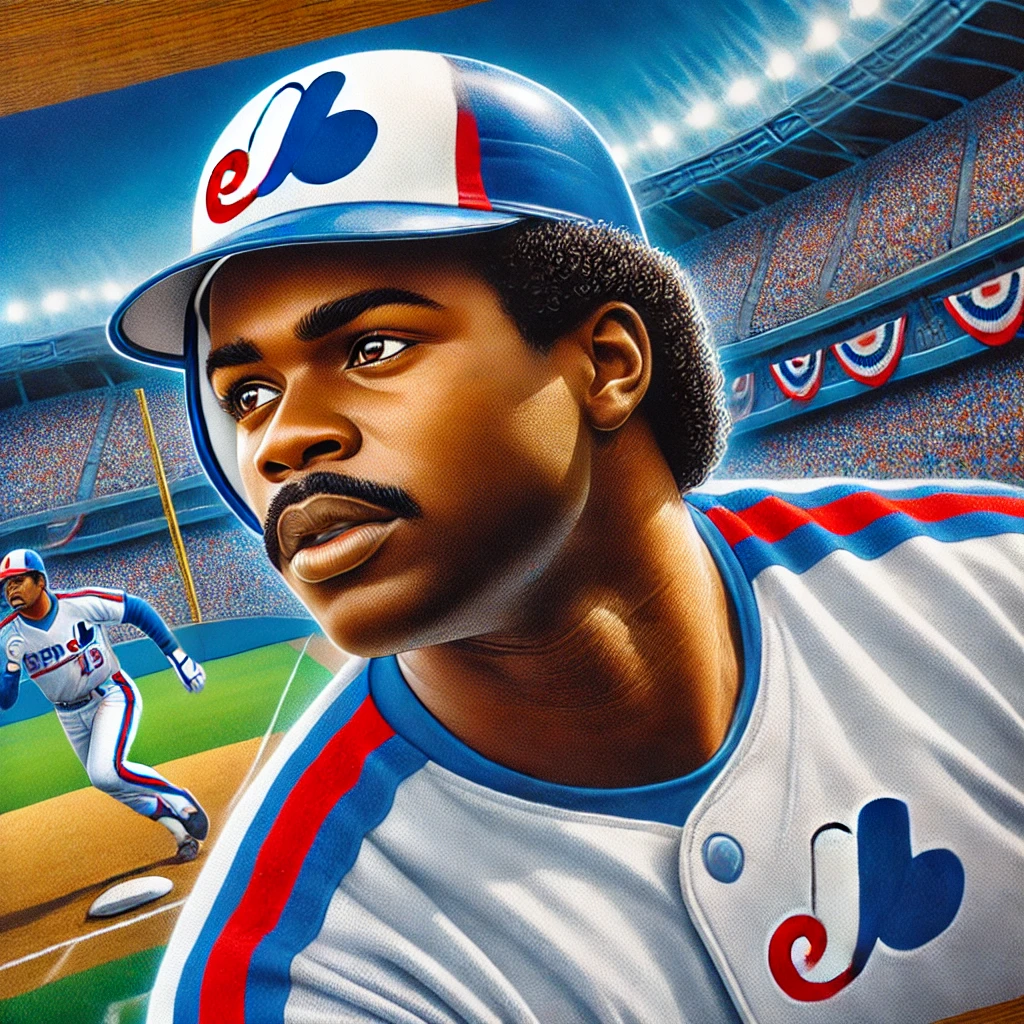
Tim Raines, affectionately known as “Rock,” is one of the most revered names in the history of baseball. Born on September 16, 1959, in Sanford, Florida, Raines emerged as a true testament to what dedication, speed, and passion for baseball can lead to. Raines’ journey to become one of the game’s best outfielders and base stealers began in the sandlots of his hometown. From there, he soared through high school stardom to being drafted in the fifth round by the Montreal Expos in the 1977 amateur draft. It was the start of a spectacular career that would see him terrorize pitchers and catchers on the base paths for over two decades.
He wasn’t just about speed, though that, of course, was a defining trait. Raines could hit, defend, and more importantly, inspire. His career spanned from 1979 to 2002, a period during which he played for six teams, but his heart always belonged to Montreal. He was an integral part of the Expos for 13 seasons, earning seven All-Star selections.
However, Raines’ career was not without its challenges. He battled against health issues and the ever-present struggle for recognition in a league dominated by bigger, flashier names. But despite all odds, he carved out his place among baseball’s elite, creating a legacy built on tenacious hustle and an unwavering love for the game. As we delve deeper into Tim Raines’ illustrious career, we’ll uncover the many facets that made him not just a survivor but a legend in his own right.
Rising to Stardom: The Early Years
Tim Raines did not take long to convince everyone that he was destined for greatness. After his draft by the Montreal Expos, he quickly moved up the ranks, demonstrating an extraordinary combination of speed and skill. By the time he reached the major leagues in 1979, he was poised to make a significant impact.
Raines made his debut in the big leagues on September 11, 1979, just days shy of his 20th birthday. Though his rookie season was brief, it was an essential prelude to his breakthrough in 1981. That season, shortened by a players’ strike, saw Raines put up remarkable numbers. He led the league in stolen bases with 71 in just 88 games, a feat that earned him the respect and admiration of fans and peers alike.
His ability to get on base, combined with his sheer speed, turned him into one of the most feared leadoff hitters. In 1981, he also posted a commendable .304 batting average and solidified his position as a key player for the Expos. Raines’ game was characterized by a combination of agility, smart base running, and a meticulous approach to hitting.
Success continued in the following years. Between 1981 and 1986, he led the National League in stolen bases four times and averaged over 100 runs per season. His efforts in 1986 earned him his first Silver Slugger Award and a second-place finish in the MVP voting, narrowly missing out to Mike Schmidt.
While Raines steadily built his reputation, it was his consistency and on-field charisma that defined his early career. His natural talent, combined with a relentless work ethic, set the stage for what would become a legendary journey through Major League Baseball.
Peak Performance: Dominating the Base Paths
Raines’ career wasn’t marked by isolated moments of brilliance; instead, it was characterized by sustained excellence. Maybe it was his intuition or pure athleticism, but his knack for stealing bases was unparalleled. By the mid-1980s, Raines had firmly established himself as one of the National League’s premier players.
During the pinnacle of his career, Raines showcased a blend of skills that set him apart. From 1981 to 1987, he consistently ranked among the league leaders in various offensive categories. What was genuinely remarkable was his ability to get on base and subsequently wreak havoc on the bases. His career-high 90 stolen bases in 1983 remain a testimony to his speed and game IQ.
Raines wasn’t just a base stealer; he was a run generator. In 1984, he reached the 100-run milestone for the third time in his career, demonstrating his consistency. His on-base percentage was always impressive, which kept pitchers constantly on edge, knowing that a walk or a single could quickly turn into a double or triple.
One of the standout seasons of Raines’ career came in 1986. During the summer of ’86, he achieved a personal milestone, leading the league both in batting average (.334) and on-base percentage (.413). Such was his dominance that he became the first player to lead in both categories since Jackie Robinson in 1949. Despite not winning the MVP award, his contributions were acknowledged by fans and analysts who understood his value beyond mere statistics.

Challenges and Perseverance
Despite his evident talent, Tim Raines’ career was not without its difficulties. Early on, he dealt with personal challenges, including a struggle with substance abuse, specifically cocaine. This issue was not uncommon among athletes in that era, but Raines’ ability to confront and overcome it suggests his inner strength and resilience. He voluntarily entered rehabilitation and returned to the game more focused, eventually becoming an advocate for clean sports.
Another significant challenge for Raines came in the form of injuries. Over the years, he faced various physical setbacks that threatened his playing time and performance. A hamstring injury in 1988 kept him off the field for large parts of the season. Despite these challenges, Raines always managed to bounce back and maintain a level of performance that was both commendable and inspiring.
Moreover, Raines had to battle for recognition. Playing for the Montreal Expos, a team that never quite captured the widespread attention like the New York Yankees or Los Angeles Dodgers, meant that his accomplishments often went underappreciated relative to his peers. The media spotlight rarely shone as brightly on Raines, but his contributions to the game were undeniable and deeply respected by those who followed and understood baseball.
Raines’ perseverance through these challenges is one of the defining aspects of his storied career. He not only had the physical prowess but also the mental toughness to navigate the many hurdles he faced. These qualities cemented his legacy as one of baseball’s most enduring legends.
Late Career and Lasting Legacy
As Tim Raines’ career progressed into the 1990s, he continued to be a formidable player. He transitioned from the Montreal Expos to several other teams, including the Chicago White Sox, New York Yankees, and Baltimore Orioles. Even though his speed waned with age, Raines adjusted his game, exemplifying adaptability and maintaining his effectiveness as a player.
During his time with the Chicago White Sox from 1991-1995, Raines continued to be a reliable offensive force, helping the team reach the playoffs in 1993. His veteran leadership became an invaluable asset wherever he played. His stint with the New York Yankees, although towards the twilight of his career, was marked by his contribution to two World Series championships in 1996 and 1998. These titles were significant as they were absent from his earlier career, providing a fitting capstone to his playing days.
Raines retired after the 2002 season, having accumulated a remarkable array of statistics: 2,605 hits, a .294 batting average, and 808 stolen bases, placing him fifth on the all-time list at the time of his retirement. These numbers tell part of the story, but his real legacy lies in the respect he earned from teammates, opponents, and fans alike.
His impact extended beyond the field. Raines became a coach and mentor, sharing his expertise and experience with younger players. He served as a coach with the Montreal Expos/Washington Nationals and later the Toronto Blue Jays. His passion for the game never waned, and his insights helped shape the next generation of players.
Hall of Fame Induction and Tribute
The crowning achievement of Raines’ career came in 2017 when he was inducted into the Baseball Hall of Fame. It was a moment of vindication for a player whose excellence had often gone underappreciated. Elected in his tenth and final year of eligibility, Raines’ induction was a heartfelt celebration of a career defined by speed, skill, and perseverance.
The induction ceremony was a tribute not only to Raines but also to the fans who had supported him throughout his career. His speech highlighted those who had influenced his journey, from family to coaches and teammates. It was an emotional moment that underscored the significance of his achievements and the respect he commanded in the baseball community.
Raines’ Hall of Fame plaque honors his career with mentions of his seven All-Star selections, Silver Slugger Award, and three World Series titles. It is a fitting acknowledgment of a player whose contributions to baseball transcended individual accolades.
Beyond the numbers and awards, Raines’ legacy is one of inspiration. He set a standard for what it means to play the game with passion and integrity. His story resonates with fans who admire not only his on-field prowess but also his ability to overcome challenges and remain a positive influence in the sport.
Conclusion: Rock’s Lasting Impact
Tim “Rock” Raines’ journey through Major League Baseball is a testament to the power of dedication, resilience, and love for the game. Starting from humble beginnings in Sanford, Florida, Raines rose to become one of the sport’s most iconic figures. His base-stealing prowess, combined with his ability to consistently get on base, made him a formidable player and a nightmare for opposing pitchers.
Raines’ career was marked by significant milestones, including his seven All-Star appearances, multiple season-leading stolen base titles, and three World Series championships. Despite facing personal challenges and the difficulty of playing for a team often overlooked in the media, Raines’ perseverance and tenacity ensured that his contributions were eventually recognized and celebrated. His induction into the Baseball Hall of Fame in 2017 was a vindication of his remarkable career and the impact he had on the game.
Moreover, Raines’ influence extends beyond his playing days. As a coach and mentor, he continues to impart his knowledge and passion to younger generations, shaping the future of baseball. His legacy is one of inspiration, demonstrating that with hard work, resilience, and a relentless spirit, one can overcome any obstacle and achieve greatness.
As we look back on Tim Raines’ career, we see a player who exemplified the true essence of baseball. His story is one of grit, excellence, and a profound love for the sport. Raines will forever be remembered as one of baseball’s greatest players, a true legend whose impact will be felt for generations to come.