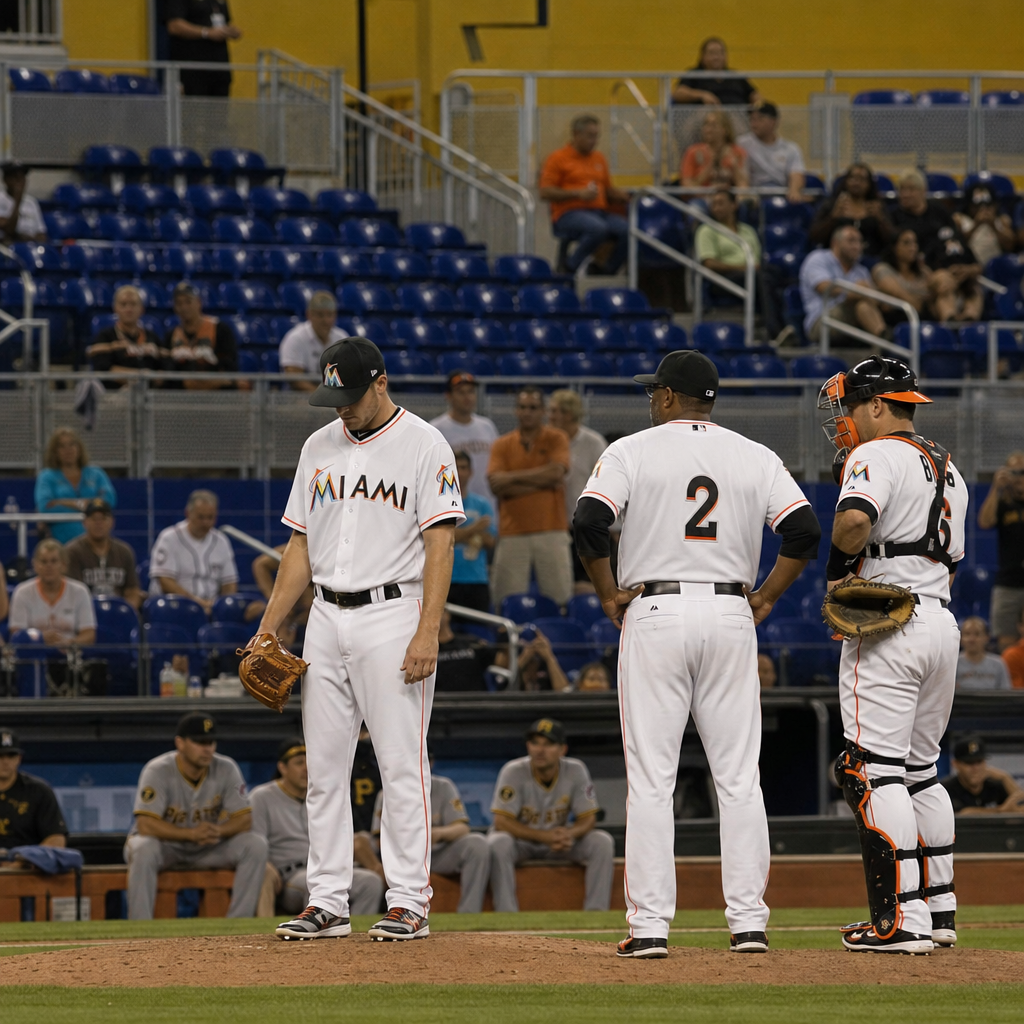
The 2010s Miami Marlins fire sales defined one of baseball’s most turbulent ownership eras, turning a franchise that promised ambition into a case study in distrust, payroll stripping, and broken public faith. In Major League Baseball, a fire sale means more than a few trades at the deadline. It describes a rapid dismantling of an expensive roster, usually after a front office concludes contention is unlikely or ownership decides costs must fall. For the Marlins, the term carries unusual weight because it happened repeatedly, and because each teardown followed bold claims that the club was building a sustainable winner. I have covered enough roster cycles to know fans usually tolerate rebuilding when leadership explains the plan honestly. What they rarely forgive is paying premium prices for hope, then watching that hope sold off almost immediately. That is why the 2010s Miami Marlins fire sales remain central to any discussion of baseball scandals and controversies. They exposed tensions between public financing and private profit, between flashy spending and disciplined development, and between short-term headlines and long-term credibility.
The decade’s turmoil cannot be understood without a few key terms. Payroll is the total money committed to player salaries on the major league roster, a figure closely watched because it signals competitive intent. A teardown or rebuild refers to trading veterans for younger, cheaper talent, often prospects not yet established in the majors. Prospect capital matters because baseball teams control young players at below-market rates for up to six full seasons, creating enormous value if scouting and player development are strong. The Marlins repeatedly argued that financial flexibility and prospect depth would create a healthier future. In practice, those promises collided with a long pattern of instability. Ownership under Jeffrey Loria developed a reputation for frequent managerial changes, contentious relationships with local government, and abrupt payroll reversals. By the time the club rebranded from Florida Marlins to Miami Marlins in 2012 and moved into a publicly funded ballpark, expectations rose sharply. When the roster was gutted within a year, the backlash was immediate and deserved.
This article serves as a hub for the miscellaneous side of the scandal, because the story is bigger than one trade. It includes the 2012-13 purge, the Giancarlo Stanton sale after the 2017 ownership change, recurring fan anger over public subsidies, and broader questions about whether the franchise operated in good faith. Understanding that full picture matters because the Marlins were not simply bad on the field. They became an example executives, journalists, and fans still cite when discussing trust, stadium politics, and the hidden cost of unstable leadership.
The road to the 2012 reset began with a promise of a new Miami powerhouse
When the Marlins opened Marlins Park in 2012, the franchise sold a clear message: a new stadium would support a new era. The club changed its name, unveiled brighter branding, and spent aggressively. José Reyes signed a six-year contract worth about $106 million. Mark Buehrle received four years and $58 million. Heath Bell got three years and $27 million. The roster already included stars such as Hanley Ramírez, Josh Johnson, and Giancarlo Stanton, giving the impression that owner Jeffrey Loria and president David Samson were finally committing to sustained contention. Public skepticism existed from the start because South Florida had seen payroll cuts before, notably after the 1997 and 2003 World Series titles. Still, the scale of the 2011-12 offseason spending made this moment different. The franchise had lobbied for a heavily taxpayer-funded stadium deal, and many supporters believed that new revenues and civic investment would stabilize operations.
On paper, the strategy was not irrational. Reyes improved lineup length and speed. Buehrle was among baseball’s most durable starters, a proven innings source. Bell addressed the bullpen with a reliever who had extensive closing experience. But the execution around those additions was messy. Ozzie Guillén’s first season as manager was overwhelmed by off-field controversy after his comments praising Fidel Castro created a major backlash in Miami’s Cuban American community. On the field, the Marlins underperformed, finishing 69-93. Ramírez was traded to the Dodgers in July. Bell struggled. Injuries hurt the rotation. The club’s one-year burst of optimism evaporated quickly, yet a single disappointing season did not justify the scale or speed of what came next.
The 2012-13 blockbuster trade turned disappointment into scandal
In November 2012, the Marlins sent José Reyes, Mark Buehrle, Josh Johnson, John Buck, and Emilio Bonifácio to the Toronto Blue Jays. In return, Miami received Yunel Escobar, Adeiny Hechavarría, Henderson Alvarez, Jeff Mathis, Justin Nicolino, Jake Marisnick, and Anthony DeSclafani. Baseball people can debate the talent balance, but the controversy centered on intent and timing. Less than a year after selling South Florida on a big-market future, the organization unloaded roughly $160 million in commitments. To many observers, this looked less like a baseball recalibration and more like a bait-and-switch. Major League Baseball’s Players Association reacted sharply. Commissioner Bud Selig reviewed the deal, a reminder that while teams have broad discretion to make trades, this one raised legitimate concerns about whether ownership had misrepresented its plans to fans and public officials.
The anger was not just emotional. It was rooted in facts. Reyes had been the signature free-agent face of the new era. Buehrle was exactly the dependable veteran teams sign when trying to win immediately. Johnson, though nearing free agency and carrying injury risk, was still a recognizable top-of-rotation arm. Dumping them so quickly validated every warning that the stadium campaign had never guaranteed competitive spending. Miami argued it had gained flexibility and useful young pieces. That was partially true. Alvarez later threw a no-hitter in 2013 and became a serviceable starter. Hechavarría offered strong defense. DeSclafani developed into a capable major league pitcher after being moved again. Yet the return never matched the public cost of the retreat. In practical terms, the trade told fans that long-term commitments in Miami could vanish almost overnight if ownership changed its financial mood.
| Fire sale phase | Key outgoing names | Main justification offered | Lasting controversy |
|---|---|---|---|
| 2012-13 teardown | Reyes, Buehrle, Johnson, Buck, Bonifacio | Reset payroll and add controllable talent | Followed stadium promises and one season of spending |
| 2017-18 ownership transition | Stanton, Ozuna, Yelich, Dee Gordon | Reduce obligations and reshape long-term roster | Young core broken apart before prime years fully matured |
Why the backlash centered on trust, not only wins and losses
Plenty of teams rebuild after failed seasons, but the Marlins became infamous because the relationship between ownership and the public had already frayed. The ballpark agreement for Marlins Park, now loanDepot park, was one of the most criticized stadium deals in American sports. Miami-Dade County and the City of Miami carried most of the financial burden, with public obligations stretching for decades. Investigations and reporting by outlets including the Miami Herald documented how little private risk ownership assumed compared with the public. Against that backdrop, payroll cuts felt like a direct violation of the spirit, if not the letter, of what taxpayers had been sold. Fans did not merely see baseball operations making hard choices. They saw a franchise benefiting from public money while refusing to behave like a stable civic institution.
In my experience, credibility in sports markets is cumulative. One smart trade can be forgiven. One bad season can be excused. What destroys confidence is repetition. By the mid-2010s, Marlins supporters had learned to distrust every declaration of permanence. Managers changed constantly. Front-office structures shifted. Star players seemed temporary even when they were marketed as franchise pillars. Attendance suffered, but low attendance was often presented by the club as a reason to cut costs, creating a self-reinforcing cycle. The team did not simply lose games. It trained its customers to wait for the next dismantling.
The 2017 sale did not end the pattern because the new group inherited and extended it
When Bruce Sherman purchased the club in 2017 with Derek Jeter as the most visible executive face, some hoped the Loria era’s worst habits were over. Instead, another fire sale followed. This time the logic had more baseball credibility because the team was not close to championship level and had an expensive roster led by Giancarlo Stanton’s massive contract. Yet even if the context differed, the public result looked familiar: a dramatic payroll reduction and the breakup of the most exciting homegrown core the franchise had developed in years. Dee Gordon was traded to Seattle. Marcell Ozuna went to St. Louis. Stanton was sent to the Yankees after using his no-trade clause to reject San Francisco and St. Louis. Christian Yelich was moved to Milwaukee for Lewis Brinson, Isan Díaz, Monte Harrison, and Jordan Yamamoto.
That last trade became especially damaging in hindsight. Yelich immediately became a superstar in Milwaukee, winning the 2018 National League Most Valuable Player award and nearly repeating in 2019. Ozuna remained a productive middle-order bat. Stanton, despite injuries, was still an elite power hitter when healthy. Miami’s returns were mixed to poor. Sandy Alcántara, acquired in the Ozuna trade, became the major exception and eventually won the 2022 National League Cy Young Award, proving that not every deal was barren. But one success did not erase the larger issue. A club with Yelich, Stanton, Ozuna, J.T. Realmuto, and a still-useful supporting cast should have been trying to solve depth and pitching, not detonating its identity. Instead, the new regime chose another hard reset, reinforcing the idea that ownership changes in Miami altered the branding more than the behavior.
The baseball case for each teardown had logic, but the pattern made it corrosive
To judge the Marlins fairly, it is important to acknowledge the baseball arguments behind these moves. Small- and mid-market teams often cannot carry expensive veterans through losing seasons. Prospect-focused rebuilding has produced winners elsewhere, from the Astros before their sign-stealing scandal came to light, to the Cubs before their 2016 title, to the Orioles more recently. Trading players before decline or free agency can be rational asset management. Stanton’s contract contained long-term risk. Buehrle and Reyes were expensive veterans. Ozuna and Yelich had significant trade value. The issue was never that the Marlins were forbidden from restructuring. The issue was that the franchise repeatedly invited fans to believe in continuity, then monetized that belief and reversed course.
That distinction matters because baseball organizations survive mistakes when their direction is legible. The Marlins often made isolated decisions that could be defended, while the total pattern remained indefensible. If leadership had openly said, before the stadium opened, that payroll would fluctuate and contention would depend on player development, expectations would have been different. If the post-2017 group had framed the process as a disciplined rebuild and then executed better on scouting returns, criticism would have softened faster. Instead, the club’s public messaging consistently lagged behind its actual incentives. That gap is where controversy lives.
What these fire sales changed for fans, media, and the franchise’s reputation
The lasting damage of the 2010s Miami Marlins fire sales was cultural as much as competitive. South Florida already had a crowded sports landscape, and baseball requires habitual attention more than occasional interest. Fans invest through 162 games, prospect tracking, and multiyear storylines. Fire sales shattered those storylines. Season-ticket holders learned that marquee acquisitions might be temporary theater. Younger fans saw stars leave before identities could deepen. Local media covered the club with permanent skepticism, often focusing less on standings than on whether promises would hold. Nationally, the Marlins became shorthand for instability. Mention “fire sale” in a baseball conversation and Miami is still one of the first examples raised.
There were consequences inside the sport as well. Agents noticed. Free agents and extension candidates understood the organization’s reputation. Even when the Marlins later built a stronger pitching pipeline with Alcántara, Pablo López, Jesús Luzardo, Eury Pérez, and others, they had to overcome years of self-inflicted doubt. Reputational damage compounds quietly. It influences negotiation dynamics, media narratives, and the patience fans are willing to extend during legitimate rebuilding phases.
The clearest takeaway is that the Marlins’ controversy was never one transaction in isolation. It was a decade-long lesson in how ownership behavior shapes every baseball decision fans see. The 2010s Miami Marlins fire sales mattered because they paired abrupt payroll cuts with public promises that had encouraged emotional and financial buy-in. The 2012-13 teardown felt scandalous because it came right after a taxpayer-backed stadium launch and an expensive rebrand. The 2017-18 purge felt familiar because a new ownership group, despite fresh messaging, again chose to cash out a recognizable core. Some individual trades had reasonable baseball logic. Sandy Alcántara proved that value could be recovered. But the franchise repeatedly failed the larger test of trust.
For anyone studying scandals and controversies in sports, Miami offers a durable case study. Public financing demands accountability. Rebuilding demands candor. Competitive resets are survivable, but only when leadership aligns words with actions and commits to a coherent long-term plan. The Marlins spent too much of the decade doing the opposite, and fans responded rationally by withholding belief. If you are exploring this subtopic further, use this hub as your starting point: follow the stadium politics, the ownership decisions, and the player exits together, because that full chain explains why franchise turmoil in Miami became one of baseball’s defining controversies.
Frequently Asked Questions
What does “fire sale” mean in the context of the 2010s Miami Marlins?
In baseball, a fire sale is not just a routine reshuffling of a roster or a few deadline trades. It refers to a rapid teardown of established, higher-paid talent, usually driven by ownership’s desire to slash payroll or by a front office deciding to reset the franchise entirely. In the case of the 2010s Miami Marlins, the phrase became especially loaded because it happened in ways that directly contradicted public promises of long-term investment and competitiveness. The Marlins did not simply move a veteran or two. They repeatedly dismantled rosters that had been marketed as the foundation of a brighter future, often shortly after signaling to fans that the club was ready to contend.
The most infamous example came after the franchise rebranded from the Florida Marlins to the Miami Marlins, opened a new publicly financed ballpark, and spent aggressively to create the appearance of a new era. Major acquisitions and contracts suggested a willingness to compete in a major market. But the roster was torn apart with stunning speed, reinforcing the impression that the spending spree had been more about optics and stadium politics than sustainable team-building. That is why “fire sale” in the Marlins’ case became shorthand for something larger than payroll reduction: it came to symbolize instability, mistrust, and a franchise repeatedly asking fans to buy into a vision that ownership soon abandoned.
Why are the Miami Marlins’ 2010s fire sales considered so controversial?
The controversy stemmed from the gap between what fans were promised and what actually happened. The Marlins entered the decade trying to sell a bold new identity. The move into a new stadium, the Miami rebrand, and an expensive burst of roster construction all suggested a franchise finally willing to operate like a serious contender. For a fan base that had already lived through earlier periods of instability, this was framed as a turning point. Instead, when the club underperformed, ownership moved quickly to unload expensive players, making the grand relaunch look temporary and deeply cynical.
That perception was magnified by the public financing attached to the new ballpark. Many observers felt that local taxpayers had helped underwrite a project marketed as a commitment to winning baseball in Miami. When payroll was slashed soon afterward, critics argued that the organization had effectively secured stadium revenues and public support without honoring the spirit of its promises. The outrage was not just about losing star players. It was about credibility. The Marlins became a national example of how ownership decisions can damage fan trust, weaken civic goodwill, and make every future sales pitch sound hollow.
The later teardown under new ownership also carried major emotional weight, though in a somewhat different way. By then, the franchise’s instability was already part of its identity. Trading away cornerstone names again, including beloved and marketable stars, reinforced the idea that the Marlins existed in a perpetual cycle of restart. Even when there were baseball arguments for restructuring the roster, fans had reason to doubt whether the moves were part of a coherent long-term plan or simply another round of cost-cutting. That accumulated skepticism is what made the Marlins’ 2010s fire sales uniquely controversial.
Which fire sale defined the decade most for the Marlins?
The 2012-13 teardown following the club’s first season as the Miami Marlins is generally the defining fire sale of the decade. It happened so quickly and so dramatically that it became one of the signature cautionary tales of the era. After the franchise spent aggressively and marketed itself as transformed, the roster imploded almost immediately. The blockbuster trade with Toronto, which sent out major contracts and recognizable talent, symbolized the speed with which the Marlins abandoned their big-spending posture. To many fans and commentators, this was not a careful recalibration. It was a complete reversal of the franchise’s public message.
That fire sale mattered because of timing and symbolism. It came right after the launch of the new ballpark era, when expectations were high and ownership had every incentive to present the team as stable and ambitious. Instead, the dismantling happened before the new identity could even establish roots with the fan base. The result was not merely a bad season followed by strategic changes. It was a breach of trust in full view of the entire sport.
The later 2017-18 teardown under Derek Jeter and the Bruce Sherman ownership group was also extremely consequential, especially because it involved stars who were central to the franchise’s image and future. Yet even that phase was filtered through the memory of 2012. Fans had seen this story before. That is why the earlier fire sale still stands as the decade’s defining moment: it crystallized the franchise’s reputation for abrupt reversals and made skepticism the default reaction to almost everything that followed.
How did these fire sales affect the Marlins’ relationship with fans and the city of Miami?
The damage was profound because the issue went beyond losing games. Fans can endure rebuilding cycles when they believe the organization is honest, competent, and committed to a plan. What made the Marlins’ situation different was the repeated sense that emotional and financial buy-in from the public was not being respected. A team asks fans to invest time, money, and identity. When ownership repeatedly promotes a competitive future and then quickly strips the roster, supporters begin to feel less like partners and more like customers being sold a product that keeps changing after purchase.
In Miami, that erosion of trust was especially costly. The franchise had always faced questions about attendance, market identity, and long-term support. Rather than stabilizing those issues, the fire sales intensified them. Casual fans had little reason to commit to players who might soon be traded. Dedicated fans had little reason to believe public messaging. That created a vicious cycle: weak trust led to weak engagement, weak engagement was then cited as a reason for continued retrenchment, and the franchise struggled to build the kind of continuity that successful baseball markets often take for granted.
The citywide impact was also civic. Because the stadium deal was so visible and contentious, the roster dismantling became part of a larger conversation about public money, political accountability, and the obligations of sports ownership. The Marlins were no longer only a baseball story. They became an example invoked whenever people debated whether a team’s promises should be believed during stadium negotiations. That kind of reputational damage is hard to quantify, but it lingers for years and can shape how a city views the franchise long after the original executives are gone.
Were the Marlins’ fire sales purely about saving money, or were there legitimate baseball reasons too?
It would be too simplistic to say there were no baseball reasons at all. In any teardown, there is usually at least some competitive logic: an underperforming roster may be expensive, the farm system may need replenishing, and leadership may believe the current core cannot realistically contend. That framework can be defensible in baseball terms. Teams do sometimes need to reset, move veterans, and prioritize longer-term flexibility over short-term appearances. The problem with the Marlins is that the baseball rationale was often overshadowed by the franchise’s history, timing, and credibility issues.
For example, after disappointing results, one can argue that certain Miami rosters were flawed enough to justify major changes. But a legitimate baseball restructuring typically works best when it is presented transparently and executed as part of a coherent organizational philosophy. The Marlins often looked less like a franchise making disciplined, long-range decisions and more like one veering from one ownership-driven impulse to another. When a club first spends heavily to sell hope, then rapidly strips payroll, observers naturally conclude that economics are leading and baseball reasoning is following behind as a public explanation.
The later fire sale under new ownership had a stronger baseball case in some respects because it involved a new regime inheriting contracts, evaluating a limited farm system, and trying to establish its own direction. Even then, however, trust was so depleted that many fans saw financial motives first. That is the enduring lesson of the 2010s Miami Marlins: baseball logic and financial logic are often intertwined, but once a franchise loses credibility, even defensible roster decisions are received as confirmation of the worst assumptions. In Miami’s case, the fire sales were controversial not simply because players were traded, but because the organization had spent years making it difficult for anyone to believe the moves were truly about building something better.