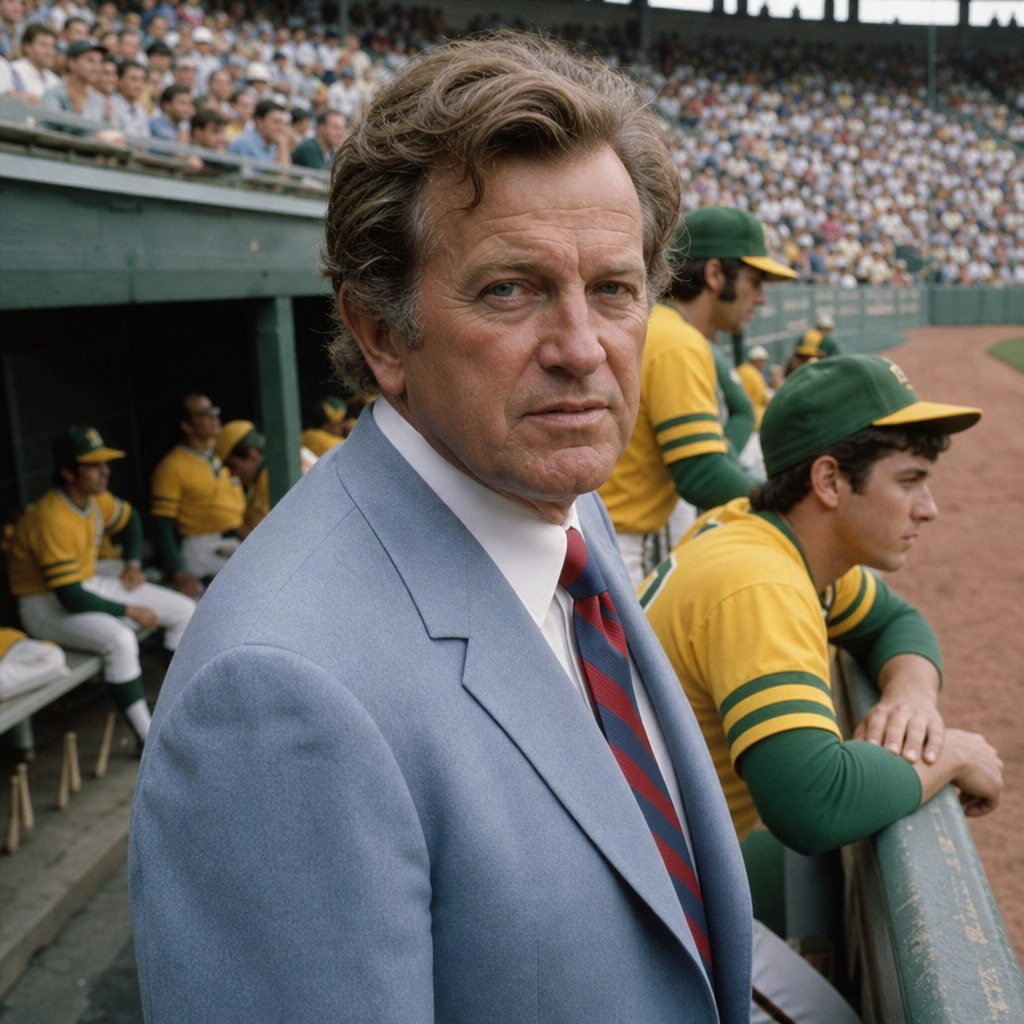
Charlie O. Finley turned the Oakland Athletics of the 1970s into one of baseball’s most successful and most combustible franchises, and the ownership controversies that followed still shape how people discuss power, personality, and governance in Major League Baseball. In practical terms, “ownership controversies” refers to disputes created by an owner’s decisions, public conduct, labor posture, financial management, and conflicts with league authorities, players, managers, and local communities. Finley generated all of them at once. He won three straight World Series from 1972 through 1974, yet he was also investigated, overruled, sued, criticized by commissioners, and bitterly opposed by many of his own employees. That combination makes the 1970s Charley Finley story more than colorful baseball history. It is a case study in what happens when innovation, ego, thrift, and weak institutional checks collide inside a high-profile sports business.
Finley matters because he was not simply a loud owner with eccentric habits. He pushed genuine changes in the sport, from uniform design and marketing flair to aggressive use of owner publicity, while also testing the limits of league rules and labor relations. In the years I have spent reviewing baseball governance disputes, Finley consistently stands out because nearly every miscellaneous controversy of the decade seems to touch his club in some way: player sales, stadium politics, managerial feuds, medical disputes, bonus conflicts, and public attacks on the commissioner’s office. He treated the franchise as a personal instrument, and baseball in the 1970s was still organized loosely enough that a determined owner could create chaos before the system reacted. Understanding Finley helps explain why later owners faced tighter rules, why the commissioner’s office hardened its stance on “the best interests of baseball,” and why players increasingly demanded contractual and procedural protections.
The phrase “miscellaneous” fits this hub because Finley’s controversies were not confined to a single scandal. They were a web of recurring fights. Some involved money, such as his efforts to sell star players after free agency changed the market. Some involved authority, including battles with Commissioner Bowie Kuhn over league approval and disciplinary control. Some involved people management, especially his poisonous relationship with manager Alvin Dark and several star players on championship teams. Others involved image and place: Kansas City’s bitterness after the Athletics left, Oakland’s unstable attendance, and Finley’s belief that promotion could compensate for structural business problems. To understand the 1970s Charley Finley ownership controversies, you have to see how these disputes connected, why they escalated, and what they left behind for baseball long after Finley himself exited center stage.
Finley’s ownership style: innovation mixed with control
Finley bought the Athletics in 1960 when the club was still in Kansas City, and from the start he governed by centralizing decisions in his own hands. He interfered in baseball operations, publicity, promotions, and even clubhouse routines. Some of his ideas were ahead of the market. He embraced bright green and gold uniforms, promoted players with memorable nicknames, experimented with orange baseballs and other television-driven gimmicks, and treated sports entertainment as a branded consumer product before that language became standard. Owners across sports later copied pieces of this playbook. The problem was that Finley’s taste for experimentation was inseparable from a need to dominate every conversation. Executives, field staff, and players often worked in uncertainty because policies could change instantly if Finley saw a financial edge or a publicity opportunity.
That management style created chronic conflict. Finley was famous for sending instructions from afar, second-guessing lineups, and trying to squeeze value out of every contract clause. He was also notoriously frugal despite owning a championship-caliber roster. In modern front-office terms, he sought maximum surplus from players while minimizing long-term commitment. That can work if trust is high and systems are stable. In Oakland, trust was thin. Players believed the owner wanted credit without sharing rewards. Managers believed he undermined their authority. League officials believed he ignored the cooperative obligations that bind franchises into a single competition. The controversies of the 1970s were therefore not random episodes. They were predictable outcomes of a structure built around one owner’s impulses.
The dynasty years hid a fractured organization
On the field, the Athletics were brilliant. Reggie Jackson, Catfish Hunter, Rollie Fingers, Vida Blue, Sal Bando, Joe Rudi, Bert Campaneris, Gene Tenace, and others formed the core of a powerhouse that won the American League West repeatedly and captured three consecutive championships. Off the field, the organization was unstable. Many championship clubs contain tension, but Oakland’s fights were unusually public and often owner-driven. Finley did not merely allow disputes to fester; he amplified them. He sparred with players over salaries, suspended personnel, criticized employees in the press, and inserted himself into matters usually handled by the manager or general manager.
One reason these disputes mattered is that baseball in the early 1970s was entering a structural transition. The reserve system still constrained player mobility, but challenges were mounting. Salaries were rising. Arbitration and grievance procedures were becoming more important. The players’ union under Marvin Miller was building real leverage. An owner who relied on old assumptions about unilateral control was bound to collide with the new environment. Finley collided harder than most because he had assembled elite talent but did not want to pay market prices to retain harmony. In several organizations, owner-player friction remained private. In Oakland, it became national news because Finley often made his battles public, believing public pressure would strengthen his negotiating position. It usually did the opposite.
The Catfish Hunter insurance dispute and the cost of mistrust
The Catfish Hunter case is one of the clearest examples of how Finley’s methods backfired. Hunter’s contract reportedly required Finley to fund an annuity payment. Finley missed the payment, and the dispute went before arbitrator Peter Seitz in 1974. Seitz ruled that Hunter was in breach-free status, effectively making him a free agent before free agency was formally normalized across the sport. Hunter then signed a landmark deal with the New York Yankees. The numbers drew national attention because they showed what top talent could command in an open market. More important than the specific dollar figure was the precedent: owner noncompliance with contract terms could destroy reserve control.
I keep returning to this case because it was not simply a paperwork error. It revealed a deeper organizational habit. Finley frequently treated contracts as flexible instruments to be managed aggressively, while players and their representatives were learning to treat every clause as enforceable. Once that legal mindset spread, the old owner advantage weakened fast. Hunter’s exit also damaged Oakland competitively and symbolically. It told other players that Finley might not protect their interests, and it told rival clubs that Oakland’s stars could become available through procedural breakdown as much as through deliberate roster strategy. For a dynasty, that was corrosive.
Vida Blue, salary wars, and the owner-player power struggle
Vida Blue’s conflicts with Finley further exposed the Athletics’ internal disorder. Blue emerged as a sensation in 1971, winning the American League MVP and Cy Young Award after a dominant season. A young superstar expected compensation to reflect his value. Finley resisted. Salary disputes escalated, and Blue held out. Although holdouts were not unique to Oakland, Finley’s public posture made them nastier. He tended to frame player demands as disloyal or unreasonable, even when the market clearly undervalued elite performance under the reserve clause. That approach poisoned relationships not only with Blue but across the roster, where players compared treatment and drew conclusions about their own futures.
These battles mattered beyond payroll because stars are signal carriers inside a clubhouse. When a Cy Young winner is fighting ownership over basic recognition and contract fairness, younger players notice. Veterans notice. Agents and union officials notice. In my experience analyzing team disputes, clubs can survive one acrimonious negotiation if leadership communicates a coherent plan. Oakland rarely did. Finley’s messages shifted between thrift, discipline, and spectacle. The result was a team that won despite ownership turmoil, not because of any stable organizational alignment created from above.
The attempted 1976 player sales and the commissioner’s intervention
The defining late-decade controversy came in 1976, when Finley attempted to sell several star players for cash. He reached deals that would have sent Joe Rudi and Rollie Fingers to the Boston Red Sox and Vida Blue to the New York Yankees. Commissioner Bowie Kuhn voided the transactions, invoking the best interests of baseball. Kuhn argued that the deals amounted to dismantling a contender for pure cash in a way that damaged competitive integrity. Finley was furious and challenged the decision, but the commissioner prevailed. This episode remains central to any discussion of owner power because it tested whether a franchise could effectively liquidate elite talent without meaningful baseball return.
| Controversy | Main issue | Immediate result | Long-term impact |
|---|---|---|---|
| Catfish Hunter annuity dispute | Contract noncompliance | Hunter became a free agent | Strengthened player leverage and arbitration significance |
| Vida Blue salary conflict | Compensation and holdout tension | Public owner-player feud | Deepened clubhouse mistrust |
| 1976 attempted cash sales | Competitive integrity versus owner asset control | Kuhn voided the deals | Expanded commissioner authority in roster governance |
| Managerial and clubhouse battles | Interference and public criticism | Internal instability during title runs | Shaped Oakland’s reputation as a fractured dynasty |
Kuhn’s intervention was controversial then and remains debated now. Finley argued that owners had broad rights to manage assets and that cash sales had historical precedent. Kuhn countered that baseball was not a set of isolated businesses but a shared competition requiring constraints. On the merits, Kuhn had the stronger institutional argument. If wealthy clubs could simply buy stars from struggling owners whenever convenient, competitive balance would collapse even faster than it already was in the pre-revenue-sharing era. Finley saw hypocrisy because baseball tolerated many inequities until his actions forced a line to be drawn. He was not wrong about inconsistency. But he had also pushed the system to a breaking point.
Feuds with managers, players, and the commissioner’s office
Finley’s controversies were not limited to contracts and transactions. He feuded constantly with managers, most notably Alvin Dark, who guided the club to championships while maintaining a poor relationship with ownership. Dark resented interference, and many players believed Finley undermined managerial authority whenever it suited him. Reggie Jackson had his own famous tensions with teammates and staff, but Finley often intensified rather than contained conflict. Instead of acting as stabilizer, he behaved as an additional combatant. That distinction matters. Strong owners can absorb tension by setting boundaries. Finley usually erased boundaries.
His antagonism toward Commissioner Kuhn also became a standing drama. Finley viewed Kuhn as an obstacle and often spoke about league governance with open contempt. Yet the office of commissioner in that era was increasingly called on to police owner behavior during labor unrest and market transition. Every public blast at Kuhn reinforced Finley’s image as a renegade owner willing to test any limit. For some fans, that made him a folk antihero challenging establishment hypocrisy. For many inside baseball, it confirmed that he was exhausting to regulate and impossible to trust in collaborative decision-making.
Relocation bitterness, Oakland attendance, and the business contradictions
Although the article focuses on the 1970s, the decade cannot be separated from the Athletics’ 1968 move from Kansas City to Oakland. Missouri politicians and fans felt betrayed, and the relocation added a lingering layer of distrust around Finley’s public image. In Oakland, meanwhile, championship success did not automatically solve attendance problems. The Coliseum was multipurpose, the fan base was uneven, and Finley never built the kind of local civic relationship that sustains support through conflict. He often seemed more interested in fighting institutions than in cultivating durable goodwill.
This is one of the biggest contradictions in the Finley story. He understood promotion better than many peers, but promotion is not the same as market development. A fireworks approach can draw attention; it cannot replace stable community trust, modern ticket strategy, regional broadcasting alignment, or patient corporate sales. Finley’s complaints about finances were sometimes grounded in real limitations, yet his own behavior regularly worsened the business climate. Sponsors, officials, and fans do not rally easily around constant confrontation, even when the team wins. The Athletics of the 1970s proved that repeated championships can coexist with a fragile business foundation if ownership alienates too many partners.
Legacy: why Finley’s controversies still matter
The lasting significance of the 1970s Charley Finley ownership controversies is that they accelerated baseball’s move toward clearer rules, stronger player protections, and firmer commissioner oversight. The Hunter dispute highlighted the legal force of contract compliance. The Blue battles illustrated the unsustainability of star treatment built on owner fiat. The 1976 attempted sales forced the sport to clarify that competitive integrity could override an owner’s immediate cash preference. His endless public feuds also offered a warning that championships do not excuse governance failures. A club can be brilliant on the field and dysfunctional at the top at the same time.
For readers exploring the wider “Scandals and Controversies” landscape, Finley’s case is the ideal hub because it connects labor conflict, executive overreach, franchise identity, commissioner power, and the economics of a changing sport. The key takeaway is simple: Finley was both a genuine innovator and a destabilizing owner, and you cannot understand the Athletics dynasty or 1970s baseball politics without holding both truths together. If you are building out this subtopic, use this page as the starting point, then follow the individual controversies in depth to see how one owner’s decisions reshaped the game far beyond Oakland.
Frequently Asked Questions
What made Charley Finley such a controversial owner during the 1970s?
Charley Finley became controversial because he combined undeniable baseball success with a management style that was highly personal, combative, and often disruptive. As owner of the Oakland Athletics, he helped build a powerhouse that won three straight World Series from 1972 through 1974, but he also turned the franchise into a constant source of conflict. Finley was known for inserting himself into matters that many owners left to baseball operations people, and he frequently clashed with managers, players, league officials, and even the media. His public behavior could be theatrical and confrontational, which made him unusually visible for an owner and ensured that disagreements around the team rarely stayed private for long.
What made the controversy especially enduring is that Finley was not merely eccentric. His decisions touched core issues of power in professional sports: who controls personnel, how much say players should have, how league governance should function, and whether an owner’s business instincts can undermine long-term organizational stability. He pushed boundaries on player treatment, payroll management, and public criticism in ways that often made the Athletics feel unstable even while they were winning championships. That contradiction is central to his reputation. Finley was both innovative and inflammatory, and the controversies around him still matter because they highlight how a successful franchise can be weakened when ownership becomes a source of turbulence rather than support.
Why did Charley Finley have so many conflicts with his players and managers?
Finley’s disputes with players and managers stemmed from a deep mismatch between his controlling style and the realities of a talented, strong-willed clubhouse. The Athletics of the 1970s were full of accomplished personalities, including stars who expected respect, financial security, and professional autonomy. Finley, however, often approached the team as if every major decision should flow through him. He was heavily involved in contracts, compensation, discipline, promotions, and public messaging, and that level of owner intervention frequently created resentment. Players did not simply object to his frugality or sharp bargaining; many felt he treated them as replaceable assets rather than as the core reason the team was winning.
His relationship with managers was equally tense. Finley often wanted influence over on-field and clubhouse matters that managers traditionally handled, which created friction over authority. The most famous example was his difficult relationship with manager Dick Williams, who helped lead the Athletics to championship success but had little patience for Finley’s intrusions. Even when the team performed at the highest level, the owner-manager relationship could be unstable because Finley’s desire for control did not necessarily diminish in response to winning. This made the franchise combustible. Instead of championships easing pressure, success often intensified power struggles because so many people within the organization believed they had earned independence from the owner’s constant interference.
These conflicts also reflected a broader change in baseball culture. The 1970s were a turning point in labor relations, and players were becoming more assertive about salaries, rights, and working conditions. Finley operated in a style that belonged partly to an older model of ownership, one in which the owner expected obedience and exercised near-total command. As that model weakened across the sport, the Athletics became one of the clearest examples of what happened when a championship roster and an authoritarian owner collided.
How did Finley’s labor and financial decisions contribute to controversy around the Athletics?
Finley’s labor and financial decisions were controversial because they often appeared to place cost control and owner leverage ahead of organizational harmony. He gained a reputation for being highly aggressive in contract negotiations and reluctant to reward players in ways they believed matched their value. On one level, that reflected the business habits of many owners in that era. On another, Finley stood out because the Athletics were not an ordinary team; they were elite, title-winning, and loaded with players who knew they were central to the franchise’s success. When a championship team repeatedly found itself in disputes over money, bonuses, contractual terms, or respect, the owner became the focal point of criticism.
The controversy deepened as baseball moved toward a new labor environment. The reserve clause system was being challenged, the players’ union was growing stronger, and free agency was beginning to transform the economics of the sport. Finley’s posture during this period often made him seem combative not just toward his own roster but toward the shifting balance of power in baseball itself. He was part of a larger ownership class resisting labor change, yet he was so visible and outspoken that many of these broader tensions became personalized through him. He became a symbol of ownership trying to hold onto maximum control during a time when players were steadily winning more influence.
Financial controversy also surrounded the perception that Finley had difficulty sustaining the very roster he had assembled. Rather than being remembered only as the architect of a dynasty, he is also remembered for disputes that contributed to the eventual breakup of that dynasty. That matters because ownership controversies are rarely just about personality. They are about whether financial decisions strengthen a franchise or destabilize it. In Finley’s case, critics argued that his management style helped create conditions in which one of baseball’s great teams could not remain intact, making his financial decisions central to how the Athletics’ 1970s story is told.
What was the significance of Finley’s clashes with Major League Baseball and league authorities?
Finley’s clashes with Major League Baseball were significant because they exposed the limits of an owner’s power within a league structure that depends on collective governance. Baseball owners do not operate in complete isolation; they are part of a system with commissioners, other club owners, league rules, and institutional expectations. Finley frequently tested those boundaries. His public criticism, independent streak, and willingness to challenge authority made him one of the most visible examples of an owner who treated league governance as something to contest rather than quietly accept.
These disputes were important not only for headlines but for what they revealed about the sport’s internal politics. Finley often saw himself as a bold innovator or practical businessman, while others saw him as erratic, self-interested, or damaging to the league’s stability. That divide mattered because the commissioner’s office was expected to protect the broader interests of baseball, not just the freedom of one franchise owner. When Finley’s actions raised questions about competitive balance, player movement, or the public image of the game, those disagreements became larger than one team. They became fights over who gets to define the best interests of baseball.
In historical terms, these clashes helped shape how people understand the modern relationship between ownership rights and league oversight. Finley forced baseball to confront difficult questions: How much independence should a team owner have? When does aggressive business behavior become harmful to the sport? And how should league authorities respond when a successful owner becomes a destabilizing figure? Because those questions still surface in modern disputes over relocation, spending, labor, and governance, Finley’s battles with baseball authorities continue to resonate well beyond the 1970s.
Why do Charley Finley’s ownership controversies still matter today?
Finley’s controversies still matter because they remain a useful case study in the difference between building a winner and building a healthy franchise. It is possible to be creative, ambitious, and even visionary as an owner while also generating dysfunction that damages long-term success. Finley embodied that tension. He helped create one of the era’s great teams, but he also showed how unstable leadership can strain relationships at every level of an organization. For modern readers, that makes his story more than a colorful baseball anecdote. It becomes a larger lesson about governance, accountability, and leadership in professional sports.
His legacy also matters because many of the same debates continue today. Fans still argue about how much owners should interfere in baseball operations, how teams should treat players during labor disputes, whether public behavior by owners helps or hurts a franchise, and how leagues should check powerful personalities. Finley’s era offered an early, dramatic version of these debates. He made ownership itself part of the daily story, and that visibility changed how people thought about the role of an owner. Rather than being a distant financier, he was a central actor whose choices could influence morale, roster stability, public perception, and league politics.
Perhaps most importantly, Finley’s controversies endure because they resist a simple verdict. He was not merely a villain, nor merely a misunderstood innovator. He was both highly effective and deeply divisive, which is exactly why historians, fans, and sportswriters continue to revisit him. The Oakland Athletics under Finley prove that championships do not erase governance problems. In fact, winning can sometimes conceal them temporarily before making them impossible to ignore. That is why his ownership remains such a powerful reference point whenever people discuss how much influence a sports owner should have and what happens when personality overwhelms structure.