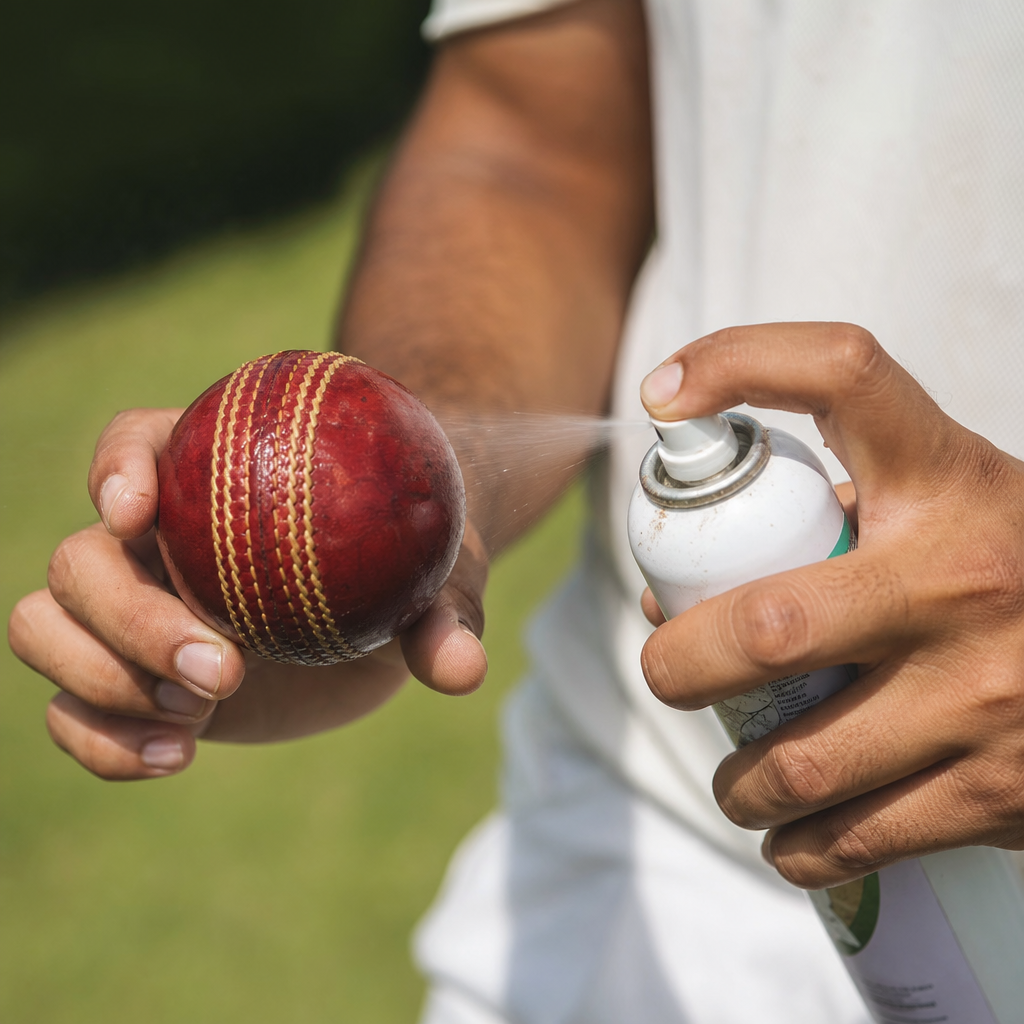
The juiced ball controversy sits at the intersection of baseball physics, league governance, player performance, and fan trust. In plain terms, a “juiced ball” is a baseball believed to travel farther than expected because of subtle changes in construction, materials, seam height, weight distribution, or surface smoothness. The phrase became common after home run rates surged across Major League Baseball, especially beginning in 2015, and observers started asking whether hitters had suddenly transformed, pitchers had become more predictable, or the ball itself had changed. I have worked on baseball analysis projects that compare batted-ball data across seasons, and this debate always returns to one practical question: when offensive outcomes shift, how much comes from athletes and strategy, and how much comes from equipment?
This question matters because the baseball is not a neutral prop. Small manufacturing differences can create measurable changes in carry distance, launch outcomes, injury risk, and roster construction. According to research discussed by MLB and outside analysts, a reduction in drag on a baseball can add several feet to deep fly balls, enough to turn warning-track outs into home runs. Over a 162-game season, that changes contracts, playoff races, arbitration cases, and how history is remembered. It also affects every level of the sport’s rules-and-evolution story, from the dead-ball era to modern Statcast-driven optimization. As a hub for the miscellaneous side of this topic, this article explains the science, timeline, evidence, competing explanations, policy response, and what the controversy reveals about how baseball evolves.
What the juiced ball controversy actually means
The controversy is not merely a complaint that “there are too many home runs.” It refers to the claim that MLB baseballs were altered, intentionally or not, in ways that changed aerodynamic performance. A baseball’s flight depends on exit velocity, launch angle, spin, drag coefficient, air density, and seam-related turbulence. If the ball is smoother, more symmetrical, or wound differently, it may experience less drag and carry farther. That does not mean every hard-hit fly ball becomes a home run, but it does mean leaguewide probabilities can move enough to show up in seasonal totals.
To understand the argument, separate three ideas. First, baseballs can vary naturally within manufacturing tolerances. Second, legal balls can still perform differently if those tolerances shift toward one end of the allowed range. Third, a league does not need a dramatic redesign to influence results; even modest changes matter at the margin. MLB’s official baseball specifications allow ranges for weight, circumference, and materials, but those ranges do not eliminate meaningful performance variation. Researchers at places such as The Ringer, FiveThirtyEight, and university laboratories have repeatedly shown that small physical differences can produce real offensive effects.
The term also carries a trust issue. Baseball has a long history of disputes about fairness, from spitballs and corked bats to sign stealing and sticky substances. Fans can accept strategic evolution, but they react strongly when the central object of the game seems inconsistent. That is why this controversy spread beyond statheads. It became a question about whether the sport was transparently managing its own competitive environment.
The timeline: why the debate exploded after 2015
The modern version of the controversy took off when home run rates jumped sharply in 2015 and remained elevated. MLB clubs hit 4,909 home runs in 2015, then 5,610 in 2016, and 6,105 in 2017. The record exploded again in 2019, when teams combined for 6,776 home runs. Those were not small fluctuations. They were structural shifts visible to anyone watching nightly highlights. Front offices, broadcasters, and players all started searching for the cause.
At first, many analysts pointed to the launch-angle revolution. Hitters were deliberately trying to pull the ball in the air, aided by high-speed video, bat sensors, and bat-path training. That explanation was partly correct. I have seen swing-change case studies where hitters raised average launch angle and transformed line-drive power into over-the-fence power. Justin Turner, J.D. Martinez, and Josh Donaldson became common examples of players who optimized contact quality rather than simply swinging harder. Pitching also changed. High fastballs and breaking-ball-heavy arsenals created more strikeouts but also more extreme contact outcomes when mistakes were punished.
Still, those explanations did not fully account for the scale or timing of the jump. Independent analysts noticed that similarly struck balls were traveling farther than comparable balls from earlier seasons. MLB commissioned studies, and a 2018 report by a panel of scientists concluded that changes in the baseball’s aerodynamic properties, particularly reduced drag, were a major factor. In 2020, another MLB-commissioned report stated that year-to-year variations in baseball construction likely affected home run rates, even if no evidence proved a deliberate effort to increase offense.
The evidence for and against a juiced ball
The strongest evidence for the theory comes from three areas: Statcast outcome patterns, laboratory testing, and league-commissioned research. Statcast allows analysts to compare batted balls with similar exit velocity and launch angle across seasons. When those comparables start producing more distance or more home runs, the ball becomes a reasonable suspect. Laboratory work has examined seam height, roundness, weight concentration, and coefficient of restitution, which measures bounciness. Some studies suggested the core and surface characteristics changed enough to affect carry, especially through drag rather than raw bounce.
Evidence against the strongest version of the claim also matters. There is no public proof that MLB executives deliberately ordered a livelier ball to boost offense. Manufacturing baseballs at scale is complex, and Rawlings production processes can introduce variability without conspiracy. Humidity storage, weather, park dimensions, and changing batter behavior all shape outcomes. In my experience, equipment debates become misleading when they assume one cause must explain everything. Baseball rarely works that way. Offensive environments emerge from overlapping factors, and the ball is one of them, not the only one.
| Factor | How it affects home runs | Why it matters in the controversy |
|---|---|---|
| Reduced drag | Ball carries farther on deep fly balls | Most cited mechanism in MLB research |
| Launch-angle approach | More balls hit in ideal home run windows | Explains part of the surge without changing equipment |
| Seam height variation | Can alter air resistance and movement | Supports claims that ball construction changed |
| Pitch design trends | More strikeouts but harsher punishment on mistakes | Creates boom-or-bust contact environment |
| Weather and ballpark conditions | Warmer air and favorable parks aid carry | Important short-term explanation, weak full-season explanation |
The balanced conclusion is straightforward: the juiced ball controversy is rooted in real physical variation, but the full offensive surge cannot be reduced to the ball alone. The reality is more nuanced and, in some ways, more significant. A baseball that changes subtly from year to year can reshape the sport even without dramatic or intentional redesign.
The science of baseball flight in simple terms
When a bat meets a ball, the first key variables are exit velocity and launch angle. If a hitter drives a ball at 103 miles per hour and 28 degrees, it enters a home-run-friendly zone. What happens next depends heavily on drag and lift. Drag slows the ball down. Lift, influenced by backspin and seam interaction, can help keep it in the air longer. Lower drag generally means more carry. That is why a ball with smoother seams or slightly different surface properties can travel farther even when hit the same way.
Coefficient of restitution, often shortened to COR, gets attention because it describes how lively a collision is. But in the modern controversy, drag appears more important than COR alone. A ball can test similarly in bounce yet still fly differently through the air. Seam height is especially important because seams disturb airflow. Lower seams can reduce drag, though the relationship is not simplistic because seam orientation and spin axis also matter. Alan Nathan, one of the most cited baseball physicists, has explained that modest aerodynamic changes are enough to produce large differences in home run totals.
Storage conditions also matter. Since 2002, Coors Field has used a humidor to reduce the effects of Denver’s dry air. Arizona later adopted one as well. Humidity can change a baseball’s weight, size, and surface feel. Temperature matters too: warmer air is less dense, helping carry, while cold weather suppresses offense. These are not side notes. They show why serious analysis must control for environment before blaming or dismissing the ball itself.
How the controversy changed strategy, rosters, and player value
Once teams believed the ball might be carrying farther, strategy adjusted quickly. Hitters leaned even harder into damage-oriented swing decisions. Pitchers chased whiffs and weak contact because allowing airborne pull contact became more dangerous. Front offices recalibrated what counted as usable power, acceptable fly-ball rates, and safe home-run suppression. I remember projections meetings where analysts treated a few feet of fly-ball distance as meaningful because the league context had shifted so clearly.
Player value changed in concrete ways. A marginal power hitter with elite barrel rates became more attractive in a high-carry environment. A pitcher who allowed many deep fly balls could see his ERA deteriorate despite similar strikeout and walk skill. Arbitration and free agency were affected because traditional stats such as slugging percentage and home runs moved with the environment. This is one reason the controversy matters historically. Equipment context influences who gets paid, who gets promoted, and how careers are judged.
The issue also touched player safety and game aesthetics. Some pitchers argued that a slicker-feeling ball was harder to grip, complicating command and potentially increasing reliance on foreign substances before MLB’s 2021 crackdown. If pitchers cannot command inside effectively, hitters gain another indirect advantage. Meanwhile, fans and media debated whether more home runs improved entertainment or hollowed out the game by reducing action on balls in play. The juiced ball controversy became part of a larger argument about what kind of baseball people wanted to watch.
MLB’s response and the broader lesson for rules and evolution of the game
MLB eventually acknowledged that baseball performance varied and announced efforts to deaden the ball for the 2021 season. League statements cited changes such as loosening the first wool winding and reducing the ball’s weight slightly within the allowed specification range. That public admission mattered because it confirmed what many analysts had argued for years: subtle construction choices can meaningfully alter the run environment. It also showed the league actively manages equipment, whether to increase consistency, control offense, or respond to criticism.
For a rules-and-evolution hub, the biggest lesson is that baseball changes through implementation as much as through written rules. The strike zone can stay the same on paper while enforcement shifts. The mound can remain fixed while pitchers develop new grip technologies. The baseball itself can remain “regulation” while performance changes within tolerance bands. That is why miscellaneous topics like humidors, replay standards, bat design, field conditions, and ball manufacturing belong in the same conversation. They shape the game’s reality even when they are not headline rulebook items.
So, is the juiced ball controversy myth or reality? Reality, but not in the cartoon version. The evidence strongly supports that baseball properties changed and affected home run rates. The evidence does not require a simplistic conspiracy, nor does it erase the roles of swing optimization, pitch design, climate, and park context. The practical takeaway is clear: when evaluating baseball history, current performance, or future rules, treat the ball as an active variable, not a constant. If you are exploring the broader evolution of the game, use this topic as your starting point, then follow the connected discussions on equipment standards, offensive eras, and how leagues balance spectacle with competitive integrity.
Frequently Asked Questions
What does “juiced ball” actually mean in baseball?
In baseball, the term “juiced ball” refers to the belief that the baseball itself has been altered, intentionally or unintentionally, in ways that make it travel farther when hit. That does not necessarily mean the ball is dramatically different to the naked eye. The controversy usually centers on subtle manufacturing variables such as seam height, pill density, winding tightness, leather smoothness, coefficient of restitution, and how weight is distributed inside the ball. Even tiny changes in those areas can affect drag and bounce off the bat, which in turn can turn warning-track fly balls into home runs.
The phrase became especially popular when home run numbers jumped sharply across Major League Baseball beginning in the mid-2010s. Fans, players, analysts, and even some front-office executives started asking whether the sport had changed the baseball. The suspicion grew because the increase looked too large to be explained by randomness alone. While better training, launch-angle optimization, stronger hitters, and more aggressive hitting approaches were all part of the story, many observers believed those factors did not fully account for the surge. That is why “juiced ball” became a shorthand way of describing a broader concern: whether the game’s most important piece of equipment was performing differently than expected.
Why did so many people believe MLB used a juiced ball?
The belief gained momentum because the timing and the numbers raised obvious questions. Home run rates rose significantly, and they did so across the league rather than in just one ballpark, one division, or one type of hitter. Analysts comparing game data from different seasons noticed changes in how far batted balls were traveling, even when exit velocity and launch angle looked similar. Academic researchers and independent baseball analysts also published studies suggesting that some baseballs appeared to have lower drag, meaning they met less air resistance and could carry farther.
Compounding the issue was the fact that baseball manufacturing tolerances allow for slight variation while still producing a legal ball. That meant a league could use baseballs that all technically met specification, yet still create meaningful on-field differences if those balls clustered toward one end of the allowable range. Public trust was also affected by inconsistent messaging. At times, MLB acknowledged changes in manufacturing or environmental effects, but many critics felt the league was slow to communicate clearly and transparently. Once players began openly discussing how some baseballs felt slicker or flew differently, the controversy moved beyond internet speculation and into the mainstream baseball conversation.
Is there scientific evidence that some baseballs traveled farther?
Yes, there is credible scientific and statistical evidence suggesting that, during certain periods, some baseballs were more likely to travel farther than similar balls from other periods. Researchers examined drag coefficients, seam profiles, carry distances, and the physical construction of game-used baseballs. Some studies found that lower seams and smoother surfaces could reduce drag, allowing a well-hit baseball to retain speed longer in flight. Even a modest reduction in drag can matter a great deal at the margins, especially on balls hit in the ideal range of exit velocity and launch angle.
That said, the evidence is more nuanced than a simple yes-or-no answer. The science does not support the idea that every ball in every game was obviously altered in a dramatic way. Instead, it points to the possibility that small manufacturing differences, introduced over time or across batches, may have had outsized competitive effects. In practical terms, that means the controversy is less about cartoonish tampering and more about whether a league should be responsible for detecting and disclosing performance shifts in a ball that still falls within formal specifications. The scientific discussion therefore supports part of the “juiced ball” claim, but it also shows why the issue became so contentious: subtle equipment changes can be real, measurable, and still difficult to explain cleanly to the public.
Could the home run surge have been caused by hitters and strategy instead of the baseball?
Absolutely, and any serious discussion of the controversy has to include those factors. Baseball changed dramatically in the Statcast era. Hitters became more data-driven, coaches emphasized launch angle and pull-side power, and players trained specifically to maximize hard contact in the air rather than simply putting the ball in play. As a result, more hitters adopted swing paths designed to generate home runs, even if that approach also increased strikeouts. Strength and conditioning improvements, better bat-speed development, and more sophisticated scouting of pitcher tendencies also contributed to the offensive shift.
However, many analysts argue that player development alone does not fully explain the scale and speed of the league-wide jump in home runs. The most balanced view is that both things were true at once: hitters got better at producing ideal contact, and the baseball may have become more favorable to that contact. That combination is important because a ball that carries just a little better can disproportionately reward modern hitting philosophies. In other words, the strategic revolution in baseball may have created the conditions for a home run boom, while ball characteristics may have amplified it. Framing the debate as either “all ball” or “all hitters” misses the complexity of how offensive environments actually change.
Why does the juiced ball controversy matter so much to fans, players, and the league?
The controversy matters because it touches the sport’s integrity, statistical history, and competitive fairness. Baseball is a game obsessed with records, comparisons across eras, and the idea that outcomes are earned under stable conditions. If the baseball itself changes in ways that materially affect performance, then home run totals, pitching numbers, player contracts, arbitration cases, and even postseason outcomes can all be influenced. For pitchers, a livelier ball can turn solid execution into damaging results. For hitters, a more responsive ball can boost production and reshape public perception of their value. For front offices, it can complicate roster construction and performance forecasting.
It also matters because trust is central to league governance. Fans can accept that baseball evolves, but they want transparency about what is changing and why. If the league appears uncertain, inconsistent, or overly defensive about the baseball’s performance, it invites suspicion that the game is being manipulated for entertainment value, whether to increase offense, improve television appeal, or shape narratives around stars. Even if no such intent exists, poor communication can create the same credibility problem. Ultimately, the juiced ball debate is about more than flight distance. It is about whether everyone in the sport is playing under clearly understood conditions, and whether the league is being candid when those conditions shift.