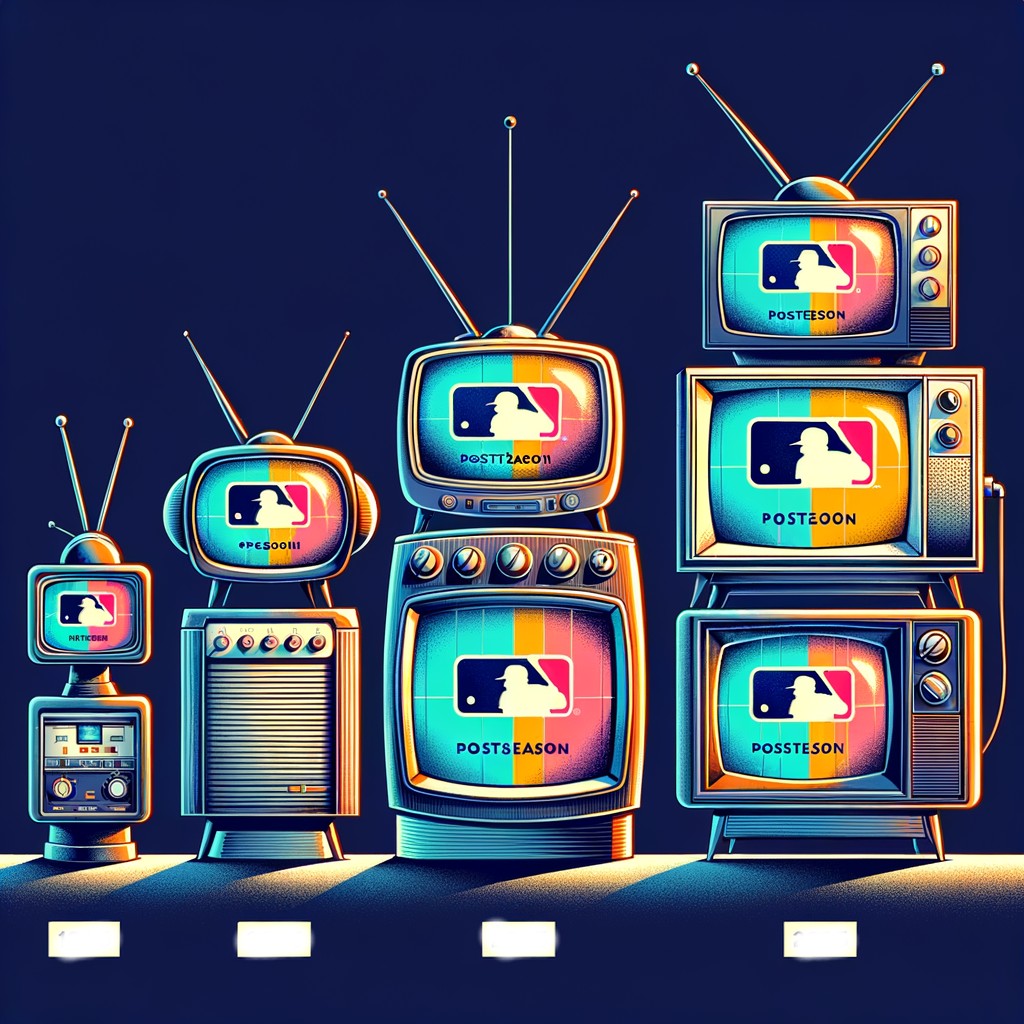
Baseball, often referred to as America’s pastime, has seen its share of transformations over the years, from rule changes to technological advancements impacting how the game is played and watched. One significant aspect of these changes is the evolution of baseball’s postseason television coverage. Since televisions became household staples, the way fans experience Major League Baseball (MLB) playoffs and World Series has shifted significantly. This transformation has been driven by advancements in broadcasting technology, shifts in viewer preferences, changes in league structures, and the growing influence of digital media. The story of baseball’s postseason on TV is a reflection of broader trends in sports media, encapsulating shifts from radio to color television, from network monopolies to cable expansions, and onto today’s streaming services’ rich offerings.
Understanding the evolution of baseball’s postseason coverage isn’t solely about technology; it’s about capturing the drama and excitement that these games provide to fans worldwide. It’s a journey from static black-and-white broadcasts with minimal graphics to today’s high-definition streams with interactive features. This evolution mirrors societal changes as well, highlighting how fans’ interaction with the game has grown over time in complexity and richness. It also illustrates the sports broadcasting industry’s adaptation to technological innovations, ensuring fans experience the best possible broadcast has always been paramount to maintaining baseball’s rich, nostalgic, yet ever-evolving tradition. By exploring baseball’s postseason television coverage evolution, we gain insight into not only the sport’s technological adaptability but also the cultural significance it holds for millions around the world.
The Early Days: Radio to Black-and-White Television
The early years of baseball’s postseason coverage were marked by the dominance of radio. Before television sets became accessible, radio broadcasters brought the excitement of the World Series to fans across the country. Announcers with distinctive voices, such as Mel Allen and Red Barber, became household names as they painted vivid pictures of the games with their words. Radio allowed fans not only to feel connected to the game but also to use their imaginations to envisage the plays unfolding on the field. As television slowly started gaining ground post-World War II, the baseball landscape began to change.
In 1947, the first televised World Series between the New York Yankees and the Brooklyn Dodgers marked a significant milestone. Television brought a new dimension to the game, allowing fans to see for the first time what they had previously only been able to imagine. The visuals, albeit in black and white, added richness to the narrative of the game. Though the number of households with televisions was small, the broadcast represented an invaluable historical moment as it was the first time the World Series reached a broader audience outside the stadium, paving the way for future developments in sports broadcasting.
Despite the triumph of broadcasting the 1947 series, it wasn’t until the 1950s that television sets became more common in American homes, gradually taking precedence over radio. Televised games brought new challenges, such as figuring out camera placements and determining how to best capture the essence of baseball. This era laid the groundwork, allowing broadcasters to experiment and refine the art of presenting a baseball game in living rooms across the nation.
Expansion and the Color Television Era
The 1960s marked a turning point with the introduction of color broadcasts, intensifying the visuals and consequently enhancing the viewer’s experience. NBC, which had obtained television rights to cover the World Series, recognized the potential of this medium. The ability to broadcast in color allowed fans to better appreciate the nuances of the game, such as uniform colors and the bright green grass of the ballparks, creating a more immersive experience.
This decade also saw the birth of sportscasting legends, with broadcasters like Vin Scully and Howard Cosell becoming synonymous with baseball. They offered not just play-by-play commentary but also rich narratives that added depth to the game. The aesthetics of color television, combined with engaging storytelling, began to capture a broader audience, turning baseball from a local pastime into a national spectacle that people planned their evenings around.
As color coverage became the norm, the 1970s introduced more sophisticated broadcasting techniques. Noteworthy was the inclusion of instant replay, allowing fans to see pivotal moments multiple times. Companies like ABC entered the competitive fray, vying for the lucrative rights to broadcast postseason games, realizing the substantial advertising revenue potential. This period marked the commercialization of baseball broadcasts and laid a framework for future expansion.
Rise of Cable Television and the Birth of ESPN
The 1980s heralded another significant shift with the rise of cable television. Increased channel capacity allowed channels to dedicate more time to sports, culminating in the birth of ESPN in 1979. This shift democratized baseball coverage, providing more content featuring lesser-known teams and games beyond just the postseason. Cable TV offered an unprecedented coverage depth, granting fans broader access beyond traditional network coverage.
The infancy of cable in the baseball broadcasting domain was not without hiccups. Initially, viewers grew accustomed to tuning to channels like NBC and ABC for postseason coverage. However, cable slowly chipped away at this dominance, offering a comprehensive baseball calendar that included spring training, regular-season games, and offseason discussions. ESPN marketed itself as the go-to hub for sports coverage, expanding the ways fan engagement flourished and enabling new forms of baseball content such as analysis shows and highlight reels.
Interestingly, this transition coincided with the 1984 landmark Court ruling in the NCAA Board of Regents v. University of Oklahoma case, removing restrictions on televised games’ number. Although unrelated to MLB, this decision influenced baseball’s approach towards media rights, encouraging an open-market strategy that integrated cable networks as pivotal partners. The decade concluded with the realization that baseball and cable television made a perfect match.
Digital Revolution and Internet Streaming Services
By the turn of the new millennium, digital technology began radically changing how baseball playoff games were presented and consumed. Innovations in internet technology paved the way for streaming services to enter the sports broadcasting landscape. MLB embraced this shift, launching MLB.tv in 2002, a pioneering service allowing fans to stream games live over the internet. This was revolutionary in enabling fans to follow their teams anywhere, at any time, marking a significant shift in viewer autonomy.
High-speed internet and mobile devices empowered fans to consume postseason games beyond traditional televisions, introducing the era of multi-screen viewing. The availability of streaming services meant the MLB could cater to a global audience, shedding light on the sport’s expanding international appeal. The introduction of MLB Advanced Media further professionalized and optimized digital broadcasts, setting high standards for streaming quality and user experience.
The 2010s magnified this digital shift, as partnerships with major digital platforms like Facebook and YouTube emerged to stream games, targeting younger audiences more inclined towards digital consumption. Besides just streaming, these platforms introduced interactive features, allowing real-time viewer engagement through social media integration and live commentary.
Impact of COVID-19 and Contemporary Changes
The COVID-19 pandemic in 2020 unexpectedly expedited changes concerning digital consumption. With live attendance restricted, baseball leaned heavily on television and online broadcasts as the primary connection between fans and the game. This period saw record streaming numbers, as a captive audience turned to digital platforms to experience the postseason, highlighting streaming’s central role in the future of sports coverage.
Networks like Fox and TBS adjusted broadcasting approaches to provide enhanced virtual interactions. This included integrating advanced statistics graphics and creating immersive fan experiences that mimicked on-ground atmospheres, such as virtual crowd noises. Interactive digital features and social media interactions became essential elements of the broadcast strategy, tailoring content to engage a diverse, tech-savvy audience.
Additionally, mobile applications became more sophisticated, offering personalized content, live statistics, and interactive features that enriched the viewing experience. The emphasis on user engagement while maintaining broadcast quality highlighted the sports industry’s direction in catering to fan preferences and provided a glimpse into the future of sports media.
Conclusion
The evolution of baseball’s postseason television coverage reflects broader shifts in technology, media consumption, and cultural engagement with sports. From the radio days’ meticulous auditory depictions to today’s high-definition streaming services, every phase highlights a unique challenge and opportunity that has shaped the fan experience. The journey from rudimentary television broadcasts to dynamic, interactive digital content underscores baseball’s adaptability and foresight in embracing technology.
As technology continually evolves, so does the potential for further enriching the baseball viewing experience. The emergence of augmented and virtual reality could shape future postseason coverage, offering fans immersive insights previously unimaginable. These innovations, while rooted in technology, remain fundamentally loyal to baseball’s spirit, ensuring the game continues to capture hearts across generations and geographies.
This legacy of innovation is not merely about broadcasting changes. It’s a testament to the ever-looming desire to bring fans closer to the game, forging experiences that transcend the distance between home and the ballpark. Baseball, as it transitions into future eras of broadcasting, surely promises to remain not only a testament to tradition but also a beacon of what’s possible through the marriage of sports and technology.