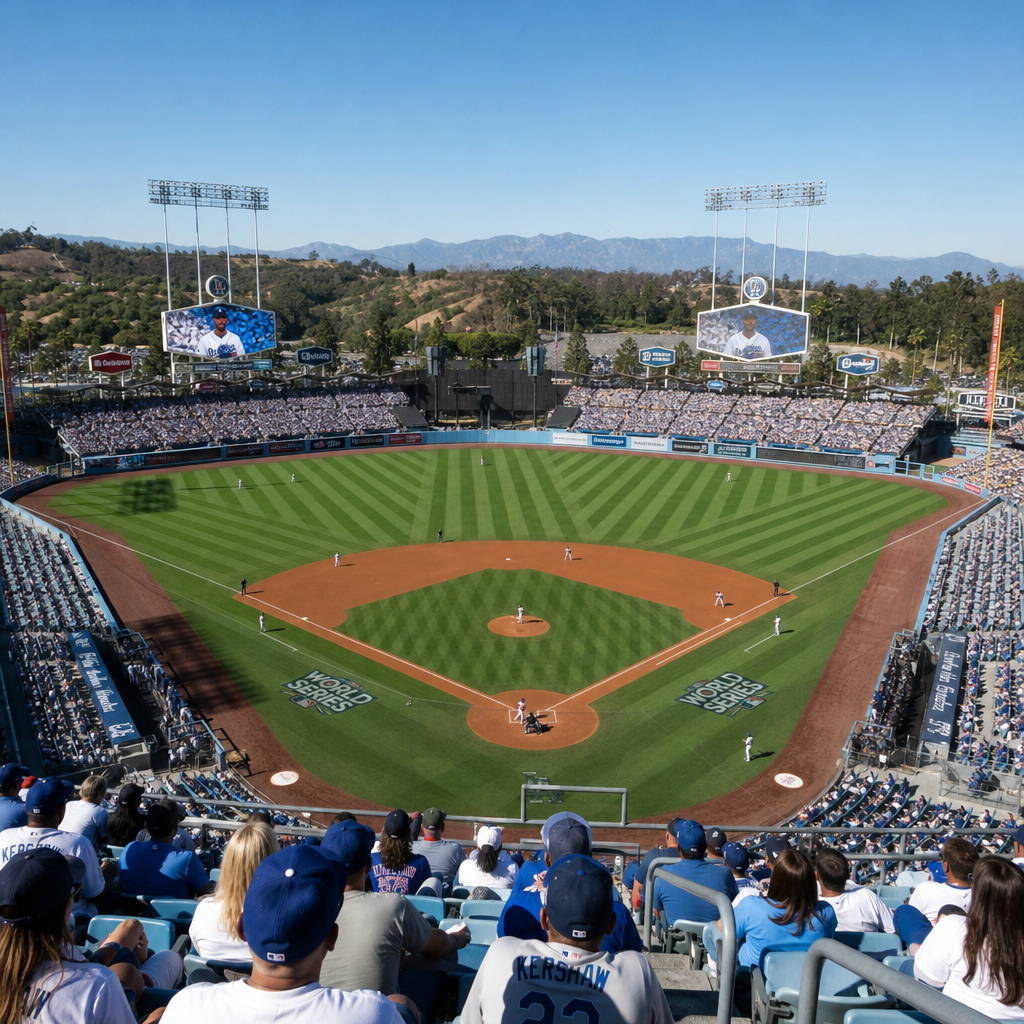
The World Series is baseball’s championship showcase, but its significance extends far beyond the field. Hosting the World Series is an economic event that activates stadium operations, public infrastructure, broadcast logistics, sponsorship networks, tourism systems, labor planning, and long-term franchise strategy. When a city lands World Series home games, it is not simply selling tickets for baseball; it is managing a concentrated surge of spending, attention, and civic expectation. The economics behind hosting the World Series therefore sit at the intersection of sports business, urban policy, media rights, and consumer behavior.
At its core, the phrase “hosting the World Series” refers to everything required to stage games in a team’s home ballpark during the championship round. That includes direct revenues such as ticket sales, premium seating, concessions, parking, merchandise, and local sponsorship activation. It also includes indirect effects, such as hotel bookings, restaurant traffic, transportation demand, temporary hiring, and heightened visibility for the city and team brand. Economists usually separate these effects into direct, indirect, and induced spending. Direct spending comes from purchases tied immediately to the event. Indirect spending comes from suppliers meeting that demand. Induced spending reflects workers re-spending event-related income in the local economy.
Why does this matter? Because the public conversation often swings between two oversimplified claims: that hosting the World Series is an enormous economic windfall, or that it barely matters at all. In practice, both views miss the mechanics. I have worked on sports-event budgeting and venue operations models, and the consistent lesson is that the value depends on who captures the revenue, how much of the spending is truly incremental, and what costs are hidden beneath the excitement. A sold-out World Series game can generate millions in gross activity, but gross activity is not the same as net local benefit. Cities, teams, stadium operators, workers, and nearby businesses each experience the event differently.
This hub article covers the major economic innovations and challenges tied to the World Series as a business event. It explains where money comes from, how media and sponsorship have changed the equation, why public infrastructure and security costs complicate headline estimates, how dynamic pricing and premium inventory have reshaped postseason revenue, and where labor, technology, and urban development fit into the picture. For readers exploring broader innovations and changes in baseball, this page serves as the central reference point for understanding championship economics in plain terms and with the necessary nuance.
Revenue Engines Inside the Ballpark
The most visible economics of hosting the World Series begin inside the stadium. Ticketing is the headline category, but the real revenue mix is more layered. Postseason ticket prices are typically set through a blend of presale allocations, season-ticket holder access, team-controlled inventory, and resale market behavior. In modern baseball operations, clubs rely heavily on dynamic pricing models that estimate willingness to pay based on opponent strength, game importance, seat location, and demand velocity. For a World Series game, especially in a first-time or long-wait market, face-value prices can rise sharply, while resale platforms often push effective prices much higher.
Premium inventory matters even more than standard seats. Suites, club seats, hospitality lounges, and sponsor-held blocks generate outsized yields because they package baseball with status, networking access, and turnkey entertainment. Teams have learned that one suite sale during the World Series can produce revenue equivalent to dozens of standard-seat transactions while requiring less transaction friction. Add in concessions, parking, in-seat service, commemorative merchandise, and postseason-specific sponsorship signage, and the per-cap spending profile rises well above regular-season levels. Major League Baseball also layers in national event branding, creating additional retail and licensing opportunities.
Still, not every dollar stays with the host club or city. MLB has a complex postseason revenue-sharing framework, and clubs do not simply keep all gate receipts from championship games. Players receive a defined postseason pool based on gate-related formulas established in the collective bargaining structure, while league-level revenue arrangements shape how money is distributed. That means a packed stadium with premium pricing may produce impressive gross receipts but lower retained local profit than casual observers assume. The important economic question is not “How much was sold?” but “Who retained what after league rules, taxes, staffing, and operating expenses?”
The modern stadium also acts as a data-rich commercial platform. Cashless concessions, mobile ticketing, customer relationship management systems, and app-based ordering allow teams to track fan behavior in real time. During the World Series, that data becomes especially valuable because clubs can identify high-value customers for future season plans, sponsorship sales, and premium products. In other words, hosting can create future revenue pipelines, not just event-night income. That long-tail value is one of the clearest economic innovations in baseball’s championship business model.
Media Rights, Sponsorship, and the National Audience
The World Series is not financed by ticket sales alone; national media rights are central to its economics. Broadcast agreements convert the championship from a local event into a national advertising product. Networks pay billions across long-term MLB rights packages because live sports still deliver audience concentration that entertainment programming struggles to match. That value flows through league structures, supports club economics, and raises the strategic importance of postseason visibility. Hosting a World Series game gives the local franchise a rare branding moment in front of a mass audience, and that visibility can influence future sponsorship negotiations, merchandise sales, and fan acquisition.
Sponsorship economics have also become more sophisticated. Brands no longer buy only static signage behind home plate. They purchase integrated campaigns that include digital impressions, social content, hospitality access, branded fan zones, and measurable lead generation. I have seen sponsors justify postseason spending not only through audience reach but through B2B relationship-building at the venue itself. A World Series host park becomes a live corporate theater where companies entertain clients, launch promotions, and align themselves with baseball tradition. That makes the event valuable even when the sponsor’s return is not tied directly to local foot traffic.
Streaming and second-screen behavior add another layer. Fans follow highlight clips, betting-related content, fantasy commentary, and social reactions while the game is in progress. That creates inventory far beyond the television broadcast and gives clubs and MLB more ways to monetize attention. However, digital fragmentation also creates measurement challenges. A local business may feel the excitement of a World Series week, yet the most lucrative advertising benefits may be captured nationally by the league, broadcaster, or global brand partner rather than neighborhood merchants. This is one reason economic impact claims often feel inflated at street level.
Local Economic Impact: Tourism, Restaurants, and Transportation
For the host city, the most immediate benefit usually comes from visitor spending. World Series games attract out-of-town fans, media personnel, league staff, corporate guests, security teams, and broadcast crews. Hotels near the stadium and downtown core often see occupancy spikes, with average daily room rates climbing because demand is compressed into a narrow window. Restaurants, bars, rideshare drivers, parking operators, and retail shops can all benefit from the surge, especially in entertainment districts built around the ballpark. When playoff runs coincide with broader downtown redevelopment strategies, the gains can be highly visible.
Yet the size of that gain depends on substitution effects. If local residents spend money on World Series entertainment instead of other local activities, much of the spending is reallocated rather than newly created. Economists have long warned against counting every dollar near a major event as net new value. For example, a family attending a World Series game may skip a theater visit, restaurant meal elsewhere, or weekend trip out of town. The city sees activity shift, but not all of it represents additional growth. This is why reputable impact analysis discounts gross spending claims and asks what portion is truly incremental.
Transportation systems also experience both benefits and strain. Transit agencies may see ridership surges, but they also incur staffing, scheduling, and policing costs. Airports and roads absorb extra demand. Host cities that already have integrated rail or bus access to the stadium generally manage event flow more efficiently and capture more spillover spending in adjacent commercial zones. By contrast, car-dependent stadium areas can suffer congestion that limits the broader benefit to businesses outside the immediate ballpark footprint. Urban form matters. A stadium embedded in a walkable district often multiplies spending opportunities better than an isolated facility surrounded by parking lots.
| Economic Area | Typical Benefit During the World Series | Main Limitation or Risk |
|---|---|---|
| Hotels | Higher occupancy and room rates from visiting fans, media, and sponsors | Demand may be short-lived and concentrated in premium properties |
| Restaurants and Bars | Game-day traffic spikes before and after first pitch | Sales may substitute for other local entertainment spending |
| Transit and Parking | More riders and event parking revenue | Extra staffing, traffic management, and security costs |
| Retail and Merchandise | Strong demand for team apparel and commemorative goods | Licensed revenue may flow primarily to league and major vendors |
| Nearby Real Estate | Visibility boost for entertainment districts and mixed-use projects | Long-term gains are difficult to isolate from broader development trends |
Public Costs, Security, and the Myth of Automatic Windfalls
One of the biggest mistakes in sports economics is treating revenue as if it arrives without cost. Hosting the World Series requires extensive public coordination. Police, fire services, emergency medical teams, sanitation crews, traffic management units, and permitting staff all play a role. Depending on the city, some of these costs are reimbursed by the team or stadium operator, while others are absorbed partially or fully by taxpayers. Security needs are especially high because the World Series is a nationally prominent event with VIP attendance, media compounds, credential control, and expanded perimeter screening.
There are also opportunity costs. Public employees assigned to the event are not available elsewhere at the same level, and municipal resources may be redirected toward the stadium district. Cleanup, street closures, crowd control, and transit adjustments all carry price tags that are easy to overlook when officials announce splashy impact estimates. In my experience, the most credible event assessments build separate line items for direct municipal cost recovery, unreimbursed service exposure, and capital wear. Without that detail, “economic benefit” becomes a marketing phrase rather than a financial conclusion.
Tax revenue is likewise more complicated than many headlines suggest. Sales taxes on hotels, food, merchandise, and parking can rise during the World Series, and cities often emphasize that bump. But tax gains depend on local tax structures, exemptions, and the share of spending that occurs within city boundaries. If fans stay in suburban hotels, park outside the district, or buy merchandise online through national channels, the host municipality may capture less than expected. The World Series can be profitable for a region while producing only modest net gains for a specific city budget.
Labor, Operations, and Technology as Economic Innovation
Behind every World Series game is a temporary expansion of labor demand. Stadium operations require more ushers, concession workers, cleaning crews, ticket resolution staff, camera support, grounds personnel, premium hospitality workers, and logistics coordinators. For many workers, postseason shifts mean higher hourly opportunities or more available hours at the end of the baseball calendar. For employers, however, the challenge is precision staffing. Demand spikes are intense, service expectations are high, and mistakes are magnified on a global stage. Teams that invest in operations planning software, predictive staffing tools, and vendor integration usually perform better both financially and reputationally.
Technology has changed the labor equation. Mobile entry reduces bottlenecks and counterfeit risk. Point-of-sale systems improve throughput and inventory forecasting. AI-assisted demand modeling helps operators decide how many stands to open and what products to stock. Broadcast compound planning now relies on detailed fiber, power, and connectivity coordination that did not exist at the same level a generation ago. These are economic innovations because they reduce waste, increase conversion, and support premium pricing through smoother fan experience. A better-run event captures more spending per attendee and lowers costly service failures.
Still, there are labor tensions. Many stadium jobs remain part-time, seasonal, and relatively low wage. Event success does not automatically mean equitable income distribution. Contractors, franchise operators, and venue managers may profit more than frontline workers unless wage policies, gratuity structures, and scheduling protections are thoughtfully designed. Any serious discussion of baseball’s economic changes has to include who benefits from postseason growth and who remains vulnerable despite the spectacle.
Long-Term Effects on Franchise Value and Urban Development
The deepest economics behind hosting the World Series are often long term. Championship visibility can increase franchise value by strengthening brand equity, expanding the fan base, improving sponsorship leverage, and validating stadium-adjacent real estate strategies. Forbes franchise valuations, while not perfect, consistently reflect the premium attached to strong media position, market relevance, and venue monetization. A World Series run can accelerate all three. It gives ownership a proof point when selling corporate partnerships, premium memberships, and future naming-rights packages.
Urban development claims require more caution. Ballparks can anchor entertainment districts, hotels, apartments, and retail corridors, but the World Series alone does not transform a neighborhood. Sustained gains usually occur where event hosting is part of a broader mixed-use plan, supported by transit access, year-round programming, and private capital disciplined enough to survive the off-season. The best examples in baseball are not just stadiums with occasional marquee games; they are districts designed to capture spending before, during, and after the season. In that model, the World Series acts as an accelerator, not a foundation.
For baseball as a whole, this matters because the championship has become a test case for how the sport commercializes scarcity. There are only a handful of World Series home dates each year, which makes each one unusually valuable. Teams, cities, and league partners that understand the economics behind hosting the World Series treat it as more than a celebration. They treat it as a high-stakes operating project with measurable upside, measurable risk, and strategic lessons that carry into the regular season.
The clearest takeaway is simple: hosting the World Series creates real economic opportunity, but the benefits are uneven, conditional, and shaped by modern innovation. Ticketing, premium inventory, media rights, sponsorship activation, data systems, and district development all expand the value of a host site. At the same time, public costs, revenue-sharing rules, substitution effects, and labor tradeoffs limit the size of the local windfall. That is why serious analysis must separate gross excitement from net economic impact.
As the hub page for baseball’s economic innovations and challenges, this article provides the framework for understanding how championship hosting works in practice. The World Series is not just a sporting event; it is a concentrated case study in pricing strategy, urban economics, public-private coordination, and sports media monetization. If you are exploring how baseball is changing as a business, start here, then dig deeper into stadium finance, media revenue, labor models, and redevelopment strategy across the rest of this topic cluster.
Frequently Asked Questions
1. Why is hosting the World Series considered such a major economic event for a city?
Hosting the World Series is a major economic event because it concentrates spending, media exposure, labor demand, and operational activity into a very short period of time. A World Series home game does not function like a typical regular-season contest. It attracts higher-spending visitors, national and international broadcasters, sponsors, hospitality clients, team personnel, security teams, and media organizations, all of which place immediate demands on hotels, restaurants, transportation systems, parking operations, retail businesses, and event staffing. Even residents who are not attending the game may spend more in nearby entertainment districts because the event creates a broader citywide atmosphere.
At the same time, the city and the team must activate a complex service network to support the event. That includes stadium operations, public safety staffing, sanitation, traffic control, transit scheduling, concessions, premium hospitality, merchandising, temporary labor, and communications infrastructure. The economic significance comes not only from direct ticket revenue, but from the surrounding ecosystem of spending and employment that expands around a championship event. In practical terms, the World Series turns a baseball venue into the center of a temporary regional economic surge, with effects felt across both the private and public sectors.
2. Where does the money actually come from when a city hosts World Series games?
The money comes from multiple revenue streams, and that is what makes the economics of hosting the World Series so layered. Ticket sales are the most visible source, particularly because postseason pricing is much higher than regular-season pricing and premium seating can command substantial markups. But ticket revenue is only one piece. Teams and venue operators also benefit from concessions, parking, merchandise, sponsorship activations, luxury suites, hospitality packages, and special event programming tied to the series. Nearby businesses capture additional consumer spending from fans who visit bars, restaurants, hotels, rideshare services, retail shops, and tourist attractions before and after the game.
There is also an important business-to-business component. Broadcasters require technical setups, workspaces, transportation, catering, and production support. Sponsors host clients, stage branded events, and spend heavily on experiential marketing. Corporate guests often book hotel blocks, meeting rooms, and private transportation at premium rates. In addition, local governments may see increased tax collections through hotel occupancy taxes, sales taxes, food and beverage taxes, parking taxes, and other transaction-based revenue sources. The economic picture is not defined by one giant payment; it is built from many overlapping streams of consumer, corporate, and media-related spending that intensify during the championship window.
3. Do cities and local businesses always make a large profit from hosting the World Series?
Not always, and this is where the economics become more nuanced than many headlines suggest. While hosting the World Series can create a meaningful spike in spending, the final financial impact depends on costs, timing, substitution effects, and who actually captures the revenue. For example, some local spending during the series may not be entirely new spending. A resident who spends money near the stadium might simply be redirecting money they would have spent elsewhere in the city. Economists call this a substitution effect, and it can reduce the true net gain. Similarly, some profits may flow to national chains, outside vendors, or league-related entities rather than staying entirely within the local economy.
On the cost side, cities and teams often face higher expenses for security, crowd management, transportation coordination, overtime labor, cleanup, insurance, and infrastructure support. Businesses close to the stadium may thrive, while firms in other neighborhoods may see little benefit or even temporary disruptions. Hotels and restaurants can gain significantly if the games bring in out-of-town visitors, but the scale of that benefit depends on travel demand, length of stay, and the local tourism calendar. So while hosting is generally a valuable and high-profile opportunity, the idea of a guaranteed windfall is too simplistic. The strongest benefits usually occur when the event drives genuinely new visitor spending and when the city is prepared to manage operations efficiently enough to keep costs from eroding the gains.
4. How do labor, infrastructure, and logistics factor into the economics of hosting the World Series?
They are central to the economics because a championship event is as much an operational challenge as it is a sports spectacle. A World Series game requires expanded staffing across nearly every category: ushers, concession workers, grounds crews, maintenance staff, broadcast technicians, cleaners, security officers, medics, transportation personnel, ticketing teams, and hospitality workers. Many of these roles involve overtime, premium scheduling, or rapid hiring, which raises labor costs but also increases short-term earnings opportunities for workers and contractors. The event can create a temporary employment bump, especially in hospitality and venue services.
Infrastructure and logistics are equally important because the city must handle concentrated demand without service breakdowns. Transit systems may adjust schedules, roads may need traffic control plans, rideshare zones may be redesigned, and public safety agencies often coordinate with team officials, league representatives, and federal or regional partners. Inside the stadium, communications networks, lighting, power systems, media facilities, and hospitality areas must operate flawlessly because the World Series is a globally televised event with high reputational stakes. These investments and operating demands are part of the economic equation. They represent costs, but they also reflect the city’s capacity to stage major events successfully. In many cases, the ability to execute these logistics well can strengthen a city’s reputation for future sports, entertainment, or convention opportunities.
5. What are the long-term economic effects of hosting the World Series for a franchise and its city?
The long-term effects can be more important than the short-term game-day surge, especially for the franchise itself. A World Series appearance elevates brand value, strengthens fan loyalty, expands merchandise demand, and increases the visibility of the team in national and international markets. That can support future ticket sales, sponsorship negotiations, media relevance, and premium seating demand long after the final game is played. For the franchise, hosting on the sport’s biggest stage can reinforce pricing power and deepen relationships with advertisers, corporate partners, and season-ticket holders.
For the city, the long-term impact is often tied to perception, tourism branding, and confidence in local event infrastructure. Successfully hosting World Series games can showcase a city’s stadium district, transportation capacity, hospitality industry, and civic identity to a massive audience. That kind of visibility may help support future bids for other major events or encourage return visits from travelers who were introduced to the destination through the broadcast. Still, these long-term gains are not automatic. They depend on whether the city and team convert a moment of attention into sustained business relationships, repeat tourism, and broader development momentum. In economic terms, the World Series is not just a revenue event; it is also a platform for long-term franchise strategy and urban positioning.