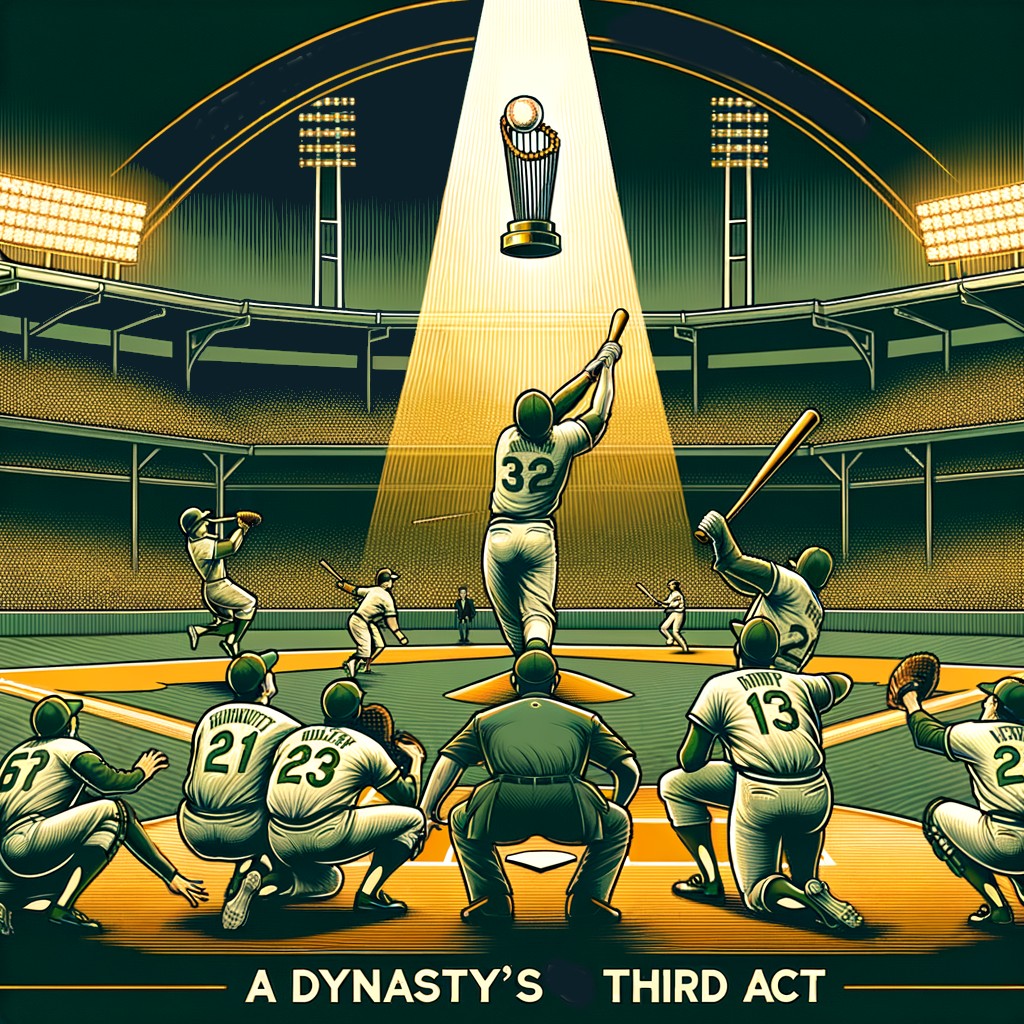
The story of the 1974 Oakland Athletics represents a quintessential chapter in the golden era of Major League Baseball, marked by definitive performances and star-laden rosters. Emerging from the shadows of their predecessors, the 1974 Athletics captured their third consecutive World Series title, cementing their place as one of the most formidable dynasties of the era. Under the fiery ownership of Charlie Finley and the astute management of Alvin Dark, the Athletics navigated the tumult of the mid-1970s, a period characterized by labor strife and colorful personalities. The team’s journey through the 1974 season is a testament to not only their athletic prowess but also their resilience against the backdrop of a rapidly evolving sport. As we delve into the intricacies of this extraordinary season, we explore the key moments, players, and strategies that propelled the Athletics to the pinnacle of baseball glory. From the gripping playoff battles to the undeniable star power of their roster, this article unpacks the essence of what made the 1974 Athletics not just a champion, but a dynasty. The backdrop of the 1974 season was unique and challenging, offering a blend of friction and flair, defined by individual brilliance as well as cohesive teamwork.
Setting the Stage
The Oakland Athletics were no strangers to baseball success, having been crowned the World Series champions in 1972 and 1973. However, the 1974 season presented new tests and opportunities. Owner Charlie Finley, known for his eccentric style, wielded significant influence over the team’s operations, often making unconventional decisions that kept fans and players alike on their toes. His managerial choice in Alvin Dark proved pivotal, providing stability and insight that would be crucial as they navigated the season. The Athletics entered 1974 with high expectations and formidable talent. Star players like Reggie Jackson, Rollie Fingers, Catfish Hunter, and Vida Blue were core contributors to the team’s ongoing supremacy. Complementing these stars was an ensemble of role players and stalwarts who added depth and versatility, essential for enduring the wear of a full season. The landscape of Major League Baseball during this time was turbulent, with labor disputes and the advent of free agency beginning to reshape team dynamics, making continuity a treasured asset. Against this ever-shifting background, the Athletics stood as a paragon of stability and success. In 1974, the team faced fierce competition in the American League West. The division was no cakewalk, with formidable teams such as the Texas Rangers and Kansas City Royals eager to dethrone the reigning champions. The Athletics knew that maintaining their winning streak would require not only excellence on the field but unity in the clubhouse. This necessity for cohesion within the ranks was even more pronounced given the strong personalities on the team’s roster, all of whom had to harmonize their energies towards a common goal.
Rise to the Top
The Athletics started the 1974 season in promising fashion, displaying the trademark intensity and skill that had become synonymous with the team. Their impressive lineup, led by the inimitable Reggie Jackson, was a powerhouse capable of intimidating even the most stalwart defenses. Jackson’s performance throughout the season was nothing short of sensational; his athletic prowess, combined with his charismatic presence, made him a fan favorite and a nightmare for opposing pitchers. The midseason stretch showcased the depth of the Athletics’ talent and their ability to execute under pressure. Key victories against rivals such as the Boston Red Sox and Baltimore Orioles solidified their standing at the top of the division while providing momentum heading into the latter part of the season. Standout performances from players like Catfish Hunter, whose pitching acumen remained unmatched, and Joe Rudi, whose batting was pivotal in close games, further underscored the team’s dominance. Rollie Fingers, the ace relief pitcher, regularly closed games with aplomb, anchoring the bullpen and showcasing his trademark handlebar mustache with the same flair as his pitches. Fingers’ skill in tight situations was vital for the Athletics, providing the certainty needed in high-stakes moments. Vida Blue, another star pitcher, offered critical innings that allowed the Athletics to maintain their edge over competitors. His lively fastball and solid mechanics impressed both fans and fellow players. Together with Hunter, Blue formed one of the most formidable starting pitching duos in the league, giving the team an often unassailable advantage in many games. As the regular season neared its end, the Athletics clinched the American League West title. This achievement marked their fourth consecutive division title, achieving a level of consistency that few teams could boast. Their focus then shifted to the postseason, where the stakes would escalate even further.
Playoff Dominance
With the postseason in sight, the Athletics approached the American League Championship Series (ALCS) with the determination and grit characteristic of their past triumphs. Their opponents in the ALCS were the Baltimore Orioles, a team known for its strong pitching and disciplined play. However, the Athletics demonstrated their superiority through a masterclass of baseball excellence. The series against the Orioles highlighted the Athletics’ strategic depth and their ability to adjust tactics depending on the situation. Alvin Dark’s managerial decisions were key, from managing the bullpen effectively to setting optimal lineups that capitalized on their powerful batting order. The Athletics triumphed in the series, proving themselves a formidable force prepared for the looming challenge of the World Series. The 1974 World Series placed the Athletics against the Los Angeles Dodgers, a team that similarly prized pitching prowess and strategic gameplay. This clash of titans promised to be a fitting conclusion to a thrilling baseball season. As the series unfolded, the Athletics leveraged their depth and experience to gain an early advantage. Their strong pitching lineup silenced the Dodgers’ bats, with Catfish Hunter and Vida Blue delivering commendable appearances. The batting order, punctuated by the firepower of Reggie Jackson and Sal Bando, played a crucial role in sustaining the offensive pressure on the Dodgers. In the World Series, it was clear how the Athletics’ experience in high-pressure scenarios enabled them to adapt and execute game-winning plays. Reggie Jackson, in particular, delivered performances befitting his reputation, reaffirming his status as a central figure in the team’s offensive strategy. In the face of a determined Dodgers side, the Athletics showcased resilience and the ability to capitalize on crucial opportunities, securing victories in decisive fashion. The culmination of their remarkable journey was the series-clinching victory in five games, securing the Athletics’ third consecutive World Series title and etching their name in the annals of baseball history.
Conclusion
The 1974 Oakland Athletics, with their third consecutive World Series title, solidified their status as one of the great dynasties in Major League Baseball. The season encapsulated the essence of their dominance – talent, depth, resilience, and a flair for conquering adversity. Charlie Finley’s audacious ownership, Alvin Dark’s astute management, and a roster brimming with stars and complementary role-players fused into an unforgettable tapestry of baseball excellence. The team’s achievement transcended mere victories on the field. Their journey through a season of challenges reflected the evolving dynamics of baseball during the 1970s, a precursor to the sport’s contemporary transformations. They balanced excellence with adaptability, showcasing not just their athletic prowess but their strategic acumen. This period in Athletics history not only provided unforgettable memories for their legion of fans but also left an indelible mark on baseball’s legacy. The key figures of the 1974 Athletics’ campaign—Hunter, Jackson, and Fingers—contributed to a unique legacy. The indomitable spirit and penchant for dramatic flair encapsulated the wider baseball landscape during a transformative era. Their triumph was not simply defined by the number of titles, but by the manner in which they defined the ethos of a baseball dynasty that set the tone for future generations. As sports enthusiasts reflect on the accomplishments of this striking team, the legacy of the 1974 Athletics stands as an iconic testament to excellence, creativity, finesse, and tenacity in the sporting domain, their victories and challenges continuing to resonate throughout the history of Major League Baseball.
Frequently Asked Questions
1. What made the 1974 Oakland Athletics an exceptional team in MLB history?
The 1974 Oakland Athletics were truly a powerhouse in Major League Baseball, and what made them exceptional was more than just their ability to win games; it was the way they dominated their era with such flair and resilience. Capturing their third consecutive World Series title was no small feat, especially considering the competitive nature of MLB at that time. The team featured a remarkable roster filled with stars like Reggie Jackson, Catfish Hunter, and Vida Blue, each at the peak of their powers. These players not only excelled individually but also came together to form a cohesive, formidable unit that could outplay any opponent on any given day.
Adding another layer to their story was the charismatic and sometimes controversial owner, Charlie Finley. His unorthodox approach to building a team included introducing vivid uniform colors and a must-see mascot—the ingenious innovations that set the Athletics apart and gave them an edge in publicity and fan engagement. Meanwhile, under the shrewd guidance of manager Alvin Dark, the Athletics were able to balance the tension among star personalities and channel it into performance on the field. In essence, the 1974 Athletics were a blend of outstanding talent, strategic innovation, and managerial expertise, making them a unique and unforgettable dynasty in baseball history.
2. How did the Athletics’ ownership and management contribute to their success in 1974?
In 1974, the Athletics enjoyed considerable success partly thanks to the dynamic leadership of owner Charlie Finley and manager Alvin Dark. Finley was the embodiment of an owner who thought outside the box. His flamboyant style translated into innovative strategies that changed how baseball was marketed and consumed by fans. Finley was responsible for the vibrant green and gold uniforms as well as the introduction of quirky yet effective team branding—crucially turning the Athletics into both a successful team and a cultural phenomenon.
On the other hand, Alvin Dark brought stability and a tactical acumen to the field. He managed to maintain unity among a group of very talented and sometimes headstrong players. Dark’s expertise in handling player dynamics allowed marquee figures like Reggie Jackson and Catfish Hunter to perform with freedom and confidence, without the friction that can derail a team of elite athletes. The synergy between Finley’s vision and Dark’s steady hand created an environment where the Athletics could truly thrive, setting the stage for their 1974 World Series triumph.
3. What was the significance of the 1974 World Series victory for the Athletics’ dynasty?
The 1974 World Series marked a pivotal moment for the Oakland Athletics, as it reinforced their standing as an enduring dynasty in American sports. Not only did it confirm their status by winning a third consecutive championship, but it also showcased their ability to sustain success over time—an achievement that only a handful of teams in MLB history have managed to accomplish. This victory was particularly significant considering the immense pressure they faced; each opposing team was eager to dethrone them and claim their own place at the top.
Winning three straight titles elevated the Athletics from being merely a successful team to one that was synonymous with excellence and resilience. It meant that their success was no fluke—it was a testament to their consistent quality, strategic planning, and sheer talent. It also solidified the legacies of many individual players and figures within the organization, ensuring that the 1974 Athletics would be remembered in the annals of sports history as one of the defining rosters of the era.
4. Who were some of the standout players on the 1974 Athletics roster?
The 1974 Athletics roster was brimming with star power, featuring some of the game’s most renowned personalities who made significant contributions to the team’s success. Reggie Jackson, known for his charisma and clutch hitting, was a key factor in the team’s offensive prowess. As an MVP and future Hall of Famer, Jackson’s presence in the lineup gave the Athletics a formidable offensive edge.
On the mound, the Hall of Famers Catfish Hunter and Vida Blue led the charge with their exceptional pitching. Hunter, known for his pinpoint accuracy and poise under pressure, was instrumental in the Athletics’ ability to stifle opponents’ offenses. Vida Blue, with his electrifying fastball and dynamic presence, provided a reliable option in the starting rotation, ensuring that the Athletics were competitive in every series.
These standout players not only brought individual accolades to the team but also elevated the overall performance of the squad, creating a synergy that allowed the 1974 Athletics to overcome their challenges and dominate the baseball world during that time.
5. How did the 1974 Athletics influence Major League Baseball and sports culture?
The 1974 Athletics were more than just a dominant baseball team; they were a transformative force in the realm of sports culture. Their influence extended beyond mere game play and into how teams were marketed and perceived by fans across the globe. Under Charlie Finley’s audacious ownership, the Athletics transformed fan engagement with their innovative use of colorful uniforms and unique personnel decisions, creating a brand that was instantly recognizable and appealing to a wider audience.
Moreover, the Athletics’ narrative of a small-market team competing at the highest levels encouraged other teams to adopt similar approaches to team-building and branding. By showing that it was possible to achieve sustained success with creativity and strategic innovation, the Athletics effectively redefined the MLB landscape, setting a precedent for the league as a whole.
Beyond the confines of baseball, the Athletics’ story resonated in the broader context of the 1970s—a decade marked by economic struggle and social change—giving fans a team that represented resilience, excellence, and an unyielding competitive spirit. Their dynasty played a crucial role in shaping perceptions of sports teams as multifaceted entities capable of both sporting excellence and cultural impact.