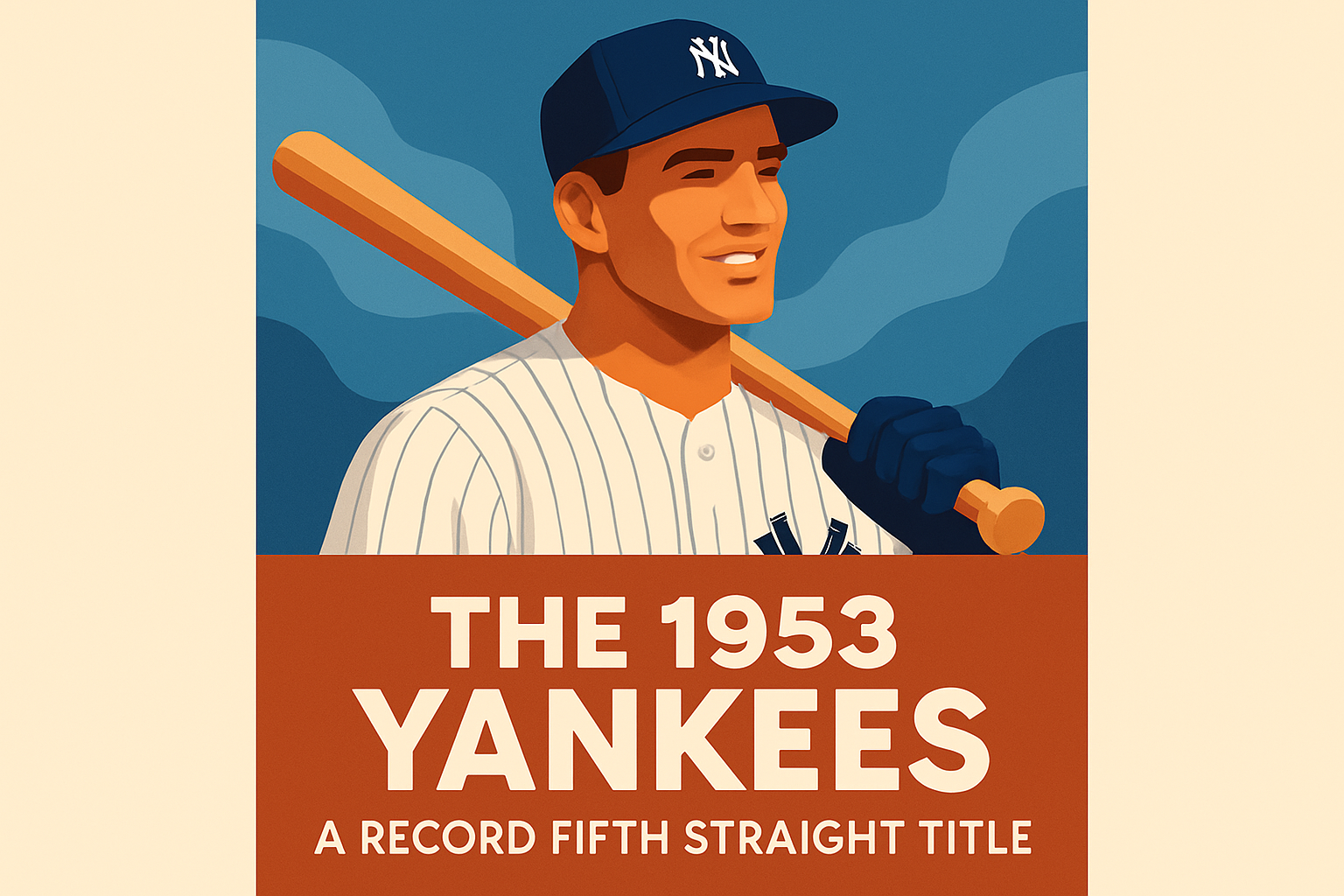
The year 1953 stands as a monumental chapter in the annals of baseball history, particularly for the New York Yankees, a franchise synonymous with excellence and victory. This illustrious year marked the culmination of an unprecedented era for the Yankees, as they clinched their fifth consecutive World Series title—a feat that has become a benchmark for success within Major League Baseball (MLB). This article delves into the significance of the Yankees’ 1953 triumph, exploring the factors that made this achievement not only possible but legendary.
To understand the magnitude of the Yankees’ accomplishment in 1953, one must first comprehend the context in which baseball operated at the time. The era was characterized by a fierce competitive spirit, with teams striving for glory in a sport that was increasingly capturing the American public’s imagination. Key terms such as “World Series” and “dynasty” are crucial here. The World Series represents the pinnacle of North American professional baseball, where the champions of the American League (AL) and the National League (NL) face off. A “dynasty” in this context refers to a team’s sustained dominance over multiple seasons—something the Yankees exemplified in the early 1950s.
This period in baseball history matters profoundly because it set a standard for excellence and ambition, impacting the culture of the sport and the expectations of teams and fans alike. Moreover, the Yankees’ dominance during this era contributed to the cultural zeitgeist, becoming a symbol of American tenacity and success. By examining the 1953 Yankees and their historic fifth straight title, we gain valuable insights into what made this team remarkable and the lessons they offer for both modern sports teams and enthusiasts.
The Path to 1953: Building a Dynasty
The Yankees’ success in 1953 did not occur in a vacuum; it was the result of strategic planning and talent cultivation that began years earlier. The groundwork for this dynasty was laid by visionary management and the acquisition of exceptional players who would become household names. Figures such as manager Casey Stengel and general manager George Weiss were instrumental in shaping a team that could not only compete but dominate. Stengel, known for his strategic acumen and innovative managerial approach, played a pivotal role in guiding the Yankees through their historic run.
The Yankees’ roster was studded with talent that left an indelible mark on the game. Players such as Mickey Mantle, Yogi Berra, and Whitey Ford became synonymous with the Yankees’ brand of success. Each contributed uniquely to the team’s prowess; for example, Mickey Mantle, with his prodigious power-hitting and speed, was a game-changer on the field. Yogi Berra, widely regarded for his defensive skills and clutch hitting, brought invaluable experience and leadership. Whitey Ford, with his pitching mastery, provided the Yankees with consistent excellence on the mound. Together, these players formed the nucleus of a team that would etch its name in the annals of baseball history.
In preparing for their 1953 campaign, the Yankees focused on refining their strengths and addressing any weaknesses identified in previous seasons. This iterative process of improvement and adaptation was crucial to maintaining their competitive edge. By fostering a culture of excellence and a relentless pursuit of victory, the Yankees set the stage for their record fifth straight title.
The 1953 Season: A Triumph of Skill and Strategy
The 1953 Major League Baseball season was a thrilling showcase of the Yankees’ unparalleled skill and strategic mastery. Throughout the regular season, the Yankees demonstrated a dominance that would set the tone for their World Series performance. The team showcased an impressive balance of offensive firepower and defensive solidity, finishing with a remarkable 99-52 record. Their prowess was not merely a reflection of individual brilliance but also the result of cohesive teamwork and a deep understanding of the game’s nuances.
During this triumphant season, the Yankees faced formidable competition from teams such as the Cleveland Indians and the Chicago White Sox. However, they consistently rose to the occasion, leveraging key performances from their star players. Mickey Mantle’s prowess at bat, Yogi Berra’s game-management skills, and Whitey Ford’s consistent pitching contributed to decisive victories at crucial junctures. The team’s ability to perform under pressure was a testament to their preparation and mental fortitude.
One of the season’s defining moments came during the final stages when the Yankees faced the Brooklyn Dodgers in the World Series. This matchup was a rematch of the previous year’s Series and underscored the intensity of their rivalry. The Yankees won the Series in six games, with Billy Martin’s game-winning catch in Game 6 — famously clinching the title — serving as an iconic moment that epitomized their tenacity and clutch performance. This victory not only underscored the Yankees’ superiority but also solidified their place as history-makers, being the first team to win five consecutive World Series championships.
Impact of the 1953 Championship: Beyond the Field
The significance of the Yankees’ 1953 championship extends beyond the baseball diamond, as it greatly impacted the cultural and social landscape of the time. During the early 1950s, baseball was America’s national pastime, a sport that reflected the aspirations and values of the nation. The Yankees’ dominance during this era resonated with the public, symbolizing excellence, determination, and the pursuit of greatness. This championship run occurred amid a backdrop of postwar prosperity in America, an era of optimism and growth.
The 1953 Yankees became integral to the cultural fabric of the time, capturing the imagination of fans across the country. The team’s success contributed to the Yankees’ brand, turning them into the most storied franchise in baseball. This era of dominance fostered a generation of loyal fans, creating a legacy that has endured through the decades. The Yankees of 1953 inspired countless young athletes to pursue their dreams with fervor, emphasizing the importance of hard work, dedication, and unwavering commitment.
Moreover, the Yankees’ accomplishment in 1953 had implications for the future of baseball. It raised the bar for what it meant to be a successful team, challenging other franchises to strive for sustained excellence. This pursuit of greatness became a driving force in the evolution of the sport, as teams adopted new strategies and approaches to compete at the highest level. The legacy of the 1953 Yankees served as a benchmark for success, influencing the trajectories of future baseball dynasties.
Key Statistics and Figures of the 1953 Yankees
The performance of the 1953 Yankees can best be appreciated through the lens of statistics, which reveal the depth of their dominance. The following table provides a glance at some of the key figures that defined their outstanding season:
| Statistic | Value |
|---|---|
| Regular Season Record | 99-52 |
| World Series Opponent | Brooklyn Dodgers |
| World Series Result | Yankees won 4-2 |
| Home Runs – Mickey Mantle | 21 |
| Batting Average – Yogi Berra | .296 |
| Wins – Whitey Ford | 18 |
These statistics underscore the Yankees’ exceptional talent and teamwork during the 1953 season. A regular season record of 99-52 highlights their consistency and dominance, which extended into the World Series. Mickey Mantle’s home run power, Yogi Berra’s batting proficiency, and Whitey Ford’s pitching prowess exemplified the individual contributions that coalesced into a formidable championship team. Furthermore, their victory over the Brooklyn Dodgers—a fierce rival—demonstrated their resilience and ability to perform under high-stakes conditions.
Lessons from the 1953 Yankees for Modern Sports Teams
The legacy of the 1953 Yankees extends an invaluable lesson to modern sports teams seeking sustained success. A key takeaway is the importance of building a strong foundation through strategic management and talent acquisition. The era of Casey Stengel and George Weiss exemplified the significance of top-tier leadership and vision in crafting a championship-winning team. In contemporary sports, organizational strategy, effective scouting, and player development remain crucial aspects of team success.
Moreover, the 1953 Yankees underscore the value of teamwork and chemistry. While individual talent played a critical role, the Yankees’ championship run was very much a collective effort. In a modern context, fostering a cohesive team culture where players are motivated to support one another and work towards a common goal can be the difference between victory and defeat.
Additionally, the Yankees’ example illustrates the power of cultivation and adaptation. By constantly refining skills and strategies, teams can maintain their competitive edge over time. The Yankees’ emphasis on improvement and resilience in 1953 shows that success is an iterative process, one that requires continuous learning and growth.
Reflecting on the 1953 Yankees Legacy
The triumph of the 1953 Yankees holds enduring significance in the world of sports, serving as a testament to the power of commitment, teamwork, and excellence. Their record fifth consecutive World Series title is a landmark achievement that still resonates today, encapsulating what it means to pursue greatness both individually and collectively. Through understanding their story, we glean insights that transcend time, offering guidance and inspiration to future generations of athletes and sports enthusiasts.
In reflecting on the legacy of the 1953 Yankees, we are reminded of the transformative power of sport, how excellence on the field can transcend into the wider cultural narrative. The Yankees’ triumph is a celebration of what is possible when talent meets dedication, leadership fosters potential, and teamwork overcomes adversity. As we move forward, let their story propel us to new heights in our endeavors, both on and off the field. For those captivated by this legacy, the call to action is clear: embrace excellence, pursue your own best, and contribute your part to the ongoing tapestry of sports history.
To immerse yourself further into this history, consider delving into biographies of key figures like Mickey Mantle and Casey Stengel, or exploring documentaries that bring the era to life. Emulate their work ethic and commitment to excellence, applying these principles to your own pursuits.
In conclusion, the 1953 Yankees represent the epitome of sporting success, an enduring legacy that continues to inspire and captivate. Their story remains an invaluable beacon for those striving for greatness, demonstrating that with the right combination of talent, strategy, and tenacity, the extraordinary is indeed achievable.
Frequently Asked Questions
1. What made the 1953 Yankees so special in baseball history?
The 1953 New York Yankees were not just any team; they represented the pinnacle of baseball dominance. Their 1953 victory marked their fifth consecutive World Series title, a record that has set the standard for success in Major League Baseball (MLB). This achievement demonstrated the Yankees’ exceptional skill, resilience, and ability to maintain excellence over an extended period. The 1953 Yankees embodied teamwork and strategy, with their lineup boasting legendary players like Mickey Mantle, Yogi Berra, and Whitey Ford. This team was known for its strong pitching, explosive batting, and strategic management by Casey Stengel. Their success wasn’t just about winning; it was about setting a legacy of consistency and excellence. Not only did this era elevate the Yankees’ status as a powerhouse in the MLB, but it also set expectations for future dynasties. Their streak from 1949 to 1953 remains a golden era that any aspiring team or sports enthusiast looks up to, emphasizing the significance of discipline, teamwork, and passion.
2. How did the Yankees clinch their fifth straight title in 1953?
The journey to the Yankees’ fifth consecutive World Series title in 1953 was a combination of skilled play, strategic planning, and a bit of sports magic. Their opponent that year was the Brooklyn Dodgers, a team against whom they had already built a fierce rivalry. The Yankees managed to clinch the title by winning the Series four games to two. The opening games were a display of power with Mickey Mantle and Yogi Berra leading offensively. On the mound, Whitey Ford’s pitching was pivotal, setting down the Dodgers with precision. Strategic decisions by manager Casey Stengel, like his choice of players and their positions for each game, played a critical role. The Yankees showed remarkable resilience, coming back from tough positions within games to clinch critical victories. Their success wasn’t just down to star players but was also about how seamlessly the entire team worked together under pressure. This collective effort, where everyone played their part to perfection, ensured they stood atop the baseball world yet again.
3. Who were the standout players for the Yankees during this period?
The Yankees’ roster in 1953 was nothing short of legendary, packed with some of the greatest names in baseball history. Mickey Mantle was undoubtedly one of the standout stars; his prowess both at bat and in the outfield made him a formidable opponent. Known for his switch-hitting ability and incredible speed, he was a key driver of the Yankees’ success. Catcher Yogi Berra provided both defensive stability and offensive firepower, becoming an indispensable member of the team. Pitcher Whitey Ford was another crucial player, known for his exceptional control and composure on the mound. Phil Rizzuto, often noted for his defensive skills at shortstop, contributed significantly with his leadership and experience. Then there was Billy Martin, whose fiery play and key performances—especially in clutch situations—endeared him to fans and teammates alike. These players, among others, formed a cohesive unit that not only played with skill but also represented the grit and determination emblematic of the Yankees’ ethos.
4. What impact did the 1953 Yankees have on the future of the team and MLB?
The 1953 Yankees not only captured a record fifth consecutive World Series title but also solidified the Yankees’ reputation as a dynasty, setting a benchmark that few teams have reached. This era of dominance had a lasting impact on the franchise, embedding a culture of winning that has continued over the decades. For the MLB, the Yankees’ success helped to elevate the popularity of the sport, as fans were drawn to see a powerhouse team in action. Their dominance during the late ’40s and early ’50s showed everyone what it took to be at the top and spurred other teams to strive for that level of excellence, fostering competitive balance and encouraging clubs to develop their talent pool intensively. The 1953 Yankees’ influence extended to the organization’s future, where they became a model for building and sustaining successful teams. This era gave rise to future Yankees legends and ensured that the team remained a permanent fixture in baseball, and sports, lore.
5. How do baseball analysts today view the 1953 Yankees’ achievement?
In the realm of sports analysis, the 1953 Yankees’ achievement is often held up as a prime example of vintage baseball success. Analysts today view this accomplishment as a benchmark of greatness, considering the complexities and challenges of maintaining such consistent excellence over multiple seasons in a high-performance environment. They point out the strategic brilliance of Casey Stengel, whose management style and ability to blend and rotate player roles seamlessly was ahead of its time. Moreover, the combination of star-caliber talent and role players exemplifies the importance of team synergy rather than relying solely on individual ability. Modern analysts appreciate the 1953 Yankees for their well-rounded capability — excelling in hitting, pitching, and fielding. Baseball historians often refer back to the strategic playbook of the 1953 Yankees when discussing enduring success, highlighting their balanced approach as a core reason for their historical impact. This legacy remains a crucial reference point when discussing what it takes to create and maintain a successful sports franchise through eras of change and challenge.