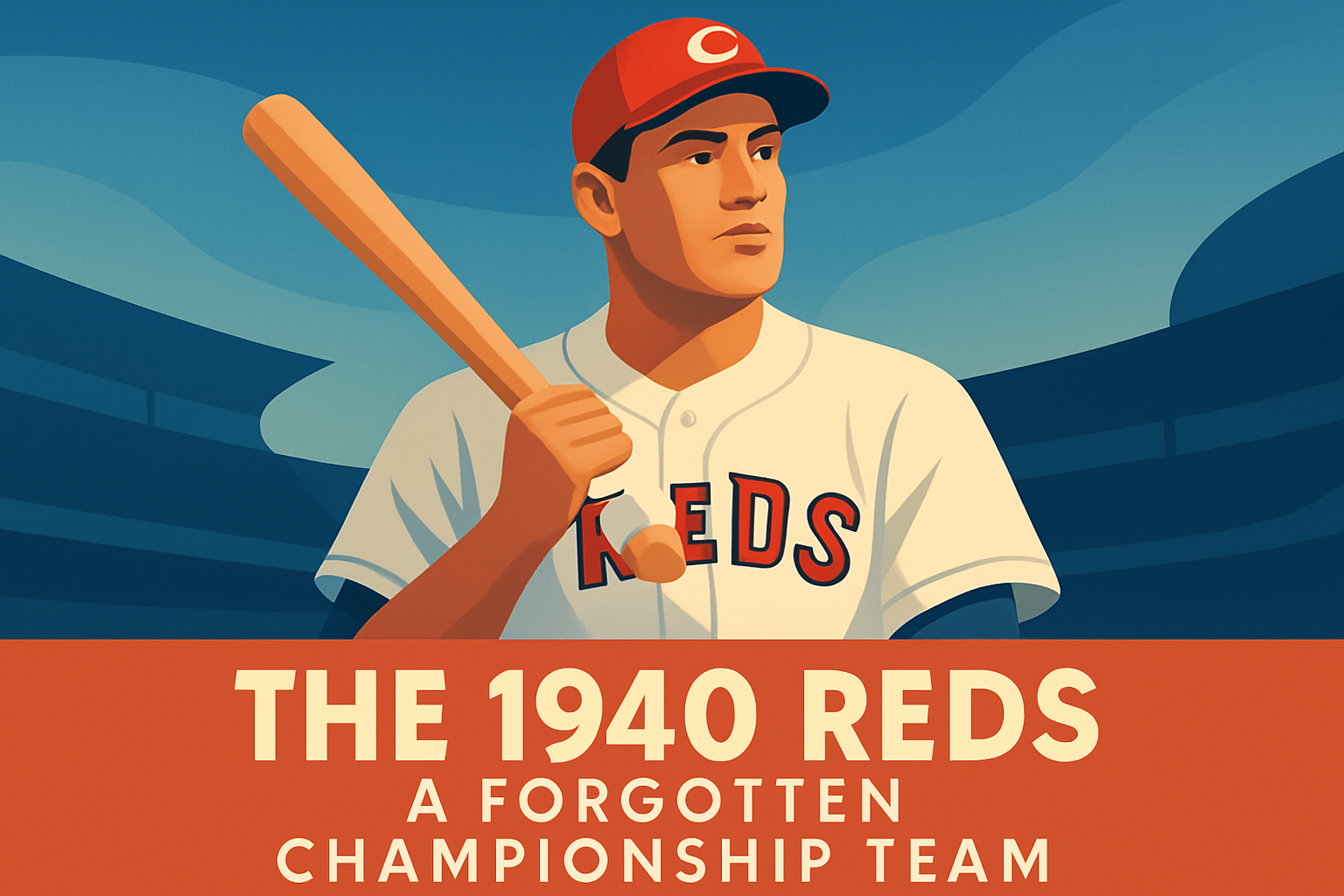
The Cincinnati Reds, often overshadowed by baseball’s more glamorous franchises, had their moment of glory in 1940. That year, they clinched the World Series, marking a high point in the team’s history. Yet, over time, this splendid achievement seems to have been lost in the shadows of baseball’s grand narrative. For many fans, the annals of Major League Baseball (MLB) hold little mention of this team. More prominent teams with recurring successes often eclipse the Reds’ one-time glory. Nevertheless, understanding the significance of this championship victory is vital. It offers invaluable insights into an era when baseball itself was going through transformative changes, and provides lessons about resilience, team dynamics, and the spirit of the game during critical periods in American history.
During the 1940 season, the Reds exhibited unwavering determination, strategic brilliance, and cohesive team dynamics that propelled them to the top. This achievement shines as a beacon of excellence and persistence, reflecting a time when the ethos of the game was fundamentally different from modern-day baseball. This article aims to shed light on this often-overlooked championship by delving into the context, the players, and the unforgettable moments that defined the 1940 Cincinnati Reds. Highlighting this team serves not only to honor their legacy but also to remind baseball enthusiasts and historians alike, of a glorious chapter in the collective memory of America’s pastime.
The Road to the World Series
The Cincinnati Reds’ journey to the 1940 World Series was one filled with strategic planning and remarkable gameplay. Under the guidance of manager Bill McKechnie, known for his methodical approach and defensive strategies, the Reds crafted a winning formula. The team’s regular season performance saw them dominating the National League with a record of 100 wins and 53 losses. They finished 12 games ahead of the second-place Brooklyn Dodgers, demonstrating their superiority that year.
Key players like Bucky Walters and Paul Derringer were instrumental in securing victories with their pitching prowess. Walters, particularly, stood out as he led the league in wins and earned run average (ERA). His efforts were pivotal in maintaining an edge over rival teams. On the offensive front, Frank McCormick, the league’s Most Valuable Player (MVP) that year, provided the necessary firepower with his consistent batting. Such synergy between different facets of the team was a hallmark of their success.
The 1940 Reds faced the Detroit Tigers in the World Series, a formidable opponent with its own strengths. It was a tightly contested series, stretching to seven games. The Reds demonstrated resilience and strategic acumen throughout, showcasing their ability to adapt and overcome. This journey was not just about clinching a title, but about reaffirming their place in the annals of baseball history through grit and determination.
The Pivotal Players
Understanding the impact of individual players on the Reds’ success in 1940 requires looking at their contributions in both statistical and strategic contexts. Bucky Walters, the star pitcher, was a former third baseman converted into a pitcher, and his versatility was unmatched. Walters’ transition into one of the most formidable pitchers exemplifies adaptability, a lesson in maximizing talent and potential within a team.
Frank McCormick stood as the central pillar of the Reds’ offensive lineup. His consistent performance with the bat and leadership on the field earned him the National League MVP award. McCormick’s role extended beyond mere statistics; he was a morale booster and a strategic thinker, ensuring that the Reds remained cohesive as a unit.
Another key player was Ernie Lombardi, the Reds’ catcher, known for his exceptional skills behind the plate and at bat. His presence not only fortified the team defensively but also added a layer of strategic depth given his experience and game intelligence.
| Player | Position | Achievements |
|---|---|---|
| Bucky Walters | Pitcher | Led league in wins and ERA; pivotal in playoffs |
| Frank McCormick | First Base | National League MVP; batting force |
| Ernie Lombardi | Catcher | All-Star; strategic influence |
By examining the contributions of these pivotal players, one appreciates the confluence of talent, strategy, and leadership that defined the 1940 Reds. Each player brought their unique strengths to the table, creating a blend of capabilities that was difficult for opponents to counter.
The Impact of Management
Bill McKechnie’s role in the Reds’ success cannot be overstated. As manager, McKechnie had a significant impact on the team’s strategic orientation and morale. Known for his calm demeanor and strategic mind, McKechnie emphasized the importance of defense and devised game plans that effectively neutralized opposing teams’ strengths.
McKechnie’s philosophy was predicated on leveraging the individual strengths of his players while fostering a sense of unity and purpose within the team. He ensured that the players were well-prepared for each game, prioritizing preparation and adaptation as critical components of his managerial approach.
The Reds’ World Series triumph in 1940 was a testament to McKechnie’s managerial acumen. His use of pitchers Walters and Derringer in crucial games demonstrated a deep understanding of how to maximize his team’s chances. His leadership was instrumental in transforming a talented team into a championship-winning outfit, highlighting the crucial role of effective and insightful management in sports.
The World Series: A Closer Look
The 1940 World Series was not only a test of skill and strategy but also of nerves and resilience. The Reds faced the Detroit Tigers in a hard-fought battle that extended to the maximum seven games. Each game told a different story, reflecting the unpredictability and excitement of baseball.
Particularly notable was Game 7, where Paul Derringer displayed unmatched prowess on the mound, pitching a complete game and allowing only five hits. This standout performance was a decisive factor in clinching the series for the Reds. The pressure of the final was immense, yet the Reds executed their plan with precision and determination.
The series also underscored the economic and social backdrop of the time. As the U.S. was emerging from the Great Depression, baseball games were a source of entertainment and unity. The 1940 victory for the Reds was not just a sports triumph but a symbol of hope and achievement during challenging times, underscoring sport’s role in society as a unifying force.
Legacy and Lessons from the 1940 Reds
The legacy of the 1940 Cincinnati Reds remains a critical chapter in baseball history. Despite its relative obscurity today, the Reds’ victory was about more than just a marker of success; it stood for the embodiment of teamwork, strategic excellence, and overcoming adversity.
One of the crucial lessons from their triumph is the importance of resilience in the face of adversity. The Reds’ ability to bounce back from losses during the series and their unwavering commitment to their collective goals offers a profound lesson in perseverance.
Furthermore, the Reds exemplified the notion that effective management and strategic planning are as vital as talent on the field. The synergy between management and players, as demonstrated by McKechnie’s leadership, can serve as a powerful lesson for modern sports teams aiming for success.
Conclusion: Reflecting on A Forgotten Achievement
The 1940 Cincinnati Reds stand as a testament to a unique era in baseball history, one characterized by its emphasis on teamwork, strategic acuity, and managerial excellence. Reflecting on the Reds’ championship serves as a reminder that the spirit of baseball thrives not just in repeated victories or household names, but in the lesser-sung exploits of teams that embody the genuine ethos of the game.
An understanding of the 1940 Reds fosters a deeper appreciation not just of a team that once conquered the pinnacle of baseball, but also of the sport’s profound impact on culture and society. As fans and historians revisit the pages of this inspiring chapter, they can draw lessons not only about baseball but about resilience, unity, and the enduring spirit of competition.
Baseball enthusiasts and sports historians alike are encouraged to delve into this fascinating story, celebrating a team whose championship legacy offers rich insights into the history of the sport. The call to action is simple: uncover these hidden stories, appreciate their lessons, and keep the memory of these remarkable teams alive. In doing so, we not only honor their achievements but also enrich our understanding of America’s favorite pastime.
Frequently Asked Questions
1. Why is the 1940 Cincinnati Reds team often forgotten in baseball history?
Despite their impressive victory in the 1940 World Series, the Cincinnati Reds often fade into obscurity for several reasons. Firstly, they are frequently overshadowed by baseball’s storied franchises, teams like the New York Yankees and the St. Louis Cardinals, which have accumulated multiple championships and have been studded with legendary players throughout their history. Unlike these teams, the Reds’ period of dominance was brief, making it easy for their achievements to be eclipsed. Additionally, the media’s attention and baseball’s historical narratives tend to prioritize teams with longer streaks of success, leaving the Reds’ one-time triumphs less noted in the grand scheme of MLB lore.
2. What was significant about the Reds’ win in the 1940 World Series?
The Reds’ victory in the 1940 World Series was significant for a number of reasons. It marked their second World Series title, their first being in 1919. The team displayed exceptional resilience and skill, defeating the Detroit Tigers in a thrilling seven-game series. This victory was not just about a tactical win on the field, but it was also emblematic of team spirit and determination. They became a symbol of hope and success for their city, pulling together a community around the common love for their home team during a period dominated by much socio-economic upheaval. This triumph was a moment of pride and unity for the Cincinnati Reds’ fans, an indelible imprint on local history.
3. Who were the standout players on the 1940 Reds roster?
The 1940 Cincinnati Reds roster boasted several standout players who were integral to their success. Most notably, Paul Derringer and Bucky Walters stood out on the pitching mound. Walters, in particular, was heralded as one of the best pitchers of his time and had clinched the National League MVP award in 1939, before going on to help secure the World Series for the Reds in 1940. On the offensive side, players like Frank McCormick, Ernie Lombardi, and Billy Werber provided the necessary firepower that propelled the Reds to victory. Lombardi, a catcher known for his bat skills and leadership, had won the MVP award in 1938 and was considered the backbone of the team. Collectively, these players formed a cohesive unit that made history for the Reds.
4. How did the Reds’ underdog status affect their performance in 1940?
The Reds’ perceived underdog status in 1940 arguably had a positive effect on their performance. Often flying under the radar compared to more high-profile teams, they were able to cultivate a strong internal team dynamic and resilient mindset. Without the looming pressure and expectation that comes with being a frontrunner, the Reds committed themselves fully into every game, proving unswayed by external doubts regarding their championship potential. This mindset, coupled with exceptional individual talents and strategic team management, allowed them to overcome expectations and secure their place in World Series history. The success that followed contributed to a cherished underdog story that continues to inspire fans who admire grit and perseverance.
5. What impact did the Reds’ victory have on their future and the community of Cincinnati?
The Reds’ victory in the 1940 World Series had a significant and lasting impact both on the team and the Cincinnati community. For the Reds as a franchise, it solidified their place within Major League Baseball, establishing a foundation upon which future successes could be built. Even though the team went through ups and downs in subsequent years, the victory provided inspiration and an enduring sense of accomplishment. For the Cincinnati community, the win served as a beacon of excitement and pride, uniting the citizens and providing a sense of hope during a time when the world was on the brink of chaos due to the onset of World War II. Fans rallied around the triumph, taking with it memories that have been passed down through generations—a testament to the power of sports as a unifier and source of joy.