
In the annals of Major League Baseball, certain ballparks resonate deeply within the collective memory of fans and players alike. Riverfront Stadium in Cincinnati is one such iconic venue. Constructed during an era when multipurpose facilities were in vogue, Riverfront served as the home base for the Cincinnati Reds from 1970 until its closure in 2002. This stadium witnessed some of the most memorable moments in baseball history, especially as the stage for the Cincinnati Reds’ powerhouse team, known affectionately as the Big Red Machine. Nestled along the Ohio River, Riverfront Stadium was more than just a ballpark; it was a testament to the city’s passion for baseball and a symbol of its revitalization efforts in the late 20th century.
The origins of Riverfront Stadium date back to the mid-1960s, a period marked by the Reds’ need for a modern facility to replace the aging Crosley Field. Spurred by a wave of urban development and a desire to keep up with the growing trend of multipurpose sports complexes, Cincinnati leaders sought to create a venue that would breathe new life into the city’s riverfront area. The result was a state-of-the-art stadium that would not only host major baseball games but also serve as a facility for the NFL’s Cincinnati Bengals and various other events.
The groundbreaking ceremony took place on February 1, 1968, signaling the start of an ambitious project that would come to fruition in a little over two years. By the time it opened its doors on June 30, 1970, Riverfront Stadium was a shining example of modern architecture and engineering. With a seating capacity of over 52,000, the facility was equipped with features unheard of at the time, such as Astroturf, a cutting-edge artificial playing surface that allowed for year-round use.
The Architecture and Design
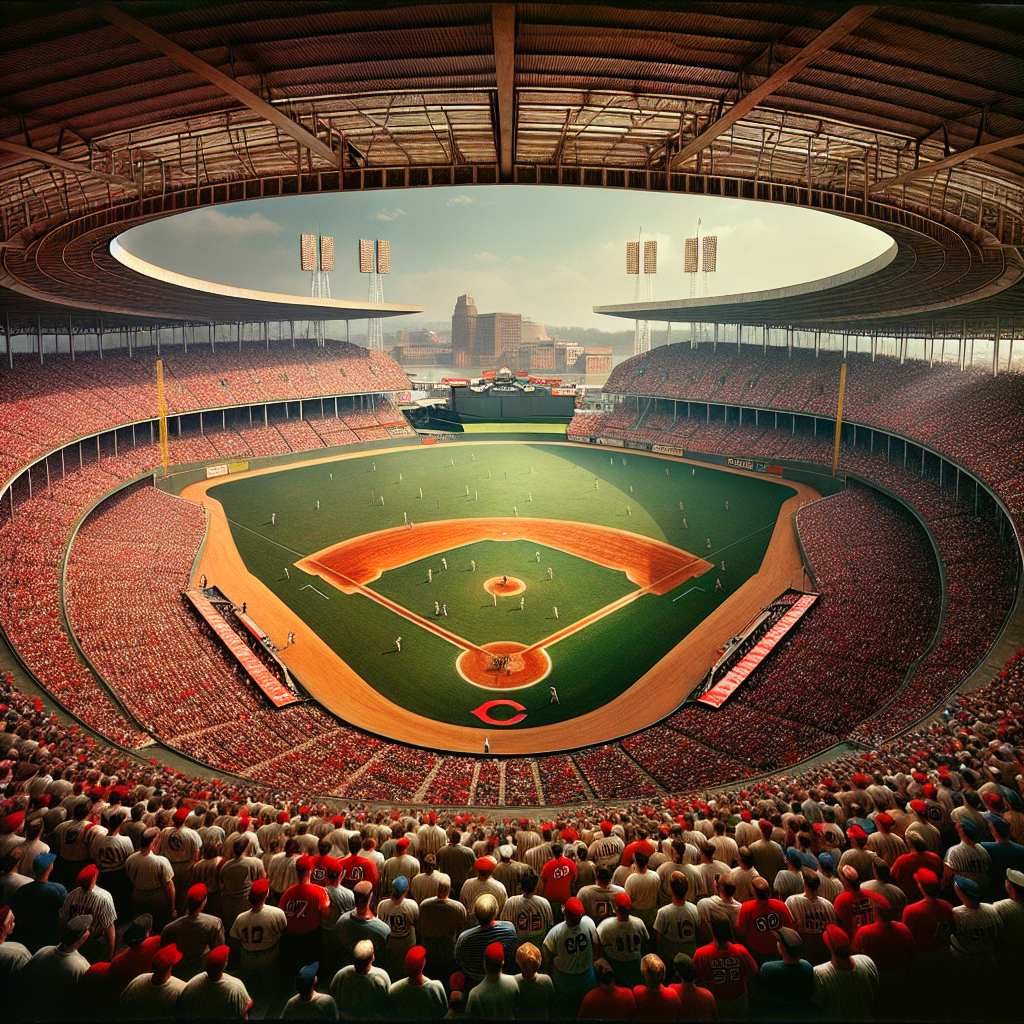
Riverfront Stadium, also known initially as Cinergy Field, boasted an architectural design meant to exemplify functionality and versatility. The circular, coliseum-like structure was typical of multipurpose stadiums built during this era. Its design aimed to accommodate both baseball and football, which was both its strength and a source of criticism over time. While the multipurpose nature allowed for a diverse range of uses, it also meant that the intimacy and idiosyncrasies unique to baseball-specific parks were conspicuously absent.
One of the distinctive features of Riverfront Stadium was its synthetic surface. Astroturf became synonymous with the stadium, reflecting a broader movement in sports during the 1970s aimed at innovation and modernization. However, the use of artificial turf also drew criticism due to its impact on player performance and injuries, as the hard surface was less forgiving compared to natural grass.
The stadium’s design included six tiers of seating, an innovative approach aimed at maximizing capacity while ensuring that spectators had decent views from any vantage point. Despite its large size, which could potentially make seats feel distant, the symmetrical design and strategic placement of seating areas allowed fans to stay connected to the action. The inclusion of luxury boxes and club seating also marked a new era in how fans experienced the game, offering varying levels of comfort and exclusivity.
The Big Red Machine Era
Riverfront Stadium’s most glorious years were undoubtedly in the 1970s, a period during which the Cincinnati Reds earned the nickname the Big Red Machine. Managed by the legendary Sparky Anderson, the team was a formidable force in Major League Baseball, winning four National League pennants and two World Series titles within a seven-year span (1970 – 1976). The dominance of the Reds during this period transformed Riverfront Stadium from a mere architectural marvel into a hallowed ground for baseball excellence.
Names like Johnny Bench, Joe Morgan, Pete Rose, and Tony Pérez became legendary, their feats etched into the history books as they ruled the diamond with an unmatched blend of skill, power, and synergy. These players, along with their teammates, created unforgettable moments that unfolded in front of ecstatic crowds at Riverfront, making the stadium synonymous with elite baseball and scintillating play.
Perhaps one of the most iconic moments was the 1975 World Series, often touted as one of the greatest in baseball history. Game 6, in particular, is engraved in fans’ memories for Carlton Fisk’s legendary home run that waved fair. Although the Reds lost that game, they came back to win Game 7, capturing the World Series title and further cementing Riverfront Stadium as a crucible of champions. This era reinforced Cincinnati’s place in baseball history and created a legacy that fans reminisce about to this day.
Memorable Moments and Events
Throughout its existence, Riverfront Stadium was the backdrop for numerous historic events and milestones in baseball, as well as other sports and entertainment spectacles. Beyond the glory of the Big Red Machine, Riverfront hosted the 1970 MLB All-Star Game, which became notably famous for Pete Rose’s legendary collision with catcher Ray Fosse to score the winning run. This moment epitomized the aggressive playing style that Rose and his teammates were known for.
In addition to baseball, Riverfront Stadium also hosted countless memorable concerts and events, including performances by musical legends such as The Rolling Stones and Bruce Springsteen. These events turned the stadium into a multifunctional venue that was a focal point of Cincinnati’s cultural life.
Over the years, Riverfront Stadium bore witness to many other notable milestones, including Tom Browning’s perfect game on September 16, 1988, which remains one of the rarest achievements in baseball history. These moments are enshrined in the memories of the fans who attended them, making Riverfront Stadium an enduring symbol of excellence and cultural significance.
The Stadium’s Decline and Legacy
Despite its storied history, by the 1990s, Riverfront Stadium began to show signs of aging. The multipurpose design that was revolutionary in the 1970s had lost its luster. Modern ballparks focused on enhancing the fan experience with intimate settings, better sightlines, and more fan-friendly amenities. The concrete and steel structure of Riverfront, once a symbol of modernity, began to feel dated and impersonal.
The call for a new stadium grew louder, culminating in the approval and construction of Great American Ball Park, which opened in 2003. Riverfront Stadium saw its final baseball game on September 22, 2002, when the Reds played the Philadelphia Phillies. The end of an era was bittersweet, marked by a sense of nostalgia for the countless memories created over the decades.
Riverfront Stadium was eventually demolished in December 2002, a reminder that even the most iconic structures have lifespans. However, its legacy endures in the hearts of fans and the tapestry of baseball history. The memories of the Big Red Machine, the All-Star Games, the perfect games, and the musical performances ensure that Riverfront Stadium will never be forgotten.
Conclusion
Riverfront Stadium’s story is one of triumph, innovation, and the unyielding spirit of a city and its fans. It was a place where legends were born, records were set, and the game of baseball evolved. While it may no longer stand as a physical structure, its impact on Cincinnati and the broader baseball world remains indelible.
The stadium not only hosted some of the most iconic baseball moments but also played a crucial role in reviving Cincinnati’s downtown area, helping to position the city as a hub for sports and entertainment. It was more than a ballpark; it was a community gathering place, a source of pride, and a symbol of the city’s love for baseball and entertainment.
As fans of the game, we continue to celebrate the rich heritage of places like Riverfront Stadium, letting their stories inspire future generations of baseball players and enthusiasts. While new stadiums may come and go, the legends of Riverfront will remain etched in history, reminding us all of a golden era in Cincinnati baseball. The Big Red Machine and their home field have been encapsulated in the annals of sports history, and the memories they created will forever echo through the hearts of baseball fans.
Its legacy, underscored by unforgettable moments and legendary players, underscores the timeless essence of baseball and its integral role in American culture. Riverfront Stadium was not just a venue; it was a chapter of American sports history, brimming with triumphs, heartaches, and the undying spirit of competition.