
The Baltimore Orioles’ victory in the 1983 World Series remains one of the most iconic moments in baseball history. This crown marked the culmination of an era, celebrating the last triumph of a baseball dynasty that rose to prominence in the late 1960s. The team, led by a blend of seasoned veterans and budding superstars, showcased a resilient and competitive spirit throughout the season. Their journey to the championship was laden with unforgettable moments and exceptional performances that have rendered them legends in the eyes of baseball fans. For avid followers of baseball, the Orioles’ 1983 season serves as a quintessential example of teamwork, strategy, and the sheer thrill that comes with America’s pastime.
The 1983 Orioles were not just about skill but also about heart. Managed by the indefatigable Joe Altobelli, the team had a unique blend of youthful exuberance and experienced wisdom. The pitching staff, led by a remarkable rotation, consistently delivered under pressure, while the offense demonstrated adaptability and power. This combination of pitching prowess and offensive versatility allowed the Orioles to hold their ground against some of the fiercest competition in the league.
As the season progressed, each game seemed to build upon the last, setting the stage for a climactic finish in October. From the regular season right through to the playoffs, the Orioles demonstrated why they were a force to be reckoned with. Their journey to the top wasn’t just about the statistics; it was also about the camaraderie, strategic ingenuity, and the will to be champions. Let’s dive into the 1983 season of the Baltimore Orioles, exploring the key players, memorable games, and moments that defined their remarkable championship run.
A Solid Foundation: Key Players of 1983
The backbone of the 1983 Baltimore Orioles was undoubtedly its players – a chorus of talent harmonizing under the astute direction of Joe Altobelli. Leading the charge on the mound was a formidable starting rotation that included the likes of Scott McGregor, Mike Boddicker, Storm Davis, and Jim Palmer. Each pitcher brought something unique to the table, from McGregor’s control and craftiness to Boddicker’s array of pitches that baffled hitters all season long.
The bullpen was equally impressive, anchored by closer Tippy Martinez, who was calm under pressure and capable of shutting down the opposition in crucial moments. The team’s defensive prowess was highlighted by shortstop Cal Ripken Jr., who not only provided stellar defense but also contributed significantly with his bat. Ripken’s breakout year earned him the American League MVP award, solidifying his status as a cornerstone of the franchise.
Offensively, the Orioles boasted a lineup that struck a balance between power and consistency. Eddie Murray, the switch-hitting first baseman, was a dominant force, combining power with a keen eye at the plate. His hitting was complemented by contributions from Gary Roenicke, John Lowenstein, and Ken Singleton, who formed the core of a lineup that could manufacture runs in various ways.
The unsung heroes of the 1983 season also played crucial roles. Players like Rich Dauer and Rick Dempsey, while not always grabbing the headlines, provided the depth and reliability that championship teams require. Together, this collective of talent, experience, and determination came together to form a team that was greater than the sum of its parts, ready to face the challenges of a lengthy and grueling baseball season.
The Regular Season: Grinding to the Top
As the 1983 season unfolded, the Baltimore Orioles quickly established themselves as contenders. From early April, the team exhibited a level of cohesion and determination that was a testament to their preparation and hunger for success. The American League East was highly competitive, but the Orioles found ways to consistently stay atop the standings. Each series brought unique challenges, yet the Orioles managed to clinch key victories, slowly but surely paving their way to a postseason berth.
One of the defining traits of the Orioles’ regular season was their ability to win close games. Their pitching staff often took center stage, with complete games and clutch performances becoming routine. Offensive consistency was another hallmark, with contributing players up and down the lineup ensuring there were no significant slumps that could derail their momentum.
A series of thrilling encounters, such as walk-off wins and come-from-behind victories, underscored the character and resilience of the squad. These games not only propelled the Orioles towards the top of the division but also captivated fans and built an aura of inevitability about the team’s success. The dugout camaraderie was palpable, with veterans guiding the younger players through the pressures and expectations that come with chasing a title.
By season’s end, the Baltimore Orioles had accumulated an impressive record, marking their dominance in the league. This success was not just a result of individual performances but rather a confluence of strategic managerial decisions, player development, and the well-rounded nature of the team’s roster. As they headed into the postseason, the Orioles carried the weight of their stellar regular season performance, eagerly anticipating the opportunity to prove themselves on the biggest stage.
Playoff Glory: The Road to the World Series
The postseason is where legends are made, and for the 1983 Baltimore Orioles, it was no different. Their journey began with the American League Championship Series (ALCS) against the Chicago White Sox. The Orioles displayed tactical brilliance and an unwavering focus, winning the series decisively. Notably, Scott McGregor’s pitching performance in Game 4 of the ALCS was instrumental, as he threw a complete game shutout, propelling the Orioles into the World Series.
With the ALCS triumph behind them, the Orioles set their sights on the ultimate prize – the World Series. Their opponents: the Philadelphia Phillies, who presented a formidable challenge with a roster brimming with talent. However, the Orioles were undaunted, ready to showcase their prowess on baseball’s grandest stage.
Game 1 set the tone for what was to be a captivating series. Mike Boddicker played a pivotal role, delivering a masterful pitching performance that stymied the Phillies’ bats. Over the next few games, the Orioles continued to exhibit a blend of potent offense and stellar defense. Highlights included contributions from Cal Ripken Jr. and Eddie Murray, whose timely hitting propelled the team in crucial moments.
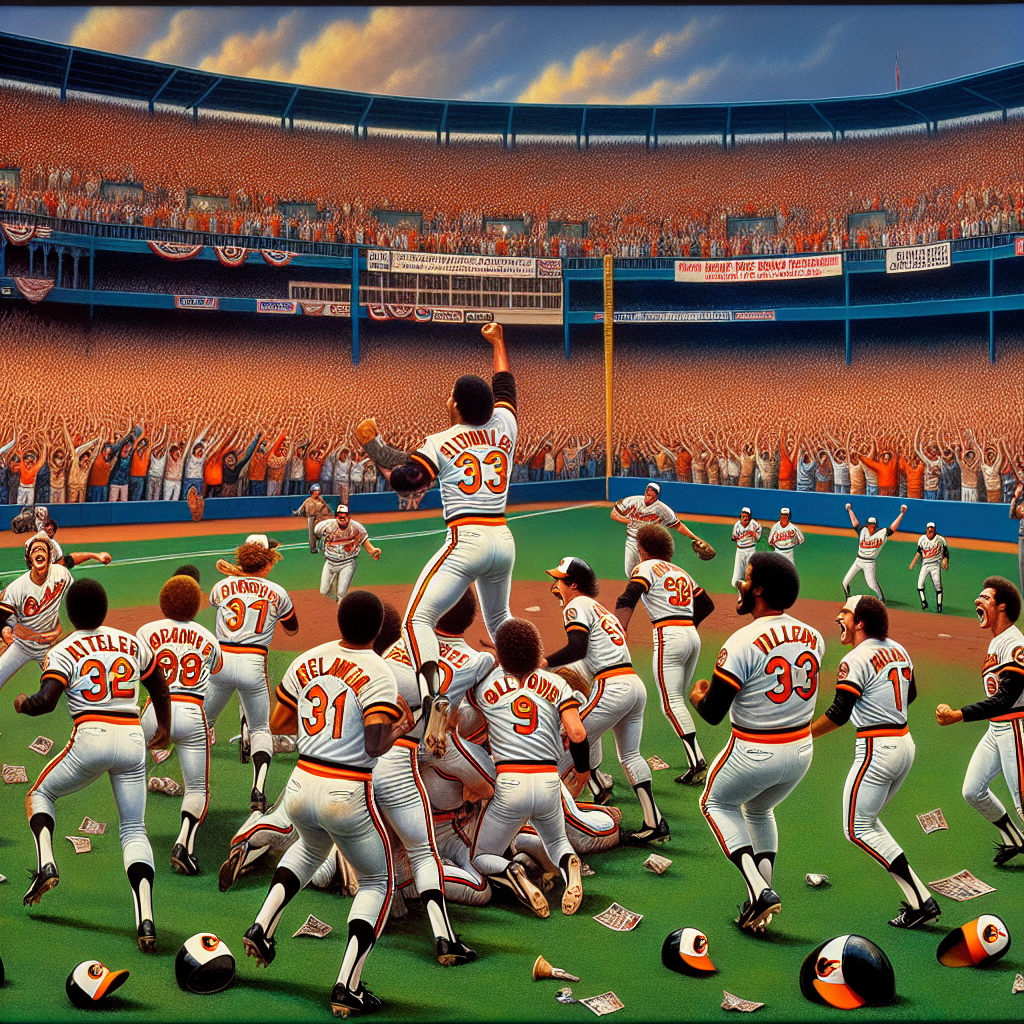
As the series progressed, the Orioles’ relentless pursuit of victory became increasingly apparent. By Game 5, the Orioles had clearly established their dominance. The final game saw them deliver a commanding performance, with key contributions from both veterans and emerging stars. When the final out was recorded, the Baltimore Orioles had secured their third World Series title, encapsulating an unforgettable 1983 season and immortalizing their efforts in the annals of baseball history.
Key Moments and Highlights
The 1983 Baltimore Orioles season was filled with moments that have since become a part of baseball folklore. From individual performances that left fans in awe to collective team efforts that embodied the spirit of the game, the season was laden with unforgettable highlights.
One such highlight was Cal Ripken Jr.’s consistency and durability throughout the season, earning him the Iron Man moniker. Ripken played in every game, exhibiting not only incredible talent but also endurance and determination. His season-notching MVP highlights underscored his value to the team both offensively and defensively.
Eddie Murray’s performance in the clutch was another standout aspect of the season. Murray provided the team with essential runs and timely hits, including pivotal home runs that often swung games in the Orioles’ favor. His leadership and quiet composure were indispensable to the team’s success.
The pitching staff also had its moments of brilliance. Mike Boddicker’s performances in both the regular season and the playoffs were nothing short of spectacular. His ability to dominate opposing hitters with his varied pitching arsenal was a key factor in the Orioles’ championship run.
The collective effort of the squad displayed in tough, hard-fought games particularly demonstrated the heart and tenacity of the Orioles. Whether it was coming from behind to clinch a victory or holding onto a narrow lead, the 1983 team left an indelible mark with their sheer willpower and team spirit. These moments not only defined their season but also etched their place in the annals of baseball history.
The Aftermath: Legacy and Impact
The impact of the 1983 Baltimore Orioles extended far beyond their World Series triumph. For the team, it signaled the end of an era, yet it left an enduring legacy that continued to influence the franchise and its fans. Players like Cal Ripken Jr. went on to achieve monumental personal milestones, further cementing their place in the baseball pantheon.
Ripken’s record-setting consecutive games streak, which began during the 1982 season and continued into the 1990s, epitomized the resilience and dedication that were hallmarks of the 1983 squad. His achievements post-1983 kept the Orioles in the spotlight and inspired future generations of baseball players.
Eddie Murray’s career also flourished after the championship season. Inducted into the Baseball Hall of Fame in 2003, Murray’s time with the Orioles remains a celebrated chapter in his illustrious career. His performance in the 1983 season exemplifies the kind of player he was, a pillar of power and consistency.
The 1983 Orioles also set the stage for future team building and strategic decisions within the franchise. Their success under Joe Altobelli’s management, which balanced veteran guidance with young talent, offered a blueprint for constructing competitive teams. Although the Orioles would face challenges in the years following their 1983 triumph, the principles and values established during that season remained influential.
For the fans, the memories of the 1983 season are eternal. The excitement of the games, the celebrations of victory, and the pride in their team have all become ingrained in the culture of Baltimore baseball. The 1983 Baltimore Orioles not only achieved greatness on the field but also strengthened the bond between the team and its supporters, a connection that persists to this day.
Conclusion
The 1983 season of the Baltimore Orioles stands as a testament to what can be achieved through dedication, teamwork, and relentless pursuit of excellence. Their journey from spring training to World Series champions encapsulates the very essence of what makes baseball such a beloved sport. It was a season filled with memorable moments, dramatic victories, and sheer determination.
While individual accolades and standout performances played their part, it was the collective effort and unity of the team that ultimately led to their success. Players like Cal Ripken Jr., Eddie Murray, and Mike Boddicker shone brightly, but it was their ability to come together as a cohesive unit under the expert guidance of Joe Altobelli that made the difference.
The impact of the 1983 Orioles went beyond the field. They left a lasting legacy that continues to inspire and influence the franchise and its supporters. Their victory solidified the Orioles’ place in baseball history and provided the city of Baltimore with moments of pride and joy that have stood the test of time.
As we reflect on the achievements of the 1983 team, we are reminded of the timeless appeal of baseball—a game where strategy, skill, and heart coalesce to create moments that are remembered for generations. The Baltimore Orioles’ triumph in 1983 remains a rich chapter in the sport’s history, a display of what can happen when a team comes together with a singular goal: to be champions.
Frequently Asked Questions
1. What made the Baltimore Orioles’ 1983 season so memorable?
The Baltimore Orioles’ victory in the 1983 World Series is a cherished moment in baseball lore, signifying not just a championship win but the zenith of an illustrious period for the team. This season was the culmination of a dynasty that had been building since the late 1960s, a testament to the skill, perseverance, and team spirit that defined the Orioles’ baseball legacy. Under the astute guidance of manager Joe Altobelli, the team was a brilliant blend of seasoned veterans like Eddie Murray and budding superstars such as Cal Ripken Jr., both integral to the team’s success. The Orioles demonstrated consistent excellence, resilience, and a competitive edge that outmatched their rivals. Their journey was punctuated by unforgettable games, thrilling comebacks, and pivotal plays that cemented their place in history. They boasted a formidable 98–64 record for the season, a testament to their dominance in Major League Baseball. Fans fondly recall the electric atmosphere, with Memorial Stadium echoing with the chants of jubilant supporters, as their team clinched the World Series title against the Philadelphia Phillies in a five-game showdown. This victory was not just about the championship ring; it was a celebration of a golden era in baseball, marked by camaraderie and sheer sporting excellence.
2. Who were the key players in the Orioles’ 1983 World Series win?
Among the Orioles’ roster, several players were pivotal to their 1983 World Series success. Firstly, Eddie Murray stands out with his exemplary performance; his power-hitting was a constant threat to opponents throughout the season. In the decisive Game 5 of the World Series, Murray’s two home runs were instrumental in sealing the victory for Baltimore. Then there was Cal Ripken Jr., whose prowess at shortstop, alongside his bat, made him an indispensable part of the Orioles’ lineup; his calm demeanor and relentless performance contributed significantly to the team’s morale and success. Another key figure was Mike Boddicker; the rookie pitcher played a crucial role in the postseason, particularly evident in Game 2 of the World Series, where he delivered an outstanding complete game shutout, striking out six. Jim Palmer, although in the twilight of his career, provided veteran leadership and added depth to the pitching rotation. Gary Roenicke and John Lowenstein were part of a formidable outfield platoon, known for their significant contributions offensively and defensively. Additionally, Scott McGregor was the hero on the mound in Game 5, pitching a complete game, which underlined the Orioles’ dominant pitching strategy. Their cohesive efforts, along with contributions from the entire team, made this championship triumph possible, engraving their names in the annals of baseball history.
3. What were the highlights of the 1983 postseason for the Orioles?
The Orioles’ 1983 postseason campaign was marked by hardcore determination and highlights that remain etched in the memories of baseball aficionados. The journey began with the American League Championship Series (ALCS) against the Chicago White Sox. The Orioles exhibited tremendous grit, ultimately overcoming the White Sox in four games to clinch the series 3-1. One standout moment from this series was when Mike Boddicker delivered a spectacular performance in Game 2, securing a vital win and showcasing stellar pitching. Moving on to the World Series against the Philadelphia Phillies, the Orioles opened with a heartening performance but stumbled slowly in Game 1. However, determined to prove their mettle, the team rebounded magnificently; Mike Boddicker again played a crucial role in Game 2, with a dazzling complete game that kept the Phillies scoreless and handed the Orioles the victory. A special highlight came in Game 5 of the World Series, where Eddie Murray propelled the Orioles to victory with his powerhouse hitting, solidifying their championship fate. In the same game, Scott McGregor pitched a commendable complete game, epitomizing the stronghold that the Orioles’ pitching had on their opponents. The series clincher was a culmination of strategic talent, sportsmanship, and adrenaline-fueled moments that led to an unforgettable championship win. Each game of the postseason resonated with the team’s resilient identity and exceptional depth, making the 1983 postseason a tapestry woven with thrilling and defining moments.
4. How did the Orioles’ 1983 season impact the team’s legacy?
The Orioles’ 1983 season marked a defining chapter in the team’s storied history, reinforcing their reputation as one of the powerhouse franchises in Major League Baseball during that era. This World Series win didn’t just add another trophy to their showcase; it symbolized a broader impact by solidifying the Orioles’ dynasty that had been established over the preceding decades. This championship represented the crescendo of a team characterized by skillful play, strategic prowess, and unyielding determination. The blend of future Hall of Famers like Cal Ripken Jr. and legendary veterans like Eddie Murray underscored the deep-seated talent within the organization. Furthermore, this period was recognized as the Orioles’ final golden era until their resurgence years later, as changes within the league and evolving team dynamics meant championship opportunities became scarce afterward. The 1983 victory is frequently cited as a source of inspiration and immense pride for Orioles fans, who regard this season as a benchmark for future successes. It highlighted what was possible through dedication, excellent management, and raw talent, setting a standard for subsequent players and teams. Such an enduring legacy not only celebrates past triumphs but also continues to inspire the ethos of the current and future Orioles, lifting them as they strive to echo the glory years under similar or even more challenging contexts.
5. How does the 1983 Orioles team compare to other teams in MLB history?
The 1983 Orioles team is often placed among the upper echelons of Major League Baseball lore due to its remarkable blend of talent, strategy, and unique personalities. This team exemplified a balanced mix of youthful vigor and seasoned experience, harmonized under the expert management of Joe Altobelli. Compared to other teams across different eras, the 1983 Orioles stood out for their pitching prowess coupled with robust defense and the clutch hitting capabilities of their lineup. When viewed as peers to legendary teams like the 1927 New York Yankees or later dynasties of the 1990s, the Orioles’ strengths were more about the collective effort and seamless teamwork rather than just marquee names or statistical dominance. The team’s ability to perform under pressure was a hallmark, with clutch moments from players like Eddie Murray and breakout performances from Cal Ripken Jr. showcasing the individual brilliance that stitched the collective success. This elevating team spirit was instrumental in their postseason performances where they defeated strong opponents with tactical grace and tactical awareness. Furthermore, the aura around the Orioles’ 1983 season captured an era of nostalgic baseball, resonating with fans who cherished the game’s simpler yet fiercely competitive times. This season’s memory serves as a touchstone, reminded frequently in narratives about grit, teamwork, and a passion for the game that transcends statistical achievement, comparable to many legendary teams celebrated in baseball’s illustrious past.