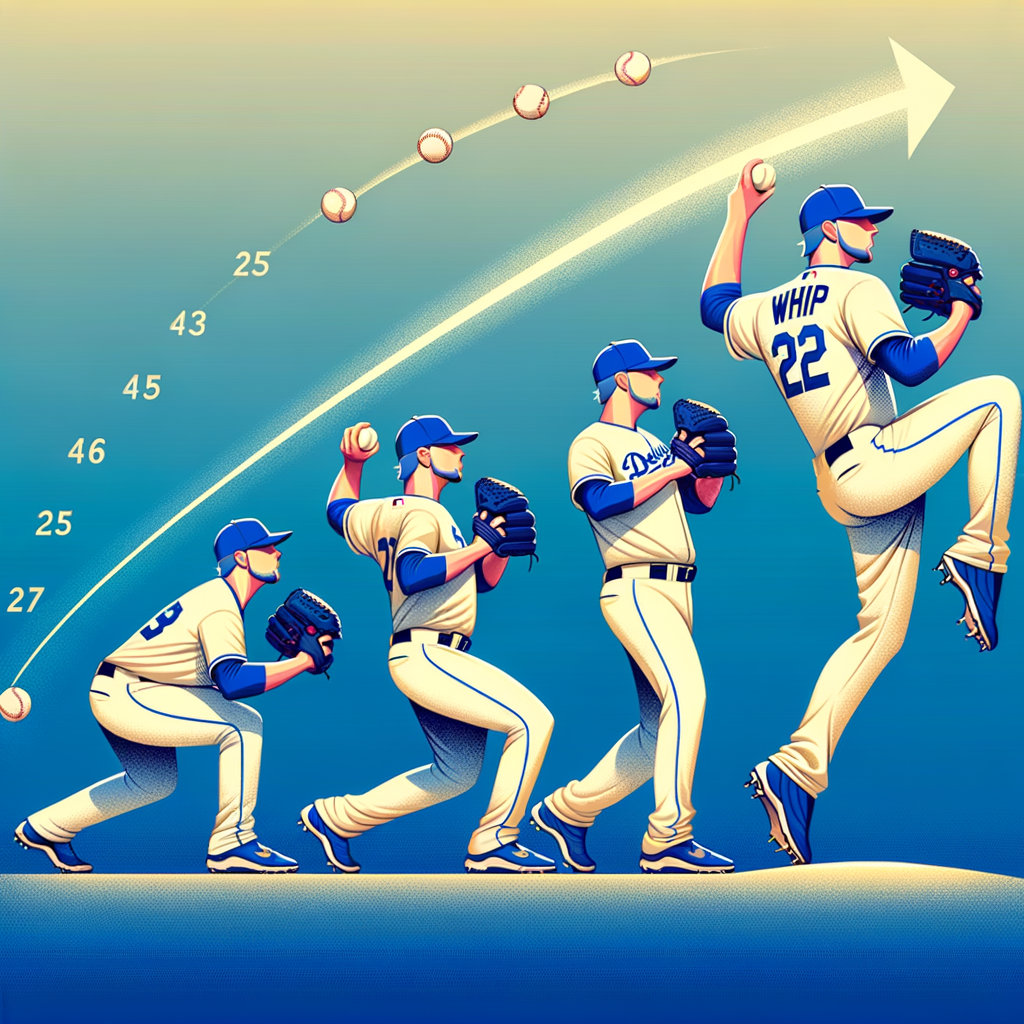
The world of baseball is steeped in tradition, with its roots tracing back to the late 19th century. Along with its rich history, the sport has developed a vast array of statistics to evaluate player performance. Among these, pitching metrics have undergone significant transformation over the decades. In the early days, a pitcher’s effectiveness was often gauged by their win-loss record. However, as the game evolved, so too did the methods used to assess pitchers. Metrics such as WHIP, or Walks plus Hits per Innings Pitched, offer a more nuanced view of a pitcher’s performance. In this article, we will explore the evolution of pitching metrics, examining how they have shifted from simple wins to more advanced statistics like WHIP, and consider the impact these changes have had on the game. By doing so, we aim to provide a comprehensive understanding of how these statistics reflect a pitcher’s skill and contribution to the team.
The transition from traditional to advanced metrics highlights a broader trend in baseball analytics. This journey from wins to WHIP is a testament to the sport’s embrace of data-driven assessment, providing teams and analysts with a more accurate depiction of a pitcher’s value. As we delve into this evolution, it’s critical to reflect on why wins were initially favored and how this historical context laid the foundation for more robust metrics that followed.
The evolution of pitching metrics also reflects larger trends in society and technology, where data analysis and statistical rigor increasingly inform decision-making processes. Fans, now more than ever, have access to a treasure trove of information, transforming the fan experience and enhancing engagement with the sport. Through detailed analysis of these metrics, we gain insights that transcend the numbers, offering a window into how the game is played, managed, and appreciated. Throughout this examination, we will acknowledge the influence of trailblazers who challenged traditional thinking and propelled the adoption of innovative metrics. This exploration is not just about numbers, but about understanding how these tools reveal the story of a pitcher’s journey from the mound to legend status in an evolving game of baseball.
The Historical Reliance on Wins
Pitching wins have long been a staple in evaluating a pitcher’s success. The concept is straightforward: if a pitcher is in the game when their team takes the lead for good, they are credited with a win. This metric originated in an era where the pitcher was seen as the central figure in a team’s success, and their win-loss record was a direct reflection of their effectiveness on the mound. This simple method allowed fans, players, and management to easily quantify performance. However, the win statistic has limitations because it is heavily dependent on factors outside the pitcher’s control, such as run support and defense. This realization prompted baseball analysts to seek alternative methods that more accurately reflect a pitcher’s skill.
Historically, a pitcher’s win total often dictated their market value and sealed their legacy in the annals of baseball history. It influenced awards such as the Cy Young and even Hall of Fame candidacies. Despite its entrenched role, the win metric increasingly faced scrutiny for oversimplifying the complexities of the game. For instance, a pitcher could perform poorly but still be credited with a win if their team provided substantial offensive support. Conversely, a pitcher could throw an outstanding game yet be saddled with a loss due to lack of run support. These discrepancies underscored the need for a more balanced evaluation framework.
The significance of wins as a metric reflects more than just the game itself; it embodies baseball’s nostalgia and its resistance to change. Yet, as the sport transitioned into the modern era, the intertwining of analytics into baseball front offices and strategies began to challenge the predominance of traditional statistics. Teams and analysts began to recognize that a thorough understanding of a pitcher’s value required an analysis beyond the win column, accounting for factors such as the frequency and quality of hits and walks allowed.
The Introduction of WHIP and Advanced Metrics
The introduction of advanced metrics revolutionized the way pitching performance was assessed. WHIP, which stands for Walks plus Hits per Innings Pitched, emerged as a prominent measurement to gauge a pitcher’s effectiveness. By calculating the number of walks and hits a pitcher allows per inning, WHIP provides a clearer picture of how well a pitcher prevents batters from reaching base. This metric reflects directly on a pitcher’s control and capability on the mound, independent of external factors such as team offensive output and defensive support.
Alongside WHIP, other statistics like FIP (Fielding Independent Pitching) and ERA (Earned Run Average) further deepened the analytical framework for evaluating pitchers. FIP, for instance, focuses on events a pitcher can control: strikeouts, unintentional walks, hit-by-pitches, and home runs allowed, disregarding the fielding quality behind them. This allows for an evaluation of how effectively a pitcher prevents scoring without bias from team defense. Conversely, ERA factors the number of earned runs a pitcher allows per nine innings—a useful measure, albeit somewhat impacted by factors outside a pitcher’s control.
The past few decades have seen an explosion in the complexity and breadth of available statistics, adapted to reflect a nuanced understanding of pitching prowess. Metrics like xFIP (Expected Fielding Independent Pitching) and SIERA (Skill-Interactive ERA) further delve into the predictive aspects of pitching performance. These metrics consider an array of factors, including pitch velocity, strikeout rates, and batted ball distributions, allowing teams to project future performance trends.
The adoption of WHIP and similar metrics reflects a paradigm shift in baseball. Where wins were once viewed as the ultimate measure of success, advanced metrics now offer a spectrum of insights that acknowledge the myriad intricacies of pitching. By providing a detailed framework, metrics like WHIP facilitate informed decision-making processes in player evaluation, contract negotiations, and in-game strategic planning. The precision these statistics bring helps teams allocate resources more effectively, identifying underappreciated talents poised to bolster a lineup or rotation.
The Impact of Advanced Metrics on Game Strategy
The evolution of pitching metrics from wins to more sophisticated measures like WHIP has significantly influenced on-field strategies and decision-making. Managers, armed with a detailed understanding of pitching statistics, now deploy pitchers based on matchups exploiting specific weaknesses in opponents, such as a tendency to walk certain players or struggles against specific pitches. Bullpens are managed with pinpoint specificity, leveraging insights from advanced metrics to match each pitcher’s strengths against the weaknesses of upcoming batters.
Data-driven insights allow teams to devise strategies that maximize each pitcher’s effectiveness. Since WHIP provides a clear view of base-runner prevention, it is a reliable metric for assessing whether a pitcher can handle high-pressure situations. This knowledge empowers managers to make informed bullpen decisions in late-game scenarios where one runner can alter the outcome. The emphasis on WHIP, therefore, shapes how starters are managed—often determining how deeply they remain in the game, based on their efficiency in limiting base runners.
Advanced pitching metrics have cascaded beyond player and game-level impact, reshaping broader team-building philosophies. Front offices harness these statistics to scout talent and build rosters emphasizing pitching efficiency and staff depth. Through identifying pitchers with low WHIPs, teams can field a rotation that promises to minimize base traffic, thus reducing opponent scoring opportunities and bolstering overall team competitiveness. By digging into granular metrics, analysts can uncover hidden gems overlooked by teams adhering strictly to traditional winning metrics.
The new metrics do more than enhance team performance; they have altered the market dynamics of player acquisition and contracts. As WHIP became a pivotal evaluation tool, it influenced how teams approach financial negotiations, recognizing pitchers with elite base-runner suppression capabilities as invaluable assets. Salaries and contract terms increasingly reflect contributions measured through advanced analytics, with WHIP highlighting pitchers who might not dominate traditional stat sheets but possess intrinsic value to a franchise’s success.
Conclusion
The progression from wins to WHIP in evaluating pitchers marks a significant milestone in the advancement of baseball analytics. While wins once served as the cornerstone in measuring a pitcher’s effectiveness, they often lacked the nuance required to capture true performance. Metrics like WHIP have afforded a deeper understanding, acknowledging the complexities of pitching and allowing for assessments based on variables within the pitcher’s control. This shift underscores a broader trend across sports toward embracing data-driven approaches, challenging long-held traditions in favor of more precise evaluations.
This evolution reflects the changing landscape of baseball, where strategy increasingly involves sophisticated statistical analysis. Teams that embrace these insights gain competitive advantages, leveraging statistics like WHIP to build balanced rosters and devise game tactics aligned with maximizing run prevention. Players, too, benefit from a clearer depiction of their abilities, enabling them to tailor training regimens and improve upon weaknesses identified through advanced metrics. The transition has not been without its challenges, particularly in reconciling modern insights with the sport’s storied history, yet it propels baseball toward a future where excellence is measured by both time-honored and innovative means.
As we conclude our exploration of pitching metrics, the journey from wins to WHIP exemplifies a broader revolution within baseball—a compelling narrative of tradition meeting modernity. Through this lens, we see the dynamic nature of sport, constantly evolving to align with advancements in knowledge and technology. The development and integration of metrics like WHIP offer an enriched perspective on the game, enhancing our appreciation for the intricacies of baseball while paving the way for further innovations in performance analysis. In this light, the science of baseball continues to grow, ensuring that as the game evolves, so too does our understanding of what it truly means to excel on the mound.