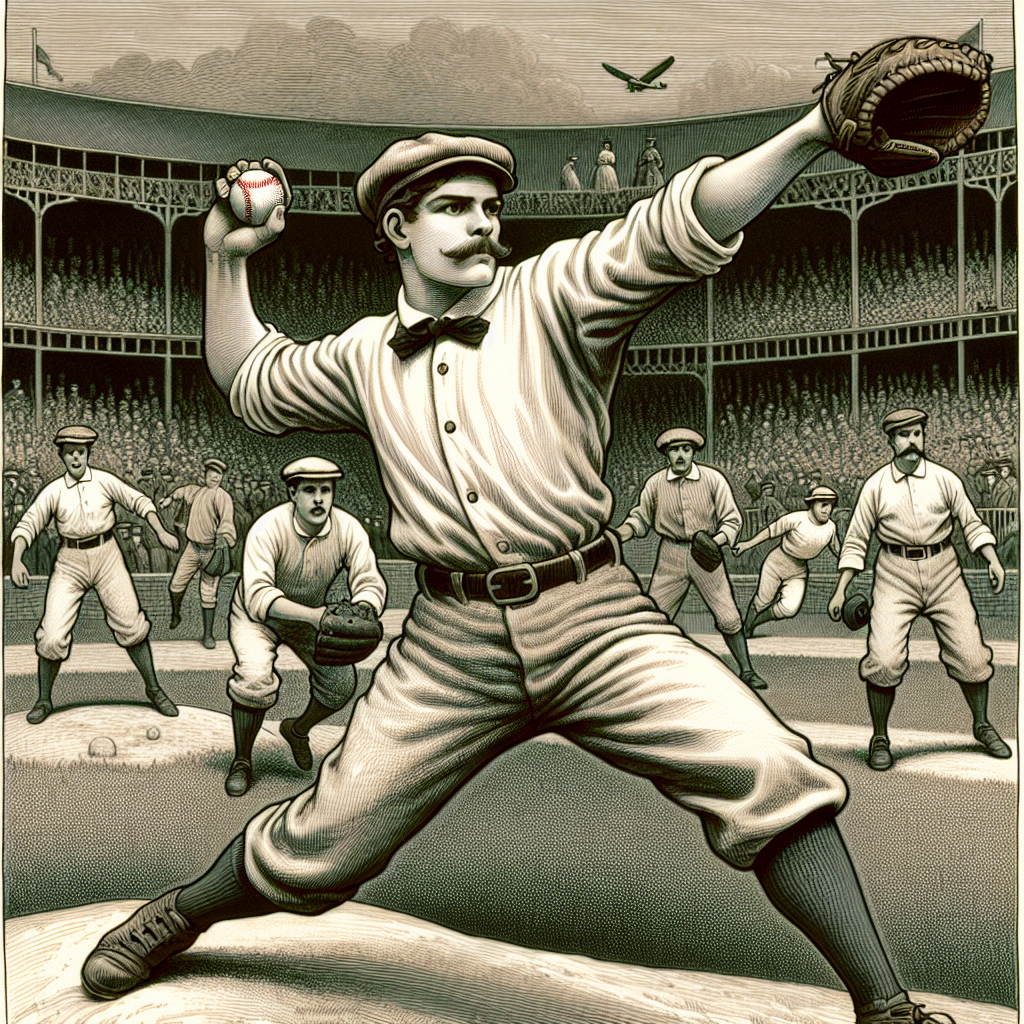
When diving into the annals of baseball history, few names evoke the awe and reverence of Old Hoss Radbourn. Born Charles Gardner Radbourn, this right-handed pitcher didn’t simply play the game; he etched his name into the fabric of baseball lore. While Radbourn had several commendable seasons during his career, the 1884 season stands out as a monumental year that would forever solidify his legacy.
The tale of Old Hoss Radbourn in 1884 is not just about statistics and numbers, although they are staggering, but also about the grit, determination, and sheer willpower of a player who gave everything he had to the sport he loved. As we turn back the pages of history, we uncover an era where the game was far different from what we know today. Yet, the spirit and the drive of players like Radbourn remind us of the timeless passion that defines baseball.
Born on December 11, 1854, in Rochester, New York, Radbourn began his professional career in the National League with the Buffalo Bisons in 1880. However, it was his time with the Providence Grays that truly marked his ascent to legendary status. The 1884 season wasn’t just the peak of Radbourn’s career; many regard it as one of the most outstanding single-season performances in the history of professional baseball.
Understanding and appreciating Radbourn’s incredible journey in 1884 requires delving into the context of the era, the challenges he faced, and the remarkable milestones he achieved. So, let’s take a closer look at this unforgettable season, from his mind-boggling workload to the staggering records he set, many of which stand unsurpassed, over a century later.
Setting the Scene: Baseball in the 1880s
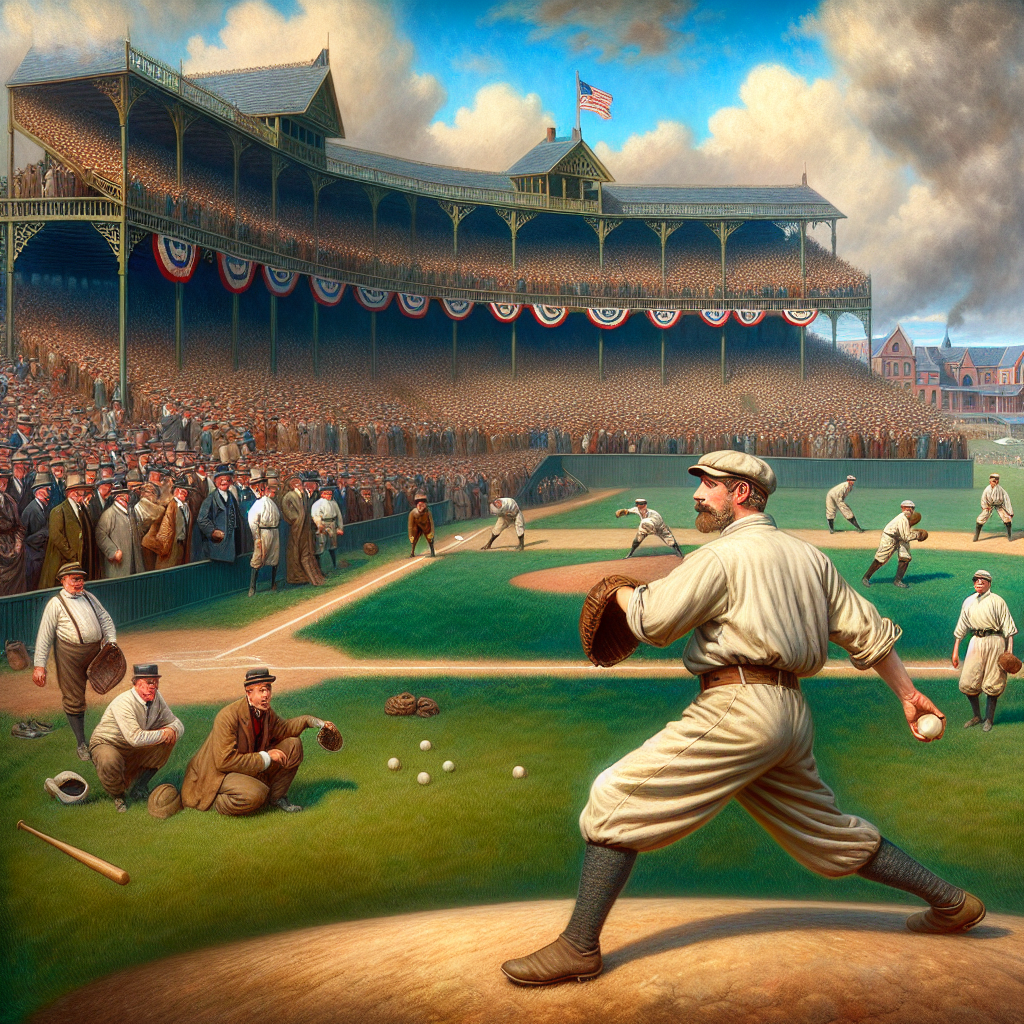
To truly appreciate Old Hoss Radbourn’s accomplishments, it’s essential to understand the context of professional baseball in the 1880s. The game was in its infancy compared to modern standards, and the structure, rules, and conditions differed significantly. In 1884, Major League Baseball was divided into two leagues: the National League and the American Association, with the Providence Grays competing in the former.
Pitchers like Radbourn had far more responsibilities than today’s specialists. The concept of a “starting rotation” was virtually non-existent, and pitchers frequently threw complete games. The physical toll on pitchers was immense, and many careers were short-lived due to the wear and tear on their arms. Additionally, unlike today’s meticulously maintained ballparks, fields in the 1880s were often rough, uneven, and littered with obstacles.
Travel conditions were also a far cry from modern comforts. Teams traveled long distances by train, and grueling schedules meant minimal rest. Off-field amenities and medical care were rudimentary at best, leaving players to rely heavily on their resilience and determination.
Despite these challenges, or perhaps because of them, the era produced some of the most revered and resilient figures in baseball history. Old Hoss Radbourn’s 1884 season is often highlighted as a testament to the extraordinary capabilities of players from this rugged era of baseball. Let’s delve deeper into the milestones and moments that defined this unforgettable season for Radbourn.
The Stunning Statistics of 1884
Old Hoss Radbourn’s 1884 season is often described in terms of sheer numbers, and for good reason. The statistics he compiled over that year are nothing short of astonishing and are a significant reason why he remains a legendary figure in baseball history.
Radbourn pitched an unparalleled 678.2 innings, securing 59 wins—a Major League record that still stands today. Modern observers might find these figures almost unbelievable, given that today’s top pitchers rarely throw more than 200 innings in a season. To put it in perspective, Radbourn’s win total is nearly double what most Cy Young Award winners achieve in the current era.
But it wasn’t just about quantity; the quality of his pitching was equally impressive. Radbourn recorded a 1.38 ERA, demonstrating remarkable skill and command over his pitches. He also led the league with 441 strikeouts, another testament to his dominance on the mound. During one stretch of the season, Radbourn won an incredible 20 consecutive games, a streak that would seal his reputation as a relentless competitor.
His extraordinary workload and performance culminated in Radbourn pitching three complete games in the World Series that year, which earned the Providence Grays the championship. It wasn’t merely the numbers but the circumstances under which he achieved them that make his 1884 season legendary. Radbourn pitched through pain and fatigue, embodying the quintessential spirit of perseverance.
Challenges and Triumphs
Despite the superhero-like stats, Radbourn’s path in 1884 was fraught with challenges. The immense physical stresses placed on his body would have rendered lesser pitchers ineffective, yet Radbourn found a way to rise above the adversity.
One of the seminal challenges Radbourn faced was the departure of key teammate, Charlie Sweeney. On July 22, 1884, Sweeney abandoned the team after a dispute, leaving the Grays critically short of pitching talent. Radbourn bravely stepped into the void, vowing to pitch as many games as needed to secure victories for the Grays. His commitment proved transformative, as he went on to appear in nearly every game for the remainder of the season.
Moreover, the technology and medical knowledge of the time were primitive. Pitching through aches and severe fatigue was commonplace, and Radbourn often found himself enduring immense physical discomfort. Despite this, his ability to deliver under pressure didn’t wane. In many ways, it was his undying confidence and fortitude that allowed him to overcome the many hurdles he faced.
Adding to these challenges were the grueling travel schedules and less-than-ideal playing conditions. Train travel was tiring, and the constant hustle between distant cities contributed to fatigue. Fields of the time were often less maintained, adding unpredictability to games. Nonetheless, Radbourn adapted and excelled irrespective of these impediments, showcasing his adaptability and resilience.
A Legacy Cemented in 1884
Old Hoss Radbourn’s 1884 season didn’t just carve out a place for him in the record books; it ensured that his name would echo through the halls of baseball fame for generations. Beyond mere statistics, Radbourn’s achievements symbolized the essence of 19th-century baseball: toughness, resilience, and exceptional skill.
After the historic 1884 season, Radbourn continued to play effectively, but never again did he reach the zenith of that particular year. Nonetheless, his influence persisted, inspiring countless players who followed. The sheer scale of his accomplishments became a benchmark for athletes aspiring to greatness.
The season immortalized Radbourn not just as a player, but as a legend whose determination and grit were unmatched. His performance was a clear exemplification of human potential, pushing the limits of what was thought possible at the time. Even with the advent of modern training and medical advancements, his records still inspire awe over a century later.
Radbourn’s legacy was further cemented when he was inducted into the Baseball Hall of Fame in 1939, deservedly so. He stands as a pillar in baseball history, and his 1884 season remains a gold standard against which the stamina, skill, and dedication of players are measured.
The Cultural Impact of Radbourn’s 1884 Season
The extraordinary exploits of Old Hoss Radbourn in 1884 had far-reaching implications beyond just records and awards. It contributed significantly to the cultural fabric of baseball, setting precedents that remain influential today.
Radbourn’s endurance and performance provided a narrative arc that resonated deeply with fans of the time. He became a hero for his ability to transcend human limitations, embodying the aspirational qualities that people admired in athletes. The way he tackled insurmountable odds became a story that was passed down through generations, reinforcing values like hard work, dedication, and resilience.
His 1884 season also marked a period of increased attention to the sport itself. Newspapers extensively covered his exploits, bringing baseball into the national consciousness. The fascination with Radbourn’s achievements provided a catalyst for the growing popularity of baseball as America’s pastime.
Moreover, Radbourn’s season fostered a competitive spirit among players and teams alike. His performances set new standards for what players could achieve, fostering a more rigorous and professional approach to the sport. In essence, the 1884 season became a cornerstone for the evolution of baseball, contributing to its development into the highly organized and competitive sport we know today.
Conclusion
Old Hoss Radbourn’s 1884 season stands as an unmatched beacon of excellence in the annals of baseball history. Overcoming numerous obstacles with sheer determination, Radbourn didn’t just play the game—he defined it. The monumental achievements of that season, including the unparalleled 59 wins, are more than just records—they are testaments to an era of baseball where the line between myth and reality often blurred.
Radbourn’s extraordinary performance continues to inspire not just baseball players, but anyone facing daunting challenges. His story serves as a timeless reminder that with enough grit, skill, and determination, the impossible can be achieved. His 1884 season remains a compelling narrative of human potential, overcoming adversity, and the unrelenting pursuit of greatness.
While the game of baseball has evolved in countless ways since Radbourn’s time, his legacy remains a poignant touchstone. Modern players and fans alike can look back at that season and marvel at what was accomplished under conditions that would be unimaginable today.
As we celebrate the enduring spirit of baseball, Old Hoss Radbourn’s name will forever resonate, reminding us of the resilience and fortitude that define the sport’s greatest legends. It’s a season that invites us to not only appreciate his staggering achievements but also aspire to the same relentless excellence in our own endeavors.