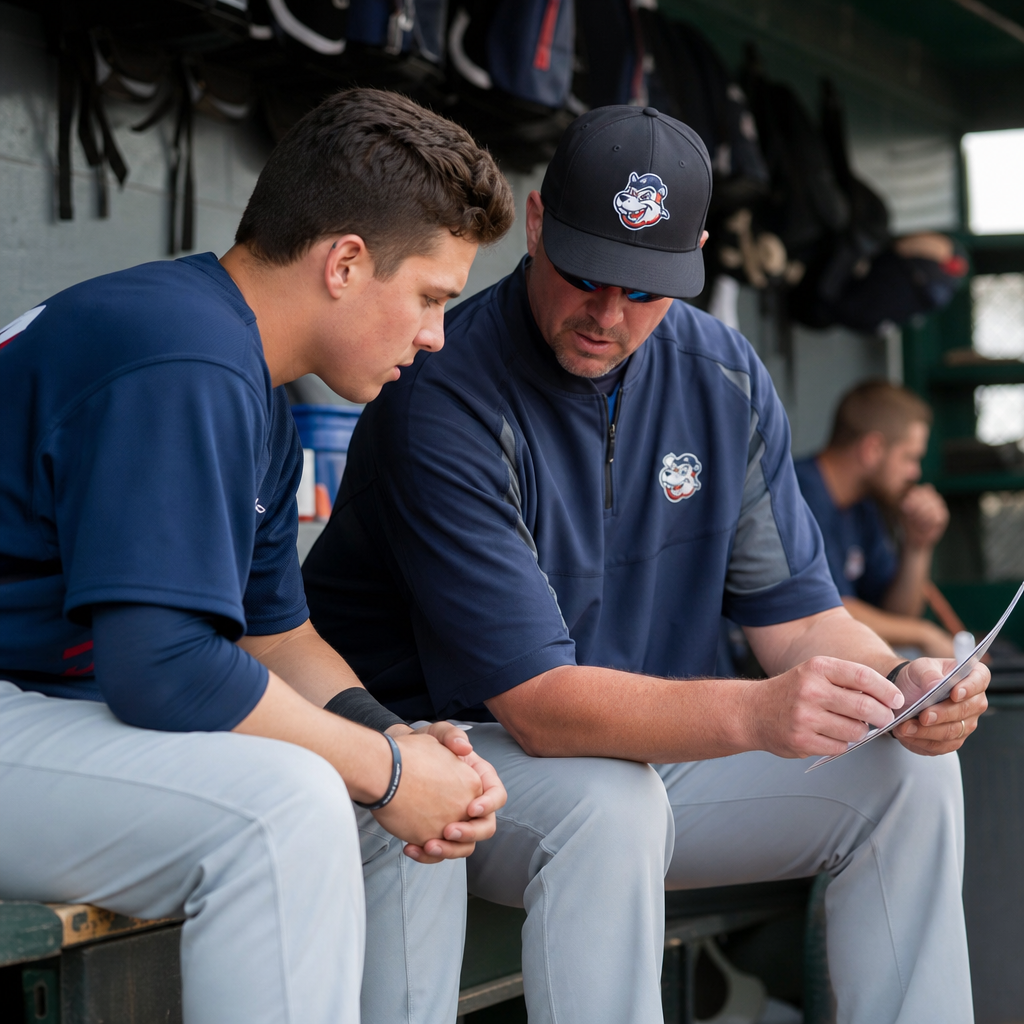
Minor league mentors shape careers long before a prospect reaches a major league clubhouse, yet their influence is rarely visible on a stat sheet or in a highlight package. In baseball, a mentor can be a manager, pitching coach, hitting coordinator, trainer, veteran catcher, roving instructor, strength specialist, mental skills coach, or bilingual staff member who helps a player navigate daily life. Within the broader world of minor leagues and college baseball, this miscellaneous hub matters because development is never only about velocity, exit speed, or prospect rankings. It is about translating raw ability into professional habits, durable routines, emotional control, and baseball intelligence. I have spent years following farm systems, speaking with player development staff, and watching how one trusted voice can salvage a season or accelerate a breakthrough. If fans want to understand why one talented player stalls while another exceeds projections, they need to understand the mentors behind the players.
Mentorship in the minors is different from simple coaching. Coaching often addresses a skill in the moment: shorten the swing path, improve hip-shoulder separation, tighten the slider shape, or refine a secondary lead. Mentorship is broader and longer term. It connects instruction to confidence, accountability, nutrition, sleep, cultural adjustment, injury recovery, and the mental grind of bus leagues, low pay, and uncertain promotions. In college baseball, mentors often bridge the gap between structured amateur competition and the more transactional world of professional baseball. In the minors, they help athletes handle failure at a scale many have never experienced. A first-round pick can hit .190 for six weeks. A converted reliever can lose the zone in front of sparse crowds after a twelve-hour road trip. The people who steady those moments are often the real difference makers, and this hub explains where that value shows up.
This page serves as a central guide to the overlooked support network in player development: managers who build culture, coordinators who align instruction across affiliates, veteran teammates who model professionalism, and specialists who handle biomechanics, analytics, and mental performance. It also connects the developmental pipeline from college baseball to the minors, where mentorship changes form but remains essential. Understanding these roles helps explain roster moves, prospect jumps, comeback stories, and why successful organizations treat development as an ecosystem rather than a collection of isolated tools. If the headline prospect is the visible asset, the mentor is often the hidden infrastructure.
What minor league mentors actually do every day
Minor league mentors turn organizational philosophy into repeatable daily behavior. On a typical day, that means more than running batting practice or setting a lineup card. A manager may hold a brief early meeting to frame game objectives, a pitching coach may review TrackMan or Hawk-Eye data with a starter, and a hitting coach may blend cage work with machine settings designed to mirror the fastball shapes a player will see that night. The best mentors make those details understandable. They translate data into one clear action: attack pitches above the belt earlier, move on the mound to improve angle, or simplify the pre-pitch routine with runners on base.
They also act as pattern recognizers. In the minors, performance often swings wildly because players are learning while competing. A mentor spots whether a slump is mechanical, physical, emotional, or environmental. I have seen coaches identify that a hitter was not late because his bat speed dropped, but because his lower-half timing was disrupted by fatigue from long travel and poor recovery. I have seen pitching instructors realize a prospect’s lost command came from overcorrecting after an analytics session, not from a lack of effort. These distinctions matter because the wrong fix can deepen the problem.
Good mentors protect players from information overload. Modern development departments can supply biomechanics reports, bat sensor data, spin efficiency numbers, vertical approach angle models, heat maps, and swing decisions by count. Useful tools become harmful when presented without context. The strongest minor league mentors know when to narrow the focus. A player does not need ten competing cues before first pitch. He needs one or two priorities tied to his role, his body, and his current competitive level. That filtering function is one reason experienced developmental staff are so valuable.
The key mentor roles across a farm system
Every affiliate has visible coaches, but the full mentor network extends well beyond the dugout. Managers shape accountability, communication, and clubhouse standards. Pitching and hitting coaches handle technical development and game planning. Catching instructors often influence leadership, receiving, game calling, and pitcher trust. Strength and conditioning coaches monitor workload, movement quality, and recovery habits. Athletic trainers become critical mentors during injury rehabilitation, when a player’s identity and patience are tested. Mental skills staff help players build routines for focus, emotional regulation, and confidence after failure.
Roving coordinators connect the system. They travel affiliate to affiliate, ensuring that the organization’s teaching language stays consistent from rookie ball through Triple-A. That matters because inconsistent instruction can derail progress. If one affiliate emphasizes aggressive damage contact while another suddenly prioritizes opposite-field contact at all costs, a young hitter may spend months caught between messages. The best coordinators create continuity without forcing every player into the same mold.
| Role | Primary focus | How the mentor helps a player |
|---|---|---|
| Manager | Culture and accountability | Sets expectations, communication standards, and daily professionalism |
| Pitching coach | Arsenal, mechanics, strategy | Links data and feel to command, pitch design, and sequencing |
| Hitting coach | Swing decisions and contact quality | Builds routines for approach, timing, and adjustments against game stuff |
| Trainer | Health and rehab | Guides recovery plans, workload limits, and return-to-play confidence |
| Mental skills coach | Focus and resilience | Teaches breathing, reset routines, and handling extended failure |
| Veteran teammate | Peer example | Models travel habits, preparation, and how to survive a long season |
Veteran players are especially important in this ecosystem. Many organizations sign older minor leaguers or former major leaguers partly because they stabilize a clubhouse. A backup catcher in Double-A may never become a headline prospect, yet he can dramatically improve a young pitching staff by teaching scouting report use, tempo control, and mound communication. Those contributions rarely trend online, but front offices notice them.
Why mentorship matters from college baseball to pro ball
The jump from college baseball to the minors looks familiar on the surface because the field dimensions stay the same, but the developmental environment changes immediately. In college, athletes usually have more structured schedules, stronger campus support systems, and coaching staffs focused on both winning and player growth within a contained roster cycle. In pro ball, the season is longer, travel is harsher, roles can change quickly, and the player is now one asset among many in a large system. A college star who was always the center of attention may suddenly be one of four corner outfielders at an affiliate.
That transition creates practical and emotional friction. Mentors help players understand workload differences, nutrition demands, and the fact that professional baseball measures progress in narrower ways. For example, a college pitcher who dominated with effort and raw stuff may need to learn strike efficiency, pitch usage patterns, and recovery discipline to survive a five-month schedule. A college hitter used to aluminum bat feedback may need patient guidance as wood-bat contact exposes holes in bat path or swing decisions.
College coaches often remain part of the mentorship chain even after the draft. Strong organizations respect that history. They ask what language resonated with the player, what routines made him comfortable, and what pressure points previously caused performance dips. That continuity can shorten the adaptation period. It also explains why some players thrive after signing: they enter pro ball with self-awareness and trusted frameworks, not just talent.
How mentors influence skill development and performance
Skill development in the minors is rarely linear, and mentors are the people who keep experimentation from becoming chaos. Consider pitch design. A prospect may add a sweeper, alter seam orientation on a changeup, or chase better induced vertical break on a four-seam fastball. Those changes can create short-term performance drops while the player learns new release cues and game usage. A mentor decides whether the temporary pain is worth the long-term gain, and just as importantly, how much change the player can absorb at once.
Hitting development works the same way. Organizations increasingly track chase rate, swing decisions, hard-hit percentage, and contact quality by zone. But metrics alone do not teach. A strong mentor turns those numbers into drills, constraints, and competitive feedback. If a hitter is rolling over sinkers, the answer may be a machine angle adjustment, a timing constraint drill, or a different verbal cue about posture and direction. If a player is too passive early in counts, the mentor may rebuild the attack plan around a specific damage zone rather than simply saying, be more aggressive.
Performance gains often show up indirectly first. Better between-start routines can improve command before velocity rises. A calmer infield pre-pitch process can reduce defensive mistakes before range metrics improve. Strong mentors appreciate these leading indicators. They do not judge development only by ERA or batting average, which are heavily influenced by context. They look for repeatability, decision quality, and how a player responds under stress. That is how sustainable improvement is built.
The human side: confidence, culture, and life off the field
Minor league baseball tests identity. Players face demotions, promotions, cramped travel, uncertain housing, language barriers, and public prospect discourse that can distort self-worth. Mentors are often the first line of protection against that instability. A bilingual coach who helps a Latin American teenager navigate a lease, banking paperwork, or a team meeting can be as important as a bullpen session. A manager who explains a benching clearly can prevent a player from inventing destructive stories about his future.
Clubhouse culture is not a vague slogan. It is the cumulative effect of standards repeated daily. Are players on time? Do they know the scouting report? Do veterans support younger teammates after mistakes? Are recovery and sleep treated seriously? I have seen affiliates with modest talent outperform expectations because the staff created a clear, calm environment where players could fail productively. I have also seen talented teams underperform when communication was fragmented and every slump felt personal.
Confidence is another area where mentorship is often misunderstood. Good mentors do not offer empty reassurance. They build evidence-based confidence. They remind a hitter that his swing decisions remain strong during a poor stretch, or show a pitcher that the shape of his best breaking ball is still present even if results have lagged. That kind of confidence is durable because it is rooted in process and observation, not slogans.
How organizations build better mentor systems
The best player development departments treat mentorship as infrastructure. They hire for teaching ability, emotional intelligence, and communication skill, not only playing résumé. They align terminology across affiliates so players hear consistent messages. They integrate analytics with on-field coaching instead of letting departments operate in silos. Organizations such as the Dodgers, Rays, Guardians, and Yankees have earned reputations for this kind of coherence, where player plans are individualized but the developmental language stays stable.
Technology helps only when mentors know how to apply it. TrackMan, Hawk-Eye, K-Vest, Rapsodo, force plates, and bat sensors can reveal meaningful patterns, but staff must decide what matters now, what can wait, and how to explain it in plain terms. The mentor who can connect objective measurement with a player’s feel has enormous value. So does the staff member who can tell a front office when a model is right in theory but wrong for a specific athlete at a specific time.
For readers exploring the minor leagues and college baseball landscape, mentorship is the thread that ties together recruiting, drafting, development, injury recovery, breakout seasons, and late-bloomer success stories. Watch the support system, not just the stat line. Follow how organizations staff affiliates, how they support international players, how they manage transitions from college baseball, and how veterans are used inside a clubhouse. Those details explain why some players become major leaguers and others remain tools without traction. The unsung heroes behind the players are not background figures. They are the reason potential becomes performance, and often the reason careers last. Keep this hub in your rotation as you explore the rest of the subtopic, and you will read prospect stories with sharper eyes.
Frequently Asked Questions
Why are minor league mentors considered so important to player development?
Minor league mentors are essential because they influence the parts of a player’s growth that raw talent alone cannot solve. A prospect may arrive with bat speed, arm strength, or athleticism, but turning those tools into a reliable professional skill set requires daily guidance. Mentors help players build routines, adjust to failure, understand game situations, manage fatigue, and stay focused through the long grind of a season. In many cases, they are the people who translate broad organizational goals into practical, day-to-day habits a player can actually follow.
Their impact also extends far beyond mechanics. A young pitcher may need help trusting a new pitch in pressure counts. A hitter may need someone to explain why process matters more than a one-week slump. An international player may need support adjusting to language, food, travel, and unfamiliar expectations. A veteran catcher might teach tempo and composure. A trainer might help a player understand how recovery affects performance. A mental skills coach might help him regain confidence after a rough outing. None of that typically appears in a box score, yet those lessons often determine whether a player stalls, adapts, or eventually thrives. That is why minor league mentors are so often described as the hidden architecture behind major league success.
Who actually serves as a mentor in the minor leagues and college baseball pipeline?
Mentorship in the minor league and college baseball world rarely comes from just one person. It is usually a network. Managers and coaches are the most visible figures, but the mentor ecosystem is much broader. Pitching coaches guide mechanics, sequencing, preparation, and mound mentality. Hitting coaches help with approach, swing decisions, and adjustments against different pitch types. Roving instructors move through the system reinforcing organizational philosophy and offering specialized insight. Strength coaches and trainers teach recovery, durability, and physical maintenance. Mental skills staff help players handle pressure, inconsistency, and the emotional side of competition.
Just as important are the less celebrated voices around the clubhouse. A bilingual staff member may help a young player feel understood and settled. A veteran teammate may show a prospect how to prepare before first pitch, how to review an at-bat honestly, or how to carry himself after a bad game. Catchers often act as on-field mentors by managing pitchers and calming high-stress moments. In college baseball, assistant coaches, coordinators, trainers, and older players serve similar roles as they help athletes bridge the gap between amateur promise and professional expectations. The key point is that mentorship is rarely a title alone. It is a function performed by people who provide trust, clarity, accountability, and perspective at critical stages of a player’s development.
How do minor league mentors help players off the field as well as on it?
Off-field mentorship is one of the most overlooked parts of baseball development, and it can be just as important as what happens during batting practice or bullpen sessions. Many players in the minor leagues are young, living away from home, earning modest salaries, navigating constant travel, and dealing with the mental strain of uncertainty. A mentor can help a player establish structure in an environment that often feels unstable. That may include time management, nutrition, sleep habits, emotional resilience, communication skills, and the ability to separate personal frustration from professional performance.
For international players, the off-field role can be even more significant. Adjusting to a new language, culture, financial system, and social environment can affect confidence and focus. A trusted mentor can help a player feel grounded, which in turn supports better performance on the field. Staff members may assist with practical issues such as routine, transportation, recovery habits, or understanding expectations within the organization. College players also benefit from mentors who help them balance academics, training, travel, and long-term career planning. In all of these cases, the mentor is not simply giving advice. He is helping create stability, and stability gives players a better chance to learn, compete, and improve consistently.
Why do the contributions of minor league mentors often go unnoticed by fans?
Fans usually encounter baseball through results: home runs, strikeouts, promotions, prospect rankings, and major league debuts. Mentorship tends to happen in quieter spaces that are not easily captured by broadcast cameras or statistical summaries. It happens during early work, side conversations in the dugout, bullpen sessions, recovery meetings, video review, bus rides, and difficult moments after a player struggles. Because the public mostly sees outcomes, the process behind those outcomes often remains invisible.
There is also no easy metric for trust, confidence, emotional maturity, or improved daily habits. A fan might notice that a pitcher suddenly commands his fastball better, but not realize that a coach spent weeks helping him simplify his pre-pitch routine. A hitter may become more disciplined at the plate, but the breakthrough may have started with a coordinator teaching him how to study counts and manage his breathing under pressure. Even major turning points, such as learning professionalism or recovering mentally from failure, are rarely credited in a public way. That is why minor league mentors are often called unsung heroes: their fingerprints are everywhere, but their names are seldom attached to the final achievement.
What makes a great minor league mentor, and how can their influence shape a player’s long-term career?
A great minor league mentor combines knowledge with timing, empathy, and credibility. Technical expertise matters, of course, but the best mentors also know when to challenge a player, when to simplify a message, and when to step back. They understand that not every prospect learns the same way. Some need detailed instruction. Others need reassurance. Others respond best to blunt accountability. Strong mentors can read personalities, communicate clearly, and build trust without lowering standards. They create an environment where players can fail, adjust, and keep moving forward.
Over the long term, that influence can shape an entire career. A player who learns how to make adjustments early is more likely to survive the inevitable setbacks of professional baseball. A pitcher who develops emotional control may handle promotions and demotions better. A hitter who learns disciplined preparation may sustain performance more consistently. Even players who never reach the majors often carry those lessons into coaching, scouting, player development, or leadership roles elsewhere in the game. In that sense, a mentor’s impact can outlast any single season or roster move. The best minor league mentors do more than help produce better players; they help form better professionals, and that contribution echoes through the sport long after the box scores are forgotten.