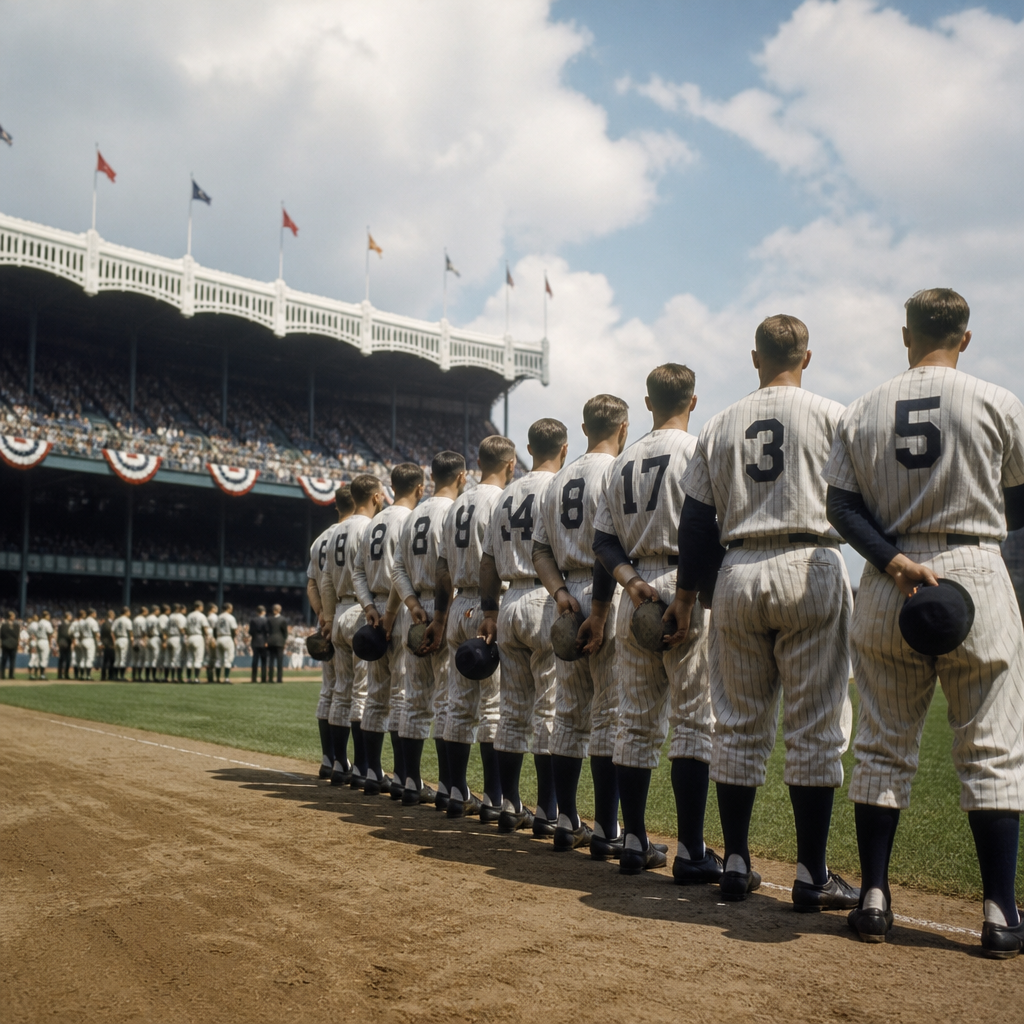
World War II reshaped Major League Baseball more dramatically than any event between the dead-ball era and expansion, altering who played, where clubs found talent, how fans understood fairness, and why the game’s postwar map eventually changed. In baseball history, “war, integration, and relocation” describes a linked chain of developments: wartime manpower losses, the breaking of the color line, and the movement of franchises into new cities and markets. I have worked through roster ledgers, wartime newspapers, and postwar attendance reports, and the pattern is unmistakable. The war did not simply thin lineups for a few seasons. It exposed weaknesses in the reserve system, accelerated scouting changes, widened public arguments about merit, and created openings for replacement players who otherwise would never have reached the majors. Those temporary openings also sharpened a deeper question: if clubs could urgently search shipyards, semipro circuits, industrial leagues, and aging veterans for usable talent, why had they excluded so many Black players and neglected so many western markets for so long? That is why this period matters. To understand postwar baseball, you have to connect depleted rosters in 1943 and 1944 to Jackie Robinson’s debut in 1947 and to the Braves, Browns, Athletics, Dodgers, and Giants moving in the 1950s. The era is one story, not three separate chapters.
How the war emptied big league rosters
After the United States entered World War II in December 1941, military service quickly reached every clubhouse. More than 500 major leaguers eventually served, including stars such as Ted Williams, Bob Feller, Hank Greenberg, Joe DiMaggio, and Stan Musial. Commissioner Kenesaw Mountain Landis kept the majors operating after President Franklin D. Roosevelt’s “Green Light Letter” in January 1942 said baseball should continue for morale, but continuation did not mean normalcy. Clubs lost prime-age players to the Army and Navy, then to physical training demands and wartime travel limits. Teams could not simply replace a Williams or Greenberg with another polished star because the entire professional ecosystem was being drained at once. The quality gap was most visible by 1943 and 1944, when lineups featured teenagers, older veterans, players with medical deferments, and men who had spent years outside the majors. I have seen club correspondence from that period showing scouts instructed to cast a wider net than ever before. They checked company teams, Pacific Coast League rosters, semi-pro tournaments, and local recommendations from civic leaders. The war turned roster building from a competitive advantage into an emergency exercise in availability.
That emergency changed player evaluation. Before the war, many clubs relied heavily on established minor league pipelines and personal relationships within the reserve clause system. During the war, those channels were disrupted. A team needed players who could pass as major leaguers immediately, even if they were unorthodox prospects. Pete Gray is the most famous example. A one-armed outfielder, Gray reached the St. Louis Browns in 1945 after excelling in the minors. In a normal talent environment, few executives would have offered that opportunity; under wartime conditions, the Browns needed outfield depth and Gray’s speed and defensive instincts forced the issue. He was not a gimmick signing. He had earned attention through production, and his presence demonstrated how necessity broadened baseball’s concept of who was employable. Another example was Bert Shepard, a fighter pilot who lost a leg and still appeared for the Washington Senators in 1945. His lone major league outing was symbolic, but symbols matter in this era. Clubs and fans were adjusting to a game where standard assumptions about the ideal player no longer held.
Who the replacement players were and why they mattered
Replacement players in wartime baseball were not one uniform category. Some were young prospects promoted before they were fully ready. Others were former major leaguers thought to be finished, men in their late thirties or early forties who suddenly had value because they could still handle professional pitching or throw strikes. Some were players rejected for military service because of age, eyesight, hearing, injuries, or family status. Others came from industrial leagues tied to defense work. The common feature was opportunity created by absence. That matters because baseball careers often depend on timing as much as talent. A player who receives 400 plate appearances in 1944 might establish enough credibility to remain in organized baseball after the stars return; another player with identical ability in 1940 might never be noticed.
Several wartime regulars became useful contributors beyond the emergency years, even if they were never stars. The St. Louis Browns, who won the American League pennant in 1944, are the clearest case study. Their rise reflected wartime disruption more than sustainable dominance, but the pennant was real, and it came from a roster assembled around availability, defense, pitching management, and players overlooked elsewhere. The Browns capitalized while better-stocked rivals were stripped of stars. In plain terms, the war compressed the distance between strong organizations and weak ones. It did not erase talent differences, but it made front-office creativity more valuable than prestige. For historians, that is important because wartime seasons should not be dismissed as fake baseball. They were altered seasons, not meaningless ones. Pennants still required durable players, competent tactics, and enough organizational depth to survive constant turnover.
| Wartime change | Immediate roster effect | Long-term consequence |
|---|---|---|
| Military enlistment and draft | Stars left for service; clubs promoted untested players | Scouting widened beyond traditional pipelines |
| Travel and labor restrictions | Teams favored local, durable, and versatile players | Front offices valued flexibility more explicitly |
| Shortage of established talent | Older veterans and semipro standouts reached the majors | Public saw that opportunity was often gatekept, not purely earned |
| Visible roster instability | Competitive balance shifted from year to year | Owners reconsidered market size, farm systems, and franchise location |
| Labor needs at home front | Industrial leagues gained attention as talent sources | Nontraditional development paths became more credible |
What wartime baseball revealed about exclusion and integration
The war years exposed a contradiction at the center of organized baseball. Owners claimed Black players were unavailable, unsuitable, or outside established systems, yet those same owners scrambled to sign almost anyone who could help during the talent shortage. Meanwhile, the Negro Leagues showcased elite players such as Satchel Paige, Josh Gibson, Buck Leonard, Monte Irvin, and Roy Campanella, all performing at levels that informed observers recognized as major league quality. The contradiction was obvious to Black newspapers, many white sportswriters, and fans who watched interracial exhibitions. If wartime clubs were willing to audition aging veterans, physically limited players, and semipro replacements, the refusal to sign Black stars looked less like caution and more like deliberate exclusion. In that sense, wartime roster disruption did not directly integrate the majors, but it weakened the credibility of segregationist arguments.
Branch Rickey understood this environment. When he signed Jackie Robinson to the Brooklyn organization in 1945, he was not acting in a vacuum. He was reading a postwar America in which military service, migration, labor politics, and Black press pressure had changed public expectations. Robinson’s debut with the Dodgers in 1947 is usually treated as a clean starting line, but the groundwork includes wartime baseball’s talent crisis and moral exposure. I do not mean the war made integration inevitable; owners still resisted, and several clubs delayed aggressively. The Boston Red Sox, for example, held a sham tryout for Robinson, Sam Jethroe, and Marvin Williams in 1945 and signed no one. Still, the wartime years made the old excuses less defensible. Baseball had already shown it could improvise when motivated. Once Robinson succeeded, the practical case became undeniable: integrated rosters were stronger rosters.
How postwar roster rebuilding changed front offices
When servicemen returned, clubs faced a complicated reset. Managers had to reintegrate stars, reduce wartime contributors, and rebuild chemistry. Some replacements vanished quickly. Others remained as bench pieces, pitchers, or organizational depth. More importantly, executives had learned hard lessons about roster fragility. Better scouting, deeper farm systems, and more systematic player development became competitive necessities. Teams that treated wartime baseball as a pause often fell behind clubs that treated it as a planning laboratory. The Dodgers under Rickey are again the leading example. Rickey’s farm system methods predated the war, but postwar baseball proved their strategic value. An organization with layered affiliates, cross-checking scouts, and clear development pathways could replace losses more effectively than a club dependent on a few stars and old assumptions.
This is also where the connection to relocation becomes clearer. Wartime attendance had been uneven, and postwar economics pushed owners to think harder about market potential. Air travel, television, suburbanization, and population shifts would matter later, but the first jolt came from seeing how vulnerable some franchises were when gate receipts softened and rosters weakened. Owners noticed that some cities offered limited growth, aging ballparks, or political obstacles to improvement. In my view, the wartime seasons forced a more modern managerial mindset. A baseball franchise was no longer just a local sporting institution; it was an asset that needed resilient talent supply, infrastructure, and market scale. That way of thinking set the stage for major moves in the next decade.
From wartime strain to franchise relocation
Relocation did not happen because of the war alone, but the war accelerated the conditions behind it. By the 1950s, clubs were reassessing geography through a sharper business lens. The Boston Braves moved to Milwaukee in 1953, the St. Louis Browns became the Baltimore Orioles in 1954, the Philadelphia Athletics moved to Kansas City in 1955, and the Brooklyn Dodgers and New York Giants left for Los Angeles and San Francisco in 1958. Those decisions reflected population movement, stadium financing, broadcast territory, and owner ambition. Yet the organizational habits that made such moves thinkable had been strengthened during and just after the war. Teams had learned to act pragmatically under pressure, to seek untapped markets, and to question tradition when revenue or competitive survival demanded it.
The westward moves especially belong in this hub because they complete the arc from wartime disruption to a national game. During the war, travel restrictions reminded baseball how regionally bound it still was. After the war, improved transportation and booming western cities made that old map look temporary. Walter O’Malley did not relocate the Dodgers simply because Brooklyn stopped loving baseball; he moved because Los Angeles offered stadium possibilities, population growth, and a scale of opportunity Brooklyn politics could not match. The Giants’ move to San Francisco followed the same logic. Relocation expanded access for new fans, but it also broke civic bonds and reshaped rivalries. That tradeoff is central to understanding the era honestly.
The legacy of war, integration, and relocation in baseball history
The lasting lesson of this period is that roster change can reveal structural truths. World War II exposed how dependent teams were on a narrow labor pool and how quickly accepted standards could be revised under pressure. Integration then proved that excluded talent had always been central to the sport’s true competitive level. Relocation showed that franchises would eventually follow money, population, and infrastructure rather than sentiment alone. Taken together, these developments transformed baseball from a largely eastern, segregated, tradition-bound enterprise into a more national and more merit-conscious business, even if that progress was uneven and incomplete.
For readers exploring baseball eras, this hub should frame the deeper articles that follow: wartime rosters, Negro League talent, Jackie Robinson and the Dodgers, the collapse of the old two-city and three-city monopolies, and the franchise moves that reoriented the map. The key takeaway is simple. Replacement players were not a side note to World War II baseball. They were the visible evidence that opportunity in the sport had always been controlled, rationed, and political. Once that became clear, integration and relocation were no longer isolated shocks. They were the next stages of baseball’s modernization. If you want to understand why the game looked so different by the late 1950s, start with the wartime roster crisis and follow its consequences forward.
Frequently Asked Questions
How did World War II change Major League Baseball rosters so dramatically?
World War II altered Major League rosters by removing hundreds of established professional players from civilian life and placing them into military service, defense work, or other war-related duties. That talent drain hit every club, but not evenly. Teams lost stars, regulars, bench players, and minor leaguers, which forced front offices to rebuild on the fly with whomever remained eligible and available. The result was a level of roster instability that baseball had rarely seen before. Clubs were no longer making changes simply because of age, injury, or poor performance; they were responding to a national emergency that redefined the labor pool almost overnight.
This upheaval changed how teams evaluated talent. Instead of relying on long-developed farm pipelines and familiar veterans, clubs drew from older former players, inexperienced prospects, men classified unfit for service, and athletes from industrial leagues, semipro circuits, and overlooked regional programs. Players who might never have reached the majors under normal conditions suddenly found opportunities because the usual competition had disappeared. Managers had to adjust lineups constantly, teach fundamentals at the highest level, and accept inconsistency as unavoidable. Wartime baseball was still Major League Baseball, but the composition of many rosters was transformed by necessity rather than by conventional baseball logic.
Who were the “replacement players,” and where did teams find them during the war?
The wartime “replacement players” were not a single type of ballplayer. They included aging veterans who returned after their presumed careers were over, young prospects promoted before they were fully polished, minor leaguers who might otherwise have stayed buried in the system, players with physical classifications that kept them out of military service, and men recruited from semipro leagues, company teams, and local baseball networks. Some had genuine ability but lacked opportunity before the war. Others were emergency options filling innings, roster spots, and travel needs in a league trying to remain operational under unusual strain.
Teams found these players wherever they could. Front offices combed through farm systems, revived old scouting contacts, and paid closer attention to industrial baseball, where wartime employment often concentrated athletic talent. Clubs also benefited from geography. A team located near strong semipro circuits or military installations sometimes had better access to short-term talent than a rival. In this environment, scouting became less about projecting a polished future star and more about identifying players who could competently help right now. The war widened baseball’s aperture: men outside the traditional pipeline received real consideration, and some turned temporary openings into lasting careers.
Did the wartime roster crisis change how fans and baseball officials thought about fairness and competitive balance?
Yes, and that is one of the most revealing aspects of the period. Fans, writers, executives, and league officials all understood that wartime baseball could not operate under ordinary assumptions of fairness. Competitive balance became uneven because military service did not affect every club in the same way. A team that lost several core players could collapse, while another with more deferred, exempt, older, or 4-F players might remain relatively stable. Even so, baseball tried to preserve legitimacy by emphasizing continuity, patriotism, and the idea that keeping the game alive served the home front.
That did not eliminate controversy. Some observers questioned whether pennants won under wartime conditions carried the same weight as those earned with full-strength rosters. Others debated whether players who remained in uniform had an unfair reputational advantage over those absent in service. There were also tensions around labor, public morale, and the optics of entertainment during global conflict. Yet the broader consensus was that baseball had to adapt rather than shut down. In that sense, wartime seasons expanded the sport’s definition of competitive fairness: instead of expecting perfect equality, people accepted imperfect conditions so long as the effort to compete remained genuine and the game retained institutional continuity.
How did wartime roster changes connect to integration and the breaking of the color line after the war?
The connection is indirect but deeply important. World War II exposed weaknesses in baseball’s talent allocation system by showing how quickly supposedly fixed roster hierarchies could be disrupted. Teams that had once acted as though the available pool of Major League talent was narrow suddenly searched aggressively for playable men in overlooked places. At the same time, the war intensified national conversations about democracy, citizenship, and equal opportunity. Those pressures did not by themselves integrate baseball, but they made the exclusion of Black players look even more indefensible, especially when Major League clubs were fielding weakened rosters and still ignoring elite talent in the Negro Leagues.
After the war, that contradiction became harder to sustain. Executives, journalists, and fans could see that baseball had already adjusted to extraordinary personnel disruption and survived. The notion that integration would be too destabilizing became less persuasive. In practical terms, the wartime years accustomed front offices to rethinking where talent could come from. In moral and political terms, the war sharpened scrutiny of exclusion. That is why “war, integration, and relocation” works as a linked framework in baseball history: wartime manpower losses destabilized old assumptions, integration challenged the segregated structure of talent recruitment, and the postwar game then expanded into new markets with a broader vision of where baseball belonged and who should play it.
Why are wartime roster changes considered part of the larger story of postwar franchise relocation and the modern game?
Because the war did more than reshuffle lineups; it changed how baseball’s leaders thought about geography, markets, and institutional survival. During the war, clubs had to operate under travel restrictions, manpower shortages, financial uncertainty, and uneven local attendance patterns. Those pressures exposed which cities could reliably support teams and which franchises were more fragile than they appeared in peacetime. Baseball learned hard lessons about regional population shifts, transportation realities, and the importance of reaching broader audiences. When the postwar United States became more mobile and economically reoriented, those lessons mattered.
The same period also accelerated a more modern understanding of roster construction and market opportunity. Once the sport moved through wartime disruption and then faced the transformative force of integration, the old prewar map of baseball looked increasingly outdated. Franchises began to reassess where future growth would come from, and owners became more willing to imagine teams outside their traditional northeastern and midwestern strongholds. So while wartime replacement players may seem like a short-term emergency story, they belong to a much bigger chain of change. The war destabilized established patterns, integration expanded the game’s talent base and moral legitimacy, and relocation carried baseball into a new national footprint. Together, those developments helped create the modern Major Leagues.