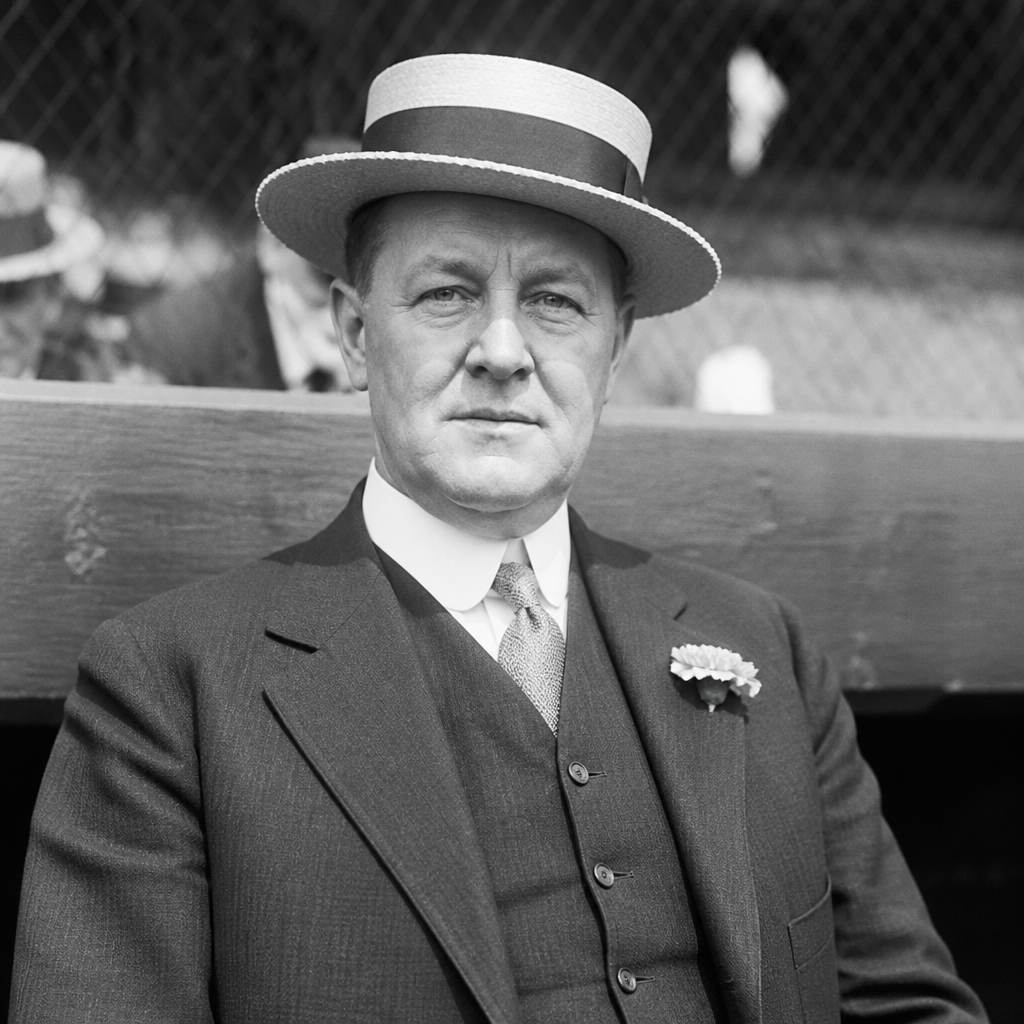
Harry Wright stands near the center of early baseball history because he did more than manage games: he organized talent, imposed discipline, built a business model, and helped turn baseball professional. In the broader story of the early history of baseball, Wright belongs in the “early players and innovators” category not simply as a successful captain, but as the figure who linked amateur club play to a modern, salaried sport. Any hub page on early players and innovators needs him at the core, because his work touches roster building, tactics, touring, scheduling, player conduct, and club administration.
To understand why Harry Wright matters, it helps to define the period. Mid-nineteenth-century baseball was shifting from loosely organized amateur competition into a game supported by gate receipts, regular travel, paid players, and public expectations. “Professional” in this context did not just mean receiving money. It meant creating repeatable systems: contracts, training routines, publicity, scouting, competitive standards, and financial planning strong enough to sustain a club over a season. I have spent years working through nineteenth-century baseball records, and Wright repeatedly appears wherever the sport becomes more structured, more accountable, and more recognizable to modern fans.
This article serves as a hub for early players and innovators by placing Wright among the larger network that shaped the game. He overlaps with pioneering administrators, tactical thinkers, star players, and rule shapers. He also offers a practical lens for readers moving deeper into the subject, because through Wright you can trace how baseball developed in Boston, Cincinnati, and Philadelphia, how clubs recruited talent, and how leadership off the field mattered as much as brilliance on it. If you want to understand how baseball became a profession rather than a pastime, Harry Wright is one of the best places to start.
Harry Wright’s background and why his career bridged eras
Born in Sheffield, England, in 1835, William Henry “Harry” Wright grew up in a family steeped in sport. His father, Samuel Wright, was a cricket professional, and that background mattered. Cricket in the nineteenth century already had organized coaching, paid expertise, and formal club culture. When the Wright family came to the United States, Harry and his brother George carried that sporting education into baseball. This is a crucial point for the early history of baseball: Harry Wright did not approach the game as a casual hobbyist. He approached it as someone raised around training, discipline, and public performance.
Before he became famous in baseball, Wright played both cricket and baseball, which was common among elite athletes of the period. His cricket experience shaped his baseball methods. He valued conditioning, fielding drill, strategic positioning, and captaincy grounded in preparation rather than impulse. Those habits helped him stand apart at a time when many clubs still operated on social prestige and informal arrangements. In practical terms, Wright represented a transfer of professional sporting culture into American baseball, and that transfer accelerated the game’s maturation.
Wright’s career also bridged two eras geographically and institutionally. He was associated with leading clubs in New York and later with the major baseball centers of Cincinnati, Boston, and Philadelphia. Each stop reflected a larger stage in the sport’s growth. New York represented the influential amateur club world. Cincinnati showcased the feasibility of a fully salaried team. Boston demonstrated how a disciplined club could dominate in an emerging professional environment. Philadelphia highlighted the long-term role of the manager as organizer, teacher, and executive authority.
Readers exploring early players and innovators should connect Wright with other names from the period, especially George Wright, Al Spalding, Candy Cummings, Cap Anson, and Albert Goodwill Spalding in his executive role. Those figures contributed star power, tactical change, or institutional growth. Harry Wright’s distinct contribution was integration. He brought people, methods, and finances into alignment so clubs could function consistently over time.
The Cincinnati Red Stockings and the proof that professional baseball could work
Harry Wright’s defining breakthrough came with the Cincinnati Red Stockings, organized in 1869 as the first openly all-professional baseball team. That phrase matters. Earlier clubs had hidden compensation or offered indirect benefits, but Cincinnati committed to paying every player’s salary openly. Wright was the central organizer and field leader of that experiment. He recruited talent, set expectations, arranged travel, and imposed the kind of order needed to make professionalism credible to skeptics.
The 1869 Red Stockings became famous by going undefeated against all opponents, finishing with a perfect record that is commonly listed at 57 wins, though period reporting can vary depending on which exhibitions and match classifications are counted. What matters more than the exact count is what the season demonstrated. Cincinnati drew crowds across the country, proved that a salaried team could become a national attraction, and showed club owners that baseball could operate as a serious commercial enterprise when run with discipline.
Wright’s methods were central to that success. He emphasized teamwork over celebrity, though his brother George Wright was one of the era’s biggest stars. He managed travel logistics during a grueling national tour, an often overlooked achievement in an age of lengthy rail journeys and inconsistent accommodations. He also understood public relations before the term existed. A touring club needed visibility, schedule reliability, and a reputation for professionalism. Cincinnati under Wright delivered all three.
The Red Stockings also exposed the costs of professionalism. Salaries, travel, and touring expenses were substantial, and sustaining the model required strong attendance and careful management. That is why Harry Wright deserves credit not only as a baseball man but as an organizer. He understood that winning games was inseparable from operating a viable enterprise.
| Area | What Wright Implemented | Why It Mattered |
|---|---|---|
| Roster construction | Recruited players for defined roles, not just local reputation | Created a balanced club built to win consistently |
| Compensation | Used open salaries for the full team | Made professionalism explicit and legitimate |
| Travel planning | Coordinated national tours with fixed opponents and dates | Expanded baseball’s audience and revenue base |
| Training | Stressed conditioning, practice, and field discipline | Raised performance standards beyond amateur norms |
| Club image | Maintained orderly conduct on and off the field | Built trust with fans, backers, and host cities |
How Wright changed the job of manager and captain
Modern readers often assume managers always handled strategy, personnel, and club culture in a formal way. In early baseball, that role was still developing, and Harry Wright helped define it. He acted as captain, manager, recruiter, scheduler, trainer, and public-facing representative. In effect, he created a template for baseball leadership that later professionals refined but did not invent from scratch.
One reason Wright stands out is that he treated management as a system. He assigned responsibilities, evaluated player reliability, and insisted that athletes represent the club well away from the field. He was known for rules regarding behavior and preparation, and those rules were practical rather than ornamental. A professional club traveling city to city could not survive repeated disorder, missed appearances, or careless conditioning. Wright understood this earlier and more fully than most contemporaries.
He also helped separate individual talent from organizational success. Early baseball writing often celebrated brilliant players, and rightly so, but Wright recognized that clubs won over time through structure. Fielding alignment, backup responsibilities, communication, and drilled habits reduced errors in a game where gloves were primitive and fields inconsistent. In my reading of period accounts, this organizational edge appears again and again in descriptions of Wright-led teams.
That leadership style influenced later baseball institutions. As leagues became more formal and owners more business-minded, the demand grew for managers who could control expenses, develop players, and maintain standards. Wright was among the first to show that the manager was not merely the oldest player or loudest voice. He was the architect of the club’s daily functioning.
Boston, dominance, and the refinement of professional team building
After Cincinnati’s first great run ended, Wright’s next major chapter came in Boston, where he managed the Boston Red Stockings beginning in 1871. This era is essential for anyone studying early players and innovators because it shows Wright building not a one-season novelty, but a durable baseball power. Boston became one of the strongest clubs of the 1870s, winning multiple championships under his direction and reinforcing the idea that professional success could be sustained through planning.
Wright’s Boston clubs combined stars with structure. He worked with elite pitchers and fielders, adjusted lineups, and made practical use of a long season when player availability and injuries could disrupt less organized teams. He also navigated the unstable environment of the National Association, a league that struggled with uneven governance, shifting club strength, and inconsistent business practices. In that setting, capable organization was a competitive advantage, and Wright used it ruthlessly.
His influence in Boston reached beyond game strategy. He participated in talent identification, compensation decisions, and club administration. This is why historians often place him in discussions of baseball’s first true managers. He did not simply fill out a lineup card. He ran an operation. The Boston years also demonstrate that Wright was not dependent on one roster or one market. He could replicate professional standards in a new setting and produce results.
For readers building out the broader early history of baseball, Boston connects Wright to larger developments: the rise of league play, the growing importance of urban fan bases, the beginnings of standard scheduling, and the increasing expectation that clubs would be managed by professionals rather than gentlemen enthusiasts. Wright made that transition look normal, which is one reason his contribution can be underestimated. What now seems obvious was not obvious before leaders like him proved it could work.
Innovation, tactics, and the culture of preparation
Harry Wright is sometimes overshadowed in tactical histories by inventors associated with single breakthroughs, such as Candy Cummings and the curveball debate. Yet Wright’s innovation was broader and, in many ways, more consequential. He advanced the culture of preparation. He believed practice should be structured, field play should be coordinated, and strategy should reflect opponents and conditions rather than mere custom.
Several tactical themes recur in accounts of his teams. He valued defense strongly, understanding that in nineteenth-century baseball, clean fielding changed games as much as heavy hitting. He paid close attention to positioning and to the way a club backed up throws and supported pitchers. He also recognized matchup realities long before data systems existed. A smart captain in Wright’s era studied tendencies through observation, memory, and conversation, then converted those observations into practical adjustments.
Just as important, Wright supported the idea that baseball knowledge could be taught. That mindset shaped his later years in Philadelphia, where he influenced younger players and helped establish professional habits. In this sense, he belongs alongside the era’s key innovators not because he attached his name to one dramatic invention, but because he normalized continuous improvement. Teams under Wright practiced with purpose, traveled with purpose, and played with a level of collective intention that moved baseball away from improvised competition.
His methods also had limits. Early baseball strategy was constrained by evolving rules, rough grounds, and uneven player pools. Wright could not impose modern specialization on a sport still inventing itself. But within those constraints, he pushed organization as far as the era allowed, and the results were unmistakable.
Harry Wright’s place in the wider hub of early players and innovators
As a hub topic, early players and innovators should be understood as an interconnected web, not a list of isolated biographies. Harry Wright links naturally to several major subtopics. He connects to George Wright through family influence and star play. He connects to Al Spalding through pitching, team building, and later sporting-goods authority. He connects to Cap Anson through the emergence of commanding field leaders in professional baseball. He connects to administrators such as William Hulbert through the institutional push toward stronger league structures.
He also helps explain the relationship between players and systems. Some innovators changed rules. Some brought exceptional individual skill. Wright’s special role was converting innovation into routine club practice. That is why he is ideal for a sub-pillar hub page. Through him, readers can move into related articles on the Cincinnati Red Stockings, the Boston Red Stockings, early baseball touring culture, nineteenth-century management, the National Association, and the transition from amateurism to professionalism.
In Philadelphia, where Wright spent later decades with the Phillies, his longevity reinforced his reputation as a foundational baseball authority. By then the sport had changed dramatically, but his presence linked newer generations to baseball’s formative period. He served as living proof that the professional game had not emerged accidentally. It had been organized into existence by people who understood training, discipline, and administration at a high level.
Harry Wright helped turn baseball professional because he made professionalism operational. He recruited intelligently, enforced standards, planned travel, built winning clubs, and showed owners and fans that structure created value. For anyone exploring the early history of baseball, that is the lasting lesson. Start with Wright, then follow the network of players and innovators around him. Doing so reveals how the sport’s first great transformation happened: not through one invention or one star, but through organized leadership that made baseball durable, marketable, and unmistakably professional.
Frequently Asked Questions
Who was Harry Wright, and why is he so important in early baseball history?
Harry Wright was one of the most influential organizers in the formative years of baseball, and his importance goes far beyond wins and losses on the field. Although he is often remembered as a player, captain, and manager, his larger historical significance comes from the way he helped reshape baseball from a loosely organized amateur pastime into a more disciplined, professional sport. In the broader early history of baseball, Wright stands out because he understood that success depended not only on talent, but also on structure, leadership, training, scheduling, and financial planning.
He emerged at a moment when baseball was changing rapidly in the mid-19th century. Clubs were becoming more competitive, crowds were growing, and the game was attracting public attention in ways that demanded better organization. Wright helped answer that need. He assembled talented rosters, insisted on orderly preparation, promoted teamwork over individual showmanship, and treated baseball as an enterprise that required management as much as athletic skill. That combination made him one of the key bridge figures between the amateur era and the professional era.
For that reason, Harry Wright belongs at the center of any discussion of early players and innovators. He was not merely a successful baseball man within an existing system; he helped build the system itself. His legacy is tied to the development of the team as a managed institution, the player as a paid professional, and the sport as a business capable of sustaining regular competition. In short, Wright matters because he helped define what professional baseball would become.
How did Harry Wright help turn baseball professional?
Harry Wright helped turn baseball professional by demonstrating that a club could be run with the discipline, planning, and financial structure of a serious business rather than as a casual social organization. In the early years of baseball, many clubs still operated under amateur ideals, even when competition and public interest were intensifying. Wright recognized that to sustain excellence, clubs needed more than enthusiasm; they needed paid talent, consistent standards, organized travel, and reliable administration.
One of his most important contributions was his role in leading professionally organized teams, especially the famous Cincinnati Red Stockings. Under Wright’s direction, the team was built around salaried players who could dedicate themselves fully to baseball. That was a major step in the sport’s evolution. Paying players changed expectations: teams could recruit more strategically, train more seriously, and compete more consistently. Wright did not simply accept this transition; he helped make it workable by combining roster management, public promotion, scheduling, and internal discipline.
Just as importantly, he showed that professionalism was not only about money changing hands. It was about building a durable model. Wright understood that a successful ballclub had to attract spectators, manage expenses, maintain standards of conduct, and create a reputation that would support ongoing competition. In that sense, he was a pioneer of baseball operations. He helped establish the idea that the sport could function as a profession for players and as a structured business for clubs, which was essential to the long-term growth of organized baseball.
What made Harry Wright different from other early baseball leaders?
What set Harry Wright apart was the breadth of his vision. Many early baseball figures contributed as players, club officers, or promoters, but Wright combined several roles at once and performed them at an unusually high level. He was not only concerned with strategy during games; he focused on how to build a complete organization. He thought about who should be on the roster, how they should prepare, how the club should travel, how standards should be enforced, and how the team should present itself to the public. That wider perspective made him more than a field leader—it made him an architect of professional baseball culture.
He was also known for emphasizing discipline and collective play. In an era when baseball was still developing its identity, Wright pushed for order, reliability, and teamwork. He valued players who could fit into a system and contribute to a coherent club structure. That may sound ordinary today, but it was highly significant in a time when the sport was still emerging from more informal club traditions. His methods helped define the difference between a talented collection of individuals and a professionally run team.
Another major difference was his ability to connect competitive success with organizational legitimacy. Wright understood that if baseball was going to grow, clubs needed public credibility. They had to be seen as serious institutions, not temporary gatherings. His leadership helped create that credibility. He offered a model of what a professional club could look like: organized, disciplined, marketable, and sustainable. That is why historians often place him among the game’s foundational innovators rather than viewing him only as a successful 19th-century manager.
Why are the Cincinnati Red Stockings so closely associated with Harry Wright?
The Cincinnati Red Stockings are closely associated with Harry Wright because they became one of the clearest early examples of what a fully organized professional baseball team could be, and Wright was central to that achievement. As leader of the club, he helped assemble a roster of salaried players and guided the team with a level of structure that stood out dramatically in the late 1860s. The Red Stockings were not important only because they won; they were important because they represented a new model for how baseball could be organized and presented.
Under Wright’s direction, the club demonstrated that professionalism could produce both competitive excellence and public excitement. The team’s success on the field drew attention, but its deeper significance lay in the way it was built and managed. Wright’s approach involved careful selection of talent, disciplined routines, and a clear sense that baseball was becoming something larger than a local pastime. The Red Stockings helped prove that fans would support a club made up of paid players competing at a high level, and that proof had enormous implications for the future of the sport.
Because of this, the Red Stockings occupy a major place in baseball history, and Harry Wright’s name is inseparable from theirs. He was not just a symbolic leader attached to a famous team; he was one of the people who made the team historically meaningful. Through Cincinnati, Wright showed that a professional club could be organized with intention, run with discipline, and marketed in a way that helped push baseball toward its modern form.
Where does Harry Wright fit among the “early players and innovators” in baseball history?
Harry Wright fits near the very center of the “early players and innovators” category because he represents more than one kind of historical contribution. Some early figures are remembered primarily for playing ability, others for rules development, and others for club administration. Wright is especially important because he connected those worlds. He was involved in the game as a practitioner, but his greatest impact came through innovation in leadership, organization, and professional structure. That makes him a pivotal figure in understanding how baseball evolved during its early decades.
He belongs in this category not simply because he was successful, but because he helped change the conditions under which success became possible. By emphasizing salaried talent, club discipline, strategic management, and organizational stability, he helped move baseball away from informal amateurism and toward a recognizable professional system. In that respect, he was not merely participating in change; he was actively shaping it. His role helps explain how baseball became a national sport with lasting institutions rather than remaining a collection of local clubs playing under uneven standards.
For any hub page or overview of early players and innovators, Wright should be treated as a core figure. He provides a crucial link between the game’s early club-based culture and the later professional structures that defined major baseball. His story illustrates that innovation in sports history is not limited to invention on the field. Sometimes the most lasting transformation comes from someone who can organize people, enforce standards, build systems, and recognize the future before others do. That is exactly why Harry Wright remains so significant.