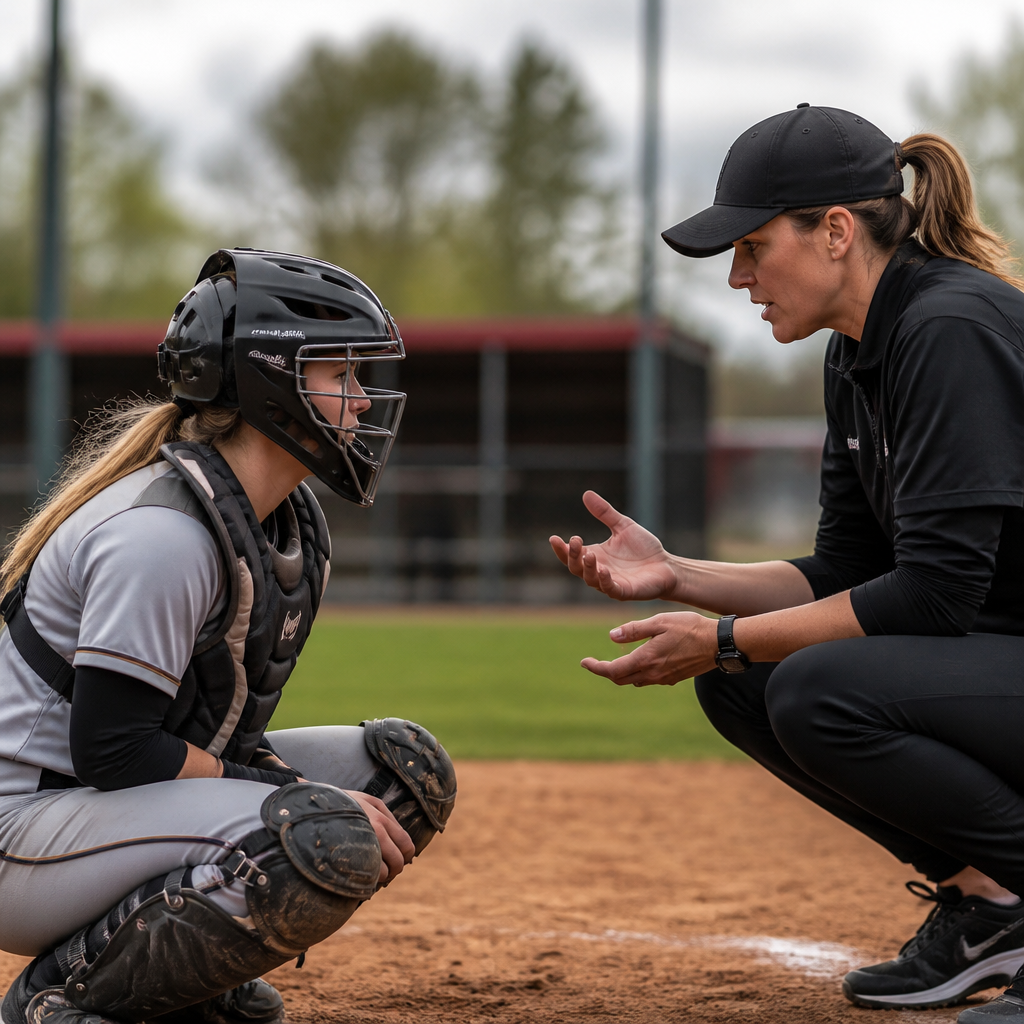
Baseball history is often told through box scores, pennants, and famous men, yet the sport has always depended on women who shaped it from inside clubhouses, classrooms, dugouts, press boxes, front offices, and communities. “From Catcher to Coach: Women’s Evolutionary Roles in Baseball” examines how women moved from being treated as exceptions to becoming essential contributors across the game. In this context, evolutionary roles means the gradual expansion of responsibilities, authority, and visibility over time, from playing and teaching to scouting, analytics, athletic training, umpiring, broadcasting, and leadership. For a “Women in Baseball” hub, the miscellaneous category matters because many contributions do not fit neatly into one lane. Some women began as players and became instructors. Others entered through medicine, operations, or media and later influenced on-field decisions. I have worked on baseball content and development programs long enough to see one recurring truth: when organizations widen access, the talent pool improves and the sport becomes smarter. Understanding these roles clarifies where progress has been real, where barriers remain, and why baseball’s future will be shaped by women in far more positions than many fans realize.
Women as Early Players, Teachers, and Organizers
Women have been playing baseball since the nineteenth century, even when records were inconsistent and coverage was dismissive. The most famous early professional pathway was the All-American Girls Professional Baseball League, founded in 1943 during World War II. While popular memory often compresses this history into entertainment, the league was a serious competitive enterprise with player development, travel demands, and tactical sophistication. Players such as Dottie Kamenshek and Sophie Kurys demonstrated elite defensive instincts, baserunning intelligence, and durability. Their work challenged the assumption that women’s involvement in baseball belonged only on the margins.
Outside formal leagues, women served as baseball teachers in schools, community recreation programs, and barnstorming clubs. That teaching role matters because baseball knowledge is transmitted through repetition: grip, footwork, release point, pitch recognition, cutoff responsibilities, and situational awareness. Many women who did not receive stable professional opportunities still became vital baseball educators. In my experience, grassroots instruction has often been the hidden engine of change. A coach running clinics for girls at age ten is not simply teaching throwing mechanics; she is normalizing belonging, which directly affects retention, confidence, and future leadership.
Women also organized teams, handled travel logistics, and built local baseball culture. Before institutions opened doors, informal networks did the work. Parents found fields, volunteers raised money, and women often coordinated registration, uniforms, and scheduling. These tasks can sound administrative, but they determine whether baseball programs survive. In practical terms, there is no player pipeline without organizers. This foundational labor created the conditions for later gains in coaching, officiating, and executive decision-making.
From the Field to the Dugout: Coaching as a Turning Point
Coaching marks a major transition in women’s baseball roles because it shifts participation from performance to authority. A player influences one position group or lineup spot; a coach shapes preparation, communication, and standards for an entire roster. Baseball coaching also requires layered competencies: swing design, defensive positioning, pitcher usage, training load management, opponent scouting, and emotional regulation over a long season. Women who step into coaching roles therefore challenge outdated assumptions at the deepest tactical level.
Justine Siegal is an important example. Through Baseball For All and her work with professional organizations, she became the first woman to coach for a Major League club in instructional settings. Her significance is not symbolic alone. She built practical pathways by running camps, advocating for girls’ access to baseball rather than softball by default, and demonstrating that instructional credibility comes from preparation and results. Alyssa Nakken’s hiring by the San Francisco Giants in 2020 as the first full-time female coach in Major League Baseball was another landmark because it embedded a woman in daily big-league operations. When she coached first base in a regular-season game in 2022, the moment was visible, but the more important point was routine inclusion in meetings, drills, and player development.
At amateur and collegiate levels, women coaches have long influenced baseball as assistants, skills instructors, strength specialists, and program builders. Their impact is clearest in player outcomes: better receiving techniques, improved strike-zone judgment plans, cleaner infield footwork, and stronger communication structures. In the organizations I have studied, the best coaches are trusted because they solve baseball problems. That is the standard women continue to meet, even as they still face scrutiny men rarely encounter.
Front Office, Analytics, and Decision-Making Power
Modern baseball increasingly runs on information, which has expanded opportunities for women in scouting, research, operations, and executive leadership. Front-office work can include contract analysis, player valuation, biomechanics integration, video systems, roster rules, and international operations. These jobs shape who gets drafted, promoted, protected on the 40-man roster, or targeted in trades. In other words, women in baseball operations influence the game even when fans never see them on camera.
Kim Ng’s appointment as general manager of the Miami Marlins in 2020 was historically significant because the general manager role concentrates authority over roster construction, staff alignment, and organizational process. Ng had already built one of the strongest résumés in the sport through roles with the Chicago White Sox, New York Yankees, Los Angeles Dodgers, and Major League Baseball’s central office. Her rise showed that expertise in labor rules, player evaluation, and institutional leadership belongs at the center of baseball success, not at its edges.
Women also contribute through analytics departments that use TrackMan, Hawk-Eye, Rapsodo, Blast Motion, and biomechanical review to improve performance. A player development analyst may help a pitcher understand induced vertical break, extension, seam effects, or release consistency. A hitting analyst may map attack angle, swing decisions, chase rate, and contact quality. These are not abstract numbers. They inform bullpen plans, batting-cage cues, and injury-prevention strategies. When clubs widen hiring in research and development, they gain broader perspectives on problem solving, communication, and evidence-based improvement.
Medical, Performance, and Support Roles That Changed the Game
Some of the most consequential women in baseball have worked in high-performance and medical positions. Athletic trainers, physical therapists, strength coaches, dietitians, mental performance specialists, and sports scientists directly affect availability, and availability drives wins. A brilliant roster means little if players are hurt, under-recovered, or mechanically compensating. Women in these areas changed baseball by professionalizing care and integrating science into everyday routines.
Sue Falsone became the first female head athletic trainer in Major League Baseball with the Los Angeles Dodgers in 2012. Her role underscored a core fact: treatment credibility comes from clinical skill, not gender. Baseball’s travel, repetitive throwing stress, and asymmetrical movement patterns create constant physical management challenges. A trainer must understand scapular control, hip-shoulder separation, workload spikes, soft-tissue response, hydration, and return-to-play sequencing. Clubs that embrace multidisciplinary performance teams usually make better decisions because no single coach can master every specialty.
Support roles also include clubhouse management, baseball operations coordination, equipment, and travel planning. These positions require precision under pressure. If a team’s advance materials are late, recovery tools are missing, or visa logistics fail for international players, performance suffers. Fans may not connect these details to the standings, but baseball people do. Reliable support systems let players focus on execution, and women have long been central to that infrastructure.
Broadcasting, Writing, and Cultural Influence
Women changed baseball not only by doing the work inside the game but also by interpreting the game for the public. Broadcasters, beat writers, documentary producers, photographers, and historians define which stories endure. That influence matters because public understanding often shapes institutional behavior. If coverage treats women as novelties, progress slows. If coverage documents expertise and results, legitimacy grows.
Jessica Mendoza’s work as an analyst at the national level expanded visibility for women offering technical baseball commentary. A strong analyst must break down sequencing, defensive positioning, baserunning reads, and swing adjustments quickly and accurately. That is baseball literacy in public form. Likewise, women beat writers have strengthened accountability by reporting on roster moves, labor issues, player development, and clubhouse dynamics with rigor. Good reporting is part of baseball’s ecosystem because teams, fans, and even future employers use those records to understand performance and decision-making.
Historical storytelling has been equally important. Researchers and filmmakers helped recover the lives of women whose baseball careers were minimized or forgotten. Once those stories enter museums, archives, and curriculum materials, they stop being isolated anecdotes and become part of the sport’s accepted history. That shift influences youth participation, sponsorship, and hiring because people pursue paths they can actually see.
Where Women Work in Baseball Today
Today, women appear across baseball’s structure, from youth leagues to Major League Baseball, though representation remains uneven by role and level. The broadest pattern is expansion from support visibility into technical and strategic authority. That change is measurable in hiring categories, development initiatives, and leadership opportunities.
| Role area | Typical responsibilities | Why it matters |
|---|---|---|
| Coaching | Skill instruction, game planning, player development | Direct impact on performance and culture |
| Scouting and analytics | Evaluation, data modeling, video review, draft support | Improves roster decisions and development efficiency |
| Medical and performance | Injury prevention, rehab, strength, nutrition, mental skills | Protects player availability and long-term value |
| Operations and administration | Travel, compliance, scheduling, logistics, roster paperwork | Keeps teams functional in a complex global sport |
| Media and education | Broadcasting, reporting, historical research, outreach | Shapes public understanding and future participation |
Development programs have accelerated this trend. MLB initiatives, women’s coaching clinics, girls’ baseball tournaments, and organizations such as Baseball For All create entry points that did not exist at scale twenty years ago. National governing bodies and international events have also helped. When girls can play competitive baseball, receive proper instruction, and meet women already working in the sport, the pipeline becomes tangible rather than aspirational.
Barriers, Tradeoffs, and What Real Progress Requires
Progress is real, but it is not linear. Women in baseball still face hiring bottlenecks, tokenism, unequal networking access, online harassment, and the expectation that they constantly prove baseline competence. Baseball remains a relationship-driven industry, which can disadvantage candidates excluded from traditional informal networks. There are also practical tradeoffs: minor league pay constraints, relentless travel, seasonal instability, and limited family support structures affect men and women, but the burden can fall differently depending on workplace culture.
Another challenge is the false choice between celebration and criticism. Milestones deserve recognition, yet representation alone is not transformation. One high-profile hire does not fix a weak pipeline. Real change requires sustained recruiting, mentorship, equitable pay practices, anti-harassment enforcement, and clear promotion criteria. It also requires facilities that support all staff members and players professionally. In my experience, the healthiest organizations treat inclusion as an operational standard, not a press release.
For readers using this hub as a starting point, the key takeaway is simple: women’s roles in baseball are not miscellaneous because they are minor. They are miscellaneous because they span nearly every function the sport depends on. From catchers teaching game calling to coaches running drills, from analysts shaping roster strategy to trainers preserving careers, women have helped baseball evolve into a more competent, accountable, and complete game. If you follow baseball, support that evolution actively: read women’s work, attend girls’ baseball events, study the history, and expect organizations to hire for excellence without limiting who gets the chance to lead.
Frequently Asked Questions
What does “women’s evolutionary roles in baseball” actually mean?
In this article, “women’s evolutionary roles in baseball” refers to the long, gradual expansion of women’s responsibilities, authority, visibility, and influence throughout the sport. Rather than focusing on one breakthrough moment, the phrase highlights an ongoing process: women first being welcomed only in limited or symbolic ways, then steadily proving indispensable in increasingly important baseball spaces. That evolution can be seen in everything from early community support and informal organizing to formal roles in education, player development, journalism, scouting, operations, and coaching.
It also matters that this evolution was not linear or automatic. For much of baseball history, women were treated as unusual exceptions rather than as full participants in the game’s culture and decision-making. Even when they were present, their work was often minimized, categorized as secondary, or excluded from the official story. Over time, however, women expanded what was considered possible by taking on more technical, strategic, and leadership-driven responsibilities. The shift from “outsider” to “essential contributor” is at the heart of what this phrase captures.
Just as importantly, the word “evolutionary” suggests adaptation within baseball itself. As the game became more complex and professionalized, opportunities opened in new areas such as analytics, sports medicine, player mentoring, communications, and coaching. Women entered and reshaped those spaces, helping organizations think differently about leadership and expertise. So the term is not simply about women joining baseball; it is about baseball changing because of women’s sustained participation and growing authority.
How have women contributed to baseball beyond playing on the field?
Women have influenced baseball far beyond game-day participation, and in many cases their contributions have helped define how the sport functions at every level. Historically, women have supported local teams, organized events, managed logistics, taught fundamentals, built youth interest, preserved community baseball traditions, and helped sustain the fan culture that gives the sport its social life. These forms of labor were not always given formal recognition, but they were essential in maintaining baseball as both a game and an institution.
As the sport developed, women became increasingly important in professional and organizational settings. They entered press boxes as reporters and editors, helping shape public understanding of players, teams, and baseball culture. They worked in front offices, where responsibilities could include administration, operations, scheduling, player services, marketing, and long-term strategic planning. In educational and developmental roles, women taught mechanics, mentored athletes, ran clinics, evaluated talent, and contributed to the intellectual side of baseball by studying performance, communication, and team dynamics.
Today, women’s contributions are especially visible in roles that demand expertise and leadership. Women serve as coaches, coordinators, executives, broadcasters, analysts, trainers, and development specialists. They contribute to scouting reports, game preparation, player growth, and organizational culture. Their impact is not limited to symbolism or representation; it is practical, measurable, and daily. In short, women have helped baseball survive, modernize, communicate, and evolve, often in ways the traditional record did not fully acknowledge until much later.
Why have women’s roles in baseball often been overlooked in traditional baseball history?
Traditional baseball history has frequently centered on statistics, championships, and a narrow set of celebrated male figures, which has left many women’s contributions underreported or completely omitted. One reason is that historians, journalists, and institutions often prioritized on-field achievement as the main measure of importance. Because many women were historically excluded from formal playing opportunities or high-profile titles, their influence in support, leadership, developmental, and cultural roles was less likely to be documented with the same seriousness.
Another reason is that women’s work in baseball was often framed as peripheral even when it was central. Tasks such as organizing, mentoring, educating, advocating, or managing team and community functions were sometimes viewed as background labor rather than as baseball labor. That distinction distorted the historical record. If a role did not fit the popular image of the sport as a male athletic contest, it was more easily ignored, even when it clearly affected team performance, player development, or the long-term health of baseball institutions.
There is also the issue of access and gatekeeping. For decades, women faced barriers to credentials, hiring, promotion, and authority, which meant fewer opportunities to hold titles that historians were trained to notice. Yet lack of title does not equal lack of impact. Modern scholarship and public discussion have started to correct that imbalance by looking more closely at archives, oral histories, local baseball communities, and overlooked contributors. As a result, baseball history is becoming richer and more accurate, showing that women were never absent from the game; they were simply too often excluded from the way the story was told.
How has the transition from roles like catcher, mentor, and organizer to coach and leader changed baseball culture?
The movement from hands-on participation and informal influence to formal coaching and leadership has changed baseball culture in meaningful ways. When women began to be recognized not just as supporters of baseball but as teachers, strategists, and decision-makers, the sport had to expand its definition of expertise. That shift challenged long-standing assumptions about who could instruct players, command a clubhouse, communicate authority, and contribute to competitive success. In many organizations, this transition helped replace outdated ideas about gender with a more practical focus on knowledge, preparation, and results.
This cultural change has also improved the game’s developmental environment. Coaches and leaders are responsible for far more than lineups and mechanics; they shape communication standards, trust, accountability, and the way athletes learn. Women in leadership roles have helped broaden those conversations, often bringing fresh perspectives to teaching, motivation, collaboration, and player care. Their presence has encouraged baseball to become more reflective about leadership style, interpersonal dynamics, and the value of diverse viewpoints within high-pressure team settings.
Perhaps most significantly, this transition has normalized the idea that women belong in baseball’s core power structures. Once women are seen regularly in dugouts, front offices, training environments, and strategic meetings, their participation becomes less about novelty and more about contribution. That normalization matters for current players, future professionals, and the sport’s public image. It signals that baseball is strongest when it draws on the widest possible range of talent, and it helps ensure that future generations inherit a game defined less by exclusion and more by capability and growth.
Why is it important to study women’s evolving roles in baseball today?
Studying women’s evolving roles in baseball matters because it leads to a fuller and more honest understanding of the sport. Baseball is not only a record of innings, pennants, and legendary players; it is also a social institution shaped by educators, organizers, journalists, executives, mentors, and community builders. When women’s roles are included, the history of baseball becomes more accurate and more human. It reveals how the game has been sustained, challenged, and improved by people whose contributions were often left out of the mainstream narrative.
This subject is also important because it helps explain where baseball is heading. The modern game depends on collaboration across coaching, technology, communication, health, development, and administration. Women are part of all those areas, and their increasing visibility reflects broader changes in how organizations recognize skill and leadership. Understanding that evolution gives readers a clearer picture of baseball as a living system rather than a fixed tradition. It shows that progress in the sport is not accidental; it comes from expanding opportunity and rethinking who gets to lead.
Finally, examining women’s place in baseball has real cultural value beyond the sport itself. It offers a case study in how institutions change, how barriers are challenged, and how overlooked labor becomes visible over time. For young athletes, aspiring coaches, and future baseball professionals, these stories create a broader sense of belonging and possibility. For fans and historians, they deepen appreciation for the game’s complexity. And for baseball as a whole, they reinforce a simple but powerful truth: the sport has always been shaped by women, and its future will be shaped by them as well.