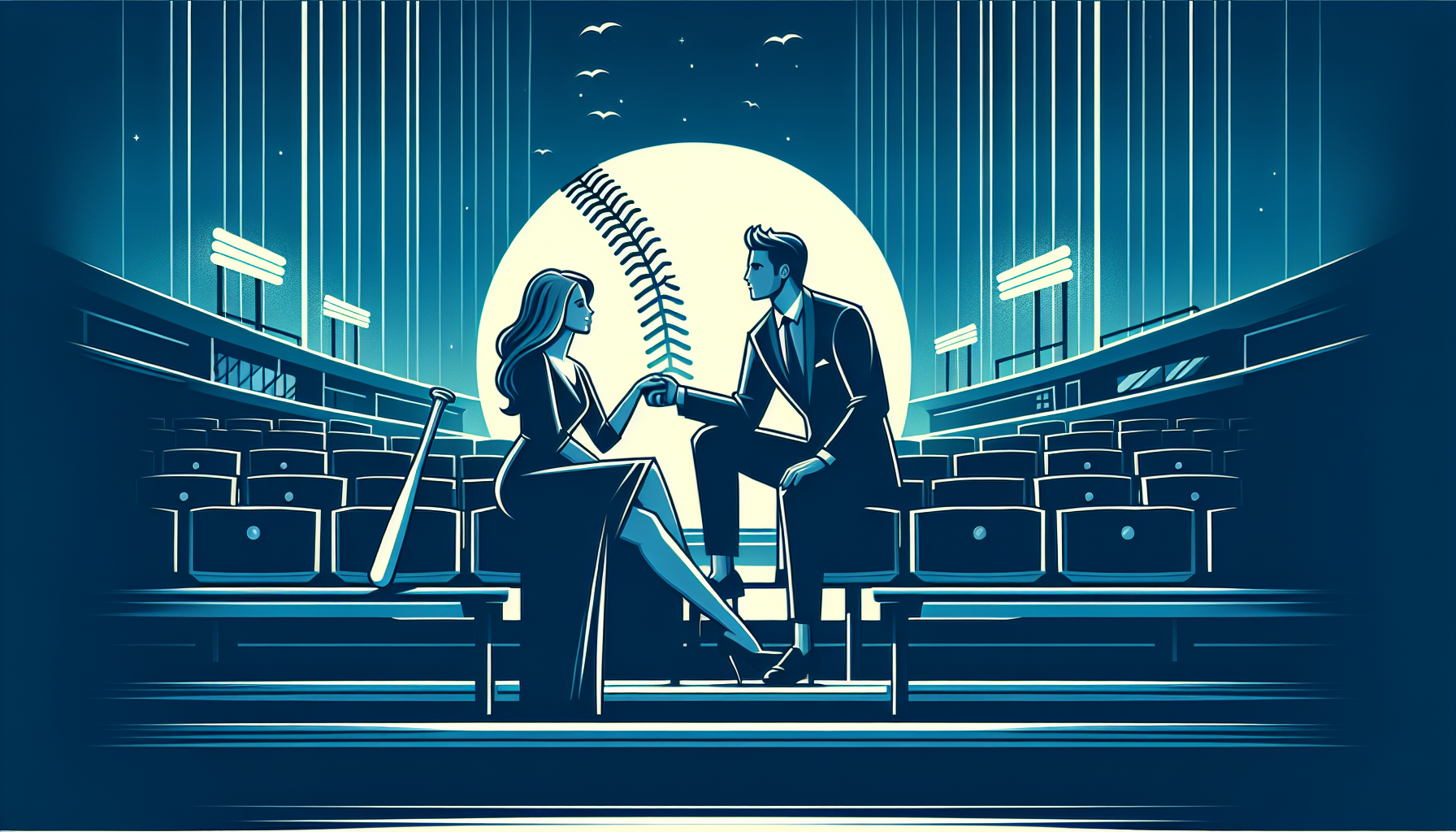
Baseball movies are often remembered for pennant races, dramatic ninth innings, and speeches about grit, yet one of the sport’s most durable screen traditions is romance. “For Love of the Game: Baseball’s Romantic Side on Screen” sits at the center of baseball in literature and film because it connects athletic competition to longing, memory, marriage, courtship, sacrifice, and nostalgia. In this miscellaneous hub, baseball romance means more than a love story with uniforms in the background. It includes films where romantic partnership drives the plot, stories where baseball symbolizes emotional commitment, and narratives where the game itself becomes the beloved object that competes with family life. After years of programming retrospectives and writing about sports cinema, I have found that viewers return to these films not simply for box scores, but for the way baseball slows time and gives feeling a ritual shape.
That matters because baseball is uniquely cinematic. Its pauses create room for glances, interior monologue, missed chances, and reconciliation. A football film can deliver velocity and collision; a boxing film can give intimacy through combat; but baseball offers waiting, repetition, and suspended hope. On screen, that makes romance plausible in several registers at once. A couple can talk in the stands between pitches. A long season can mirror a long courtship. A rain delay can become a crisis point. The geometry of the diamond also helps filmmakers stage emotional distance and reunion with unusual clarity. Home plate, the mound, and the outfield fence are not just sporting spaces. They are visual markers of vulnerability, separation, and return.
As a hub article, this page maps the major ways film has fused baseball and romance across eras, tones, and audience expectations. It covers direct romantic dramas such as For Love of the Game, comedies like Bull Durham, family-centered stories including A League of Their Own, and adjacent works where affection, fantasy, or devotion shape the baseball experience. It also points toward the larger subtopic of baseball in literature and film by showing how recurring motifs move between novels, memoirs, screenplays, and adaptations. If you want a practical definition, baseball’s romantic side on screen is the set of films and performances that treat the game as a language for desire, loyalty, regret, and belonging.
The appeal of these stories has lasted because they answer a basic question that sports narratives alone cannot fully settle: what is winning for? A pennant without companionship can feel empty; a relationship tested by ambition becomes legible through the season’s demands. Baseball romance films matter in criticism and popular culture because they reveal how Americans have imagined gender roles, regional identity, celebrity, labor, and aging through the safest possible vessel: a game that already carries mythic weight. Understanding this romantic strand helps viewers read the whole field of baseball cinema more accurately.
Why Baseball and Romance Fit So Naturally on Film
Baseball supports romantic storytelling because its rhythm resembles conversation and memory. Directors can cut from action to reaction without breaking plausibility, and writers can use innings the way a stage playwright uses acts. The sport is also seasonal, which gives romance an easy narrative clock: spring attraction, summer intensity, autumn reckoning. In practical filmmaking terms, baseball’s downtime allows scenes of seduction, conflict, and confession without forcing the audience to ignore the game. That is one reason Ron Shelton’s Bull Durham remains a touchstone. The film is about minor league baseball, but its core engine is the triangle among Crash Davis, Annie Savoy, and Nuke LaLoosh. The locker-room chatter, mound visits, and bus rides make the romance feel organic rather than imported from another genre.
Another reason is iconography. Ballparks are loaded with soft evening light, folk music cues, scoreboards, and communal ritual. Cinematographers repeatedly use these elements to create emotional warmth. Barry Levinson’s The Natural is not a conventional romance, yet its visual language turns baseball into courtship with destiny itself. By contrast, Sam Raimi’s For Love of the Game anchors romance in a mature relationship, crosscutting Billy Chapel’s perfect game with his memories of Jane Aubrey. Many critics were divided on the film’s pacing, but its method is revealing: the game functions as a frame through which a player measures what he may lose when his career ends.
Baseball also accommodates both idealism and realism. In one film, love can feel fated; in another, it can be compromised by travel, ego, contract pressure, or media scrutiny. That flexibility explains why baseball romance appears in comedy, melodrama, family film, and even supernatural fantasy. The game can signify innocence in Field of Dreams, erotic intelligence in Bull Durham, middle-aged reckoning in For Love of the Game, and collective female solidarity in A League of Their Own. The common thread is that baseball provides stakes beyond the couple, giving private emotion a public stage.
Key Film Types in Baseball’s Romantic Tradition
When readers look for baseball romance on screen, they usually mean one of four patterns. The first is the athlete-centered love story, where a player’s career directly pressures intimacy. For Love of the Game is the clearest example, but so are films in which a prospect’s instability or fame disrupts domestic life. The second is the baseball ensemble with a strong romantic spine, seen in Bull Durham and parts of A League of Their Own. The third is the nostalgia film, where memory and affection merge, as in Field of Dreams. The fourth is the fan-centered romance or relationship comedy, where baseball fandom becomes the shared language of a couple, as in Fever Pitch, adapted from Nick Hornby’s memoir and shifted from football culture to the Boston Red Sox.
These categories overlap, but they help organize the subtopic for deeper reading. A film does not need a kiss in the final inning to belong here. Sometimes the romantic charge lies in devotion to place, team, family lineage, or a lost past. That broader reading is essential because baseball cinema often transfers emotion from person to symbol. A glove, a ticket stub, a radio call, or a father-son catch can carry the force of romantic imagery even when the relationship is not conventionally romantic.
| Film | Year | Romantic Mode | Why It Matters in This Hub |
|---|---|---|---|
| Bull Durham | 1988 | Adult romantic comedy | Blends baseball knowledge, sexual politics, and minor league realism |
| For Love of the Game | 1999 | Mature relationship drama | Uses a perfect game as the structure for memory and emotional reckoning |
| A League of Their Own | 1992 | Ensemble relationships | Shows how romance intersects with women’s labor, marriage, and wartime change |
| Field of Dreams | 1989 | Nostalgic devotion | Expands romance beyond couples to family, faith, and idealized belonging |
| Fever Pitch | 2005 | Fan-centered relationship comedy | Explores how obsessive fandom complicates ordinary partnership |
For a miscellaneous hub, this framework is useful because it points readers toward specialized articles: player-centered melodramas, baseball rom-coms, women and baseball relationships, adaptations from books, and films about fandom. Together, those branches cover the full emotional range of the subtopic.
Essential Titles and What Each One Adds
Bull Durham remains the most complete fusion of baseball intelligence and adult romance in American film. Shelton, who played in the minors, understood clubhouse speech, streaks, slumps, and the humiliations of bus-league life. That lived-in detail gives Annie Savoy’s annual selection of a player both comic sparkle and thematic force. She is not simply a muse; she is a reader of baseball ritual, a curator of male fantasy, and a challenge to sports-movie innocence. Crash Davis, played by Kevin Costner, brings veteran melancholy, while Tim Robbins’s Nuke embodies raw talent without emotional shape. The romance works because it is inseparable from baseball literacy.
For Love of the Game is more polarizing, but it deserves serious attention. Costner’s Billy Chapel is aging, physically strained, and facing retirement while throwing what may be the defining game of his career. The film alternates present-tense concentration with memories of Jane, played by Kelly Preston. Some viewers find the flashback structure repetitive. I think its value lies in showing how athletes narrate their own lives under pressure. Chapel does not remember linearly; he remembers by emotional trigger. The romantic story is therefore not a subplot but the very texture of his consciousness on the mound.
A League of Their Own broadens the category. Penny Marshall’s film is not primarily a romance, yet its treatment of marriage, sisterhood, and public femininity is central to baseball’s romantic side on screen. Dottie’s bond with Bob, Kit’s hunger for recognition, and the players’ negotiations with wartime expectations show how baseball can both interrupt and reinforce conventional romance. The famous line “There’s no crying in baseball” survives as comedy, but the film’s deeper achievement is its attention to women’s emotional labor within a sport industry.
Field of Dreams may seem like an outlier because its central relationship is filial rather than romantic. Still, it belongs in this hub because baseball romance often expands into love of family, land, and impossible return. Ray Kinsella’s marriage is unusually supportive for a fantasy film, and the movie’s emotional climax depends on tenderness rather than triumph. In adaptation terms, it also matters that W.P. Kinsella’s novel Shoeless Joe already framed baseball as an arena where imagination and desire could heal private grief.
Fever Pitch adds the modern fan perspective. The Farrelly brothers’ version, starring Drew Barrymore and Jimmy Fallon, asks a contemporary question: can a relationship survive total emotional investment in a team? Its answer is lighter than Hornby’s memoir, but the film captures a real dynamic I have seen around clubs with multigenerational loyalties. Fandom structures calendars, spending, mood, and identity. On screen, that can look absurd, but it also reveals why baseball remains a social bond strong enough to shape courtship and commitment.
Literary Roots, Adaptations, and Recurring Motifs
This hub belongs under baseball in literature and film because many screen romances inherit patterns first worked out in print. Novels and memoirs gave filmmakers a ready-made vocabulary of longing attached to baseball’s slowness, pastoral imagery, and archival feel. Bernard Malamud’s The Natural, Mark Harris’s baseball novels, and Kinsella’s magical-realist fiction all helped define the emotional possibilities available to later films, even when the adaptations changed tone or plot. Literature also made room for interiority. Film then translated that interiority into voiceover, flashback, montage, and performance.
Several motifs recur across media. One is the season as relationship arc. Another is the game as a rival lover: players neglect partners, partners resent the schedule, and fans compete with spouses for emotional priority. A third is the return home. Baseball diamonds in fiction and film are often tied to hometown memory, first love, or unresolved family attachment. Finally, there is the motif of record-keeping itself. Box scores, letters, scorecards, and broadcasts preserve feeling. Few sports lend themselves so naturally to archival romance, where the beloved survives in statistics and stories.
These motifs are useful for readers exploring related articles because they create internal pathways. If you are interested in baseball adaptations, look for how novels handle memory differently from films. If you are drawn to women’s stories, compare the courtship conventions in wartime narratives with later revisionist treatments. If your focus is nostalgia, trace how the baseball field became a place where cinema negotiates masculinity and emotional expression.
What These Films Reveal About Culture, Gender, and Memory
Baseball’s romantic side on screen is never just personal. It records changing ideas about who gets to love the game publicly and what kinds of intimacy the culture will validate. Older films often treated the male athlete’s ambition as primary and the female partner as stabilizer, temptation, or reward. By the late 1980s and 1990s, that pattern became more self-aware. Annie Savoy’s intelligence in Bull Durham and the collective viewpoint of A League of Their Own challenged passive depictions, even if neither film escapes stereotype entirely.
These films also document changing masculinity. Baseball has long been linked to fathers, sons, stoicism, and ritualized self-control. Romantic baseball cinema complicates that inheritance by making men speak, remember, and grieve. Costner’s baseball roles are central here because his screen persona combines athletic credibility with reflective vulnerability. Whether one admires or resists that mode, it helped define how late twentieth-century baseball films invited male characters to be emotional without abandoning competitive identity.
Memory is the final cultural key. Baseball romance films frequently insist that love is not measured only in permanence. Sometimes it is measured in recurrence: a yearly Opening Day, a replayed radio call, a return to the same seat in the same park. That is why even lighter films can carry surprising weight. They recognize that spectators attach biography to seasons. In criticism, this is where miscellaneous coverage becomes valuable. Not every important baseball romance fits neatly into melodrama or comedy, but taken together these works show how the sport organizes feeling across generations.
How to Use This Hub for Further Viewing and Reading
Start with the essentials: Bull Durham, For Love of the Game, A League of Their Own, Field of Dreams, and Fever Pitch. Then branch by interest. Choose adaptations if you want to compare page and screen. Choose women-centered baseball films if you want romance reframed through labor and visibility. Choose fan comedies if you care about baseball as domestic negotiation. Revisit star performances, especially Costner, Susan Sarandon, Geena Davis, Tom Hanks, and Drew Barrymore, because acting style strongly shapes how sincerity lands in this subgenre.
The main takeaway is simple: baseball’s romantic side on screen is not a niche curiosity. It is one of the clearest ways film explains why the game matters beyond standings and statistics. These stories make baseball legible as courtship, companionship, memory, and loss. Use this hub as your starting point, then follow the connected articles in baseball in literature and film to build a fuller map of how the diamond became one of cinema’s most enduring spaces for love.
Frequently Asked Questions
What makes baseball such a natural setting for romance in film?
Baseball lends itself to romance on screen because the sport already carries emotional qualities that filmmakers can easily translate into love stories: patience, ritual, memory, anticipation, and the passage of time. Unlike faster, more chaotic sports, baseball unfolds in pauses and glances as much as in action. That rhythm gives directors room to explore relationships, longing, missed chances, and emotional reconciliation without making the romance feel separate from the game. A ballpark at dusk, a long road trip, a summer season, or the quiet between pitches can all become visual and emotional spaces where characters confront what they want from love and life.
Just as importantly, baseball is deeply tied to nostalgia in American storytelling. It often represents childhood, family bonds, first loves, hometown loyalty, and the idea of returning to something lost. When romance enters that world, it becomes more than a subplot. It can express devotion, regret, sacrifice, and emotional maturity through the language of the game itself. A relationship in a baseball film may mirror a season: hopeful in the beginning, tested in the middle, and clarified by what survives at the end. That structure helps baseball romance feel organic, emotionally resonant, and unusually durable in popular culture.
How do baseball romance films differ from standard sports movies?
Baseball romance films usually shift the central dramatic question. In a traditional sports movie, the primary focus is often whether the team will win the championship, whether the underdog will succeed, or whether an athlete will overcome adversity. In a baseball film with a strong romantic core, those competitive stakes still matter, but they are often reframed through intimate human relationships. The real tension may involve whether a marriage can survive the demands of fame, whether a player can choose emotional honesty over professional obsession, or whether love can endure across distance, disappointment, and changing identities.
These films also tend to use the sport symbolically rather than only competitively. A slump can represent emotional withdrawal. A comeback can reflect personal healing. A final game may serve as a reckoning not just with a career, but with love, aging, loyalty, and regret. In that sense, baseball romance films often feel more reflective than triumph-driven. They are interested in what the game costs people, what it preserves, and how it shapes the way characters connect to spouses, partners, families, and memories. That combination gives the genre a richer emotional texture than many straightforward sports narratives.
Why is nostalgia so important in baseball love stories on screen?
Nostalgia is central because baseball on screen is rarely just about the present moment. It almost always carries echoes of the past: childhood afternoons, old stadiums, family traditions, vanished eras, and unfinished emotional business. When romance is woven into that atmosphere, love becomes linked to memory in a powerful way. Characters are not only falling in love or trying to save a relationship; they are often trying to recover a version of themselves, reconnect with an earlier dream, or understand how time has changed them. That makes baseball romance especially poignant, because it is often shaped by what has already been lost or nearly forgotten.
On a storytelling level, nostalgia allows filmmakers to deepen both character and theme. A romantic relationship in a baseball film may stand for continuity in a world of change, or it may highlight the painful gap between idealized memory and adult reality. Ballparks, uniforms, radio broadcasts, scorecards, and seasonal rhythms become emotional triggers that connect personal love to collective cultural memory. This is one reason baseball romances often feel expansive even when the plot is intimate: they speak not only to a couple’s story, but to the audience’s sense of time, longing, and the fragile beauty of things that do not last forever.
What themes usually appear in films about baseball and romance?
Several recurring themes define baseball’s romantic side on screen. One of the most common is sacrifice. Players, partners, and families must decide what they are willing to give up for ambition, stability, marriage, or personal fulfillment. Another major theme is distance, both literal and emotional. The long baseball season, travel schedule, and pressures of performance naturally create strains on intimacy, making the sport an ideal framework for stories about separation, loneliness, and reunion. Many of these films also explore identity, especially the tension between public life and private feeling. A character may be celebrated in the stadium yet deeply uncertain at home, which gives romance a grounding realism.
Other important themes include aging, second chances, devotion, and the conflict between myth and reality. Baseball often produces heroes in the public imagination, but romantic storytelling tends to humanize them. It asks what happens when the legend steps off the field and has to be a spouse, a lover, a parent, or simply a vulnerable person. The best baseball romance films also return again and again to the idea of timing. In both baseball and love, timing matters enormously. A late swing, a missed opportunity, an unexpected return, or a final chance at connection can carry enormous weight. These shared structures are part of what makes the genre so emotionally effective.
Why does the romantic tradition matter within baseball in literature and film?
The romantic tradition matters because it broadens our understanding of what baseball stories can do. If baseball were treated only as a vehicle for competition, victory, and masculine toughness, many of its richest emotional possibilities would be left unexplored. Romance introduces vulnerability, domestic life, emotional consequence, and interpersonal complexity. It allows baseball narratives to engage with marriage, courtship, longing, grief, memory, and the complicated negotiations between career and intimacy. In literature and film alike, that expansion has helped keep baseball culturally relevant, because it connects the game to universal human concerns rather than limiting it to sports fandom alone.
This tradition also reveals something essential about how baseball functions as metaphor. The game is slow enough to think in, spacious enough to remember in, and repetitive enough to invite reflection. That makes it uniquely suited to stories where love is not just decorative, but interpretive. Romance helps explain why the game matters to people beyond the standings. It shows how baseball becomes intertwined with family histories, personal transformation, and emotional inheritance. In that sense, baseball’s romantic side is not a minor branch of the genre. It is one of the ways literature and film have most successfully turned the sport into a lasting art form, capable of speaking to the heart as powerfully as it speaks to competition.