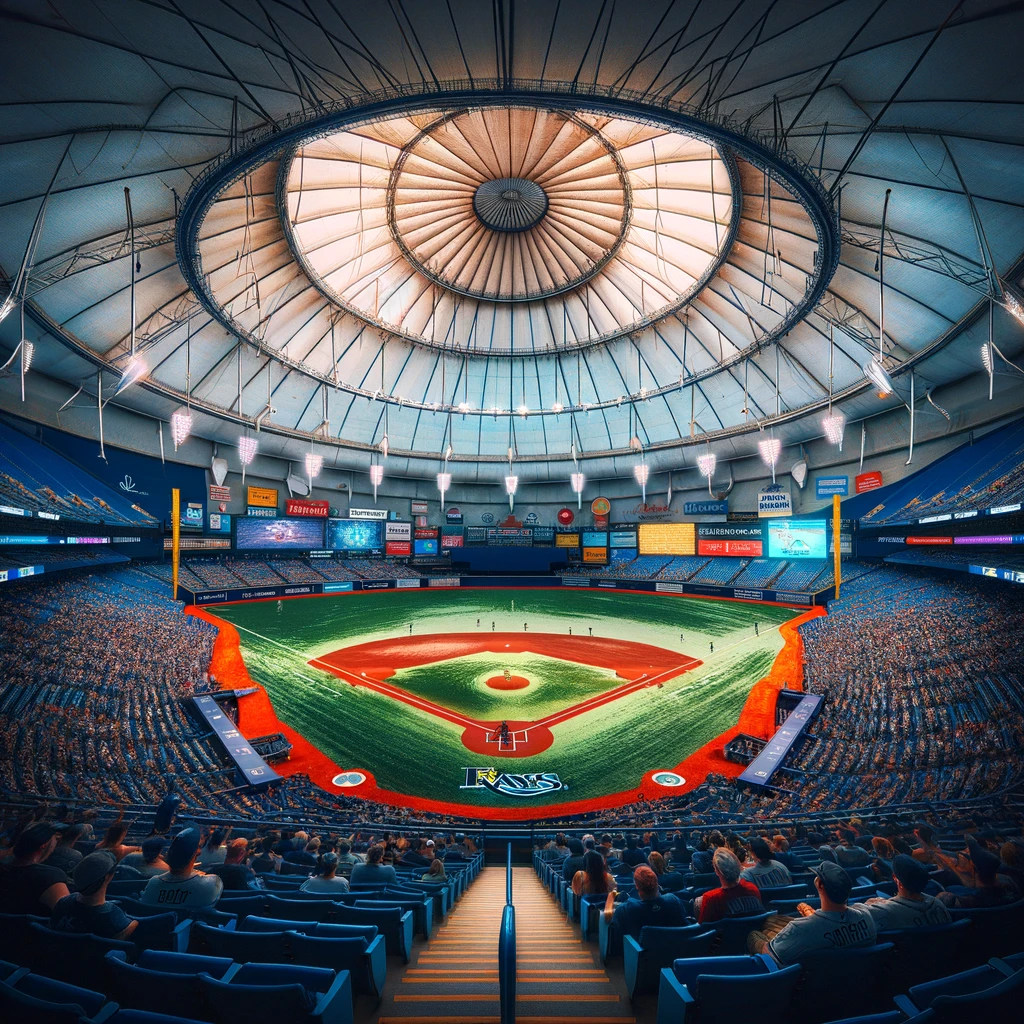
Tropicana Field, the home of Major League Baseball’s Tampa Bay Rays, stands as a unique monument in the world of sports stadiums. Nestled in St. Petersburg, Florida, this domed stadium is unlike any other in the major leagues. From its inception to its current status, Tropicana Field holds a distinctive place in the hearts of baseball fans and architecture enthusiasts alike. In this article, we will explore the history, architectural features, innovations, and the fan experience that make Tropicana Field an iconic ballpark.
History and Development
The story of Tropicana Field begins in the late 1980s, a time when the city of St. Petersburg was eager to attract a Major League Baseball team. The construction of a new, state-of-the-art stadium was seen as a key component in this endeavor. Completed in 1990, the stadium was initially named the Florida Suncoast Dome. Despite not having a resident baseball team initially, it hosted various events, showcasing its versatility and state-of-the-art facilities.
In 1995, the Tampa Bay Devil Rays (now known as the Tampa Bay Rays) were founded, and the Dome was renovated to accommodate baseball. It was rechristened as Tropicana Field in 1996 after a naming rights agreement. The Rays played their first game here in 1998, marking the beginning of a new era in Florida’s baseball history.
Architectural Features
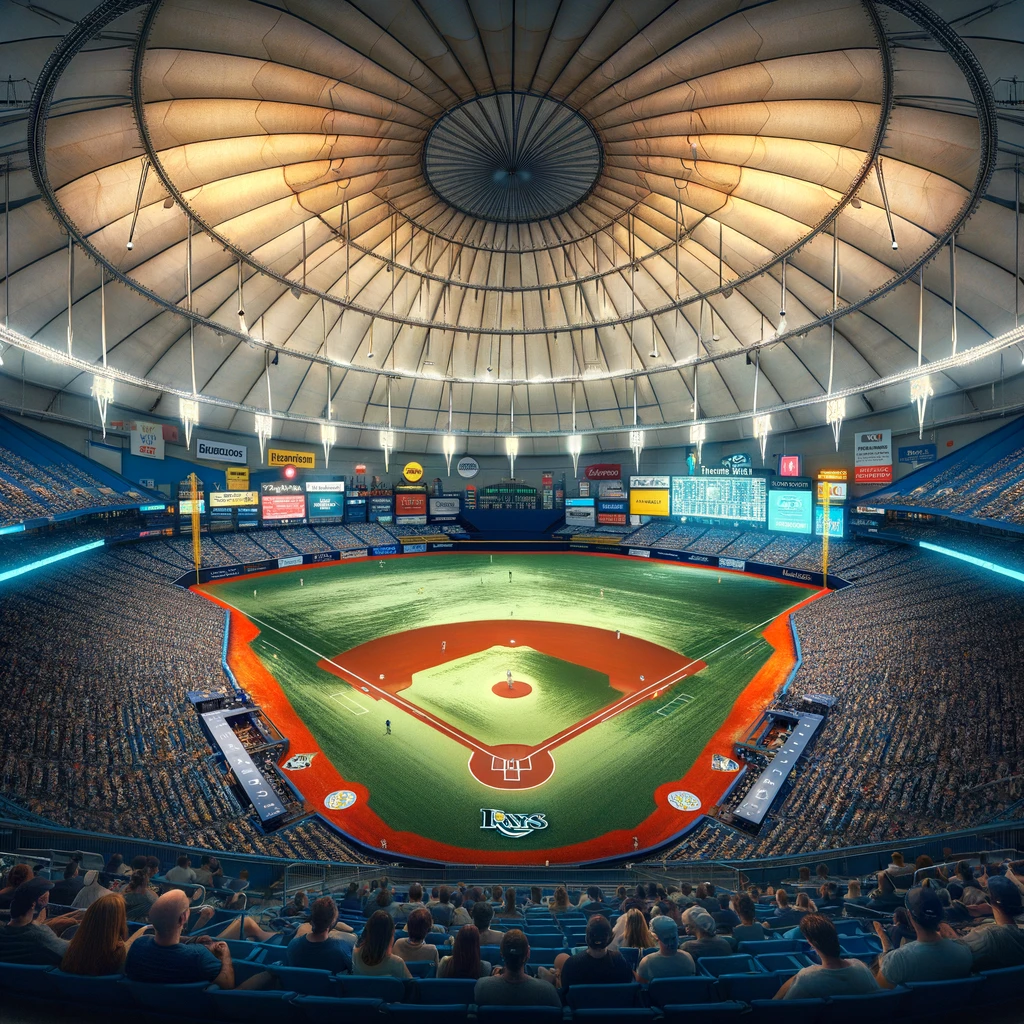
Tropicana Field’s design is a marvel in itself. The most striking feature is its fixed, domed roof, designed to shield players and fans from Florida’s often unpredictable weather. This made it the first domed stadium in Major League Baseball to have an artificial turf surface. The dome spans 6.5 acres and reaches a height of 225 feet, creating an impressive and unmistakable silhouette against the St. Petersburg skyline.
Inside, the stadium’s seating arrangement offers an intimate experience for fans, with a capacity of just over 25,000 for baseball games, making it one of the smallest in the majors. This creates an atmosphere where every seat feels close to the action. The catwalks, part of the dome’s support structure, add a quirky element to the game, as they occasionally come into play on high-flying baseballs.
Innovations and Features
Tropicana Field has been a groundbreaker in several aspects. One of its most notable features is the Rays Tank, an aquarium located beyond the right-center field fence, home to dozens of cownose rays. The tank is a fan favorite and adds an element of local wildlife to the ballpark experience.
The field’s turf has evolved over the years, with the Rays installing a new, state-of-the-art artificial playing surface in recent seasons. This surface is designed to mimic the feel and playability of natural grass, offering players a consistent and safe playing field.
Fan Experience and Amenities
Visiting Tropicana Field is about more than just baseball; it’s an immersive experience. The stadium offers a wide array of amenities to enhance the fan experience. From a variety of food and drink options that reflect the local cuisine to interactive fan zones and a team store filled with merchandise, there is something for everyone.
The Ted Williams Museum and Hitters Hall of Fame, located inside the ballpark, is a must-visit for any baseball enthusiast. It features memorabilia and exhibits honoring one of baseball’s greatest hitters and other legendary players.
Community and Economic Impact
Tropicana Field has had a significant impact on the St. Petersburg community and the wider Tampa Bay area. It has served as a catalyst for economic development and urban revitalization in its surrounding areas. The stadium has generated employment opportunities, boosted tourism, and brought a sense of pride and identity to the local community.
The Rays have also been active in community outreach, using the stadium as a venue for various charitable and community events, further embedding themselves in the fabric of the local community.
Challenges and Future Prospects
Despite its unique features, Tropicana Field has faced criticism, particularly regarding its location and accessibility. There have been ongoing discussions about the future of the Rays in St. Petersburg, with proposals for new stadium locations being a frequent topic of debate.
As of now, Tropicana Field remains the Rays’ home, and it continues to be a focal point for baseball in Florida. While its future may be uncertain, its place in baseball history is secure.
Community Engagement and Events
Beyond baseball, Tropicana Field has become a hub for community engagement and diverse events. It has hosted concerts, sporting events, and festivals, showcasing its versatility as a venue. The Rays’ commitment to community involvement is evident through programs that focus on youth sports, education, and environmental sustainability. These initiatives have strengthened the bond between the team and the local community, making Tropicana Field more than just a sports venue.
Technological Advancements
In the realm of technology, Tropicana Field has not been left behind. Efforts to enhance the fan experience through technology are evident. The use of advanced lighting and sound systems provides an immersive experience during games and events. Additionally, the stadium has embraced digital ticketing and mobile apps for ordering food and merchandise, streamlining the fan experience.
Environmental Initiatives
Environmental sustainability is another area where Tropicana Field shines. The Rays have implemented various green initiatives, including energy-efficient lighting and water conservation measures. These efforts reflect a commitment to reducing the environmental footprint of the stadium and promoting sustainability in the sports industry.
The Rays Baseball Experience
Attending a game at Tropicana Field is unique due to the intimate atmosphere and fan-friendly environment. The stadium’s design ensures that fans are close to the action, creating a personal connection with the game. The energy and enthusiasm of the Rays’ fan base add to the vibrant atmosphere, making each game a memorable experience.
Legacy and Cultural Impact
Tropicana Field has left an indelible mark on the cultural landscape of St. Petersburg and the wider baseball community. It stands as a symbol of the city’s passion for baseball and its commitment to providing a unique sports experience. The stadium has witnessed many memorable moments in baseball history, contributing to the rich tapestry of the sport.
Challenges and the Path Ahead
Despite its unique features and community impact, Tropicana Field faces challenges, particularly regarding its aging infrastructure and the ongoing debate about the future of the stadium. The Rays and the city continue to explore options for either renovating the existing structure or building a new stadium to ensure the team’s long-term presence in the region.
Final Thoughts
Tropicana Field, with its distinct dome and innovative features, represents a significant chapter in the evolution of baseball stadiums. Its story is one of resilience, community, and a deep love for the game of baseball. As the Tampa Bay Rays continue to make their mark in Major League Baseball, Tropicana Field remains a testament to their journey and the unwavering support of their fans.
In conclusion, Tropicana Field is not just a stadium; it’s a landmark that encapsulates the spirit of baseball and the community it serves. Its legacy will continue to influence the design and operation of sports venues for years to come, standing as a unique and cherished part of baseball history.