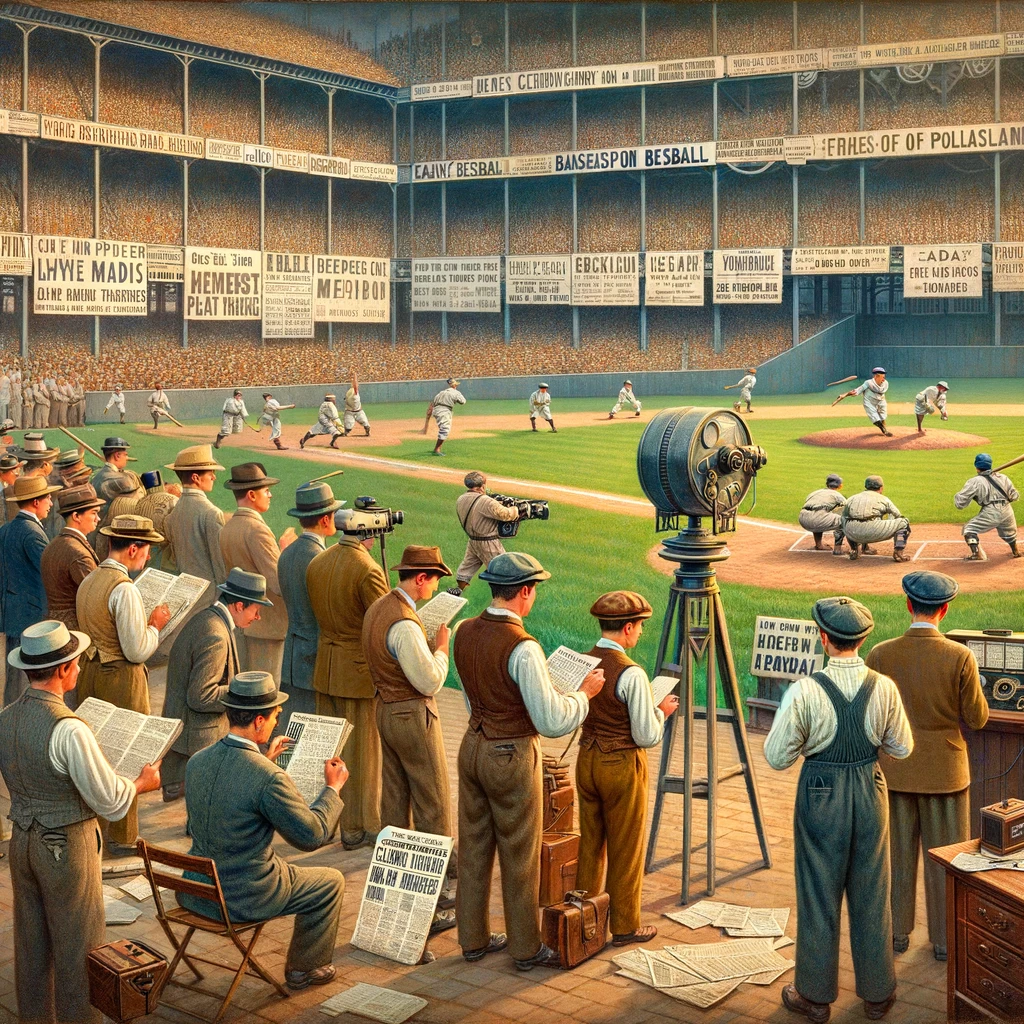
Baseball, often referred to as America’s pastime, has a rich and storied history that traces back to the mid-19th century. The evolution of baseball from a recreational activity to a national sport is inextricably linked to the role played by the media of the time. This article explores how various forms of media contributed to the popularization of early baseball, examining the transformation of the sport from a local pastime to a national obsession.
Early Beginnings and Local Coverage
The Origins of Baseball
Baseball’s origins are somewhat mythical, with stories like that of Abner Doubleday inventing the game in Cooperstown, New York, in 1839. However, historians agree that the game evolved from older bat-and-ball games like rounders and cricket. By the 1840s and 1850s, baseball started to gain traction in the northeastern United States, particularly in New York City.
Local Newspapers: The First Chroniclers
The earliest reports of baseball games can be found in local newspapers. Small, community-focused papers played a crucial role in documenting these games, providing details about the teams, scores, and players. These reports were often simple, lacking the detailed analysis or romantic prose that would come later. However, they were instrumental in introducing the sport to a broader audience and helped build a sense of community around the teams.
The Role of the New York Press
Baseball in the Big Apple
As baseball’s popularity grew in New York, so did the attention it received in the city’s newspapers. The New York press was pivotal in transforming baseball from a casual pastime into a more organized sport. Newspapers like the New York Herald and the New York Tribune began to cover baseball games regularly, offering more in-depth analyses and player profiles.
The New York Knickerbockers and the Press
The New York Knickerbockers, one of the first organized baseball clubs, benefited greatly from this increased media coverage. The team’s games and players became regular features in newspapers, drawing larger crowds and increasing the sport’s visibility. This media coverage was crucial in spreading the rules and style of play developed by the Knickerbockers, which would eventually form the basis of modern baseball.
Baseball and the Penny Press
Accessible Reporting
The emergence of the penny press in the 1830s played a vital role in baseball’s early popularization. These inexpensive, mass-produced newspapers made news accessible to a broader segment of the population. Baseball stories were among the many human-interest stories covered, which helped integrate the sport into the daily lives of many Americans.
Sensationalism and Rivalries
The penny press also introduced a more sensational style of reporting. Rivalries between teams were emphasized, creating a narrative that went beyond the game’s results. This sensationalism made baseball more than a game; it became a spectacle, with heroes and villains, triumphs and defeats. This narrative style made baseball stories engaging and helped build emotional connections with the readers.
The Impact of Illustrations and Cartoons
Early Visual Representations
Before the advent of photography in newspapers, illustrations and cartoons were the primary visual media. Illustrated weeklies like Harper’s Weekly and Leslie’s Illustrated Newspaper often featured sketches of baseball games and players. These illustrations brought the game to life for those who had never seen it played and played a crucial role in building baseball’s image.
Cartoons and Cultural Integration
Cartoons in these publications often used baseball as a metaphor for political and social issues, reflecting the game’s growing significance in American culture. This not only popularized baseball further but also integrated it into the broader cultural and political discourse of the time.
The Telegraph: Spreading Baseball Nationwide
Instantaneous Updates
The advent of the telegraph in the 1840s revolutionized how baseball scores and news were disseminated. For the first time, game results could be sent instantly across great distances. This technology allowed newspapers outside of New York to report on games soon after they concluded, spreading the popularity of baseball beyond its local origins.
The Creation of a National Audience
The telegraph helped create a sense of a national baseball audience. Fans in cities far from where a game was played could now follow the action, fostering a sense of participation in events that were geographically distant. This technology laid the groundwork for the nationalization of baseball fandom.
The Role of Magazines in Cultivating Baseball Lore
Emergence of Specialized Publications
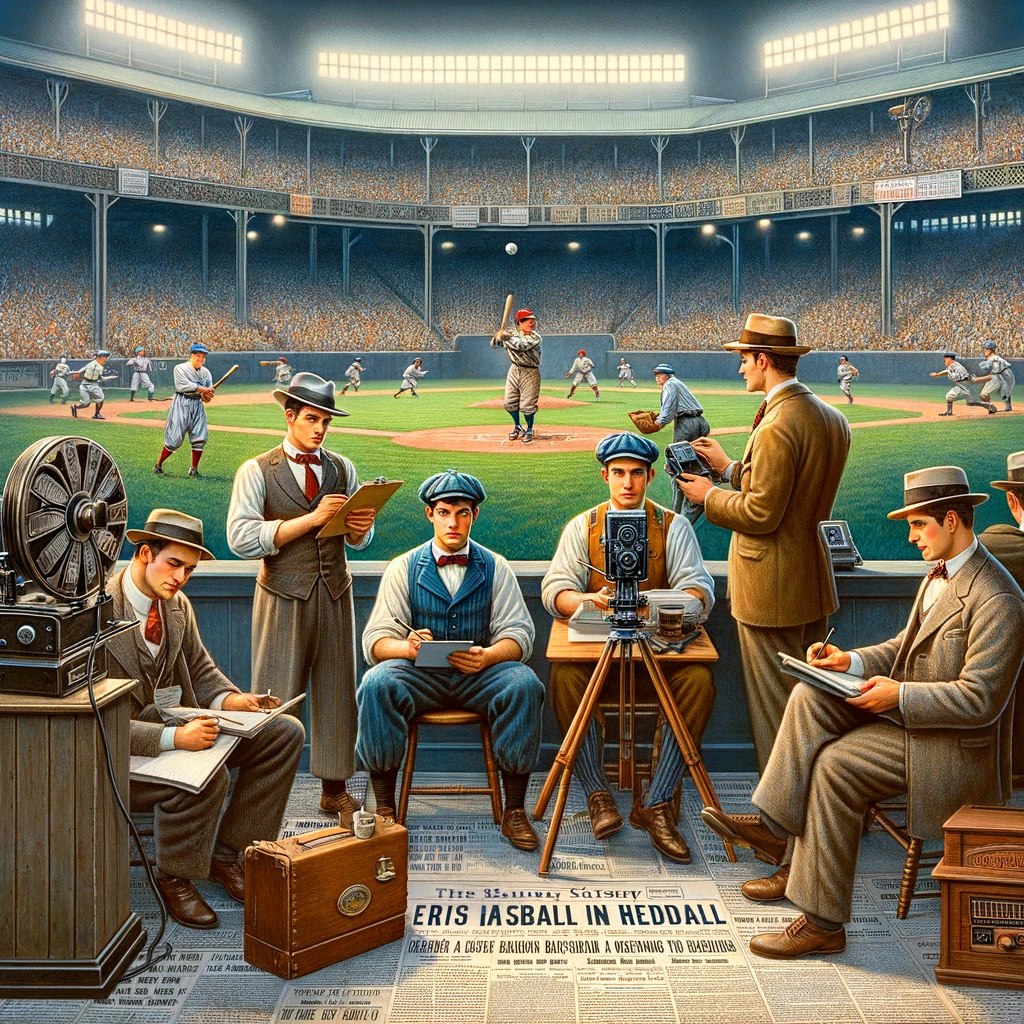
By the late 19th century, specialized magazines began to emerge, catering to baseball enthusiasts. Publications like “The Sporting News,” established in 1886, played a crucial role in not only reporting game results but also in analyzing plays, discussing strategies, and profiling players. These magazines offered a more nuanced and detailed understanding of the game, appealing to both casual fans and serious aficionados.
Crafting Heroes and Narratives
Baseball magazines were instrumental in crafting narratives that turned players into national heroes. Figures like Ty Cobb and Babe Ruth became household names, not just through their on-field exploits but also through magazine profiles that highlighted their skills, personalities, and personal stories. This hero-making aspect was crucial in elevating the status of baseball players from athletes to icons.
Rise of the Radio: Bringing the Game to the Masses
The Advent of Live Broadcasts
The 1920s saw a new revolution in media with the advent of radio broadcasts. Radio brought baseball games into homes across the country, changing how fans experienced the game. For the first time, fans could follow live games from afar, bringing a sense of immediacy and excitement that print media could not match.
Creating a Shared Experience
Radio broadcasts of baseball games created a shared national experience. Legendary broadcasters like Red Barber and Mel Allen became as famous as the players they described, their voices synonymous with the game itself. The radio enabled fans to experience the drama of the game in real-time, fostering a deeper emotional connection with the sport.
The Influence of Early Film and Newsreels
Capturing Motion and Emotion
The early 20th century also saw the rise of film as a popular medium. Newsreels, shown in movie theaters before feature films, often included footage of baseball games and highlights. This visual medium captured the motion and emotion of the game in a way that still images could not, providing fans with a more dynamic view of baseball.
Expanding the Reach
Film and newsreels expanded baseball’s reach to audiences who might not have had the opportunity to attend games or listen to radio broadcasts. These visual snippets of games, players, and crowds contributed to the mythology of baseball, encapsulating the excitement and drama of the sport in a format that was accessible to a wide audience.
Baseball During the War Years
A Symbol of American Life
During both World Wars, baseball took on a symbolic role, representing the American way of life. Media coverage during these years often highlighted baseball as a unifying force, a reminder of normalcy in tumultuous times. Players who joined the military were covered extensively, and their service was intertwined with their identities as baseball heroes.
Keeping the Home Front Connected
The media played a crucial role in keeping the home front connected to the sport during the war years. Newspapers, radio broadcasts, and newsreels provided updates on both the war and baseball, intertwining the narratives of national service and the national pastime. This connection helped maintain baseball’s popularity during a time when many professional players were away at war.
Conclusion: The Symbiotic Relationship Between Baseball and Media
The history of baseball and its rise in popularity is a testament to the powerful symbiosis between the sport and the media. Each stage of media evolution, from newspapers to magazines, radio, and film, contributed to shaping the public’s perception and understanding of baseball. This relationship was not merely one of coverage but of mutual growth and influence. The media helped construct the narratives, heroes, and legends of baseball, while baseball provided compelling content that drove the evolution of media itself.
As we look back on the early history of baseball, it is clear that the sport’s journey from a local pastime to a national obsession was in large part due to the role of media. This partnership between baseball and media paved the way for the modern sports media landscape, illustrating the profound impact that media can have in elevating a sport to iconic status.
Frequently Asked Questions
1. How did local newspapers contribute to the early popularity of baseball?
Local newspapers played a significant role in the popularization of baseball during its early days. In the mid to late 19th century, newspapers were a primary source of information for the public. Many local papers began dedicating sections to cover the burgeoning number of baseball games, providing detailed play-by-play descriptions, player profiles, and game results. This contributed to the game’s popularity in several ways. Firstly, it helped create local baseball heroes and team rivalries, making games more enticing to the local populace who followed their favorites avidly. These detailed reports also brought the excitement of the game to those who could not attend in person, consequently expanding the audience base. Additionally, the local press helped standardize the rules of the game, as they detailed the norms and spirit of competitions, leading to a more unified understanding of baseball across different regions.
2. What role did magazines and periodicals play in baseball’s expansion during the early 20th century?
Magazines and periodicals like The Sporting News, which came to be known as the “Bible of Baseball,” were pivotal in transforming baseball from a regional pastime into a national sport. These publications featured extensive coverage on baseball, including reporting on state and national leagues, player statistics, in-depth analytical articles, interviews with key figures in the sport, and even opinion pieces on the evolution of baseball’s rules and practices. Such in-depth coverage elevated baseball from a hobbyist activity to a well-regarded professional competition. They also ignited a rise in baseball’s cultural status, as stories about heroic feats, contentious rivalries, and iconic players mesmerized readers. This heightened awareness and sophisticated narrative around baseball fueled fan interest and played a crucial part in making baseball an embedded part of American culture.
3. How did the advent of radio broadcasting change the consumption of baseball in the 1920s?
The 1920s brought about a revolution in how Americans consumed baseball, primarily due to the advent of radio broadcasting. For the first time, fans were able to follow the play-by-play action of a baseball game live as it happened, despite being hundreds or even thousands of miles away from the stadium. Radio transformed the spectator sport into an auditory experience that could be shared in real-time among fans who could gather in living rooms, bars, and public spaces, listening together. This innovation expanded the audience dramatically, breaking the geographical constraints that previously limited fan bases. Broadcasting national vital games also created a narrative around the major leagues and heightened fan passions, solidifying baseball’s place in the fabric of American daily life. Radio provided particular power in building narratives around games and players, enhancing player celebrity status and deepening fans’ emotional investment in the game.
4. How did early photography and film influence baseball’s cultural prominence?
Early photography and later cinema had a profound impact on baseball’s cultural prominence. Photographs, which appeared in newspapers and magazines, brought the stars of the game closer to the general public. Images of iconic players in action made their way into homes, offices, and public spaces through widely distributed prints, postcards, and trading cards, fostering a connection between the players and their fans. These images were powerful in hero-making, with the public idolizing players, driven as much by imagery as by performance. Furthermore, the advent of motion pictures allowed for baseball games, highlighted plays, and player antics to be broadcasted via newsreels in cinemas nationwide. This not only made the game accessible to those who could not attend live matches but also added an aura of legitimacy and spectacle to baseball, solidifying its status as the premier American sport.
5. In what ways did the media help in standardizing the rules and perception of baseball across America?
The media, particularly newspapers and magazines, played a crucial role in standardizing the rules and perception of baseball across America. Early on, baseball was a loosely organized activity with different regions deploying their own sets of rules. As media outlets began to cover baseball more extensively, there was an increased need to describe the game uniformly to a growing number of readers. Publications began publishing lists of rules, game summaries, and columns that debated and clarified the rules of baseball. Their continual promotion of standardized rule books contributed significantly to unifying regional variations into a recognizable national framework. Moreover, by promoting higher-profile baseball events and featuring stories of national league games, the media helped to set the professional standards and competitive spirit that defined modern baseball, aligning spectator expectations and experiences across different locales.