
In the annals of baseball history, few figures command as much reverence and awe as Ed Walsh, affectionately known as “Big Ed.” Born on May 14, 1881, in Painesville, Ohio, Walsh’s imposing physical presence at 6 feet 1 inch tall and around 200 pounds belied the finesse and technical prowess he wielded on the mound. A right-handed pitcher renowned for his devastating spitball, Walsh became a cornerstone of the Chicago White Sox during the early 20th century, earning a legendary reputation that continues to captivate baseball enthusiasts to this day.
Walsh’s era was one marked by the evolution of pitching techniques and the increasing importance of the pitcher in the game. His innovative use of the spitball—a pitch that involved moistening the ball to create unpredictable movement—cemented his status as a dominant force on the field. Despite the rule changes that would later ban the spitball, Walsh’s legacy as one of the greatest practitioners of this pitch was already sealed.
This article will delve deep into the life and career of Ed Walsh, examining his early days, major league success, the infamous spitball, his post-playing career, and enduring legacy. We’ll explore how his contributions to the game not only led to personal accolades but also influenced the strategies and regulations of baseball. Join us as we uncover the journey of Ed Walsh, a true legend of America’s pastime.
Early Life and Career Beginnings
Ed Walsh’s journey to baseball stardom began in the quiet town of Painesville, Ohio. From a young age, he exhibited a natural talent for sports, but it was baseball that truly captured his heart. With a powerful arm and a competitive spirit, Walsh quickly drew attention from local teams. By his late teens, he had already earned a reputation as a promising pitcher in semi-professional leagues.
Walsh’s break came in 1902 when he signed with the Meriden Silverites of the Connecticut State League. His performance was impressive enough to catch the eye of scouts from major league teams. In 1903, he made his way to the Chicago White Sox, a team that would become synonymous with his career. Initially, Walsh had to prove his worth, starting as a reliever and gradually earning his spot as a starter. His unconventional spitball, combined with an intense work ethic, soon made him a formidable presence on the mound.
The early years of Walsh’s professional career were characterized by rapid development and adaptation. He honed his skills under the mentorship of veteran players and coaches, learning the intricacies of pitching at the highest level. By 1906, Walsh had established himself as one of the premier pitchers in the league, playing a pivotal role in leading the White Sox to a World Series championship. His exceptional skills and determination laid the foundation for what would become a legendary career.
Rise to Prominence with the Chicago White Sox
Ed Walsh’s ascent to baseball greatness is inexorably linked with the Chicago White Sox. By the mid-1900s, Walsh had become the ace of a talented pitching staff, showcasing his prowess in a variety of ways. His breakout season came in 1908, a year that remains one of the greatest single-season performances by a pitcher in baseball history. During this campaign, Walsh notched an astounding 40 wins, a feat so monumental that it has rarely been approached in the modern era.
Walsh’s dominance during this period wasn’t just limited to win statistics. He led the league in strikeouts and had an astonishingly low earned run average (ERA), thanks in large part to his mastery of the spitball. Unlike many of his contemporaries, who relied on raw velocity to overpower batters, Walsh used deception and movement to keep hitters off balance. His spitball dipped and darted unpredictably, making it incredibly difficult for batters to make solid contact.
The 1908 season also highlighted Walsh’s incredible endurance and durability. Pitching in an era before the advent of specialized relief pitchers, Walsh regularly threw complete games, often on short rest. He pitched over 400 innings that year, a testament to his physical conditioning and unwavering commitment to his team. This remarkable performance cemented his status as one of the game’s elite pitchers and earned him a place in the pantheon of baseball legends.
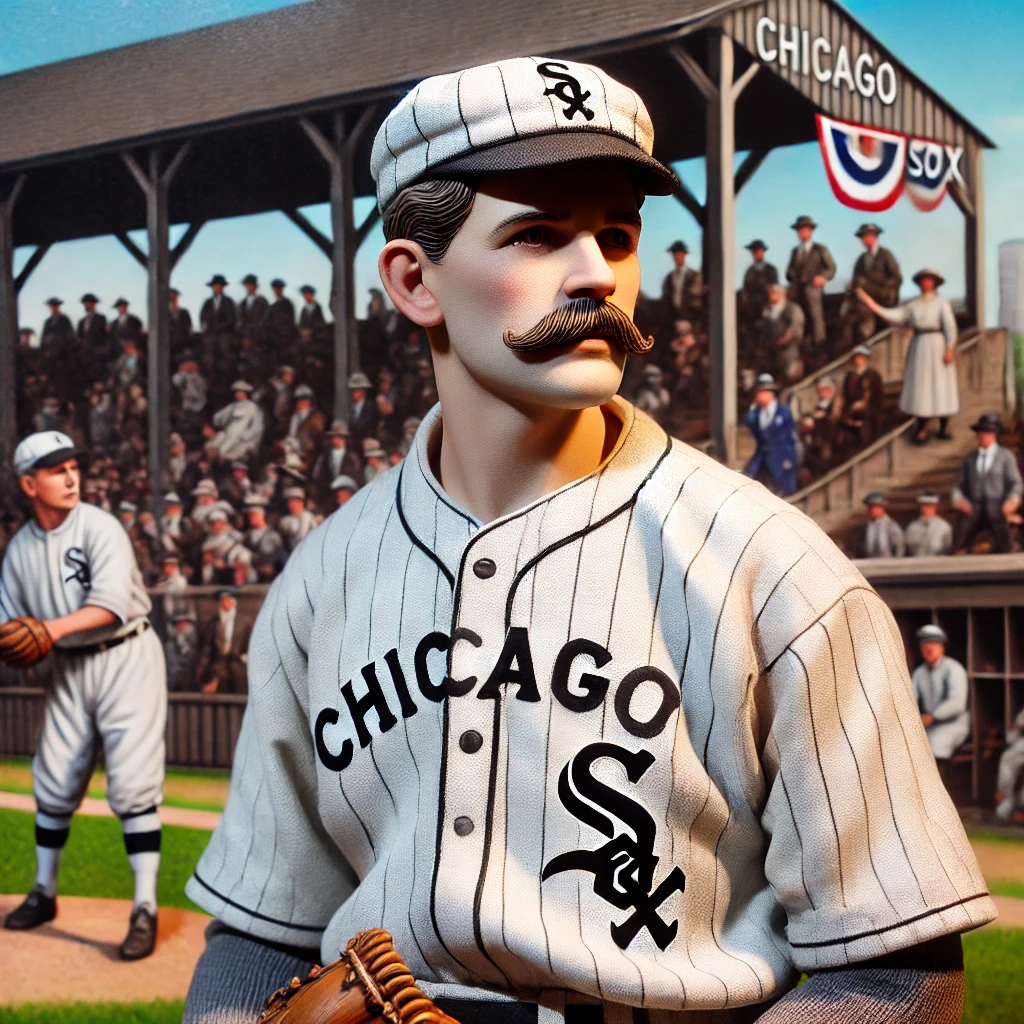
The Spitball: Weapon of Choice
The spitball, a pitch shrouded in both mystery and controversy, was Ed Walsh’s signature weapon. Developed in a time when pitchers were willing to experiment with grip and texture to gain any possible advantage, the spitball involved applying saliva or another foreign substance to the ball to alter its aerodynamic properties. The result was a pitch with unpredictable movement, making it exceptionally difficult for hitters to track and hit.
Walsh’s mastery of the spitball was unparalleled. He had an innate understanding of how to manipulate the ball’s rotation and movement, using different grips and release points to achieve the desired effect. This deceptive pitch was a cornerstone of his success, allowing him to stymie even the most skilled hitters of his era. It’s worth noting that the spitball wasn’t without its critics, with many arguing that it compromised the integrity of the game. However, during Walsh’s time, it was a legal and accepted part of a pitcher’s arsenal.
The spitball’s effectiveness was such that it remained a critical part of the game until it was officially banned in 1920. Walsh’s ability to harness its full potential was a key factor in his dominance. Even after the ban, players who had already established themselves as spitball pitchers were allowed to continue using it, known as “grandfathered” in. This acknowledged the significant role the pitch played while simultaneously ushering in a new era of pitching strategy.
Post-Playing Career and Contributions
Ed Walsh’s contributions to baseball didn’t end with his playing career. After retiring as a player in 1917, he transitioned seamlessly into coaching and management roles. His extensive knowledge of pitching mechanics and strategy made him an invaluable mentor to younger players aspiring to make their mark in the major leagues.
Walsh served as a coach for the White Sox and later took on various roles in minor league teams. His ability to analyze and improve pitching techniques helped countless pitchers develop their skills. Walsh’s influence extended beyond the diamond, as he was an advocate for the evolution of the game. He supported efforts to enhance player safety and improve the overall quality of play. His dedication to the sport and willingness to share his expertise ensured that his legacy endured even after he hung up his glove.
In recognition of his remarkable contributions, Walsh was inducted into the Baseball Hall of Fame in 1946. This prestigious honor was a testament to his impact both as a player and as a mentor. Walsh’s commitment to the sport and his role in shaping the future of baseball cemented his place in the annals of baseball history. His journey from a small-town pitcher to a revered icon serves as an inspiration to generations of players and fans alike.
Legacy and Enduring Impact
Ed Walsh’s legacy in baseball extends far beyond his impressive statistics and individual achievements. His innovative approach to pitching, particularly his mastery of the spitball, left an indelible mark on the game’s evolution. Even though the spitball was eventually banned, Walsh’s influence on pitching strategy and technique continues to be felt.
Walsh’s work ethic, dedication, and resilience set a standard for future generations of players. His ability to consistently perform at the highest level, often in grueling conditions, showcased the physical and mental demands of the sport. Walsh’s story serves as a reminder of the importance of determination and perseverance in achieving greatness.
Additionally, Walsh’s contributions to the development of pitching theory and mechanics remain relevant. His emphasis on the intricacies of grip, release, and movement laid the groundwork for modern pitchers to refine their craft. The principles he championed continue to be studied and applied by pitchers at all levels of the game, ensuring that his impact endures.
As we reflect on Ed Walsh’s remarkable career, it’s clear that his legacy is not confined to the records he set or the games he won. He embodies the spirit of innovation and excellence that defines baseball. Walsh’s journey from a small-town pitcher to a Hall of Famer is a testament to his dedication, passion, and unwavering commitment to the game he loved. His name remains synonymous with greatness, and his story will forever be an integral part of baseball’s rich tapestry.
Conclusion
In the grand tapestry of baseball history, few figures loom as large as Ed Walsh. From his early days in Painesville, Ohio, to his legendary career with the Chicago White Sox, Walsh’s journey is one of determination, innovation, and unparalleled skill. His mastery of the spitball, combined with his unwavering work ethic and dedication to the game, places him among the pantheon of baseball greats.
Walsh’s impact on the game extends beyond his impressive statistics and individual achievements. His innovative approach to pitching, particularly his use of the spitball, left an indelible mark on the sport, influencing pitching techniques and strategies for generations to come. Even after the spitball was banned, Walsh’s influence continued to be felt, as pitchers sought to emulate his success with other methods.
As a coach and mentor, Walsh shared his knowledge and passion for the game with younger players, helping to shape the future of baseball. His contributions to the development of pitching theory and mechanics ensured that his legacy would endure beyond his playing days. Inducted into the Baseball Hall of Fame in 1946, Walsh’s place in baseball history is secure, a testament to his remarkable career and lasting impact on the sport.
Ed Walsh’s story is one of resilience, innovation, and excellence. His journey from a small-town pitcher to a Hall of Famer is a reminder of the power of hard work, dedication, and a love for the game. As we celebrate his legacy, we honor not only his achievements on the mound but also his enduring influence on the sport of baseball. Ed Walsh remains a true legend of America’s pastime, and his story will continue to inspire and captivate baseball fans for generations to come.
Frequently Asked Questions
1. Who was Ed Walsh and why is he a significant figure in baseball history?
Ed Walsh, affectionately known as “Big Ed,” was an iconic figure in the history of baseball. Born on May 14, 1881, in Painesville, Ohio, Walsh made a name for himself as a dominant right-handed pitcher in the early 20th century. Standing 6 feet 1 inch tall and weighing around 200 pounds, his physical presence was as imposing as his pitching prowess. More than just his size, it was his skill on the mound that made him legendary. Walsh was particularly famous for his masterful use of the spitball, a pitch that involved altering the ball’s flight with saliva for an unpredictable drop. He anchored the Chicago White Sox as a critical player and was among the greatest pitchers of the dead-ball era. His strategic mind and remarkable pitch control led him to secure a place among the legends of baseball.
2. How did the spitball contribute to Ed Walsh’s success on the mound?
The spitball was a pivotal part of Ed Walsh’s pitching arsenal, and it played a significant role in his legendary status. This pitch was legally allowed at the time he played, and pitchers who mastered it gained an advantage. The spitball involved applying saliva or other substances to the baseball, which altered its aerodynamics and made its trajectory unpredictable for batters. Walsh was not only adept at using it but also achieved remarkable consistency and control, making it virtually unhittable. His spitball, combined with his other pitches, baffled hitters and was a key factor in his dominance. Even after the pitch was banned, Walsh’s ability to innovate and adapt with unwavering focus highlighted his technical genius and remains a significant part of his legacy.
3. What were some of Ed Walsh’s career achievements that underscored his dominance in baseball?
Ed Walsh’s career was marked by numerous achievements that underscored his dominance as a pitcher. After joining the Chicago White Sox in 1904, his career rapidly ascended. Walsh achieved his most remarkable season in 1908, boasting a record of 40 wins with only 15 losses and a jaw-dropping 1.42 earned run average (ERA). His ERA remains one of the lowest single-season records in major league history. Over his career, he tallied 1,732 strikeouts with an incredible lifetime ERA of 1.82, the lowest in MLB history for a pitcher with at least 10 innings pitched per game. Walsh’s performances were instrumental in the White Sox’s success and even led them to a World Series Championship win in 1906. His ability to endure and excel over complete games made him a workhorse, often pitching multiple games with little rest. This all culminated in his 1946 induction into the Baseball Hall of Fame, cementing his place in baseball lore.
4. How did Ed Walsh’s playing style impact the way pitchers approach the game today?
Ed Walsh left an indelible mark on baseball, influencing how pitchers view and approach the game. His strategic use of the spitball demonstrated the importance of pitch variation and deceit. While the spitball itself has long been banned, the concept of using deceptive pitching to outthink batters remains pivotal. Walsh’s heavy workload and consistent performance highlighted the significance of stamina and conditioning—principles enduring pitchers aspire to meet even today. He set a remarkable standard for completing games—a feat hard to replicate in modern baseball, emphasizing bullpen use over starters going the distance. Furthermore, his cerebral approach to mastering different pitches remains a lesson in technique diversification, inspiring pitchers to develop comprehensive skill sets. Overall, Big Ed’s legacy teaches perseverance and adaptability, ensuring its impact on future generations seeking to dominate the mound as he once did.
5. How did Ed Walsh’s career and legacy influence the rules and culture surrounding baseball during and after his time?
Ed Walsh’s career unfolded during a dynamic period for baseball, significantly shaping views on pitching styles and the sport’s evolving rules. The spitball, a hallmark of his success, became a subject of controversy and eventually led to the pitch being banned in 1920, reflecting the sport’s shift towards fairer play environments and standardized conditions. Walsh’s emphasis on technique and strategic prowess created a culture that celebrated not only physical talent but also mental acuity in baseball. His ability to maintain a level of consistent excellence impressed upon teams the need for robust player development and training regimens. After his retirement, Walsh remained involved in baseball, allowing his influence to permeate beyond his playing years. The reverence for his character and skills fostered discussions about pitcher utilization, workloads, and the balance between raw talent and strategic ingenuity. Walsh’s enduring legacy is celebrated among today’s players and coaches, illustrating how one player’s incredible career can leave a mark that echoes through future generations.
“`