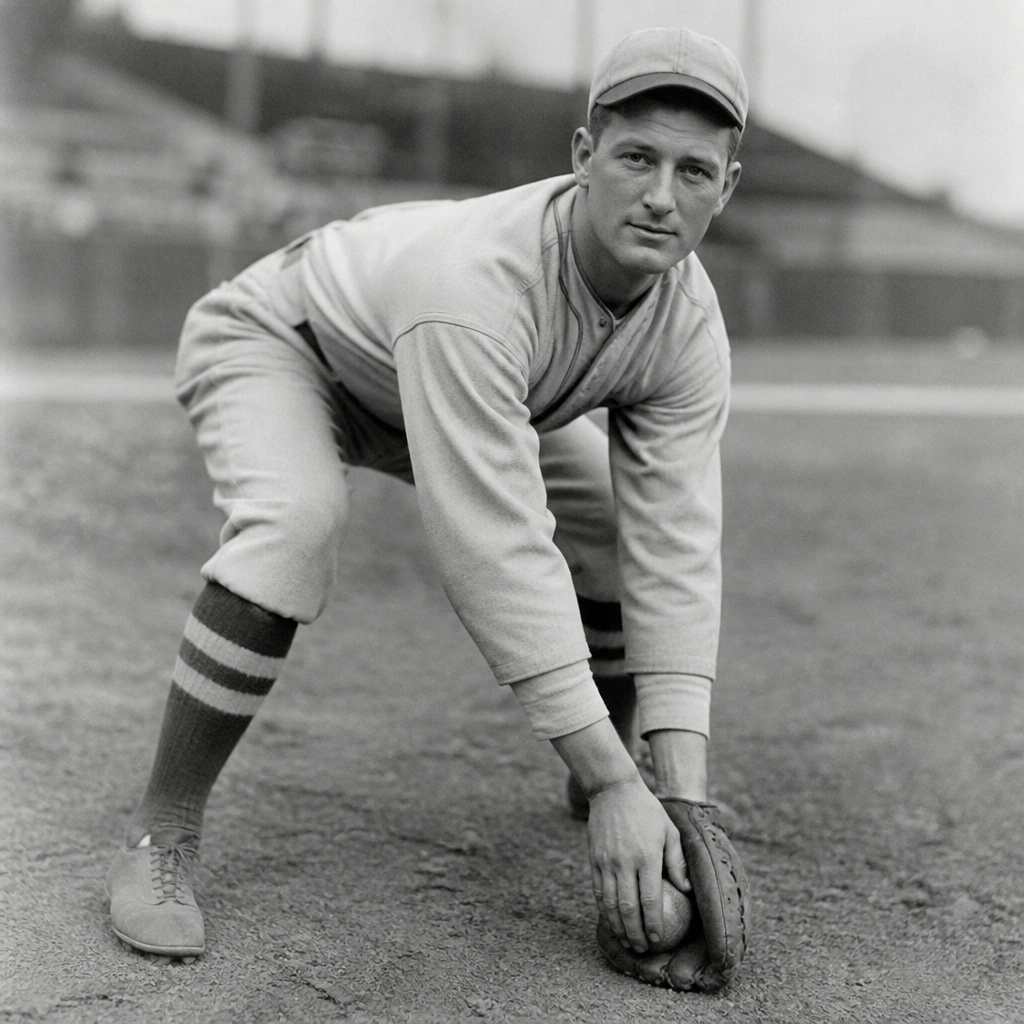
Dickey Pearce stands at the center of early baseball history because he helped invent the modern shortstop while shaping how nineteenth-century players thought about defense, positioning, and infield strategy. In any serious study of early players and innovators, his name belongs beside the founders, rule makers, and star clubs that turned a loosely organized bat-and-ball pastime into organized baseball. Pearce played in the years when the sport was still deciding where fielders should stand, how runners should be retired, and which skills mattered most. That uncertainty gave gifted players unusual influence. A smart infielder could change accepted practice simply by doing something effective often enough for others to copy it. Pearce did exactly that, and the position he refined remains one of the game’s most demanding jobs.
To understand why Dickey Pearce matters, it helps to define the key term in this article’s title. The modern shortstop is not merely the player listed between second and third base on a scorecard. The role combines range, anticipation, relay throwing, cutoffs, force plays, bunting awareness, and coordination with every other infielder. Today the shortstop is often the captain of the infield, handling the highest volume of difficult chances. In the 1850s and 1860s, that role was not fixed. Defensive alignments were fluid, gloves were absent, balls were lively but uneven, and many outs still depended on quick barehanded exchanges. Pearce recognized that a defender stationed in shallow left side territory could interrupt hits, start force plays, and reduce extra bases. That insight sounds obvious now because baseball later built itself around it.
This article serves as a hub for the early players and innovators branch of early baseball history. Pearce is the anchor, but his significance becomes clearer when placed among the other figures and developments that defined the era: clubs such as the Brooklyn Atlantics, Stars of Brooklyn, and St. Louis Brown Stockings; rule changes like the gradual end of the bound catch; pitching evolutions from underhand placement to tactical speed and spin; and stars whose reputations spread through newspaper box scores and championship tours. I have worked through nineteenth-century game accounts, guides, and retrospective histories, and one pattern appears repeatedly: the best early players were innovators because the game still lacked settled doctrine. Studying Pearce is therefore not just a biography exercise. It is a direct route into understanding how baseball strategy formed at ground level.
Who Dickey Pearce Was and Why Historians Remember Him
Richard J. “Dickey” Pearce was born in 1836 and became one of the most respected infielders of baseball’s formative decades, especially with Brooklyn clubs and later in St. Louis. He built his reputation before the major leagues existed in modern form, when top amateur and then professional clubs competed for prestige, gate receipts, and regional dominance. Contemporary writers praised his intelligence as much as his athleticism. That detail matters. Early baseball did not yet separate players into highly specialized training systems, so observers paid close attention to judgment, placement, and tactical creativity. Pearce excelled in exactly those categories.
Historians remember Pearce for two overlapping reasons. First, he was an elite player over many seasons, which gave him visibility and influence. Second, he altered defensive convention by moving into the area between second and third base instead of hugging either bag like a conventional infielder. In an era with fewer strikeouts, more balls in play, and irregularly distributed fielding responsibilities, this repositioning solved a practical problem. Hitters repeatedly punched ground balls and low liners through the left side. Pearce shortened that lane. Once opponents and teammates saw the effect, the arrangement spread. Baseball history contains many gradual inventions, but this one is unusually traceable to a named player.
Pearce also mattered because he bridged baseball’s amateur and professional phases. He starred with the Brooklyn Atlantics, one of the great clubs of the 1850s and 1860s, then played for the professional Cincinnati Red Stockings and later the St. Louis Brown Stockings of the National Association period. That career path links him to several hub topics within early players and innovators: the rise of Brooklyn as a baseball center, the 1869 Red Stockings as a landmark fully salaried team, and the spread of eastern baseball expertise westward. A hub article must show connections, and Pearce’s career provides them naturally.
How the Shortstop Position Emerged
The shortstop position did not arrive fully formed. In the earliest organized versions of baseball, fielding systems reflected equipment limits and the style of play. Because balls were softer and less consistently manufactured than later professional baseballs, and because long accurate throws were harder barehanded, teams often placed a fielder as a kind of intermediary between the outfield and the infield. The term “short stop” originally described exactly that function: someone who could stop short throws coming in from the outfield and relay them toward the bases. Over time, as bats, balls, and tactics evolved, the position moved inward and became more central to infield defense.
Pearce’s contribution was to make that evolving role strategically indispensable on the infield dirt and grass rather than as a loose relay man. He stationed himself where he could field balls headed between third and second, then make fast throws to first or flips to teammates covering the bag. This was a decisive answer to the offensive environment of the 1860s. Hitters emphasized placement, chopping contact, and speed. Without gloves, fielders valued hops they could read cleanly and throws they could make under control. By positioning himself deeper and more centrally than many rivals, Pearce turned reaction time into an advantage. He increased the number of playable balls without requiring impossible barehanded range from the third baseman or second baseman alone.
Newspaper descriptions from the period regularly emphasize where Pearce stood and how much ground he covered, which is strong evidence that his placement was distinctive enough to notice. Baseball at the time was rich in local variation, so one player’s successful adjustment could become a template. Clubs copied winning methods. That is how innovations spread before formal coaching manuals dominated the sport.
Pearce’s Defensive Innovation in Plain Terms
If you want the clearest explanation of Dickey Pearce’s legacy, it is this: he moved into the defensive gap that offenses were attacking, and he turned an improvised solution into a permanent position. Modern readers sometimes assume all baseball positions were designed by rulebook authors, but early baseball worked differently. The rules named broad structures, yet practical alignments were worked out by players on the field. Pearce saw that too many ground balls slipped through the left side and that throws from deeper territory needed a skilled, quick-thinking infielder. He responded by creating a consistent zone of responsibility for himself.
This adjustment had several ripple effects. It improved force-play efficiency at second base because a central infielder could cover or feed the bag more easily. It supported relay throws from the outfield. It reduced pressure on third basemen, who often played closer to the line against fair balls and bunts. Most importantly, it redefined what teams expected from a premier infielder. The shortstop became not a spare defender but a strategist with heavy involvement in nearly every sequence.
| Early problem | Pearce’s adjustment | Lasting effect on baseball |
|---|---|---|
| Ground balls frequently passed between second and third | Played deeper and between the bases instead of fixed near one bag | Created the central left-side infield role now identified as shortstop |
| Long throws were difficult with bare hands | Cut off balls earlier and used shorter, quicker transfers | Increased routine outs and rewarded anticipation over pure arm strength |
| Infielders worked in isolated zones | Connected third, second, and outfield relays through one player | Made shortstop the pivot point of coordinated team defense |
| Force plays at second lacked fluid feeds | Positioned to cover or start plays near the bag | Set the foundation for double-play footwork and middle-infield partnership |
What makes this innovation especially credible is that Pearce’s peers noticed it while he was active, not only after the fact. In baseball history, retrospective claims can be exaggerated, but repeated contemporary praise for his fielding intelligence gives the story weight. When later generations looked back and called him the father of the shortstop position, they were building on an already established reputation.
Brooklyn Baseball, the Atlantics, and the Culture That Produced Innovators
Pearce’s rise cannot be separated from Brooklyn, which was one of the game’s great nineteenth-century laboratories. Before the National League unified top professional baseball under a stronger structure in 1876, local clubs were the engines of innovation. Brooklyn produced fierce competition, civic pride, and large crowds. The Atlantic Base Ball Club of Brooklyn, with which Pearce became closely associated, was among the era’s powerhouse organizations. The Atlantics won championships, traveled widely, and played in high-stakes contests that received substantial press attention.
This environment rewarded experimentation. Clubs sought any legal edge, whether in batting order construction, pitcher usage, field placement, or aggressive baserunning. The culture of early Brooklyn baseball also encouraged players to build reputations through visible style. A spectacular catch, a clever shift, or a daring relay became newsworthy material. Pearce’s defensive positioning therefore spread not just because it worked, but because influential audiences saw it work in major matches.
The broader Brooklyn scene also links this hub article to other key early figures and teams. Readers exploring early players and innovators should move next to studies of Joe Start, the powerful first baseman and batting star; the Atlantic club’s championship years; and the social world of baseball in New York and Brooklyn before full professionalism. Pearce belongs within that web, not apart from it. He demonstrates how a city’s club culture could shape national baseball practice.
Pearce Among Early Players and Innovators
A useful hub article must place its central subject among peers. Pearce was one of several figures who changed baseball before modern leagues standardized the game. Harry Wright represents organizational innovation and tactical leadership through the Cincinnati Red Stockings. George Wright, his brother, became the first great star shortstop after Pearce helped define the position, proving that the role could also anchor an offense. Candy Cummings is associated, though debated in detail, with early curveball development. Al Spalding symbolizes pitching dominance, sporting goods influence, and baseball entrepreneurship. Joe Start shows how offensive excellence and longevity looked in the nineteenth century. Cap Anson later embodied the powerful player-manager under a more mature professional structure.
Pearce differs from many of these names because his innovation was positional rather than institutional or purely statistical. He changed geometry. That is why his impact still feels modern. Fans can watch a current shortstop shaded toward the hole, turning a ground ball into an out, and see a direct descendant of Pearce’s logic. The continuity is unusually visible across eras.
He also reminds us that innovation in baseball often begins with defense, even though offensive records attract more headlines. Early baseball chroniclers sometimes treated fielding artistry as equal in importance to batting, partly because low-scoring, error-prone games could swing on a single clean play. Pearce’s legacy supports that older understanding. He helped prove that run prevention could be designed, not merely hoped for.
From Amateur Pastime to Professional Game
Pearce played during baseball’s transition from gentlemanly club competition to open professionalism. That shift is essential context for understanding his influence. In the 1850s, leading clubs still described themselves as amateur associations, even when under-the-table payments and job arrangements blurred the reality. By the late 1860s, professionalism was increasingly explicit. The Cincinnati Red Stockings of 1869, with salaried players including Pearce, became the clearest symbol of this change. Fully professional clubs trained more consistently, traveled more extensively, and spread tactical ideas faster because their rosters were assembled to win at the highest available level.
Pearce’s move through these worlds gave his fielding methods a broader audience. Techniques developed in Brooklyn did not remain local once elite clubs toured nationally. Professional baseball accelerated imitation. If a winning club showed a better defensive arrangement, rivals copied it or lost. That process explains why Pearce’s approach did not stay a personal quirk. It became common baseball sense.
His later years with St. Louis also matter. The spread of top players beyond the Northeast helped transform baseball from a regional game into a national one. Pearce was part of that transfer of knowledge. When historians discuss the origins of the modern shortstop, they are also discussing how early professionals carried ideas across city lines, leagues, and competitive systems.
What Modern Fans Can Learn from Pearce’s Career
Pearce’s story offers three practical lessons for modern fans studying early baseball history. First, positions are historical creations. They develop because players solve recurring problems. Second, defense evolves through alignment as much as through athletic ability. Pearce did not wait for better equipment or new rules; he improved outcomes by standing in a smarter place. Third, innovation spreads through visibility, repetition, and winning. A tactic becomes standard when successful teams trust it under pressure.
For readers using this page as a hub, the next logical topics are clear. Study the Brooklyn Atlantics to see the competitive setting that shaped Pearce. Study George Wright to see the shortstop role flourish in the professional age. Study Harry Wright and the Cincinnati Red Stockings to understand how organization and travel spread new methods. Study nineteenth-century rule changes, especially fielding and pitching regulations, to see why defensive positioning mattered so much. Study Joe Start, Al Spalding, Candy Cummings, and Cap Anson to compare different kinds of innovation: hitting, pitching, leadership, and commercial influence.
Dickey Pearce and the origins of the modern shortstop reveal how much of baseball’s foundation was built by observant players making practical adjustments in real games. Pearce was not famous because he played an already glamorous position. He helped create the position’s importance. By moving into the gap between second and third, coordinating infield play, and proving that smart defensive geometry could change outcomes, he left a mark that still defines the sport. His career also opens the wider world of early players and innovators, from Brooklyn club culture to the first professional touring teams and the rule changes that shaped modern baseball. If you are building a serious understanding of the early history of baseball, start with Pearce, then follow the connections outward to the clubs, rivals, and fellow pioneers who turned experiment into tradition.
Frequently Asked Questions
Who was Dickey Pearce, and why is he so important to early baseball history?
Dickey Pearce was one of the most influential players of nineteenth-century baseball, and his importance goes far beyond his personal statistics or club affiliations. He is remembered primarily because he helped define the shortstop position at a time when baseball itself was still taking shape. In the earliest years of organized play, defensive positions were not as fixed or as carefully understood as they would later become. Teams were still experimenting with where to place fielders, how to react to different types of batted balls, and how to coordinate infield coverage. Pearce emerged in that formative environment and recognized that there was a critical defensive space between the infield and outfield that needed to be actively managed.
What makes Pearce especially significant is that he was not simply a player occupying a spot on the field; he was a practical innovator. He helped transform shortstop from a loose supporting role into a true strategic position with defined responsibilities. That shift had lasting consequences for how teams thought about defense, throwing angles, ball distribution, and infield teamwork. In broader baseball history, his legacy places him alongside the early rule makers, club organizers, and star pioneers who helped turn a regional bat-and-ball game into organized baseball. When historians discuss the origins of modern fielding strategy, Pearce’s name consistently appears because he represents the moment when instinct and experimentation began to harden into baseball structure.
How did Dickey Pearce help invent the modern shortstop position?
Pearce’s contribution to the shortstop position was rooted in observation and adaptation. In baseball’s early era, fielders often played in arrangements that made sense for a game with different equipment, weaker throwing strength across some positions, and evolving offensive tactics. The shortstop initially functioned less as a classic infielder and more as a kind of intermediary, stationed between the infield and outfield to assist with throws and cover open ground. Pearce recognized that this area of the field was not merely a leftover space but a vital defensive zone that demanded intelligence, anticipation, and mobility.
By playing aggressively and positioning himself with purpose, Pearce showed that the player in this spot could cut off balls, back up throws, respond to bunting and chopped hits, and help connect the entire left side of the defense. As baseball matured, the role moved closer to the infield dirt and evolved into the demanding position now known as shortstop. Pearce’s style helped drive that transition. He demonstrated that defense was not just a matter of standing in assigned places but of reading the batter, reacting to game situations, and understanding where the next play was likely to develop. In that sense, he did not invent the shortstop out of thin air, but he helped shape it into something recognizable as the modern position: active, central, cerebral, and strategically indispensable.
What was baseball like when Dickey Pearce played, and why did that matter for his innovations?
Baseball during Pearce’s career was still in a developmental stage, which is exactly why one player’s defensive ideas could have such an outsized impact. The sport had not yet settled into the standardized form familiar today. Rules continued to change, equipment was primitive by modern standards, and tactics were still being discovered through experience rather than inherited from generations of established coaching. Gloves were minimal or nonexistent in the earliest years, fields could be rough and uneven, and clubs often learned by trial and error. In that environment, every smart adjustment on the field could become a model for others.
This mattered enormously for Pearce because he played when positioning was still open to reinvention. There was room for a perceptive player to redefine where he stood, how he moved, and what responsibilities belonged to him. Rather than accepting a static defensive arrangement, Pearce helped show that fielding should be flexible and strategic. His era rewarded baseball intelligence in a particularly visible way because many of the game’s systems had not yet hardened into convention. A player who could solve practical problems on the field was not just helping his own club; he was participating in the design of the sport itself. Pearce’s influence makes the most sense when viewed in that context: he was not merely succeeding within baseball’s structure, but helping create that structure while the game was still unfinished.
Why is Dickey Pearce often described as a defensive innovator rather than just an early star player?
Pearce is often labeled a defensive innovator because his reputation rests on changing baseball thought, not simply excelling within the existing game. Many early players were famous for hitting, club prestige, or participation in notable matches, but Pearce stands out because historians credit him with reimagining how defense should function. He saw value in anticipation, spacing, and field awareness at a time when those ideas were still being worked out in real time. His approach reflected a deeper understanding of baseball geometry: where balls tended to go, how quickly a defense had to respond, and how one well-positioned fielder could prevent larger breakdowns across the field.
Calling him an innovator also acknowledges that his impact lasted beyond his own playing days. Star players can dominate an era and then fade into statistical memory, but innovators leave behind methods that others adopt. Pearce’s influence can be traced in the eventual importance of the shortstop as one of the most demanding positions in baseball. Today, shortstops are expected to combine quickness, range, arm strength, instincts, and leadership. Those expectations did not emerge fully formed; they developed over time, and Pearce was central to that development. He deserves recognition not only because he was good, but because he helped teach baseball what good defense could look like.
What is Dickey Pearce’s lasting legacy in the history of the shortstop position and organized baseball?
Pearce’s lasting legacy is that he helped establish the idea that defensive positioning is fundamental to baseball intelligence. The shortstop eventually became one of the game’s signature roles, often reserved for elite athletes and field generals, and that evolution begins with the kind of thinking Pearce brought to the field. He helped prove that the area between second and third base, and the wider zone linking the infield to the outfield, required a player who could do far more than react. It required someone who could organize movement, support teammates, and anticipate offensive patterns before the ball was even put in play.
His place in organized baseball history is equally important. Pearce belonged to the generation that helped transform baseball from an informal pastime into a sport with recognizable positions, roles, and tactical logic. That gives him significance beyond nostalgia. He is part of the foundation of how baseball came to be understood as a game of systems as well as skill. Modern fans may think of the shortstop as an obvious necessity, but in Pearce’s era, even obvious things had to be invented, tested, and refined by players willing to experiment. That is why his legacy remains so durable. He represents an early baseball mind at work—one that helped turn improvisation into strategy and strategy into tradition.