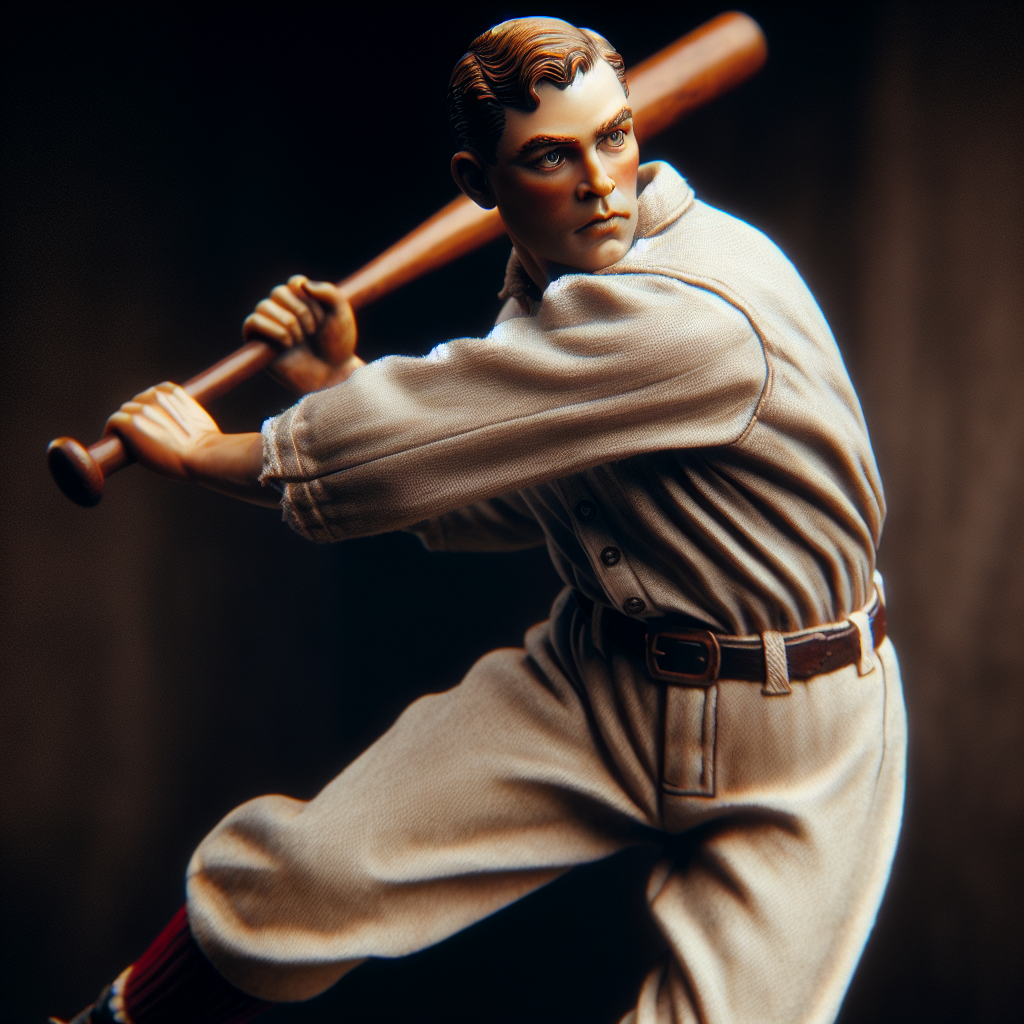
Adrian “Cap” Anson, a name that’s likely familiar to those who are well-versed in the annals of baseball history, stands as a colossal figure from the sport’s early days. Born on April 17, 1852, in Marshalltown, Iowa, Anson emerged as one of the most consequential players of the 19th century. Over a career that spanned nearly a quarter of a century, he made a remarkable impact both on and off the field. From his longevity in the game to his noteworthy batting records, Cap Anson’s legacy is filled with significant milestones that firmly position him among the sport’s all-time greats. However, like many prominent historical figures, his story is complex and intertwined with the cultural and societal norms of his time. This article delves deep into the multifaceted life of Cap Anson, exploring his contributions to baseball, his controversial stances, and the indelible mark he left on the sport.
Early Life and Career Beginnings
Adrian Constantine Anson, known affectionately as “Cap” or “Pop,” started playing baseball in his teenage years, inspired by the burgeoning popularity of the sport in the post-Civil War United States. Anson’s athletic talents were evident from an early age, and by 1871, he had joined the Rockford Forest Citys in the National Association, which was baseball’s first professional league. Although the National Association eventually folded, it provided a stepping stone for many players, including Anson, to transition to the National League in 1876.
Initially joining the Chicago White Stockings (now the Chicago Cubs), Anson swiftly established himself as a formidable hitter and fielder. His versatility allowed him to excel in multiple positions, although he predominantly played at first base. Anson demonstrated exceptional discipline at the plate, coupled with an impressive ability to hit for both power and average, making him a critical component of Chicago’s lineup. His early years in the National League set the stage for what would become one of the longest and most impactful careers in baseball history.
Peak Years and Achievements
Throughout the 1880s and into the early 1890s, Anson’s performance on the field was nothing short of extraordinary. He led the league in batting average multiple times, achieving a career-high .399 average in 1881. Moreover, Anson was an iron man of his era, consistently playing in over 100 games per season—a tremendous feat considering the grueling travel and primitive medical care of the time.
By accumulating over 3,000 hits during his career—a milestone only achieved by a select few—Anson set standards that future generations would measure themselves against. His ability to maintain such high performance levels over two decades is a testament to his skill and perseverance. Offensively, he was a powerhouse, contributing significantly to the team’s successes, including five National League pennants. His influence extended beyond just playing; Anson was also a player-manager, a role that gave him substantial authority in team decisions and strategies.
Controversial Aspects
However, Cap Anson’s legacy is not without controversy. One of the more contentious aspects of his career was his stance on racial segregation in baseball. Anson was a staunch supporter of the color line that excluded African-American players from participating in professional leagues. He was infamously vocal in his opposition to integrated baseball games and is noted for demanding that his team not play against clubs featuring black players. This pushback contributed to the formal segregation that plagued baseball until Jackie Robinson’s breakthrough in 1947.
While some argue that Anson’s views were reflective of the broader societal attitudes of his era, it nonetheless paints a complex picture of a man whose contributions to the sport were significant, yet marred by his support for exclusionary practices. His stance on this issue serves as a reminder of the intertwining of sports and societal values, and offers important lessons about inclusivity and the evolution of public consciousness in athletics.
Post-Playing Career and Legacy
After retiring as a player in 1897, Anson continued to be involved in baseball, albeit with varying success. He managed teams, owned a semi-professional ball club, and even tried his hand at business ventures unrelated to baseball. Despite some financial troubles and endeavors that didn’t quite pan out as expected, Anson’s standing as a baseball legend remained unblemished.
In 1939, Anson was posthumously inducted into the Baseball Hall of Fame, solidifying his place among the sport’s immortals. His statistical achievements, leadership, and ability to popularize the game in its infancy are universally acknowledged and celebrated. While his contributions to baseball are of great significance, the more contentious parts of his legacy also serve as critical reminders of the sport’s journey through America’s complex social fabric.
Modern Perspectives and Reevaluation
Today, Cap Anson is often discussed within the context of both his on-field prowess and his off-field beliefs and actions. Modern historians and baseball enthusiasts sift through the good and the bad, seeking a balanced understanding of his life and legacy. This process involves recognizing the historical context within which Anson lived and acknowledging that views and norms evolve over time.
Anson’s influence on the game is undeniable, as his records and contributions to the early development of professional baseball remain influential. However, the reevaluation of his stance on racial integration also serves as a crucial dialogue that enriches our understanding of history. It underscores the importance of diversity and inclusion, which are now seen as cornerstones of modern sports.
By examining Cap Anson through a multifaceted lens, we can appreciate the complexities that define not just his story, but also the broader narrative of baseball itself. This balanced perspective allows the sport and its community to move forward with a richer awareness of its past.
Conclusion
Cap Anson’s life and career offer a profound glimpse into the early fabric of professional baseball. As one of the sport’s first superstars, he set benchmarks that influenced generations of players and helped elevate baseball into America’s pastime. His batting records, managerial success, and sheer longevity in the game marked him as a figure of towering importance in the sport’s nascent years.
However, Anson’s legacy is equally colored by his views on race and his role in solidifying baseball’s color line. While he excelled in many facets of the game, his advocacy for racial segregation presents a more complex, and at times troubling, aspect of his story. This dichotomy is crucial for anyone seeking a comprehensive understanding of Cap Anson and the era in which he played.
In remembering Cap Anson, we acknowledge both his contributions to the game and the lessons that can be drawn from his life. His story serves as both an inspiration and a cautionary tale, reflecting the intertwined paths of athletic excellence and social evolution. By engaging with this history, we not only honor the sport’s pioneers but also pave the way for a more inclusive and understanding future in baseball.