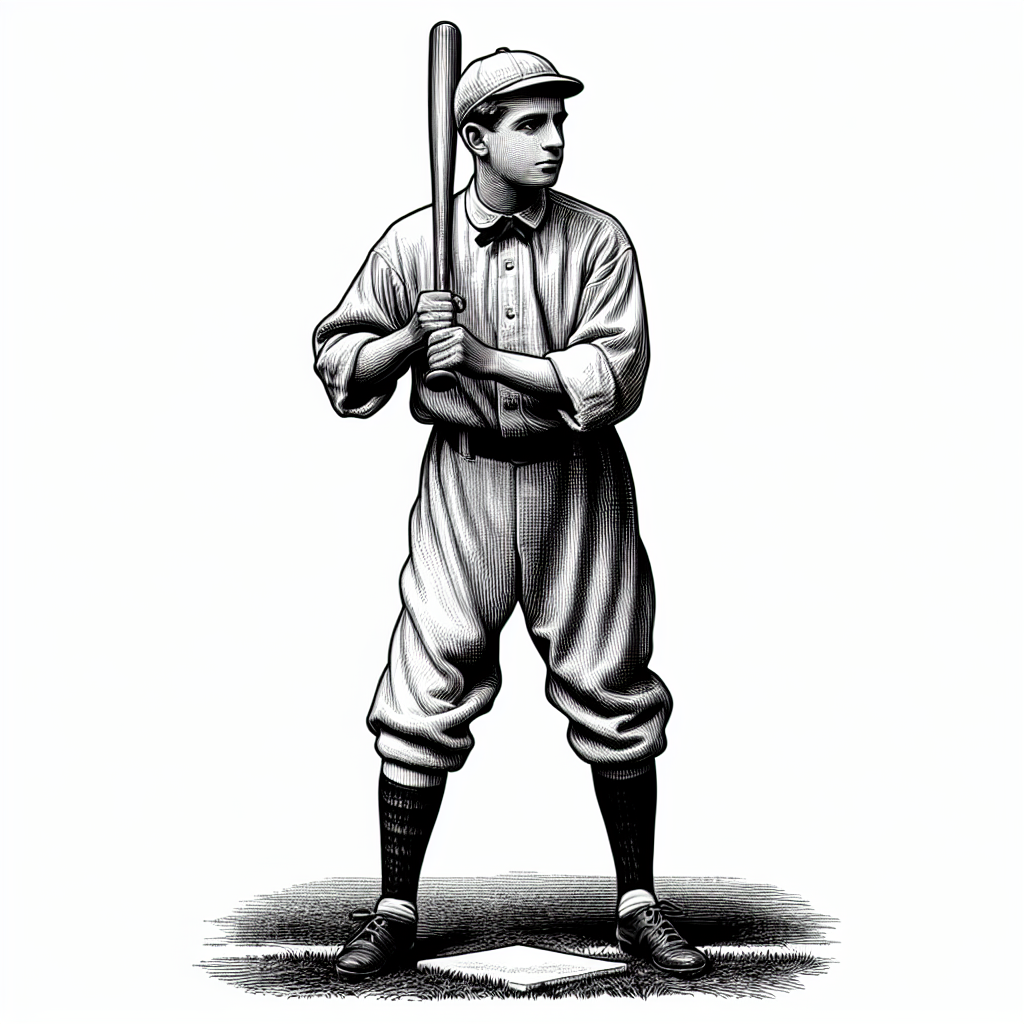
In the annals of baseball history, there are few names as intriguing and quietly dominant as Mel Ott. Often referred to as “Master Melvin” or simply “Master Mel”, Ott was one of the premier sluggers and dynamic players of the early-to-mid 20th century. With a left-handed swing that is still imitated today, Ott solidified his place in Major League Baseball (MLB) history through sheer consistency, skill, and leadership. Born in 1909 in Gretna, Louisiana, Ott’s journey to becoming one of the all-time greats is a testimony to natural talent augmented by relentless dedication. His career with the New York Giants, spanning from 1926 to 1947, exemplified a level of performance that endeared him to fans and left an enduring mark on the game.
The Early Years and Rise to Stardom
Melvin Thomas Ott was born into a world where baseball was rapidly becoming America’s pastime. From a young age, it was clear that Ott had a special gift for the game. By 14, he was already attracting attention for his batting prowess, and by 16, he was playing semi-professional baseball. His burgeoning talent caught the eye of John McGraw, the manager of the New York Giants, who would become instrumental in Ott’s development. McGraw saw in Ott not just a power hitter, but a burgeoning superstar whose unique stance and high leg kick gave pitchers nightmares.
Ott’s initiation into Major League Baseball at just 17 years old was meteoric. A testament to John McGraw’s confidence in him, Ott bypassed the traditional route through the minor league system. By 1927, Ott was already showcasing his potential, but his breakout season came in 1929. He batted .328 with 42 home runs, laying the foundation for a career that would see him become synonymous with power hitting. Ott’s arrival signaled a transformative era for the Giants, blending youthful energy with unyielding skill.
Consistency and Achievements
Mel Ott’s career is a portrait of consistency. Over his 22-season career, he racked up 511 home runs, making him the first National League player to surpass the 500-home run mark. His home run tally stood as a National League record until it was broken by Willie Mays. Ott’s ability to perform at a high level year after year is evident in his stellar stats. He led the National League in home runs six times and earned 12 All-Star selections, solidifying his status as a cornerstone of the Giants.
Beyond his power hitting, Ott was a well-rounded player. He consistently posted batting averages above .300 and proved to be a formidable outfielder. His keen eye at the plate earned him a career on-base percentage of .414, showcasing his ability to draw walks alongside his slugging prowess. Ott’s accomplishments extended beyond regular-season heroics; he played pivotal roles in the Giants’ World Series appearances, contributing significantly to their championship runs in 1933 and 1936, and serving as a steadying presence whenever the stakes were high.
Leadership On and Off the Field
Leadership is a trait that defined Mel Ott’s career. Taking over as the Giants’ player-manager in 1942, Ott showcased his intellect and understanding of the game. Despite the team’s struggles during this period, Ott’s commitment and leadership never wavered. His tenure as manager demonstrated the depth of his baseball knowledge and the respect he commanded in the clubhouse.
Ott’s quiet demeanor often belied his competitive nature and his influence on his teammates. He led by example, both through his work ethic and his performance. His leadership extended off the field, where he was known for his sportsmanship and kindness. Ott’s humility and approachability made him a beloved figure in the baseball community, earning him admiration from both fans and fellow players. His impact as a leader was not just confined to statistical achievements, but also in the ways he inspired those around him. Challenges and Adversities
No great career is without its obstacles, and Mel Ott’s journey was marked by its share of challenges. The transition from a player to a player-manager came with its difficulties, particularly managing a team during the tumultuous years of World War II. The Giants faced roster shortages and other war-related challenges, but Ott’s resilience as a manager helped the team navigate these tough times.
The latter years of Ott’s career were also marked by physical decline, as injuries and age began to take their toll. Despite these challenges, Ott’s unwavering commitment to the game never faltered. Even as his power at the plate waned, his presence and veteran savvy provided immense value to the Giants. Ott’s ability to adapt and contribute in different capacities underscored his versatility and deep understanding of the game. His perseverance through these adversities made his career even more remarkable and inspiring.

Legacy and Impact
Mel Ott’s legacy is one that continues to resonate within the baseball world. His approach to the game and his natural talent have influenced generations of players. Players like Barry Bonds and Ken Griffey Jr. credit Ott as an inspiration, particularly highlighting his disciplined plate approach and his distinctive swing mechanics.
Inducted into the Hall of Fame in 1951, Ott’s place among baseball’s elite is unquestionable. His number 4 jersey was retired by the Giants, ensuring that his contributions are forever remembered by the franchise and its fans. Ott’s impact, however, extends beyond numbers and accolades. His integrity, sportsmanship, and dedication to the game serve as a benchmark for what it means to be a true professional. Ott’s story is a poignant reminder of how one player can influence the course of a sport through determination, skill, and an unwavering commitment to excellence.
Remembering Master Mel
Mel Ott passed away tragically in a car accident in 1958, but his legacy has endured throughout the decades. As we reflect on Master Mel’s career, it becomes evident that he embodied a unique blend of power and humility. Ott was a pioneer of his time, establishing benchmarks that future generations would strive to meet. His life in baseball is a testament to quiet dominance—unlikely to make headlines for flamboyant gestures, but certain to leave an indelible mark on the game through consistent excellence.
Ott’s story is not just one of personal triumph but also of a lasting influence on the sport he loved. His strategic mind, coupled with his physical abilities, created a blueprint for what a well-rounded, professional ballplayer should be. Though statistics provide a window into his skill, the full measure of Ott’s contribution to baseball lies in the respect and admiration he earned from peers, fans, and future stars. As we continue to celebrate the storied history of baseball, Mel Ott’s legacy remains a gentle reminder of the enduring power of a true sportsman.
Conclusion
In examining the storied career of Mel Ott, what stands out most is his quiet, unwavering dominance on and off the field. His impressive statistics, leadership, and sportsmanship paint a portrait of a player who was not just exceptional in his era but whose influence transcends time. Ott’s left-handed swing, his adeptness at drawing walks, his consistency at the plate, and his excellence in the field are benchmarks that continue to inspire and instruct.
Master Mel’s legacy is a cornerstone in the rich tapestry of baseball history. From the sandy fields of Gretna, Louisiana, to the hallowed grounds of major league stadiums, Mel Ott’s journey is one of passion, dedication, and quiet excellence. As fans and historians look back, they find in Ott a model of what the sport can produce at its very best: skilled, respectful, and eternally committed to the game. Mel Ott may have left this world over six decades ago, but his spirit lives on each time a young hitter steps up to the plate with dreams of greatness in their eyes.