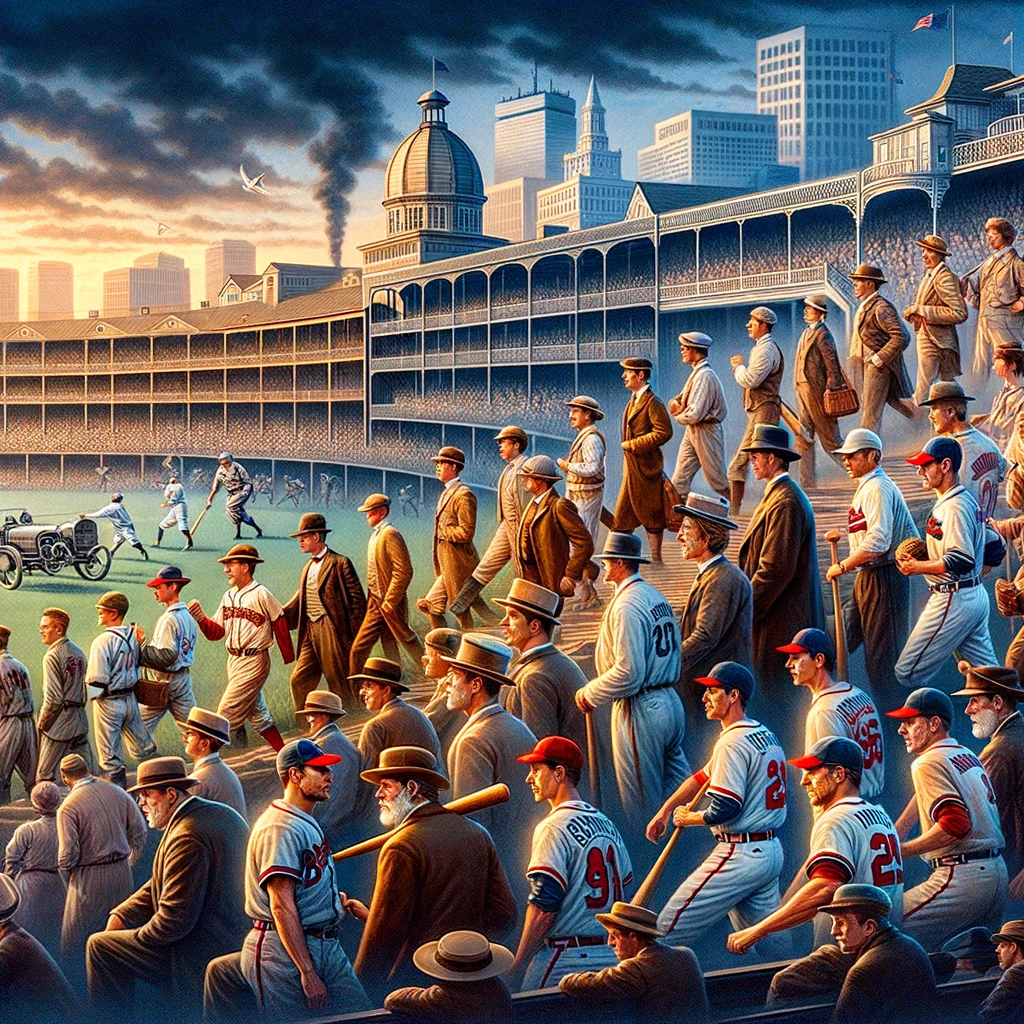
The Boston Braves, established in 1871, are one of the oldest continuous sports franchises in America. The team underwent various name changes, including the Boston Bees and Boston Red Stockings, reflecting its long and varied history. Throughout its tenure in Boston, the Braves captured the hearts of many and made significant contributions to the world of baseball before moving to Milwaukee in 1953.
The Early Days and Dominance
In their formative years, the Boston Braves quickly established themselves as a formidable team in professional baseball. They clinched their first National Association pennant in 1872 and continued to dominate with successive pennants through 1875. The early success was largely credited to the brilliant performances of players like Al Spalding and the innovative leadership within the franchise. Their success wasn’t just on the field; the Braves also managed to be financially viable, navigating the challenges of the sports business with agility and foresight.
The Miracle Braves of 1914
Perhaps the most storied chapter in the Braves’ history occurred in 1914, when the team earned the nickname “Miracle Braves.” Mid-season, the Braves were languishing in last place, only to make a dramatic turnaround and sweep the heavily favored Philadelphia Athletics in the World Series. This unexpected victory remains one of the most remarkable comebacks in baseball history.
The Building of Braves Field
In 1915, the Braves moved from the South End Grounds to the newly constructed Braves Field, which became a significant baseball landmark. Designed to be the largest baseball park of its time, it reflected the ambitions of the team’s management to cater to a growing fan base and bring more people closer to the game through improved access and facilities.
Struggles and Stars
Despite their early successes and the glory of the 1914 World Series, the Braves experienced many years of struggle. From the late 1910s through the early 1930s, the team often found itself near the bottom of the league standings. However, this era also saw the Braves home to some of baseball’s legendary figures, such as Rogers Hornsby in 1928, and Babe Ruth, who ended his illustrious career with the team in 1935. Ruth’s presence on the team, despite being the twilight of his career, brought significant attention and attendance to Braves games.
World War II and the 1948 Pennant
World War II was a challenging period for many baseball teams, including the Braves. Post-war, the team saw a resurgence, culminating in winning the National League pennant in 1948. This success was significantly driven by the outstanding performances of pitchers like Warren Spahn, who, along with Johnny Sain, formed a formidable duo that led the team to one of its most successful seasons.
The Move to Milwaukee
By the early 1950s, the Braves were struggling to compete with the Boston Red Sox for fan support. The economic pressures and waning fan interest eventually led to the Braves relocating to Milwaukee in 1953, marking the end of an era in Boston sports history. The move was seen as a fresh start for the franchise, which would go on to achieve further successes, including another World Series title in 1957.
Throughout their history in Boston, the Braves were a team of highs and lows, marked by legendary players and memorable seasons. They left an indelible mark on the city and the sport, encapsulating the dramatic and evolving nature of America’s pastime.
The Boston Braves’ history is a narrative of resilience, marked by spectacular comebacks and challenging declines. The franchise’s journey from its establishment to its relocation reflects the broader evolution of baseball, highlighting both the sport’s capacity for unpredictability and its profound impact on its fans and communities. The Braves’ story remains a significant chapter in the annals of baseball history, reminding us of the rich tapestry of teams and talents that have shaped the game over the years.

Impact on Media and Culture
The Braves not only influenced the sport of baseball but also had a significant impact on media and cultural developments related to the game. The introduction of radio broadcasts of baseball games was a significant milestone, with Braves games being among the first to be aired. This development brought the excitement of the game to a much broader audience, fostering a deeper connection between the team and its fans.
The team’s influence extended into the emerging television era. The 1948 World Series, which featured the Braves, was one of the earliest World Series to be televised, marking a significant step in sports broadcasting. This transition from radio to television continued to expand the team’s reach and helped solidify baseball’s place in American culture.
Braves Field: More Than Just a Ballpark
Braves Field was not just a ballpark; it was a cornerstone of Boston’s community. Its construction in 1915 symbolized a new era for the Braves and for baseball. With a seating capacity of 40,000, it was one of the largest sports structures of its time, equipped with modern amenities that improved the spectator experience. The field was also notable for its spacious outfield, which changed the dynamics of how the game was played there.
However, as the years passed, Braves Field saw declining attendance, partly due to the team’s lackluster performance and also because of the growing popularity of the Boston Red Sox. The stadium underwent several modifications, but by the time the Braves moved to Milwaukee, it had become a symbol of the team’s struggles in Boston.
Legacy and Memory
The legacy of the Boston Braves is preserved through various memorials and historical sites around the city. The site of the original South End Grounds, for instance, is marked by a plaque, reminding residents and visitors of the rich baseball history that once thrived there. Memorabilia and artifacts from the Braves era are cherished by collectors and historians, serving as a portal to the past for baseball enthusiasts.
The Braves’ move to Milwaukee, and later Atlanta, might have ended their physical presence in Boston, but the memories and impacts of their time in the city continue to resonate. They remain an essential part of Boston’s sports history, celebrated for their contributions to baseball and their community.
The Braves Today
Today, the Atlanta Braves carry forward the legacy of the franchise with their own successes and storied history. The spirit of the original Boston Braves lives on through this team, which continues to build on the historical foundations laid down over a century ago. Fans of the Braves, whether in Atlanta or Boston, share a deep appreciation of the team’s storied past, maintaining a connection that transcends geography and generations.
Conclusion
Reflecting on the historical journey of the Boston Braves offers more than just a look back at a baseball team; it reveals the profound impact that sports franchises can have on communities and cultures. From pioneering early baseball dominance to influencing major media developments, the Braves’ legacy is a multifaceted story of innovation, resilience, and enduring spirit. This story is not just about a team but about the people and the times that shaped it, making the Boston Braves a timeless chapter in the history of America’s favorite pastime.